
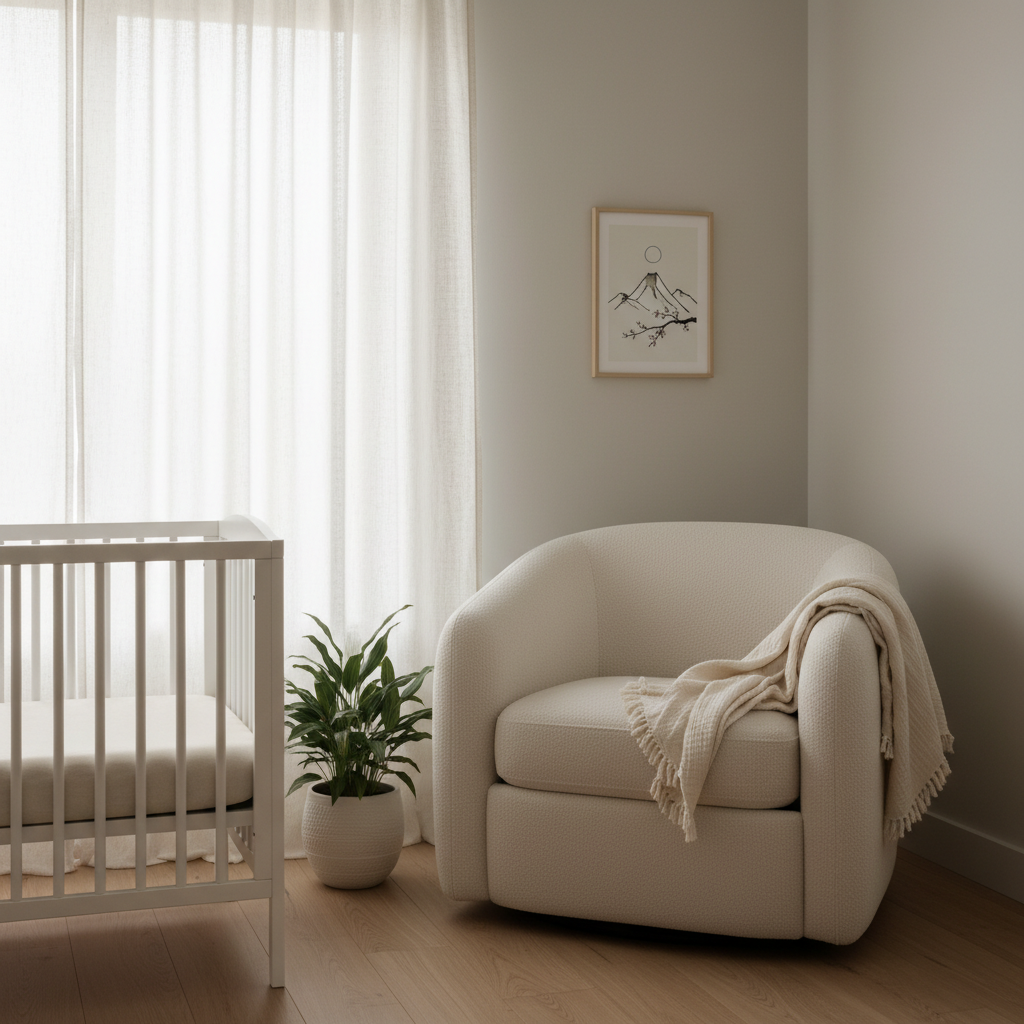
Best Nursing Chairs for Small Nurseries and Apartments
- by WengGracy
You taped a chair outline on the floor of your 10-by-10 nursery, stepped back, and felt that sinking moment: there is barely room to walk past the crib. If you live in an apartment, condo, or studio, the small nursery nursing chair search can feel like trying to fit a sofa into a closet. You want lumbar support for those 3 a.m. feeds, a swivel that lets you reach the crib without bumping the dresser, and a silhouette that does not scream "baby furniture" in your living space. This guide cuts through the marketing fluff with real dimensions, clearance math, and two carefully sized picks from Mamazing built for parents who measure twice before they buy.
Whether you are nesting in a Brooklyn walk-up, a Tokyo-style micro-condo, or a guest room turned nursery, you will find a compact nursing chair here that fits the room you actually have, not the showroom one. Let's get specific.
Plenty of chairs are marketed as "space-saving," but the label rarely matches the spec sheet. A genuinely compact nursing chair has measurable traits, not adjectives. Before you scroll product pages, build a short checklist based on your room layout, your body, and the way you plan to feed.
Pediatric experts also emphasize that nursing ergonomics matter for posture and supply, not just comfort. The American Academy of Pediatrics recommends breastfeeding for at least the first year, which means you will spend hundreds of hours in this chair. The dimensions you choose today shape your back tomorrow, and a deeper look at correct posture in a nursing chair is worth the ten minutes before you commit to a footprint you cannot return.
Use these numbers as your filter when shopping:
Urban parents are not imagining the squeeze, either. U.S. Census Bureau data puts the median new single-family home sold in 2024 at 2,210 square feet, while apartment nurseries often sit under 100 square feet. Every inch counts.
Think of these as the difference between a chair that occupies a room and one that cooperates with it. The right small space nursery glider should disappear into the layout, not announce itself. If you are still weighing motion types, our breakdown of how swivel rocking chairs transform a nursery into a peaceful haven walks through why a pivoting base earns its keep faster than any other feature in a tight room.
Both chairs below are built around nursing ergonomics and dimension discipline. Mamazing's signature HugAssist armrest system, with its 5D adjustability, is the feature that ties them together: armrests that swivel, lift, and lock to the exact height your forearms need for cradling a feeding baby. That detail matters more than any colorway because shoulder strain, not back pain, is the most common postpartum complaint among nursing parents.


At 34.25 inches wide and 32.28 inches deep upright, the Lullabud sits right inside the compact sweet spot. Most apartment nurseries can absorb it without losing the walking path between the crib and changing table. The 360-degree swivel is the headline feature for tight rooms: you can pivot toward the crib, the door, or the dresser without ever scooting the chair across the floor.
The HugAssist lift-up armrests fold away for toddler cuddles later, and close in for nursing support now. Functionally, that means the chair shrinks when you do not need the arms, which matters in a small space where every inch of perceived width counts. Removable, washable cushion covers handle the spit-up reality of life with a newborn, and they are practical in apartments where deep-cleaning upholstery means dragging it to a laundromat.
Side storage pockets eliminate the need for a separate nightstand. Stash burp cloths, your phone, a water bottle, and a paperback within arm's reach. The chair comes in Light Grey/Cream, Brown/Beige, Grey/Grey, and Black/Grey, all aligned with the 2026 Japandi nursery palette, and is available with or without an ottoman. Skip the ottoman if you are working with a studio or a sub-100-square-foot nursery. Sale pricing around $109.99 makes it the accessible entry into Mamazing's lineup, and a fair pick for first-time parents or anyone who plans to relocate the chair once nursing winds down.
This is the slim nursery rocking chair to choose when budget and footprint both matter, and you still want lift-up arms, a true swivel, and washable covers in one package.
The Lullapod Zen is the wider of the two at 38.2 inches, and we will be honest about that. For reference, a standard loveseat runs 50 to 60 inches, so the Zen is still narrower than the smallest sofa you have ever owned. What earns it a place in this small space guide is the 270-degree swivel, which is engineered to sit closer to a wall than a full 360-degree chair while still giving you the pivot range you need to face the crib, the changing table, or the door.
The 135-degree power recline is the standout small-apartment feature. Manual recliners shove backward when you release the latch, which is exactly what you do not want in a 10-by-10 room. Power recline glides slowly and stops where you tell it, so you can dial in a half-recline for daytime feeds and a near-flat angle for night sessions without bumping the wall behind you. The motor is quiet enough to use with a sleeping baby on your chest, which is genuinely rare in this category. Still on the fence about going power? Our honest guide on whether you actually need a reclining nursery chair lays out the tradeoffs before you commit.
HugAssist power lift armrests with a 45-degree swivel open wide for nursing positions, fold for cuddling, and tuck in to reduce the chair's working width. Built-in cup holders, a phone holder, USB-A and USB Type-C charging ports, and side storage pockets mean the chair replaces your side table entirely. In a studio apartment, that single decision reclaims about three to four square feet of floor space. An integrated lumbar pillow supports postpartum recovery, which the American College of Obstetricians and Gynecologists notes can include weeks of musculoskeletal recovery, especially after a C-section.
At sale pricing around $674.99, with a 5-year warranty and 30-day returns, the Zen is built as a multi-year investment piece. It will outlast the nursing stage and slide naturally into a reading corner, a home office, or a primary bedroom as a postpartum chair for small nursery rooms that grow into kids' bedrooms.
The right compact nursing chair only works if it lands in the right spot. Placement is half the battle in a small room, and a few thoughtful moves separate a cramped nursery from a calm one.
This is the apartment nursery chair logic that interior designers use when they style condo nurseries: every piece earns its square footage by serving more than one purpose, and visual lightness matters as much as physical dimensions.
Already read both product sections and want the side-by-side? Here is the cheat sheet for the two chairs at a glance, so you can match the right one to your room, your body, and your budget.
| Feature | Lullabud Rocking Chair | Lullapod Zen Recliner |
|---|---|---|
| Width | 34.25" | 38.2" |
| Depth (upright) | 32.28" | 37.4" |
| Swivel | 360 degrees | 270 degrees |
| Recline | Manual rock (30 forward / 20 back) | Power recline, 135 degrees |
| Armrests | Lift-up, HugAssist manual | Power lift + 45-degree swivel |
| Storage | Side pockets | Side pockets, cup holder, phone holder, USB / Type-C |
| Washable covers | Yes | Check product page |
| Sale price | $109.99 | $684.99 |
| Best for | Budget, smaller rooms, relocatable | Long-term, postpartum recovery, studio all-in-one |
| Warranty | Check product page | 5 years |
Aim for a chair width of 25 to 30 inches for a genuinely tight room, or up to 36 inches if you have a standard 10-by-10 or 10-by-12 nursery. Depth matters as much as width, so keep the upright depth under 36 inches. Before ordering, tape the full footprint, including reclining depth, on the nursery floor. You need at least 30 inches in front and 12 to 18 inches behind.
Gliders usually have a narrower footprint and need less rear clearance than recliners, which makes them the default choice for tight rooms. Recliners offer more comfort positions but typically demand more floor space. A power recliner engineered specifically for nursery use, like a swivel nursing chair for small nursery layouts, closes the gap by minimizing rear clearance and using a tighter swivel radius for closer wall placement.
Yes, if you choose a chair whose design belongs in a living room, not just a nursery. Neutral upholstery, slim profiles, and modern silhouettes let nursing chairs double as reading or accent chairs. In a studio, place the chair next to the bassinet and face it away from the main living zone to create a dedicated night-feed corner without needing a physical room divider.
Absolutely, and that is one of the strongest arguments for investing in a quality chair over a cheap nursery-only option. Chairs with lumbar support, adjustable recline, and neutral colorways serve well as home office, reading, or bedroom accent chairs for years after nursing ends. The CDC's NIS-Child results show the majority of U.S. infants are ever breastfed, but most parents nurse for under a year, so the chair's second life often lasts longer than its first.
Prioritize these five, in order: a swivel base so you can pivot toward the crib without moving the chair; lift-up or adjustable armrests that reduce functional width when not in use; side storage pockets that replace the side table; washable covers that handle small-home cleaning realities; and visible legs that keep the room feeling open. HealthyChildren.org, run by the AAP, emphasizes comfortable positioning as a foundation of successful breastfeeding, and your chair's adjustability is what makes that possible.
Finding the right small nursery nursing chair is as much about knowing your room as it is about knowing the chair. Measure before you browse, think past the newborn stage, and prioritize features, swivel, adjustable armrests, built-in storage, that actually solve problems in a small space. Whether the Lullabud fits your budget and footprint or the Lullapod Zen fits your long-term postpartum vision, every option in our lineup is sized for real homes, not showroom floors. Browse our full nursing chair collection below to compare compact rockers, space-saving gliders, and premium nursery recliners side by side, and find the apartment nursery chair that earns its square footage in your home.
At Mamazing, we design every chair around the parent in a real apartment, not a magazine spread. Tape the floor, trust the numbers, and pick the chair you will still love when your baby is asking to read another bedtime story.
Aim for a chair width of 25 to 30 inches for a genuinely tight room, or up to 36 inches if you have a standard 10-by-10 or 10-by-12 nursery. Depth matters as much as width, so keep the upright depth under 36 inches. Before ordering, tape the full footprint, including reclining depth, on the nursery floor. You need at least 30 inches in front and 12 to 18 inches behind.
Gliders usually have a narrower footprint and need less rear clearance than recliners, which makes them the default choice for tight rooms. Recliners offer more comfort positions but typically demand more floor space. A power recliner engineered specifically for nursery use, like a swivel nursing chair for small nursery layouts, closes the gap by minimizing rear clearance and using a tighter swivel radius for closer wall placement.
Yes, if you choose a chair whose design belongs in a living room, not just a nursery. Neutral upholstery, slim profiles, and modern silhouettes let nursing chairs double as reading or accent chairs. In a studio, place the chair next to the bassinet and face it away from the main living zone to create a dedicated night-feed corner without needing a physical room divider.
Absolutely, and that is one of the strongest arguments for investing in a quality chair over a cheap nursery-only option. Chairs with lumbar support, adjustable recline, and neutral colorways serve well as home office, reading, or bedroom accent chairs for years after nursing ends. The CDC's NIS-Child results show the majority of U.S. infants are ever breastfed, but most parents nurse for under a year, so the chair's second life often lasts longer than its first.
Prioritize these five, in order: a swivel base so you can pivot toward the crib without moving the chair; lift-up or adjustable armrests that reduce functional width when not in use; side storage pockets that replace the side table; washable covers that handle small-home cleaning realities; and visible legs that keep the room feeling open. HealthyChildren.org, run by the AAP, emphasizes comfortable positioning as a foundation of successful breastfeeding, and your chair's adjustability is what makes that possible.
Featured Products


When Do Kids Stop Using a Stroller? Age Limits, Signs & Transition Tips
Can You Use a Baby Stroller as a Dog Stroller?