
- by WengGracy
Do You Need a Reclining Nursery Chair?
- by WengGracy
It is 3:14 a.m. Your newborn has been cluster-feeding for nearly an hour, your lower back is on fire, and the dining chair you dragged into the nursery is somehow making everything worse. Sound familiar? The question every expecting parent eventually asks lands right here: do you actually need a reclining nursery chair, or is it just another registry item promising more than it delivers?
Here is the honest truth from someone who has helped hundreds of parents build their nurseries: a nursery recliner is not a universal must-have. For some families it becomes the most-used piece of furniture in the house. For others, it gathers laundry. The difference is knowing what you need before you click "add to registry."
In this guide, you will get a balanced answer to the worth-it question, learn which features actually matter, and see how to choose a chair that fits both your body and your space. We will also look at the nursing chair options most parents are comparing this year, courtesy of mamazing's parenting editors.
Before deciding whether you need one, you need to know what you are actually buying. A reclining nursery chair is not just a shrunk-down version of the leather recliner in your dad's living room. It is purpose-built furniture designed for the very specific demands of newborn life: long feeding sessions, quiet movement, baby-safe materials, and a footprint that fits beside a crib.
Traditional recliners are built for adults watching TV. Nursery recliners are built for adults holding a sleeping baby at 2 a.m. The differences are real:
Most parents arrive at the nursery furniture aisle confused by three near-identical-looking chairs. Here is the quick-reference comparison you can screenshot.
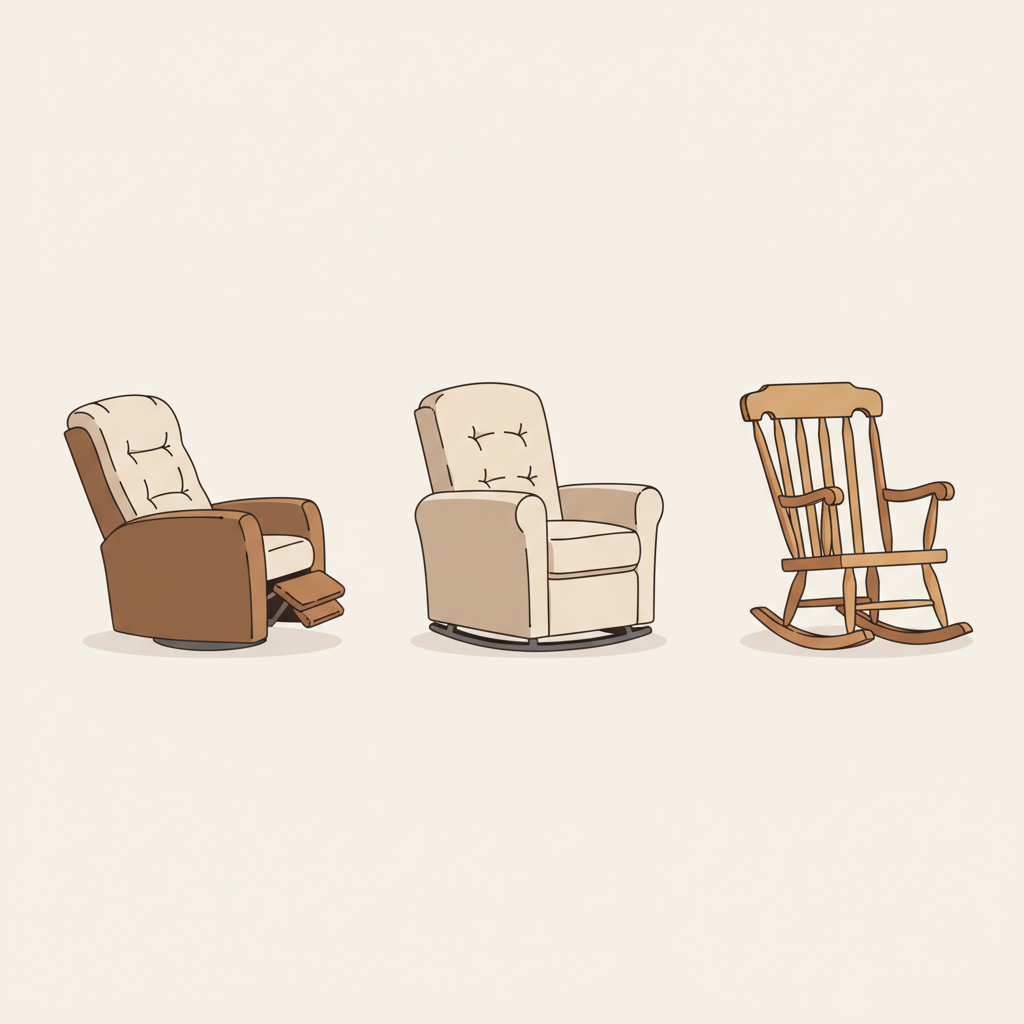
| Feature | Nursery Recliner | Glider | Rocker |
|---|---|---|---|
| Motion | Optional glide or static | Smooth forward-back | Curved arc rocking |
| Recline angle | Adjustable, often 100-160° | Fixed upright | Fixed upright |
| Footprint | Medium-large (needs recline clearance) | Medium | Small |
| Best for | Long feeds, recovery, naps | Soothing fussy babies | Budget, tight spaces |
| Typical price | $600 - $1,800 | $300 - $1,200 | $150 - $500 |
Quick answer: You need a reclining nursery chair if you expect long feeding sessions, are recovering from a C-section, plan to share night feeds with a partner, or do not have a comfortable existing chair in your home. You can probably skip it if you primarily feed in bed, your nursery is studio-sized, or you already own a supportive armchair that fits the room.
If you said yes to three or more signs in the first list and none in the second, a nursery recliner will earn its keep. If your yes count is one or zero, save the money and put it toward a quality nursing pillow and a really good night light instead.
This is the section most buyer's guides skip, and it is the most important one. A recliner for breastfeeding is not a luxury detail. It is postpartum body care. The hours you spend feeding will shape how your back, shoulders, and pelvic floor recover from pregnancy and birth.
Lactation consultants consistently point to supported, slightly reclined feeding as the most sustainable position for new parents. According to guidance from La Leche League International, a laid-back or biological nurturing position allows gravity to help the baby latch while you stay relaxed against a supportive backrest. Hunched feeding in a kitchen chair is one of the fastest paths to chronic upper-back pain in the first year postpartum.
If you are recovering from a cesarean, sitting up straight from a low surface can pull on your incision for weeks. A reclining nursery chair with lumbar support lets you ease back and rise using the armrests, which protects your core during healing. The American College of Obstetricians and Gynecologists notes that cesarean recovery typically takes six to eight weeks, during which avoiding strain on the core matters enormously.
For your pelvic floor, the elevated leg position of a recliner also reduces downward pressure during long feeds, a small detail that postpartum physical therapists frequently mention.
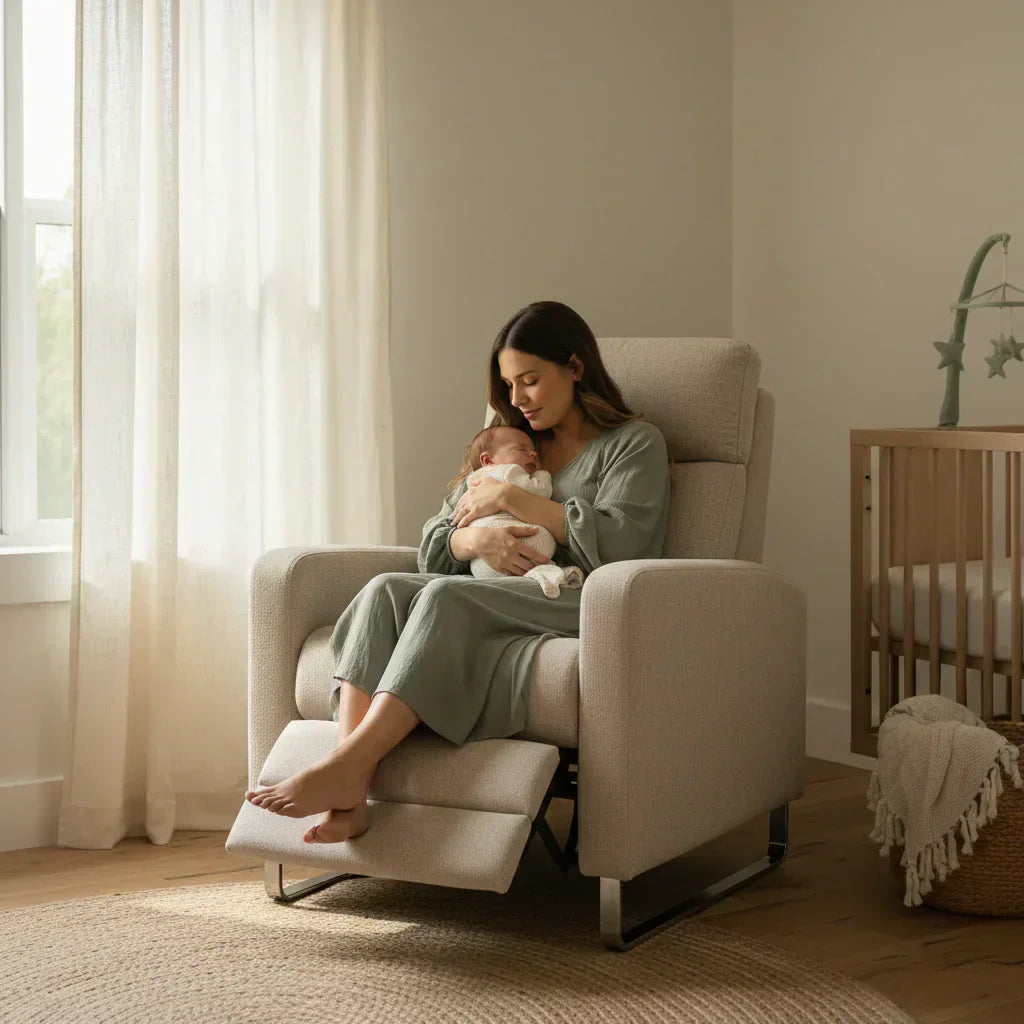
At 3 a.m., posture matters more, not less. The reclined cradle position, with your back at roughly a 110 to 130-degree angle and your baby tilted slightly upright on your chest, keeps your shoulders dropped and your neck neutral. The key safety note: stay awake. Reclined feeding is supportive, but it is not safe sleep. Always transfer your baby back to their flat, firm sleep surface once the feed ends, in line with AAP safe sleep recommendations.

Once you have decided a recliner makes sense, the next trap is being dazzled by features you will never use. Here is what genuinely matters, ranked by how much real-world difference it makes during the newborn months.
A nursery chair that reclines and swivels earns its money in the first week. Rotating toward a bassinet, side table, or partner without standing up is the difference between a 2-minute diaper handoff and a 15-minute back-twinge wakeup. Look for a smooth, silent 360-degree swivel with a lockable position.
Almost no competitor guide talks about this, and it is the feature parents thank us for most. Lift-up armrests let you raise the chair arm to the exact height of your baby during a feed, eliminating shoulder hunching. They also create extra room when you are pumping or burping a wiggly newborn. Once you have used a reclining glider with lift-up armrest, a fixed-arm chair will feel like a step backward.
You do not need a chair that lays fully flat. A recline range of about 100 to 160 degrees handles every realistic feeding and resting position. What you do need is a smooth, lockable mechanism with finger-pinch protection - especially once your baby becomes a curious crawler reaching for moving parts.
A power reclining nursery chair is worth the upgrade in two scenarios: you are recovering from a C-section and cannot push a manual lever, or you frequently feed while holding a sleeping baby and need one-touch adjustment. For most parents, a smooth manual recline is genuinely fine and saves $200 to $400.
Choose performance fabric. Boucle looks beautiful on Pinterest, but it traps spit-up. Look for stain-resistant weaves and removable, washable cushion covers. For foam fillings, prioritize CertiPUR-US certification - the same standard the CertiPUR-US program uses to verify foams are made without harmful chemicals like formaldehyde and certain phthalates.

The most stunning chair in the world is useless if it does not fit your room or your body. Let's get specific.
A small reclining chair for nursery setups should clear three measurement tests:
Measure your nursery before you fall in love with a chair. A tape measure prevents 90% of nursery furniture regrets.
The 2026 nursery aesthetic leans warm, neutral, and texture-rich. Think bone, oatmeal, soft taupe, and matte vegan leather instead of glossy finishes. A modern reclining nursery chair in a creamy boucle or buttery faux leather doubles as a living-room-quality piece once baby grows up. For gender-neutral nursery palettes, low-saturation tones photograph beautifully and age better than novelty prints.
If you are 5'8" or taller, look for a seat depth of at least 22 inches and a high back near 42 inches. If you are 5'3" or shorter, look for a shallower seat (around 20 inches) and a footrest that can rise high enough to support your feet without dangling. Always sit-test if you can.
If, after all of that, you have decided a recliner belongs in your nursery, here are two pieces from the mamazing line that earn the editor pick label. Both are featured because their feature sets directly answer the points in this guide - not because we are trying to sell you on something. The best reclining nursery chair for breastfeeding is the one that fits your body and budget, not the one with the highest price tag.

The pick for parents who want everything the early-newborn months demand: 360-degree swivel for one-handed turns toward the bassinet, lift-up armrests that raise to your baby's exact feeding height, and a contoured lumbar curve that reduces upper-back fatigue during cluster feeds.

Built for parents anticipating long feeding marathons, twins, or significant postpartum recovery. The Max Luxe offers a deeper recline, oversized cushioning, and an advanced glide motion that soothes fussy babies without waking sleeping ones. Think of it as the upgrade pick if your priority is recovery comfort.
If neither of these is quite the right fit, you can compare the rest of mamazing's nursing chair side by side, with filters for size, recline type, and fabric.
Here is the quiet truth about a quality glider recliner nursery piece: it outlasts almost every other piece of baby gear you will buy. The bouncer is gone in six months. The swing in eight. The chair is still earning its keep five years later.
Year one is feeds. Year two becomes bedtime stories and lullabies. Years three through five turn the chair into a reading corner where your toddler climbs up to "read" their own books. By year six it has often migrated to a primary bedroom, a home office, or a quiet living-room corner for a parent's morning coffee.
Let's run the simple math. A $900 nursery recliner used twice a day for three years equals just over 40 cents per use. Spread across two children (most families using a quality chair report keeping it for the second), it drops to around 20 cents per use - cheaper than a fancy coffee, with infinitely better posture support.
The parents we hear from years later usually fall into one of two camps: the ones who chose a quality chair and still use it daily, and the ones who bought a cheap option and replaced it within 18 months because the foam compressed or the glide squeaked. A real nursery investment piece is built to be reupholstered, not discarded.
It is worth it if you anticipate long feeding sessions, postpartum recovery, or shared night feeds with a partner. If you mostly feed in bed or already own a supportive armchair, you can comfortably skip the investment without regrets.
A glider moves gently forward and back on a fixed track, while a recliner tilts your back and legs into adjustable resting positions. A glider recliner nursery chair combines both, offering soothing motion and full body support in one piece.
Yes, breastfeeding in a recliner is safe when you stay alert. Keep the recline shallow enough to maintain eye contact with baby, support your arms with pillows or lift-up armrests, and never fall asleep with your infant on your chest in a reclined position.
No, full flat recline is not necessary or ideal for feeding. A moderate recline of 100 to 130 degrees is typically best because it supports your back without compromising the safe upright angle babies need during feeds.
A swivel base is a major upgrade for breastfeeding parents. It lets you rotate toward a side table, bassinet, or partner without straining your core, which is especially helpful in the early postpartum weeks when twisting can be painful.
Most families actively use a quality nursery chair for three to five years per child, transitioning from newborn feeds to toddler story time. With durable materials, the chair often becomes a long-term reading corner long after baby grows up.
For a small nursery, look for a chair under 32 inches wide with a seat depth around 20 to 22 inches. Leave at least 18 inches of clearance behind the chair for full recline, and confirm the swivel circle clears nearby furniture.
Whether you decide a reclining nursery chair belongs in your registry or not, the goal is the same - a calm corner where feeding feels easier on your body. If you would like to keep exploring, you can browse mamazing's full lineup of chairs side by side, with filters for size, recline depth, and fabric.
Featured Products


How to Choose a Crib: Safety, Mattress, and Room Placement
Infant Stroller vs Toddler Stroller: When and How to Transition in 2026