
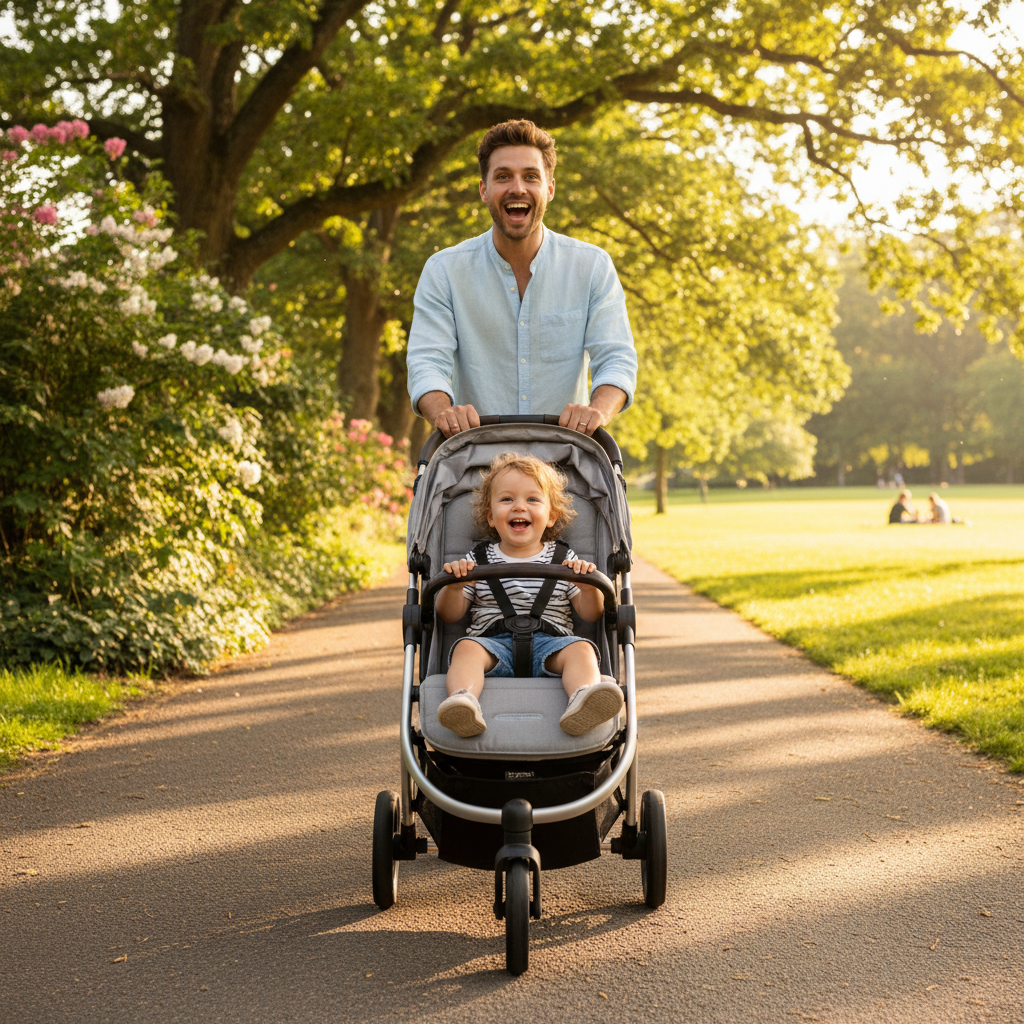
- by WengGracy
When Do Kids Stop Using a Stroller? Age Limits, Signs & Transition Tips
- by WengGracy
Picture this: you are at a sunny theme park in July, pushing your 4-year-old in a stroller, when a little voice next to you asks, "Mom, is she a baby?" Your cheeks flush. You wonder, silently, if you should be asking when to stop using a stroller already. If that scene sounds familiar, take a breath. You are not alone, and you are not behind. Mamazing put this guide together because the question of when stop using stroller comes up in our inbox almost every single week, especially as families gear up for summer travel.
In the next few minutes, you will learn the typical age range, the real stroller age limit by stroller type, the readiness signs that actually matter, and the situations where toddler stroller use is still smart well past age 4. We will also share gentle transition strategies, a special-needs perspective most articles skip, and answers to the questions parents whisper in playgroup chats. Ready? Let's walk through it together.
Here is the short answer most parents are searching for: most kids stop using a stroller regularly between the ages of 3 and 5. There is no official cutoff stamped on a birthday card, and pediatricians do not hand out a graduation certificate when your child turns four. The decision is yours, and it depends on your child, your lifestyle, and your day-to-day reality.
The American Academy of Pediatrics encourages families to reduce sedentary time in early childhood and shares 11 ways to keep preschoolers physically active throughout the day. That guidance does not ban strollers, but it does suggest that by the preschool years, walking should make up a healthy chunk of your child's movement diet.
The Canadian 24-Hour Movement Guidelines go a step further on stroller restraint. They advise that children under 5 should not be restrained for more than one hour at a time in a stroller, high chair, or car seat. Translation: strollers are tools, not parking spots. Use them when they help, and let your child stretch their legs in between.
Beyond developmental guidance, manufacturer limits also nudge the timeline. Most standard strollers max out at 50 pounds, which the average child hits somewhere between ages 4 and 6. So even if you wanted to keep rolling, physics eventually casts a vote.
One quick reframe before we move on. Plenty of parents feel guilty when they keep using the stroller longer than other families in their neighborhood. Take comfort in the fact that pediatric researchers measure outcomes in habits, not single trips. Three hours of total daily activity matters more than whether your child rode in a stroller for the last 20 minutes of a long Saturday outing. Look at the week, not the moment.
"Is there a stroller age limit?" is one of the most-Googled questions on this topic, and the honest answer is: it depends entirely on the type of stroller you own. Weight and height limits matter far more than birthdays. Here is a side-by-side look at the most common categories so you can match your gear to your child's stage. If you are still deciding which model fits your family, our guide to choosing a baby stroller for your lifestyle walks through the trade-offs in detail.


| Stroller Type | Typical Age Range | Max Weight | Max Height | Key Notes |
|---|---|---|---|---|
| Standard / Full-Size | 0 to 4 years | 50 to 65 lbs | 43 to 47 in | Most versatile; best for long outings |
| Umbrella / Lightweight | 6 mo to 3-4 yrs | 35 to 50 lbs | 40 to 43 in | Compact; limited recline; great for travel |
| Jogging / Jogger | 6 mo to 4-5 yrs | 75 to 100 lbs total load | 45 in | Best for active parents; fixed front wheel |
| Double / Tandem | 0 to 4 yrs per seat | 40 to 50 lbs per seat | Varies | Ideal for sibling scenarios |
| Travel / Compact | 6 mo to 3-4 yrs | 40 to 55 lbs | 43 in | Airline-friendly; ideal for Disney and airports |
| Wagon / Push Cart | 1 yr to 5+ yrs | 100 to 150 lbs | N/A | Great stroller alternative for older kids |
A few things worth knowing as you read that table:
Forget the calendar for a second. The clearest signal of when toddler outgrows stroller comfort is behavior, not birth year. Watch for these three buckets of readiness.
Tip from our team: One developmental cue many parents miss is when your child starts asking to push the stroller instead of ride in it. That role reversal is a quiet announcement of independence. Honor it.
Now for the counterintuitive part. There are real, valid reasons to keep using toddler stroller comforts well past the so-called typical age. If any of these apply, you are not babying anyone:
Reframe the stroller as a tool, not a crutch. The decision is yours, not the stranger's at the grocery store.
Once you spot the readiness signs, a gentle stroller transition takes a few weeks, not a single dramatic Tuesday. If your toddler is also outgrowing an infant-style seat, our infant stroller vs toddler stroller transition guide pairs nicely with the strategies below. Try these five and pick the mix that fits your family.
Start with short, exciting outings where your child has reason to walk: a trip to the ice cream shop, a quick library run, a backyard nature loop. Bring the stroller folded in the car as a safety net rather than pushing it. Within a week, most kids forget to ask for it.
Turn walks into games. Try I-Spy, sidewalk-crack hopping, or a scavenger hunt for red leaves and blue mailboxes. Hand over a bit of agency too: let your child choose the route or set the pace. The key is keeping the experience positive rather than forced, which is exactly how walking builds endurance and emotional regulation over time.
Frame the change as a "big kid" privilege, not a loss. Avoid tying the transition to a new sibling taking the stroller, which can plant resentment that lingers for months. "You are such a strong walker now" works better than "The stroller is for the baby."
Some days your transitioning 4-year-old will need the stroller again. After a fever, a missed nap, or a 14-hour travel day, that is not a setback. That is a tired kid. Pull out the stroller without commentary and move on.
Some of the most common "should I bring a stroller" questions come from families planning specific outings. Here is a quick situational breakdown.
Disney trip planners report that guests walk roughly 8 to 10 miles per day at Disney World. No 4-year-old is built for a marathon, no matter how excited they are about Mickey. Disney officially allows strollers for children through age 7, with a size cap of 31 inches wide by 52 inches long. A compact travel stroller is the sweet spot for park days.
Long terminal walks, gate-change sprints, and 5 a.m. wake-ups drain a toddler's tank fast. A lightweight travel stroller doubles as a safe waiting zone, a snack station, and an on-the-go nap pod. Bonus: most airlines let you gate-check strollers for free. For a deeper dive on what to look for, our guide to choosing the best travel stroller covers airline-friendly picks.
City parents often cover two to five miles between grocery runs, school pickups, and park visits. A stroller keeps the pace manageable and keeps your child safely off the curb when traffic zips by. There is no shame in city stroller toddler use at age 4.
This is the section most parenting articles skip. Children with autism, sensory processing differences, anxiety, or impulse-control challenges often benefit from stroller use well beyond typical ages. According to the CDC, about 1 in 31 children is identified with autism spectrum disorder, and many of these families rely on strollers as a regulation tool, not just transportation. Adaptive strollers accommodate children up to 150 pounds. If your child needs a stroller for safety or sensory regulation, that is parenting wisdom, not a delay.
Most children transition out of regular stroller use between ages 3 and 5. Ages 3 to 4 are the most common window, but many families continue situational use through age 5 or 6 for travel, theme parks, or long city days. There is no universal hard cutoff, and pediatricians do not set one.
There is no legal age limit on stroller use, but every model carries manufacturer weight and height limits. Most standard strollers are rated for children up to 50 pounds and 43 to 47 inches tall. Umbrella stroller age limits typically cap around 40 to 50 pounds. Jogging stroller age limits often allow 75 to 100 pounds of total load including child and cargo.
A toddler outgrows a stroller when they consistently approach or exceed the weight and height caps, prefer walking independently, handle typical outing distances without fatigue, and follow basic safety instructions like stopping at curbs. For most children that combination clicks into place gradually between ages 3 and 5.
Yes, absolutely. A 4-year-old riding in a stroller, especially for travel, theme parks, or long outings, is completely appropriate. The AAP encourages reducing sedentary transportation for ages 4 to 6, but that guidance applies to routine daily use, not occasional or safety-driven use.
Look for three categories of signals: physical (can walk 30 to 45 minutes at a steady pace, rarely naps during outings), behavioral (consistently prefers walking, follows traffic safety rules), and practical (frequently resists or ignores the stroller). When all three align, your toddler is ready.
Most Disney experts say yes. Visitors walk an average of 8 to 10 miles per day at Disney parks, well beyond what most 4-year-olds can sustain without meltdowns. Disney allows strollers for kids through age 7 within posted size limits. A compact travel stroller is ideal.
Popular options include balance bikes, kick scooters, ride-on boards that clip onto the stroller frame, and wagons. For urban parents, a lightweight canopy wagon handles long shopping days. Soft-structured carriers also work for shorter distances with younger toddlers.
This is one of the most common transition phases. Keep the folded stroller in the car as a backup, let your child walk freely until they ask to ride, and use walking games to extend stamina. Patience plus a granola bar in your bag goes a long way.
So when stop using stroller worries should you actually take seriously? The ones rooted in your child's readiness, not the stranger's stare. Most kids step away from regular stroller use between ages 3 and 5, but the real signposts are walking stamina, safety awareness, behavioral independence, and the manufacturer's weight cap. Some situations, like Disney days, airport marathons, long urban outings, and special-needs support, justify continued stroller use well past 4. Transition gradually, make walking fun, and let your child's pace guide yours.
Whatever stage your toddler is in right now, the right stroller makes every outing easier, from the daily grocery run to a summer Disney trip. Mamazing curates lightweight, toddler-ready picks designed to grow alongside your family. Browse age-appropriate stroller options to find a model that matches your child's current stage, your travel plans, and your daily reality. Happy strolling, or happy walking, whichever comes next.
Most children transition out of regular stroller use between ages 3 and 5. Ages 3 to 4 are the most common window, but many families continue situational use through age 5 or 6 for travel, theme parks, or long city days. There is no universal hard cutoff, and pediatricians do not set one.
There is no legal age limit on stroller use, but every model carries manufacturer weight and height limits. Most standard strollers are rated for children up to 50 pounds and 43 to 47 inches tall. Umbrella stroller age limits typically cap around 40 to 50 pounds. Jogging stroller age limits often allow 75 to 100 pounds of total load including child and cargo.
A toddler outgrows a stroller when they consistently approach or exceed the weight and height caps, prefer walking independently, handle typical outing distances without fatigue, and follow basic safety instructions like stopping at curbs. For most children that combination clicks into place gradually between ages 3 and 5.
Yes, absolutely. A 4-year-old riding in a stroller, especially for travel, theme parks, or long outings, is completely appropriate. The AAP encourages reducing sedentary transportation for ages 4 to 6, but that guidance applies to routine daily use, not occasional or safety-driven use.
Look for three categories of signals: physical (can walk 30 to 45 minutes at a steady pace, rarely naps during outings), behavioral (consistently prefers walking, follows traffic safety rules), and practical (frequently resists or ignores the stroller). When all three align, your toddler is ready.
Most Disney experts say yes. Visitors walk an average of 8 to 10 miles per day at Disney parks, well beyond what most 4-year-olds can sustain without meltdowns. Disney allows strollers for kids through age 7 within posted size limits. A compact travel stroller is ideal.
Popular options include balance bikes, kick scooters, ride-on boards that clip onto the stroller frame, and wagons. For urban parents, a lightweight canopy wagon handles long shopping days. Soft-structured carriers also work for shorter distances with younger toddlers.
This is one of the most common transition phases. Keep the folded stroller in the car as a backup, let your child walk freely until they ask to ride, and use walking games to extend stamina. Patience plus a granola bar in your bag goes a long way.
Featured Products


Late-Night Feeding Chair Tips: Comfort, Company and Calm
Best Nursing Chairs for Small Nurseries and Apartments