
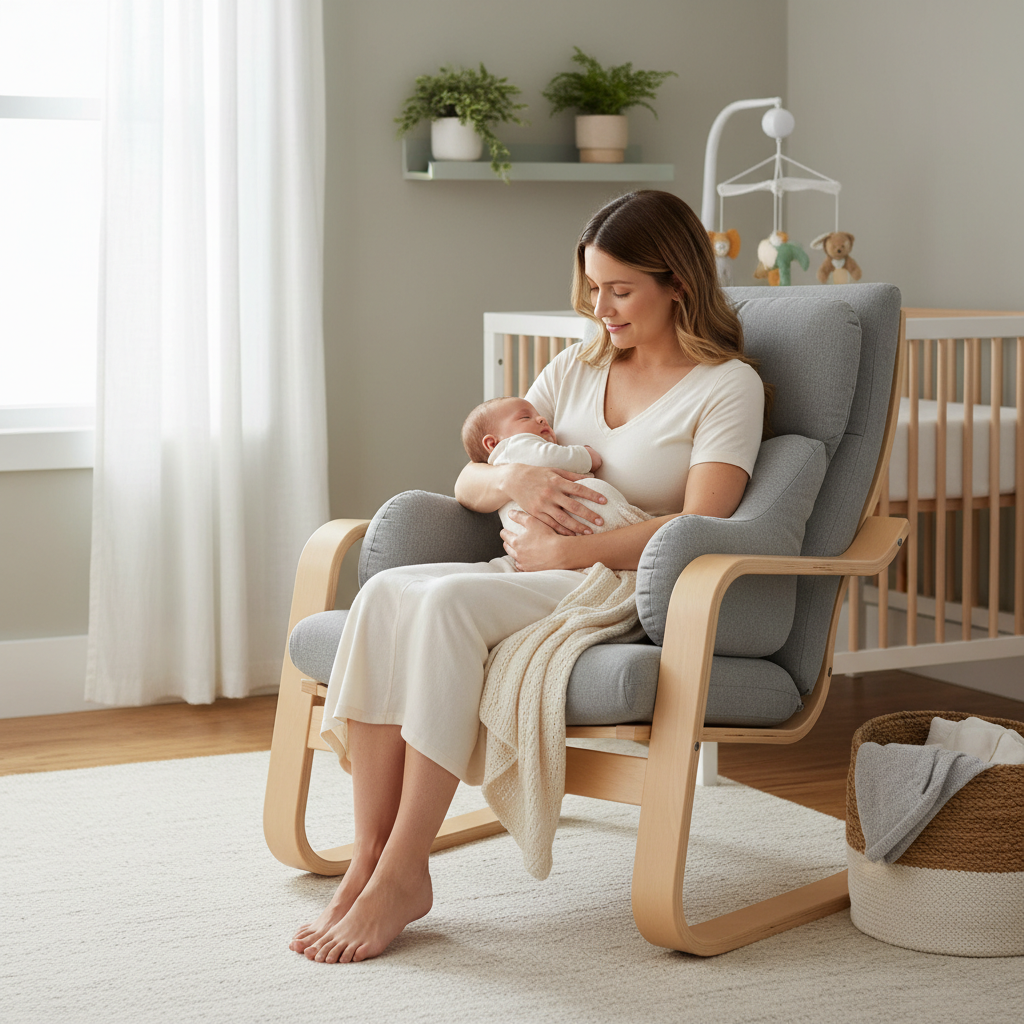
Correct Posture in a Nursing Chair: How to Prevent Back and Neck Pain
- by WengGracy
A nursing chair can feel perfect in the showroom and still leave your neck, shoulders, or lower back aching after a week of real feeds. The difference is often not the chair alone. It is how your body, baby, pillows, and small supports work together.
This guide focuses on practical nursing chair posture: how to sit in nursing chair setups, how to use nursing chair back support, and how to create an ergonomic nursing position without turning every feed into a complicated ritual. For a chair that supports real feeding routines, Mamazing designs nursery seating for long, sleepy, repetitive moments when comfort has to hold up.
Good posture in a nursing chair is not stiff, military-straight sitting. It is supported, relaxed alignment. Your back has contact with the chair, your feet are grounded or on a footrest, your baby is lifted toward your body, and your shoulders are not working like a pair of emergency shelves.
The most useful nursing chair posture checklist is simple:
These points echo general sitting guidance from Cleveland Clinic, which recommends back support, even weight on both hips, hips and knees near a right angle, and feet flat or supported for seated posture in pregnancy and body mechanics guidance. A nursing chair adds one extra challenge: you are also holding a baby, often while tired, healing, and distracted.
The easiest time to fix posture is before the feed starts. Once your baby is latched, settled, or finally calm, you will avoid moving even if your shoulder is creeping toward your ear. Set your body first, then bring baby in.

Scoot your hips all the way back until your pelvis feels supported by the seat and backrest. If the chair is deep, place a firm cushion behind your lower back so you do not slide into a rounded C-shape. Keep both feet supported. If your feet dangle, your pelvis tends to tip, your lower back works harder, and your shoulders often compensate.
A footstool does not need to be fancy. The goal is simply to stop your legs from hanging and to help your knees and hips settle comfortably. Cleveland Clinic's low back pain guidance also recommends a back support at the curve of the back and a footrest if needed so hips and knees can stay comfortably positioned during sitting.
If the seat is too deep for your body, you may have to choose between back support and foot contact. Do not sacrifice both. Add a back pillow, then use a footrest. If the seat is shallow, avoid sliding forward until only your upper back touches the chair. Your lower back needs support too.
Place water, burp cloths, nipple cream, pump parts, and your phone within easy reach on the side you naturally use. Repeated twisting is a quiet posture problem. One twist for a cloth is nothing. Fifty twists across a week can become a pattern your back notices.
If you are still choosing seating, compare how a comfortable nursery chair supports your feet, arms, and back before you focus on fabric or color.
Back support is less about one perfect chair shape and more about contact. Your body should feel held at the lower back, mid-back, and shoulders without forcing you into a rigid arch. If there is a gap behind your waist, your muscles may fill that gap for the whole feed.
When testing nursing chair back support, pay attention to three things: where your lower back lands, whether your shoulders can relax, and whether you can sit back while still bringing baby close. The best support is the support you can actually use during a 2 a.m. feed.
| Support point | What to check | Quick fix |
|---|---|---|
| Lower back | Does your waist feel held? | Add a small lumbar pillow. |
| Shoulders | Can they drop away from your ears? | Support elbows and forearms. |
| Feet | Are both feet grounded? | Use a footstool or ottoman. |
| Reach zone | Do you twist for essentials? | Move supplies to one side table. |
A slight recline can help some parents because it lets the chair carry more of the body. But reclining too far may make you curl your neck forward to see baby. The sweet spot is usually a gentle lean with the head, neck, and upper back supported.
The most common posture mistake is trying to bring yourself down to the baby. It starts as a loving instinct: you lean, curl, and hover to help the latch. Then your neck holds that position for twenty minutes.

For an ergonomic nursing position, bring baby toward you. La Leche League GB gives a clear principle for comfortable breastfeeding: use pillows for your own comfort and bring baby to breast rather than breast to baby in its positioning guidance. That one idea protects your neck, shoulders, and upper back.
Your arms can hold a newborn for a short time. They should not have to hold the whole feeding session. Use the chair arms, a firm nursing pillow, or folded blankets to support your forearms. If your elbows hang in midair, your shoulders will lift. If your shoulders lift, your neck joins the work.
Whether you use cradle, cross-cradle, football hold, or bottle feeding, baby's head should not be turned away from the body. NHS breastfeeding guidance for cradle hold recommends checking that baby's ear, shoulder, and hip are in a straight line during positioning. That alignment helps baby feed while also reducing your urge to twist your own body around them.
Many parents stack pillows under baby but forget their own shoulders, wrists, or lower back. A pillow behind your waist, one under the elbow on the feeding side, and a small footrest can do more for comfort than one large pillow under baby alone.
Most nursing chair posture problems are tiny habits repeated often. You may not feel them during one feed. You feel them after days of the same shape.
Perching gives you the illusion of control because you are closer to baby. It also removes the backrest from the equation. If you need to be closer, bring baby and pillows toward you instead of moving your spine away from support.
Of course you will look at your baby. You should. The problem is holding your head down without breaks. Mayo Clinic Health System notes that phone posture and looking downward can strain the neck, and recommends bringing devices closer to eye level when possible in posture guidance. During feeding, try brief check-ins instead of a continuous neck curl.
If your elbows are unsupported, your shoulders often rise to stabilize the baby. Slide a pillow under the elbow on the feeding side. If bottle feeding, switch sides when you can so the same shoulder is not always doing the same job.
Keep your most-used items on the side that lets you reach without rotating your waist. If your nursery is tight, a small nursing chair for nursery setup may need a narrow side caddy, wall shelf, or rolling cart so posture does not lose to floor space.
Crossed legs can make your pelvis uneven. Dangling feet can pull you forward. Both make it harder for the lower back to stay supported. If your chair sits high, use an ottoman. If it sits low, make sure your knees do not force your hips into a cramped tuck.
Your nursing chair posture will change a little depending on what you are doing. The goal stays the same: support your body first, then position baby or equipment around that support. If you change the task but keep the same slumped shape, your neck and back may keep paying for it.
Start with your back and feet supported, then build height under baby. If you are using cradle or cross-cradle hold, support the elbow on the feeding side so your shoulder does not lift. If you use football hold, make sure the pillow or cushion supports baby's whole body, not only the head. A useful test is whether you can briefly relax your hand without baby dropping away from you.
Bottle feeding can create the same posture strain as breastfeeding because parents often stare down and hold one arm in the same position. Keep baby close, switch holding sides when practical, and support the wrist that holds the bottle. If your bottle-side shoulder starts climbing, the bottle is probably too low or too far from your body.
Pumping in a nursing chair often leads to a forward lean because you are checking flanges, bottles, or settings. Set the pump controls within reach before you start. Sit back between adjustments, and use a small tray or side table so you are not balancing parts on your lap. If you use a hands-free bra, still check that your shoulders can stay down and your lower back has contact with the chair.
In every scenario, think of the chair as your base. Your pillows, footrest, and side table should help you stay with that base instead of pulling you away from it.
Postpartum posture is not only about your back. Pregnancy and birth can leave your abdominal wall, pelvic floor, hips, and ribs feeling different. You may also be healing from a vaginal birth, tearing, or a C-section. That is why the best nursing chair posture should feel supported, not forced.
ACOG lists back, neck, and joint pain among common postpartum symptoms and advises parents with back, neck, or joint pain to talk with their ob-gyn. Its self-care tips include relaxing the shoulders, using a pillow to support the arms, keeping the back supported, and looking up when possible while breastfeeding in postpartum pain guidance.
Think of your core as a gentle support system, not a brace you must clench. Before a feed, exhale slowly and let your ribs soften down. Sit back. Let the chair carry you. If you had a C-section, avoid positions that press baby, pillows, or a chair edge into the incision area. Side-lying or a football hold may feel better for some parents, but your clinician or lactation consultant can help you adjust based on your healing.
If pain is sharp, worsening, one-sided, associated with numbness, or making it hard to lift or care for your baby, do not treat posture tweaks as the full answer. Get medical guidance.
Use this reset before a feed, halfway through, or after baby falls asleep. It is intentionally short because the best posture routine is the one you can remember when you are tired.
If you are comparing chair styles, a best nursing chair guide can help you connect these posture needs to real chair features.
Sit with your hips back, lower back supported, feet flat or on a footrest, and shoulders relaxed. Bring your baby up to your body with pillows or arm support instead of bending your neck and upper back down toward baby.
You need foot support, whether it is a footstool, ottoman, or firm box. If your feet do not touch the floor comfortably, a footstool can help your pelvis and lower back stay supported.
The best back support keeps your lower back in gentle contact with the chair without forcing a stiff arch. A built-in lumbar curve, small cushion, or rolled towel can all work if they help you sit back comfortably.
Neck pain often comes from looking down too long, shrugging your shoulders, or bending toward baby instead of lifting baby toward you. Support your arms, bring baby closer, and look up briefly during longer feeds.
A slight recline can be comfortable if your head, back, arms, and baby are supported. Reclining too far may make you curl your neck forward, so aim for relaxed support rather than a deep slump.
A supportive nursing chair can reduce strain by helping your back, arms, and feet stay supported during feeds. It is not a treatment for ongoing or severe pain, so talk with your clinician if symptoms persist or worsen.
Choose a position that avoids pressure on your incision. Sit back with support, use pillows to hold baby away from your abdomen, and ask your clinician or lactation consultant about positions such as football hold or side-lying if sitting feels uncomfortable.
If back, neck, shoulder, wrist, or pelvic pain continues despite support changes, ask your ob-gyn, physical therapist, or lactation consultant for help. Persistent pain deserves care, not just another pillow.
Correct nursing chair posture is not about sitting perfectly. It is about making the chair, pillows, foot support, and feeding position do more work so your body can do less. Start with your feet and pelvis, support your back and arms, bring baby to you, and reset your neck often.
Mamazing nursing chairs are built for the ordinary, repeated moments of feeding and soothing: the long holds, the late nights, and the tiny posture adjustments that make parenthood feel a little easier on your body.
Featured Products


Postpartum Back Pain: How the Right Nursing Chair Can Help
Are Electric Nursery Glider Recliners Worth It? A Deep Dive Review