
- by WengGracy
Infant Stroller vs Toddler Stroller: When and How to Transition in 2026
- by WengGracy
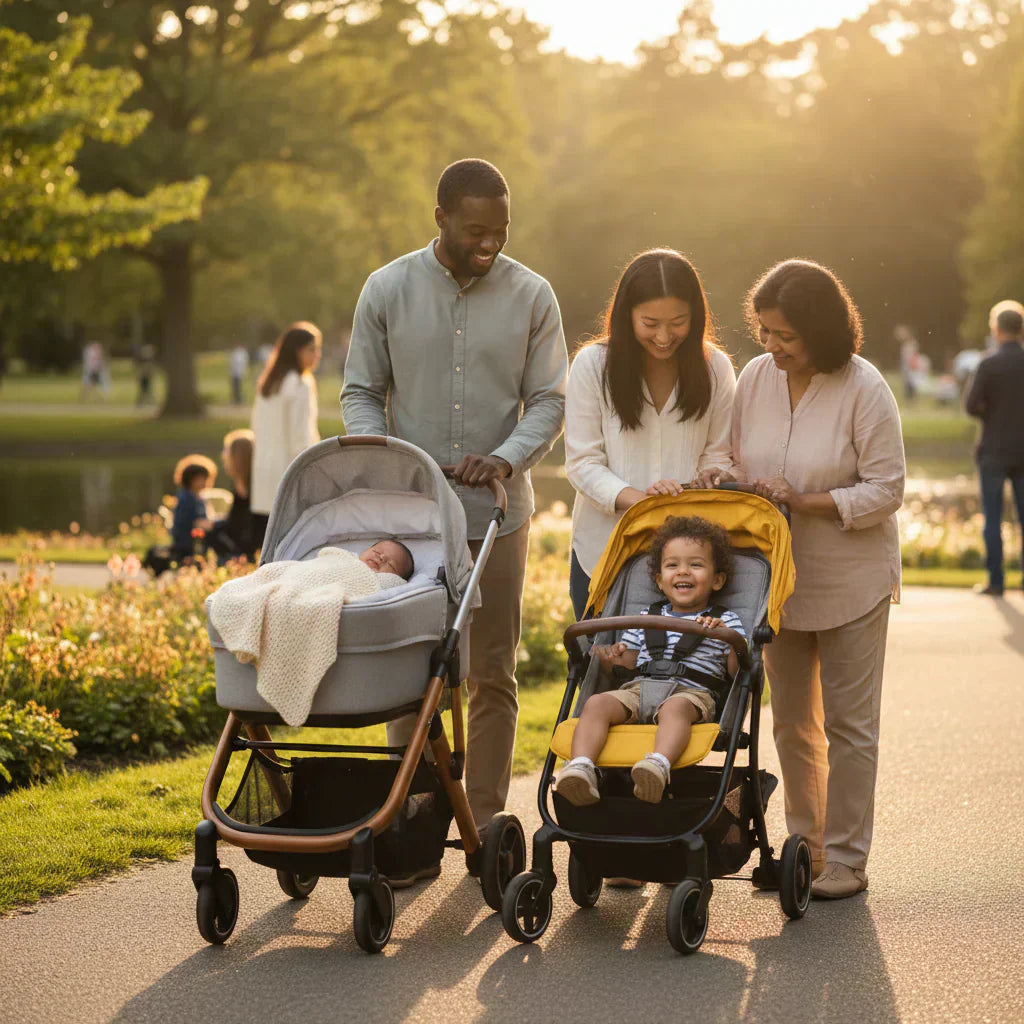
Picture this: you are pushing your 14-month-old through a Father's Day cookout, and they are arching their back, twisting sideways, and full-on protesting the bassinet-style infant stroller you spent a small fortune on last year. Sound familiar? You are not alone. Many parents either wait too long to switch, or they jump too early and end up buying twice. The middle path is a milestone-based transition, and that is exactly what this guide gives you.
If you are wondering when to switch stroller setups, what to look for in a toddler stroller, and how to make the change without tears (theirs or yours), you are in the right place. Below, you will find a milestone-based timeline, a 7-point readiness checklist, a side-by-side comparison table, and the 2026 mamazing picks our team trusts. We will reference current American Academy of Pediatrics safety guidance and JPMA certification standards along the way. Let's get into it.
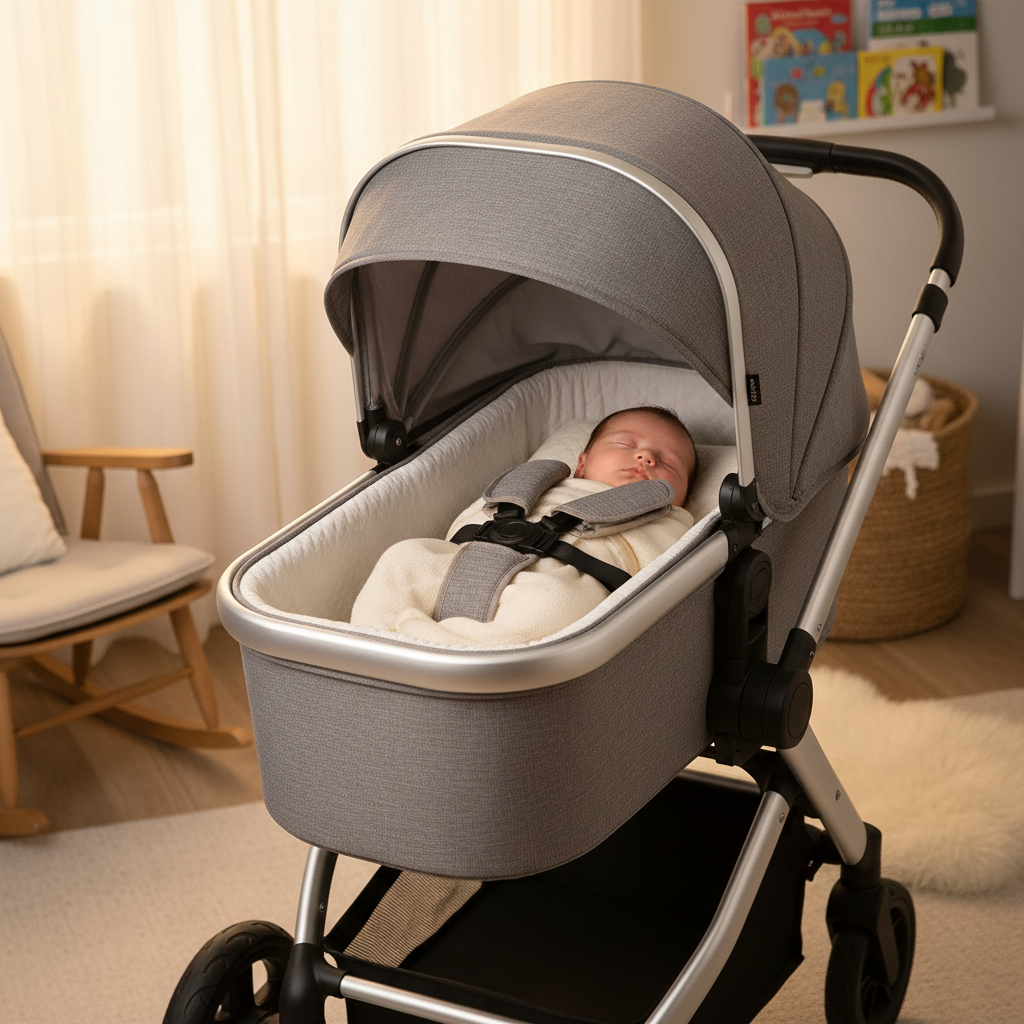
An infant stroller is engineered around one critical fact: a newborn cannot hold up their own head. Every design choice, from the lay-flat bassinet to the harness padding, exists to protect a delicate neck and a still-developing spine. If you are buying for a baby under six months old, this is the category you are shopping in.
True infant strollers share a recognizable set of features. They are heavier, plusher, and built with safety physics in mind:
The infant stroller weight limit matters more than most parents realize. Once your baby crosses the threshold, the bassinet stops being safe. Here is a quick reference for the most common configurations:
| Mode | Typical Weight Limit | Recommended Age |
|---|---|---|
| Bassinet mode | Up to 25 lbs | Birth to ~6 months |
| Infant car seat (with adapter) | Up to 30-35 lbs | Birth to ~12 months |
| Infant seat (reclined) | Up to 35-50 lbs | 6 to 24 months |
| Toddler seat mode (convertible) | Up to 50-65 lbs | 6 months to 4+ years |
Before you click buy, scan for three certifications. They are not marketing fluff. They are the legal floor for safe newborn gear in 2026:
You should choose a dedicated infant stroller if your baby is newborn to six months, you transfer car-seat-to-stroller often, or you crave the plush ride for naps on the go. For most other families, a convertible stroller from birth to toddler will serve you longer. For more on this, see our mamazing guide on when baby can safely sit in a stroller.

The moment your baby starts twisting around to look at the world, the equation flips. A toddler stroller is not just a smaller infant stroller. It is a different tool, built for a different child — one who wants to see everything, point at squirrels, and hop in and out at the playground gate.
Toddler strollers strip away the bassinet machinery and add ergonomics that match an upright, curious child:
Most toddler strollers cap at 50 to 65 lbs, which translates to roughly age four for an average-build child. When do toddlers stop using strollers entirely? Honestly, the answer is "it depends." Some children are walking marathons by age three. Others still need a ride at five for long airport days. The AAP encourages active movement from toddlerhood onward, so use the stroller as a tool, not a default.
| Type | Best For | Weight | Trade-Off |
|---|---|---|---|
| Umbrella stroller | Quick errands, travel | 8-13 lbs | Limited recline and storage |
| Lightweight toddler stroller | Daily walks, travel days | 11-18 lbs | Mid-tier suspension |
| Jogging stroller | Active runners, trails | 22-30 lbs | Bulky for indoor use |
| Sit-and-stand stroller | Two siblings, mixed ages | 25-32 lbs | Longer footprint |
| All-terrain toddler stroller | Hiking, beach, gravel | 20-28 lbs | Larger fold size |
Toddler bodies are not mini adults. Seat depth, footrest height, and harness fit all affect posture. A seat that is too shallow can let your toddler slump forward; one that is too deep can cause the hips to splay awkwardly. Look for adjustable footrests and seats with thigh support — tiny details that prevent fussiness on long outings.
Sometimes a single table beats a thousand paragraphs. Here is the direct infant stroller vs toddler stroller breakdown, with the numbers parents actually want to compare. Use this for fast decision-making.
| Specification | Infant Stroller | Toddler Stroller |
|---|---|---|
| Age range | 0 - 6 months | 6 months - 4 years |
| Weight limit | Up to 25 lbs (bassinet) | 50 - 65 lbs |
| Recline | Lay-flat (180 degrees) | Multi-position (110-150 degrees) |
| Frame weight | 22 - 30 lbs | 11 - 18 lbs |
| Fold type | Two-handed | One-hand quick fold |
| Best use | Naps on the go, newborn outings | Travel, theme parks, daily walks |
| Avg. price (2026) | $300 - $1,200 | $90 - $700 |

Ready to put the comparison to work? Browse mamazing's best baby stroller to see infant, toddler, and convertible options side by side.
Here is the math no competitor seems to walk you through. If you buy a dedicated infant stroller at $500 and then a toddler stroller at $400, you have spent $900 over four years. A convertible stroller from birth to toddler runs roughly $650 and covers the same window. That is a $250 saving — before you factor in resale value, which trends higher for premium convertible frames — a factor worth considering when comparing lifetime value across stroller types.
If summer 2026 travel is on your radar, portability becomes the deciding factor. Most major airlines allow gate-checking of strollers under 20 lbs, and a one-hand fold makes solo travel realistic. Infant strollers rarely meet cabin-fold dimensions; lightweight toddler strollers almost always do.
Quick answer: Most babies are ready to switch from an infant stroller to a toddler stroller around 6 to 9 months, once they have full head and neck control and can sit unassisted. The transition is also weight-driven: once your baby exceeds the 25-pound bassinet limit, the toddler stroller becomes safer. Behavioral cues like fussing in the recline or wanting to look outward are equally important.
So how do you know when to switch stroller setups? It is rarely a single signal. Think of it as a three-part check: developmental, physical, and behavioral. When two of those three line up, you are ready.
For deeper context on the six-month checkpoint, see our mamazing guide on when to switch from bassinet to stroller seat.
| Age | Typical Weight | Recommended Mode |
|---|---|---|
| 0 - 6 months | 7 - 17 lbs | Infant stroller (bassinet or car seat mode) |
| 6 - 12 months | 16 - 22 lbs | Toddler seat with full recline option |
| 12 - 18 months | 20 - 26 lbs | Upright toddler stroller, lightweight preferred |
| 18 - 24 months | 23 - 30 lbs | Lightweight or umbrella stroller |
| 2 - 4 years | 26 - 50 lbs | Compact toddler stroller for outings only |
This is the self-assessment we wish every parent had before buying. Score one point for each "yes." Your total tells you whether to switch now, ease in, or wait.
One caveat: every child develops on their own timeline. Always loop in your pediatrician for personalized guidance, especially if your baby was born preterm or has any motor milestones to watch.
Toddlers do not love change. The stroller transition can trigger surprising resistance — not because the new stroller is uncomfortable, but because it is unfamiliar. A soft-parenting approach respects that and gives your child agency. Here is the gentle, child-led playbook.
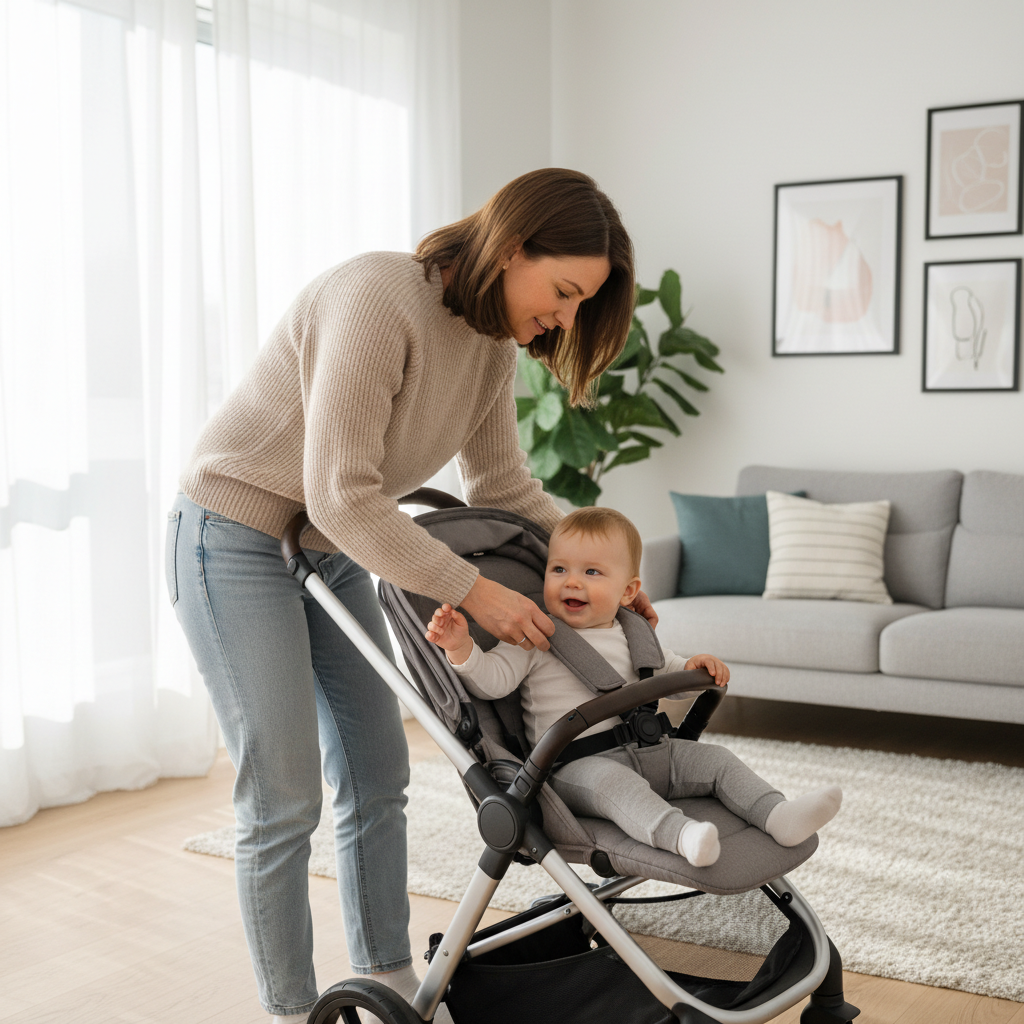
Set up the new toddler stroller in the living room. Let your child climb in, buckle up, and play with the harness clicks. Add a favorite snack or book. Five minutes of indoor "practice" lowers the novelty factor before the first real outing.
Resist the urge to debut the new stroller at a four-hour zoo trip. Start with the block around your house or your usual park loop. Familiar scenery anchors your toddler emotionally while the new ride feels strange.
Transition objects work. Clip the same lovey, muslin, or stroller toy from the old setup onto the new one. The sensory continuity tells your child's nervous system: "This is still my safe space."
Some toddlers will protest the first three outings, then suddenly accept the new stroller on day four. If resistance is strong, rotate back to the infant stroller for one or two outings, then retry. Forcing the transition tends to backfire. Patience pays.
Tie the switch to a positive milestone moment: their first birthday outing, the first park trip of summer, or a Father's Day picnic. Give your toddler a sense of ownership ("This is your big-kid stroller!"). For more travel-day strategies, browse our mamazing gate check stroller travel guide.

Every family transitions differently. Some want a one-and-done convertible. Others crave a featherweight stroller for travel days. Below are the four picks our mamazing editorial team trusts for 2026, each tied to a real transition use case.
For parents who want lifecycle value and a sustainability win, the convertible stroller from birth to toddler is the smartest single purchase. One frame, multiple seat configurations, four years of use. Less landfill waste, less storage hassle, and stronger resale value when you are done. Explore convertible strollers built for the transition in our 2026 collection.
If your summer calendar includes flights, beach days, or theme parks, prioritize a lightweight toddler stroller with a one-hand fold. Look for a frame weight under 15 lbs, a cabin-friendly fold, and a recline that supports mid-day naps. Bonus points for an extended canopy.
Welcoming a second baby? You have two routes. A double stroller works if both kids still need a full seat. A sit-and-stand stroller works beautifully once your older toddler walks well but tires on long outings. The sit-and-stand option also folds smaller. For modular family setups, see our mamazing guide on when kids stop using strollers.
The 2026 outdoor-parenting trend is real. If you hike, run trails, or live somewhere snowy, an all-terrain toddler stroller with air-filled tires and serious suspension is non-negotiable. Look for adjustable handlebars (back-friendly for taller parents) and a hand brake for hills.
Ready to find the right ride for your child's next chapter? See mamazing's top-rated transition-friendly strollers in our 2026 curated lineup.
Most parents switch between 6 and 9 months, once the baby has full head and neck control and can sit unassisted. If your baby exceeds the 25-pound bassinet limit sooner, switch earlier. Behavior matters too — if your baby fusses in the recline, your timing has likely arrived.
A toddler should not use an infant stroller once they exceed the manufacturer's weight limit (usually 25 lbs in bassinet mode) or outgrow the seat dimensions. Beyond that, posture and harness fit become unsafe. The seat geometry is built for a reclined newborn, not a curious upright toddler.
Most infant strollers cap at 25 pounds in bassinet mode and up to 35-50 pounds in seat or toddler-conversion mode. Always check the specific model's manual for accurate limits, since the cutoff varies by brand and configuration.
Most toddlers stop using a stroller between ages 3 and 5, depending on walking endurance and family lifestyle. For long travel days, theme parks, or city walks, many parents keep a lightweight stroller until age four.
Yes — for most families a convertible stroller offers the best lifecycle value, saving an average of $250-$400 versus buying two strollers. It is also a more sustainable choice in 2026, with one frame replacing two purchases.
Babies can typically face forward around 6 months, once they have stable head and neck control. Before that, the rear-facing or bassinet position is safest for newborns and supports their still-developing neck muscles.
Not always. A convertible stroller with a lay-flat bassinet mode or an infant car seat adapter can replace a dedicated newborn stroller and grow with your child. If your budget allows for only one stroller, a convertible model is the practical pick.
Pediatricians recommend limiting continuous stroller time to under 2 hours for newborns, with breaks for repositioning and floor play. Total daily use is fine as long as posture is correct, head support is in place, and your baby has plenty of supervised tummy time off the stroller.
Final Thoughts. Choosing between an infant stroller and a toddler stroller is not really a "which is better" question. It is a milestone-plus-behavior-plus-lifestyle question. When your baby's body, mood, and your daily routine all point the same direction, you have your answer. And for many families in 2026, a convertible stroller from birth to toddler quietly wins on cost, sustainability, and simplicity. Whichever path you choose, mamazing is here to help you transition with confidence — one milestone at a time.
Featured Products


Do You Need a Reclining Nursery Chair?
How to Clean a Baby Stroller: A Complete Guide to Keeping It Hygienic