
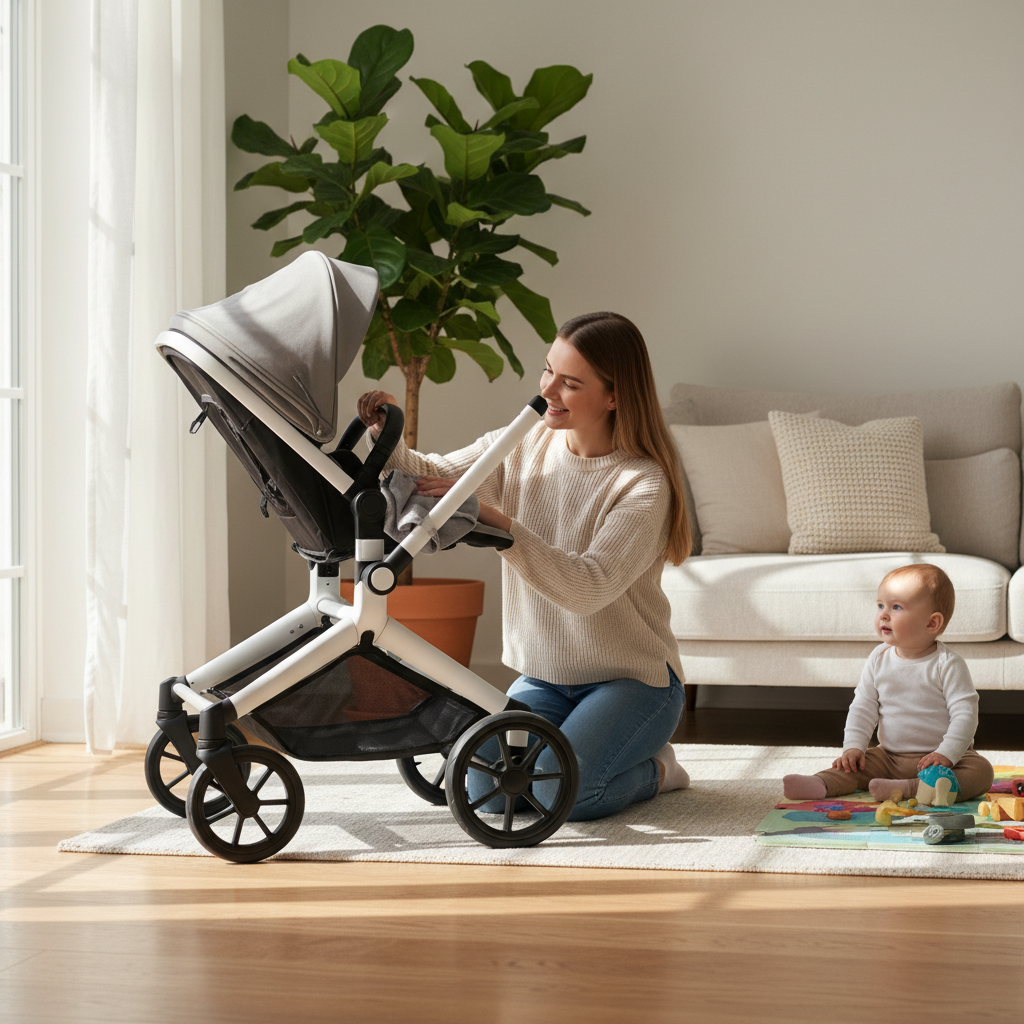
- by WengGracy
How to Clean a Baby Stroller: A Complete Guide to Keeping It Hygienic
- by WengGracy
Your baby stroller is one of the most-used pieces of gear you own — and one of the most overlooked when it comes to cleaning. Between park trips, drool, crushed crackers, leaky sippy cups, and the occasional diaper blowout, your stroller picks up a surprising amount of grime. In fact, public health research has long shown that frequently touched surfaces in everyday baby gear can harbor coliform bacteria, yeast, and mold, as documented in the NSF International germiest household items study.
This complete guide on how to clean a stroller walks you through every step — from baby-safe cleaning products to specific stroller cleaning tips for fabric seats, straps, wheels, and frames. You will also learn how to wash stroller covers, tackle stubborn stains, get rid of mold, and follow brand-specific care guidelines. At Mamazing, we design strollers with real parents in mind, so we want yours to stay just as fresh and safe as the day you unboxed it. Let's get started.
It's easy to assume "a little dirt won't hurt," but baby stroller hygiene goes deeper than aesthetics. From around three months of age, babies explore the world by constantly mouthing their hands, feet, and anything within reach, according to developmental milestone guidance from the American Academy of Pediatrics. That means anything resting on your stroller's harness, tray, or seat ends up in their mouth.
Most parents wipe the visible surfaces and call it a day. But the real problem zones are the spots you can't easily see:
The Centers for Disease Control and Prevention notes that respiratory viruses like RSV can survive for many hours on hard surfaces such as tables and crib rails. For infants, who have developing immune systems, regular cleaning is one of the simplest protective measures you can take. Cleaning isn't just about appearance — it's preventative care.
Before you start, gather supplies that are gentle enough for baby-contact surfaces. Skip anything you wouldn't be comfortable having your little one chew on — because eventually, they probably will. The U.S. Environmental Protection Agency's Safer Choice program helps you spot cleaners with ingredients that are safer for human health, which is exactly what you want around infants.

Here's your shopping list of baby stroller cleaning products to keep on hand:
Skip these harsh ingredients: chlorine bleach (damages fabric and can irritate skin), ammonia (toxic if inhaled), and any cleaner labeled "flammable" or "do not use around children." Even popular disinfectant wipes can leave a chemical residue on surfaces your baby touches. When in doubt, simpler is safer.
If you're shopping for a stroller that's easier to clean from the start, browsing the Mamazing best baby stroller can help you find models with removable, machine-washable fabrics built in.
Fabric is where most of the daily mess lands. Understanding how to clean stroller fabric properly extends your stroller's lifespan and protects your baby's skin from irritants. The right approach depends on fabric type and the manufacturer's care label, so always check that first.
Sometimes, yes — but not always. Most modern stroller seat covers and liners are removable and machine washable on a cold, gentle cycle. However, the metal frame, plastic parts, and harness straps should never go in the wash.
Look for the care label sewn into the seat cover. If it says "machine washable," follow these steps:
If the label says "spot clean only" or "hand wash," respect that. Machine washing the wrong fabric can shrink it, fade colors, or break down waterproof coatings.
For hand-wash-only fabric, fill a clean tub or large sink with cool water and a small amount of mild dish soap. Submerge the fabric, gently agitate, and let it soak for 15 to 20 minutes. Use a soft brush on stained spots, then rinse thoroughly under cool running water until the water runs clear. Squeeze out excess water (don't wring) and hang to air dry.
Mesh panels and canopies are usually attached to the frame and can't be removed easily. Mix a small bowl of warm soapy water and use a microfiber cloth to wipe gently. For mildew or musty smells, lightly mist with a 1:1 white vinegar and water solution, let sit for 10 minutes, then wipe clean. Open the canopy fully and let it dry in sunlight whenever possible — UV light kills surface bacteria naturally.
For lightweight travel models like the Mamazing Ultra Air Compact Stroller for Travel, the breathable fabrics are designed to dry quickly, which is a huge plus when you're cleaning between trips.
Harness straps are arguably the dirtiest part of your stroller — they catch drool, spit-up, and food fingerprints constantly. They're also the most safety-critical component, which is why cleaning them requires a specific approach.
Important rule: never machine wash stroller straps. Major manufacturers and child-restraint safety authorities like the National Highway Traffic Safety Administration (NHTSA) warn that submerging or machine washing harness webbing can degrade the fibers, compromising their ability to restrain your child in a sudden stop. The straps may look fine but lose internal strength.
Here's the safe technique for how to clean stroller straps:
For the plastic buckle, use an old toothbrush dipped in soapy water to scrub crumbs out of crevices. Rinse with a damp cloth. If the buckle is sticky or jammed with debris, you can carefully run it under lukewarm water — most buckles are designed to handle this — then shake out water and air dry.
When to replace straps: Look for fraying, severe discoloration, stiffening, or any sign of damage. Most manufacturers recommend replacing harnesses if they show wear or after any incident. Contact the manufacturer for replacement webbing — never substitute homemade straps.
Wheels are the unsung hero of stroller cleaning. They roll through sidewalk gum, dog parks, sand, mud, and salty winter slush. Here's how to deep clean a stroller from the ground up.

Many modern strollers have wheels that pop off with a simple release button. If yours do:
For fixed wheels, lay the stroller on its side on an old towel. Wipe each wheel with a damp cloth soaked in soapy water, then scrub treads with a stiff brush. A pencil or toothpick helps dislodge pebbles and hair tangled around the axle.
The metal or aluminum frame typically needs only a wipe-down with a damp microfiber cloth. For tougher grime, mix a few drops of mild dish soap with warm water. Avoid soaking joints, hinges, and folding mechanisms — water inside these can cause rust and stiffness.
Use a cotton swab or old toothbrush to clean the crevices around folding latches and adjustable handle joints. Once dry, you can apply a small amount of silicone-based lubricant to moving parts if they squeak — but never use WD-40 around baby-contact surfaces, and check your manual first.
If you regularly head off-road, an all-terrain model like the Mamazing BabyVista All-Terrain Stroller Wagon features sturdy wheels designed to be hosed down — much easier than smaller wheel designs.
Finding mold on your baby's stroller is alarming, especially if you're a new parent. Take a breath — in most cases, mold on a stroller can be safely removed, and the gear is salvageable. The Mayo Clinic notes that while mold spores are common indoors and out, prolonged exposure can trigger allergies and respiratory issues in sensitive individuals, so prompt removal matters.
If mold has penetrated foam padding deeply or covers more than a small surface area, consider whether the stroller is worth saving — or contact the manufacturer about replacement parts. Surface mold on fabric or frame? You can almost always fix it.
White vinegar is one of the safest, most effective household mold removers for baby gear because it tackles surface mold without leaving toxic residue.
For stubborn cases, sprinkle baking soda over the wet vinegar-treated area, let it fizz for a few minutes, then scrub and rinse. Baking soda deodorizes and adds extra cleaning power.
Travel strollers like the Mamazing Ultra Air X travel stroller are especially prone to trapped moisture when folded into compact form, so always air them out fully before storing.
Your cleaning schedule depends on usage. Daily city walkers, daycare commuters, and outdoor jogging strollers need more frequent care than the lightweight travel stroller that comes out twice a year. Here's a simple framework:
| Cleaning Level | Frequency | What to Do |
|---|---|---|
| Quick wipe-down | After each use | Wipe seat, harness, tray with damp cloth |
| Spot clean | Weekly | Treat visible stains, clean cup holders and snack tray |
| Full fabric clean | Monthly | Remove and wash seat cover, spot clean canopy |
| Deep clean | Every 3–6 months | Full disassembly: wheels, frame, all fabric |
| Before storage | Seasonally | Full deep clean plus mold prevention steps |
If you use a bassinet attachment with a newborn, treat it like bedding — wash the bassinet sheet weekly and deep clean the bassinet shell monthly. The Mamazing Air Lux Bassinet Stroller has a removable bassinet liner that makes this easy, so newborn-stage cleaning doesn't have to be a multi-hour project.
While the general principles of stroller cleaning apply across brands, each manufacturer has specific recommendations. Always start with your owner's manual or the brand's website for model-specific guidance. Here's a quick reference for popular brands:
If your stroller's care label is missing or unreadable, contact the manufacturer with your model number. They'll provide official cleaning guidance — and using the wrong method can void your warranty.
Most stroller seat covers and liners are machine washable on a cold, gentle cycle in a mesh laundry bag. However, harness straps, metal frames, and wheels should never go in the washing machine. Always check the care label on your specific model first.
Mix equal parts white vinegar and water. Apply to moldy areas, let sit 10 to 15 minutes, then scrub with a soft brush. Rinse thoroughly and dry completely in sunlight or with a fan before reassembling. Never store a damp stroller.
Wipe harness straps with a damp cloth and a small amount of mild dish soap. Do not soak or machine wash the straps — this weakens the webbing. Rinse with a clean damp cloth to remove all soap residue, then air dry fully before use.
Use mild dish soap diluted in warm water, or a baby-safe multi-surface cleaner. Avoid bleach, ammonia, and solvent-based cleaners — these damage fabric and leave residue that can irritate baby skin. White vinegar is safe and effective for mold treatment.
Quick wipe-down after each use, spot clean weekly, full fabric wash monthly, and deep clean every 3 to 6 months. Always clean thoroughly before storing seasonally to prevent mold and mildew growth.
For the frame and plastic parts, disinfectant wipes can be used occasionally, then wiped with a damp cloth to remove residue. Avoid them on fabric that contacts baby skin, as chemicals may cause irritation. A diluted baby-safe disinfectant is better for fabric.
Remove the seat cover immediately. Rinse solid material with cold water — never hot, as heat sets stains. Apply stain remover or diluted dish soap, let soak, then machine wash if the label allows. Clean the frame and harness separately with damp cloths.
Air dry all fabric components completely before reattaching. Avoid the dryer unless the care label permits it — heat can shrink fabric and warp plastic fittings. Open the stroller fully for maximum airflow; direct sunlight helps disinfect and deodorize naturally.
Knowing how to clean a baby stroller properly isn't just about appearances — it's about creating a safer, healthier ride for your little one. With the right routine, your stroller stays fresh, fabric lasts longer, and you avoid the panic of finding mold three months after a rainy day.
Stick with a simple cadence: wipe after each use, spot clean weekly, deep clean every few months, and always dry fully before storing. Use baby-safe products, treat the straps gently, give the wheels their due, and never ignore the warning signs of mildew.
At Mamazing, we design strollers — from compact travel models to all-terrain wagons — that make daily cleaning easy and weekly upkeep stress-free. Explore the Mamazing best baby stroller to find a stroller built to keep up with real family life — and the messes that come with it. Happy strolling, and even happier cleaning.
Featured Products


Infant Stroller vs Toddler Stroller: When and How to Transition in 2026
The Complete Nursery Glider Checklist for First-Time Parents