
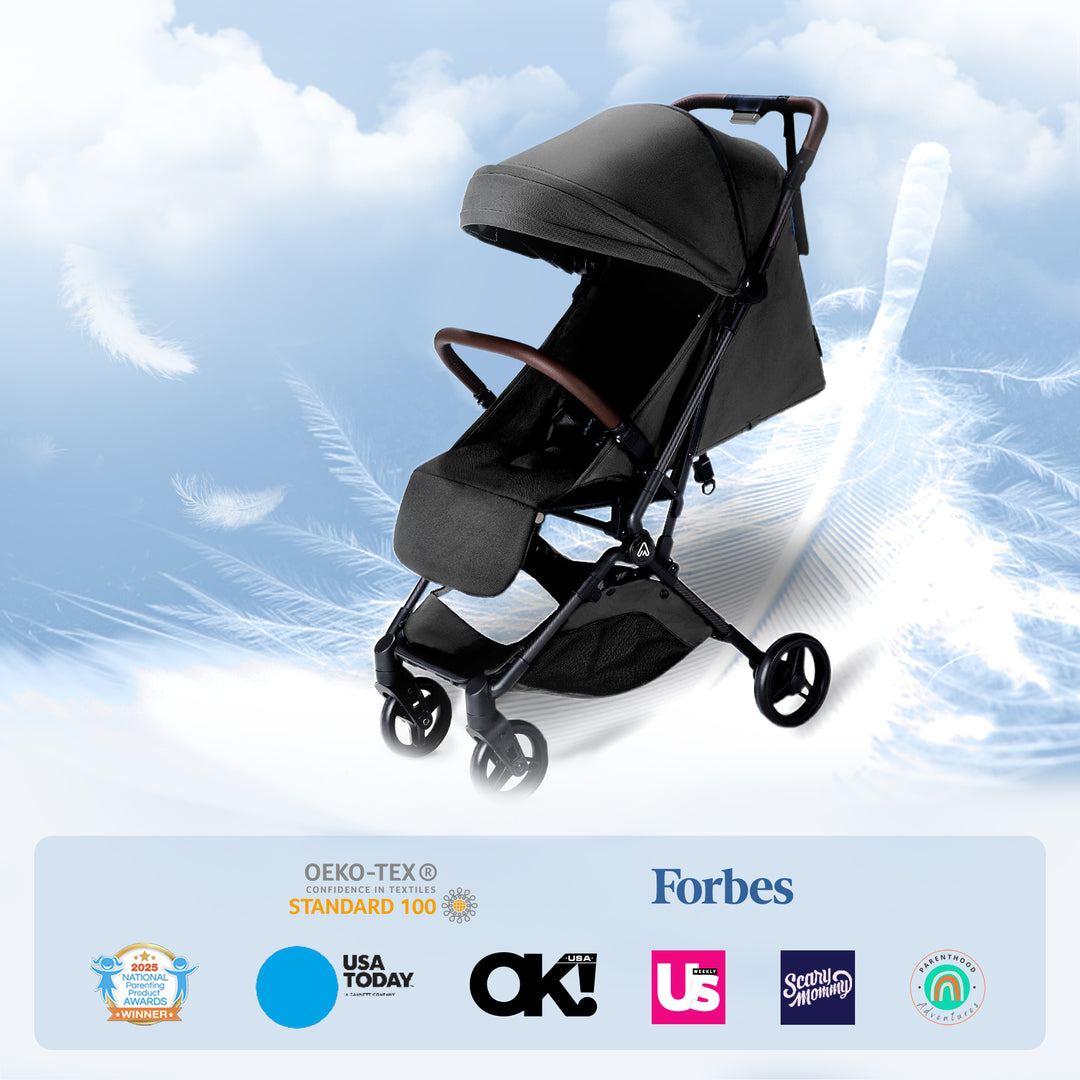
- by FangRussell
What Is a Good Travel Stroller? 9 Features That Matter Before You Buy
- by FangRussell
If you are wondering what makes a travel stroller truly good, the short answer is this: it should be light enough to carry without dread, compact enough to store without drama, easy enough to fold while you are juggling a child and a bag, and comfortable enough that your toddler still wants to stay in it by the end of the day. A good travel stroller is not simply the smallest stroller on the market. It is the one that keeps your trip moving.
That distinction matters because a stroller can look great on a product page and still frustrate you in real life. Some models fold tiny but feel flimsy on bumpy sidewalks. Some are comfortable but too heavy to lift into a taxi trunk. Others promise airplane convenience even though airline stroller rules still vary by carrier, so there is no single overhead-bin guarantee you can rely on for every trip.
In this guide, you will find a practical way to judge whether a travel stroller is actually worth buying, how it differs from a regular stroller, and why the Mamazing Ultra Air Compact Stroller fits the needs of many families who want a lightweight, toddler-friendly option for airports, city breaks, and everyday errands that feel a lot like travel.
A good travel stroller makes transitions easier. That means you can carry it up a few stairs, fold it quickly before a security line bunches up behind you, steer it one-handed through a crowded terminal, and stash it in a small trunk or hotel room without reorganizing your whole day.
In practical terms, the best travel strollers usually share the same core traits: low carry weight, a compact fold, stable steering, toddler-ready comfort, and enough durability that you do not feel like the frame will complain every time it meets a curb. If even one of those pieces is missing, the stroller tends to feel better in theory than in use.
That is also why the question is not just, “Is this stroller lightweight?” It is, “Does this stroller stay convenient after the first ten minutes of the trip?” A stroller you hate lifting, cleaning, steering, or storing will not feel like a good travel stroller for long, no matter how nice the marketing copy sounds.
If you want a quick filter, start here. These are the features that usually matter more than flashy accessories or inflated “luxury” positioning.

A travel stroller should feel manageable when your child is not in it. That sounds obvious, but it is often the first thing parents underestimate. The problem is not a smooth two-minute push through a store. The problem is carrying the stroller up transit stairs, lifting it into a rideshare, or dragging it through a hotel lobby while also holding a diaper bag and your child.
For many families, the sweet spot is a stroller that stays clearly lighter than a full-size everyday model. The lighter it is, the more likely you are to fold and carry it when needed instead of fighting through every obstacle. Weight alone should not win the decision, but it absolutely sets the tone for the whole experience.
A good travel stroller folds quickly and locks into a shape that does not feel awkward to carry. You do not need a gimmick. You need a folding motion you can remember while distracted and tired. One-hand folding is especially useful if you often travel solo with your child, but even a two-step fold can work well if it is consistent and compact.
The important detail is what happens after the fold. Does the stroller stay closed? Can you pick it up without a wheel swinging into your leg? Does it stand on its own or at least stay tidy enough to lean against a wall? A compact folded shape matters just as much as the speed of the fold itself.
A stroller can be light and still feel annoying if the front wheels chatter, drag, or need constant correction. Travel usually means airports, sidewalks, cafes, museum lines, elevators, and hotel corridors. In all of those places, stable steering matters more than big-wheel bragging rights.
You want a stroller that turns cleanly, tracks straight enough on flat surfaces, and does not require both hands just to avoid clipping table legs. The best models feel predictable. That predictability lowers stress fast, especially when your child is getting tired and you are trying to keep moving.
A good travel stroller should be honest about who it serves. Many travel strollers are best for older babies and toddlers, not newborns. That is not a flaw. It is simply the trade-off that often makes them lighter and easier to fold.
What matters here is whether the seat feels realistic for the age and length of use you have in mind. Look for enough support, enough recline for short naps or quiet breaks, decent leg room, and fabric that does not feel too hot in warm weather. If your child is already in the stage of wanting to look around more than lie flat, a well-designed travel stroller can be more useful than a bulkier newborn-focused setup.
A stroller should never earn “good” status just because it is compact. The basics still matter: a secure harness, reliable brakes, a frame that locks properly, and day-to-day stability. The U.S. Consumer Product Safety Commission recommends using the restraint system every time, locking the stroller open before putting your child in it, setting the brakes when you stop, and never leaving a child unattended.
That advice sounds simple, but it is useful because it reframes what “good” means. A good travel stroller is not just easy to carry. It also makes the safe behavior easy to repeat. If the brake is awkward, the harness is irritating, or the fold lock feels questionable, that friction adds up over time.
Travel stroller shopping gets much easier when you think beyond flights. Plenty of families buy one because they are tired of dedicating half the trunk to a stroller or tripping over a bulky folded frame in a small apartment. If your storage reality is a compact car, a narrow entryway, or a hotel room with luggage everywhere, folded footprint matters every single week.
This is one reason the query “what makes a stroller suitable for travel” overlaps with everyday convenience. A travel stroller often wins not because you are always flying, but because your daily life also rewards compact, low-friction gear.
Good travel strollers are built for messy days. Snacks get crushed. Cups leak. Sunscreen gets everywhere. Airport floors are not gentle. A stroller that is easy to wipe down and reasonably breathable can save you a surprising amount of frustration over a long trip.
You do not need an oversized feature list here. You need enough canopy coverage, enough airflow for warm-weather walks, and fabrics that are not stressful to maintain. If a stroller looks pristine only in studio photos, it may not stay lovable for long in real family use.
Parents do want storage, but a travel stroller does not need a giant basket to be useful. What you really need is enough room for the items that keep the trip moving: wipes, a snack pouch, a light layer, and a few essentials. Once a stroller is overloaded with bags, it often becomes harder to steer and less stable to park.
That is one reason a compact stroller can feel better than a supposedly “all-in-one” option. It forces you to pack lighter, which often leads to a smoother day. Convenience is not always about carrying more. Sometimes it is about carrying less without regret.
If you are buying a stroller mainly for flying, stay skeptical of blanket promises. Some compact strollers can work well for airports and some may fit in overhead bins on certain aircraft, but airline rules change and aircraft layouts vary. HealthyChildren advises parents to check directly with the airline before flying with gear like strollers, and their Flying with Baby guidance is a good reminder that the trip itself matters as much as the packing list.
Think of “airplane friendly” as a probability, not a promise. A good travel stroller makes the airport easier even if you still gate-check it. That is a healthier standard than shopping around one fragile claim.
The biggest difference is not just size. It is the kind of convenience each stroller is built for. A regular stroller usually gives you more cushioning, more storage, and more flexibility for newborn life. A travel stroller usually gives you less bulk, faster transitions, and more willingness to take it anywhere.
| What you care about | Travel stroller | Regular stroller |
|---|---|---|
| Carrying and folding | Usually lighter and faster to fold | Usually heavier and bulkier |
| Storage footprint | Better for small trunks, apartments, hotels, and transit | Better if space is not a daily issue |
| Newborn flexibility | Often limited | Usually more accommodating |
| Long walks and rough routes | Best on smoother, everyday urban surfaces | Often better for longer or more demanding outings |
| Best use case | Trips, errands, airports, restaurants, compact living | Newborn stage, long walks, larger storage-friendly setups |
If you mainly need a stroller that is easy to move, easy to store, and easy to bring along, the travel stroller category usually makes more sense. If you need maximum comfort for a newborn, more suspension, or a full daily system, a regular stroller may still be the better fit. If you want a deeper breakdown of that decision, see Mamazing's guide to travel stroller vs. everyday stroller.
The easiest way to choose a good travel stroller is to stop imagining every possible future trip at once. Instead, buy for the 80 percent case.

If you mostly travel by air, prioritize carry weight, fold speed, and compact storage. If you mostly use rideshares, trains, or small cars, prioritize trunk fit and one-step folding. If your biggest pain point is everyday city life with a toddler, prioritize steering, comfort, and how easy the stroller feels to park and carry into small spaces.
Your child's stage matters too. If you need a stroller for a newborn or need a car-seat-compatible system, a lightweight travel stroller may feel too limited. But if your child is older, curious, and mostly wants a comfortable place to sit between bursts of walking, a lighter stroller often feels far more practical.
You should also be honest about your home. A stroller that lives in a walk-up apartment, a compact hatchback, or the corner of a hotel room should be judged by a different standard than one that mostly moves from a suburban garage to a wide sidewalk. That is why many parents searching for “best stroller for travel” are really searching for “best stroller for my daily transitions.”
If airline convenience is central to your decision, check your carrier's policy before you buy. As one example, American Airlines explains that only a small collapsible stroller under its stated weight threshold may be allowed in the cabin if space permits. That is exactly why “compact enough for some flights” is a better expectation than “guaranteed overhead-bin fit.” For more airline-specific thinking, Mamazing's best travel stroller for airplane guide is the more targeted follow-up.
If your version of a good travel stroller is one that keeps things light, compact, and toddler-ready, the Mamazing Ultra Air makes a strong case. The core reason is simple: its spec sheet lines up with the real-life filters that matter most for travel. It weighs 11.6 lbs, folds with one hand, supports children from 6 to 36 months, and is rated up to 50 lbs according to Mamazing's own product information.
That profile makes it especially appealing if you are past the newborn stage and want something you can actually carry without resentment. It is not trying to be a giant, do-everything stroller. It is trying to remove friction. That focus is what makes it feel more believable as a travel option.
The stroller also fits the intent behind several adjacent searches, not just the exact title query. If you are really looking for a lightweight stroller that works for travel, or trying to avoid dragging a bulky stroller through airports and city breaks, the Ultra Air sits in the right lane. It is also a useful next step if you want a broader read on a good lightweight stroller for travel before you commit.
Just as important, the fit comes from its boundaries as much as its strengths. The Ultra Air makes the most sense for families who value portability, quick folds, and toddler-stage practicality. If you need a stroller mainly for newborn use, rough terrain, or full travel-system flexibility, you should treat that as a sign to look elsewhere rather than trying to force a travel stroller into a role it was not designed to fill.
The most common mistake is buying for an imagined perfect trip instead of your real routine. Parents often overvalue edge-case features and undervalue the daily annoyances that become trip-ending annoyances fast.
If you avoid those mistakes, you will usually end up with a stroller that feels better after purchase, not just before it.
A good travel stroller is light enough to carry, compact enough to store, easy to fold in a hurry, comfortable for your child, and stable enough to handle real travel days without creating extra stress.
You should look for manageable carry weight, a compact fold, reliable steering, a secure harness, dependable brakes, toddler-friendly comfort, and realistic fit for your car, home, and usual travel style.
A travel stroller can replace an everyday stroller for many families with older babies or toddlers, but it is not always the best choice if you need newborn flexibility, a larger basket, or more comfort for long daily walks.
Some travel strollers may fit in overhead bins on some flights, but airline rules and aircraft space vary, so you should always check your carrier before you assume cabin storage will be allowed.
Travel strollers usually make the most sense once your baby has outgrown the need for a newborn-focused setup and you want a lighter, easier option for older baby or toddler travel.
You should skip a travel stroller if your top priorities are newborn compatibility, long all-terrain walks, maximum storage, or a more cushioned all-day ride than most lightweight travel models are designed to deliver.
A good travel stroller is the one that reduces friction everywhere you actually go. It should feel light in your hand, sensible in your trunk, easy in tight spaces, and honest about what it can and cannot do. That is a better buying standard than chasing the smallest fold or the loudest marketing claim.
If your family mainly needs a stroller for flights, short trips, city errands, and compact everyday living, the Mamazing Ultra Air Compact Stroller is a strong option because it aligns with the features that matter most: low weight, quick folding, toddler-stage comfort, and practical portability. And if that is the balance you have been looking for, it is exactly the kind of stroller that can make travel feel simpler instead of heavier.
Featured Products


Lightweight Stroller for Travel: What Matters Most and Which Mamazing Model Fits Best
Best Toddler Travel Stroller for Airplane Trips: What to Look For Before You Fly