
- by FangRussell
Best Toddler Travel Stroller for Airplane Trips: What to Look For Before You Fly
- by FangRussell
If you are flying with a child who is too big for an infant stroller but still too little to handle a full airport day on foot, a toddler travel stroller for airplane trips is usually worth bringing. The right one makes security lines easier, folds fast at the gate, turns more smoothly in crowded terminals, and gives your toddler a place to rest before they melt down halfway to boarding.
That is why parents searching for the best toddler travel stroller for airplane trips are not really asking for a generic stroller roundup. They want something light enough to carry, compact enough to manage in tight spaces, sturdy enough for real travel, and comfortable enough that their child will actually stay in it when the day gets long.
Quick Answer
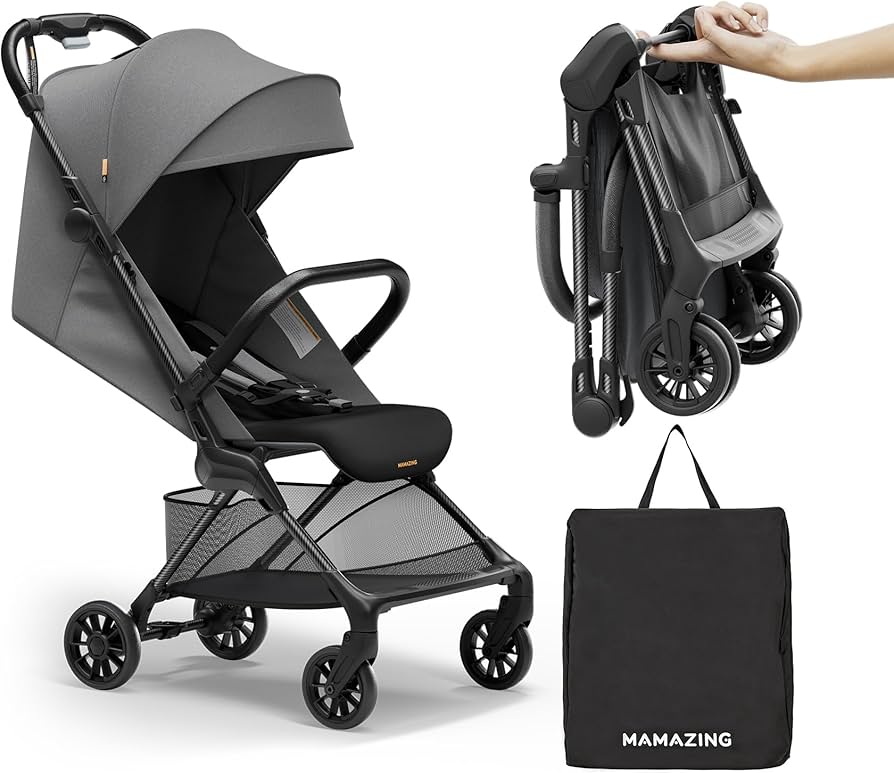
A good toddler stroller for airplane travel should do four things well: stay easy to carry, fold quickly, take up less space in airport transitions, and still feel comfortable for a tired toddler. For most Mamazing families, Ultra Air is the strongest all-around pick because it balances low carry weight, a fast fold, and real travel comfort without drifting into bulky full-size stroller territory.
The rest of this guide walks through what actually matters, where parents often overbuy or underbuy, and when a travel stroller really does make airplane days easier.
A good toddler travel stroller for airplane trips is not just a smaller stroller. It is a stroller that handles the awkward parts of travel better than a regular everyday stroller does.

Think about the actual pressure points of a flight day. You may need to collapse the stroller at security, push it through a long terminal, stop suddenly in a boarding line, lift it near the jet bridge, and then repeat the whole process again after landing. The best stroller for flying with a toddler is the one that keeps those transitions from feeling harder than they need to be.
That usually means looking for:
Parents often focus too hard on one feature, usually folded size, and ignore the rest of the experience. But a stroller that looks compact on paper can still feel frustrating if it is awkward to carry, takes too long to fold, or becomes uncomfortable after 20 minutes of real use.
What matters most is the combination. A travel stroller should help you in the five hardest minutes of the day, not only in the easy moments when your toddler is happily seated and the terminal is quiet. If a stroller helps only in ideal conditions, it is not really travel-friendly.
If you want a broader category overview before narrowing down to toddler-specific needs, Mamazing's guide to the best travel stroller for airplane use is a helpful companion read.
Airplane travel changes the stroller equation because the hardest part is rarely the destination. It is the chain of little transitions that happen before you ever sit down on the plane.
At the airport, you need a stroller that feels nimble when space is tight and crowds are unpredictable. At security, you need one that folds without drama. At the gate, you need one that does not punish you if an agent suddenly asks you to collapse it. After landing, you want it ready again before your toddler decides they are done walking.
This is why a travel stroller for toddler airplane trips is a different decision from buying an everyday stroller. Everyday convenience can mean more storage, a larger seat, or a heavier frame. Flight convenience usually means speed, portability, and less bulk in the moments when your hands are already full.
That does not mean every family needs the tiniest stroller possible. It means you should buy for the hardest moments of flying, not for the easiest ones. A stroller that feels easy when your toddler is seated in it is only half the story. It also needs to feel manageable when your child is out, you are carrying a bag, and the whole airport is moving faster than you want it to.
Another difference is rhythm. An everyday stroller can be judged by one long neighborhood outing. A flight-day stroller gets judged by repeated handoffs: push, stop, fold, lift, unfold, repack, and keep moving. That repeated interruption is exactly why weight, fold speed, and compactness matter so much more in airports than they do on ordinary family walks.
For families who split time between flights and daily errands, Mamazing's travel stroller vs everyday stroller guide is a useful reality check before you choose.
If your main use case is flying, a toddler travel stroller usually makes more sense than dragging a full-size stroller through the airport. The reason is not that full-size strollers are always bad. It is that they ask more from you at exactly the moments when you have the least patience to give.
| Feature | Toddler travel stroller | Full-size stroller |
|---|---|---|
| Carry feel | Usually lighter and easier to lift during airport transitions. | Often fine while rolling, but much harder once you have to carry it. |
| Fold speed | Built for quick collapse and fast handoffs. | More likely to feel bulky or slow when the line starts moving. |
| Airport maneuvering | Better for tight gates, elevators, shuttles, and busy terminals. | Can feel oversized in narrow airport spaces. |
| Comfort trade-off | Best when your child is in the toddler stage and you want practical travel comfort. | Best when you need the most features and do not mind more stroller bulk. |
| Best fit | Families who fly, take city trips, or need quick airport transitions. | Families who prioritize full-size comfort over travel convenience. |
The point is not that a full-size stroller never works. It is that if you are specifically searching for a toddler stroller for airplane travel, you are probably already feeling the downside of extra weight and extra bulk. A well-chosen travel stroller removes some of that friction.
One helpful rule of thumb: if you dread the carry moments more than the seated moments, lean travel stroller. If you mostly care about feature-rich comfort and only fly occasionally, a full-size stroller may still make sense.
It also helps to think about recovery time. A bigger stroller may feel fine at home where you can take breaks and store it easily. On a trip, every extra pound and every extra second of folding gets repeated more often than you expect. That repetition is what makes a travel stroller feel worth the switch for many parents of toddlers.
For most families in this search category, the best answer is not a stroller that wins one spec and loses the rest. It is a stroller that stays easy to live with all day. That is why Mamazing Ultra Air fits this topic so well.

Ultra Air works because it lines up with the real pain points parents mention again and again:
Just as important, Ultra Air avoids a common travel-stroller mistake: becoming so aggressively minimal that it stops feeling good to use once you actually arrive. Parents traveling with older babies and toddlers still need comfort, stability, and a stroller that feels trustworthy on long walking days.
Another advantage is that it does not force parents into a false choice between "airport stroller" and "real stroller." It still feels useful after the flight ends, whether you are walking city blocks, moving through a museum, or buying yourself an extra hour of calm on a sightseeing day.
That balance matters because most families do not want a stroller that solves only one slice of the trip. They want a stroller that helps in the terminal, at the destination, and on the walk back to the hotel when their toddler is suddenly done for the day. Ultra Air fits that broader travel rhythm better than a more cumbersome stroller built mainly for everyday bulk and storage.
If your decision is mainly about the smallest folded package possible, the better comparison is not a random competitor list. It is the choice between Ultra Air and the even more compact overhead-bin-focused stroller path. But for most families who want the smoother overall airplane day, Ultra Air is the more balanced pick.
A travel stroller is worth it for a toddler when your child can walk, but not enough to make a real airport day easy. That describes more families than they expect.
Toddlers are unpredictable travelers. They may walk happily in the first terminal and then refuse ten minutes later. They may nap in the stroller, ask to be carried through boarding, and then need the seat again as soon as you land. That stop-start rhythm is exactly why an airport stroller for toddler travel can make such a difference.
In real life, a stroller is usually worth it when:
It may feel less essential if your child is older, you are flying direct, and the trip is very short. But for most families, the real question is not whether the stroller will be used every minute. It is whether it will be useful at the moments when you most need help. On airplane trips with toddlers, the answer is often yes.
There is also a comfort-for-parent reason that matters. A toddler travel stroller is not only for your child; it protects your own energy. Saving your back, your arms, and your patience is part of what makes the purchase worthwhile, especially on trips where you still have a whole day ahead after the flight.
Parents also underestimate how much better the destination can feel when they arrive with a stroller that still works for museums, long sidewalks, hotel corridors, and evening walks. A good toddler travel stroller is not only an airport tool. It is the thing that helps you keep the rest of the trip moving once the airport part is over.
If you are still deciding how much stroller you really need, Mamazing's guide to a lightweight stroller for travel is a helpful next step.
A good stroller choice helps most when you also have a realistic airport routine. Before you fly, run through this checklist.

If you travel often enough that the whole airport flow matters as much as the stroller itself, Mamazing's guide to navigating airports with a foldable stroller is worth reading too.
The goal is not perfection. It is reducing the number of things that can unravel at once. A toddler travel stroller earns its place when it gives you one less problem to solve in a setting that already asks a lot from parents.
The best toddler travel stroller for airplane trips is one that stays easy to carry, folds quickly at the gate, feels compact in crowded airport spaces, and still keeps your child comfortable once you land. For most Mamazing families, Ultra Air is the strongest fit when you want a balanced all-around travel stroller rather than the bulkiest full-size option or the tiniest fold at any cost.
Sometimes, but never as a guarantee. A compact stroller may fit on some flights, but aircraft type, boarding order, crew decisions, and available cabin space all matter. It is smarter to choose a stroller that gives you a reasonable overhead-bin chance and still feels easy to gate-check if the cabin plan changes.
Usually, yes. A two-year-old can walk in short bursts, but airports, connections, long queues, and sightseeing days can quickly become too much. A good toddler travel stroller saves energy for the moments your child really needs it and keeps the whole day from turning into a carry-your-toddler marathon.
A full-size stroller can still be the right choice for some families, but it is often harder to fold, carry, and manage in tight airport spaces. If your main challenge is flying, a toddler travel stroller usually feels easier because it is built for faster transitions and less bulk.
Check your airline rules before you leave, remove loose items before screening, and practice folding the stroller one-handed or one-motion at home. TSA reminds families that children come out of the stroller for screening, so the smoother your fold-and-carry routine is, the easier the airport day feels.
No. Ultra Air is designed for toddlers rather than newborn use, so it is a better fit once your child is in the toddler stage and you want a lightweight stroller for flights, city walking, and travel days.
The best toddler travel stroller for airplane trips is the one that solves airport friction without making the rest of the trip harder. That usually means choosing a stroller that is light enough to carry, compact enough to handle crowded transitions, fast enough to fold under pressure, and comfortable enough that your toddler still wants the ride.
For most Mamazing readers, Ultra Air is the right starting point because it balances those needs better than a bulky full-size stroller and better than an ultra-minimal travel option that gives up too much comfort. If you want a broader comparison set before you decide, Mamazing's article on the best travel stroller for airplane use is the most natural next read.
The goal is not to win a stroller spec sheet. It is to make your airport day calmer. When you shop with that in mind, you usually end up with the better stroller and the better trip.
Featured Products


What Is a Good Travel Stroller? 9 Features That Matter Before You Buy
Best Nursery Rocking Chairs and Gliders: How to Choose a Glider, Rocker, or Recliner