
- by Mamazing Team
Best Travel Stroller for Airplane Overhead Bin: What Actually Fits
- by Mamazing Team
If you want the best travel stroller for airplane overhead bin use, the real question is not just whether a stroller can fold small enough on paper. The real question is whether it still feels easy to live with when boarding gets rushed, overhead space disappears, or you end up gate-checking at the last minute.
That is why the best stroller for flying is rarely the one with the boldest marketing claim. It is the stroller that gives you a realistic shot at cabin storage, stays easy to carry once your child is out of the seat, and does not turn your airport transitions into a wrestling match.
Quick Answer
A stroller can fit in an airplane overhead bin, but it is never guaranteed. For most families, the best travel stroller for airplane overhead bins is the one that balances compact folded size, low carry weight, a quick fold, and a calm gate-check backup plan. If you are choosing within Mamazing, Ultra Air is the better default for most trips, while Ultra Air X makes more sense if your first priority is the smallest folded package possible.
Yes, sometimes. No, not as a promise. That is the most useful starting point for any overhead-bin stroller decision.
A stroller may be compact enough to fit overhead on one flight and still get gate-checked on another. Aircraft type, how full the cabin is, your boarding group, and crew decisions all affect what actually happens once you reach the gate. That is why it is smarter to think in terms of overhead-bin friendly instead of guaranteed overhead-bin fit.
Official airline guidance supports that cautious mindset. Delta's carry-on baggage page publishes a standard cabin-bag size limit of 22 x 14 x 9 inches and also notes that gate or flight personnel may further limit what stays in the cabin when storage is tight. That is exactly how families should think about strollers too: folded size matters, but cabin space reality still wins.
If you only remember one line from this guide, make it this: the best stroller for overhead-bin travel is the one that still feels like a good choice when the overhead-bin plan fails.
The best travel stroller for airplane overhead bins is not just the lightest stroller or the smallest folded stroller. It is the one that clears the first filter on size, then keeps the rest of the airport routine easy.
| What to check | Why it matters | What usually goes wrong |
|---|---|---|
| Folded size | It tells you whether overhead-bin storage is even realistic. | A stroller is labeled compact but still feels bulky once it is actually folded. |
| Carry weight | You feel it at security, on the jet bridge, and while boarding with a bag and a child. | The stroller feels fine while rolling, then awkward the second you have to carry it. |
| Fold speed | Fast folds reduce stress when an agent suddenly tells you to collapse it. | A good-looking stroller becomes stressful because the fold is awkward in public. |
| Gate-check backup | No overhead-bin plan is perfect, so the backup still has to feel manageable. | Once gate check enters the picture, the stroller suddenly feels like too much gear. |
That is the missing context in a lot of stroller roundups. Parents are not only asking whether a stroller technically fits. They are asking whether it keeps the whole travel day smoother from security to boarding to landing.
Folded size matters first because it sets the ceiling. If a stroller still looks long, wide, or awkward when folded, there is no point pretending it is a great overhead-bin candidate. That part is simple.
But it is only the first filter. A stroller can pass the size test and still feel annoying if the fold takes too long, the carry handle is awkward, or the folded shape is compact in theory but uncomfortable in real airport movement.
This is where many families misjudge what they need. The stroller may feel easy while your child is seated, but your opinion changes quickly when you have to grab it one-handed near security, lift it on a jet bridge, or carry it with a backpack already on your shoulder.
If you fly often, a lighter stroller does not just help with overhead-bin hopes. It lowers the friction in every small handoff moment that makes airport travel feel chaotic.
Some families focus so hard on overhead-bin success that they forget what happens if an airline says no. That is a mistake. The best stroller for airplane overhead bins should still feel easy to fold, carry, and hand over for gate check without blowing up the rest of your boarding routine.
If overhead storage works, that is a win. If it does not, the stroller should still feel like the right purchase.
The shortest honest answer is this: the closer your folded stroller is to a standard cabin-bag footprint, the better your odds, but there is no universal stroller-safe overhead size.
Delta's published carry-on guideline of 22 x 14 x 9 inches is helpful as a screening benchmark, not as a stroller guarantee. A stroller is shaped differently from a suitcase, overhead bins vary across aircraft, and smaller regional planes usually leave you less room for flexibility. That means a stroller can look promising against the numbers and still lose to a smaller aircraft or a full flight.
For parents, the most practical approach is to use size in layers:
That last question matters because the wrong stroller can make you over-optimize for one lucky cabin scenario and under-optimize for the real travel day you are much more likely to have.
It also helps to look at your trip style honestly. If you usually fly direct, board early, and avoid very small aircraft, a compact stroller has a better chance of staying with you in the cabin. If you often take connections, board late, or fly regional routes, your best decision may be the stroller that handles gate check gracefully rather than the stroller that wins the tightest folded-size contest.
In other words, do not compare strollers in a vacuum. Compare them against the kind of flying you actually do. A family that mostly flies short direct routes can justify leaning harder into overhead-bin compactness. A family that flies crowded holiday routes with multiple handoffs may be happier with a stroller that is calm, quick, and easy to carry even when the airline changes the plan.
If you want a broader starting point beyond this article, Mamazing's guide to the best travel stroller for airplane use is a useful companion read before you narrow down your final pick.
For most families, start with Ultra Air. If your first priority is the smallest folded package, look harder at Ultra Air X.
That split is important because these two products solve slightly different travel problems. Ultra Air is the stronger default if you want a balanced travel stroller that stays easy to carry, easy to board with, and easy to use once you land. Ultra Air X is the more aggressive compactness play if you want to push overhead-bin odds as far as possible.

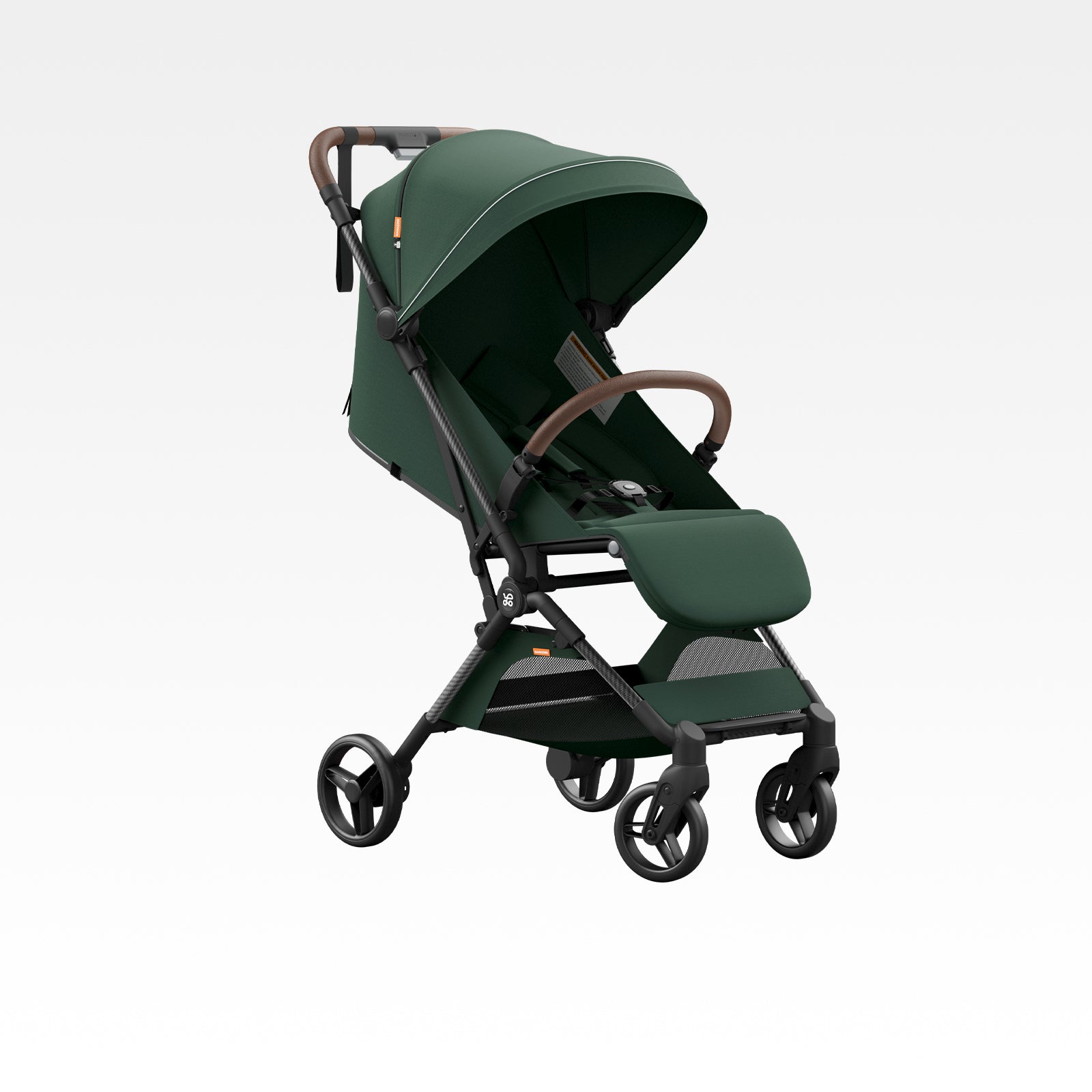
A balanced travel stroller for families who want overhead-bin potential without making airport transitions harder.
| Pick | Best if | Why it works for flights |
|---|---|---|
| Ultra Air | You want the easiest overall balance of compact size, carry comfort, and everyday usefulness. | It is the safer default when you care about the whole airport experience, not only the smallest folded package. |
| Ultra Air X | You want the most compact carry possible and are willing to optimize around that first. | It is the better answer if your decision starts with folded size and light carry above everything else. |
If you are still deciding between the two, Mamazing's Ultra Air vs Ultra Air X comparison guide is the most natural next read. If your child is older and you care more about city walking plus flights, the brand's guide to a toddler travel stroller for airplane trips can also help you stress-test the choice.
The simplest way to choose is to ask one honest question: are you optimizing for the smoothest full trip, or for the smallest folded package first? If the answer is the smoothest full trip, Ultra Air is usually the better call. If the answer is the smallest folded footprint you can reasonably get, Ultra Air X deserves the harder look.
That distinction matters more than many parents expect. A stroller that looks ideal in a size chart can still feel less helpful if it gives up the small conveniences that make a long airport day smoother, like a more forgiving carry feel or an easier everyday rhythm once you reach your destination. On the other hand, some families know they are willing to trade a little of that balance for the strongest possible compact-fold advantage. Neither choice is wrong; the wrong choice is pretending both priorities are the same.
For many parents, this is the real buying decision. If overhead storage works, great. But if the stroller becomes stressful the second you have to fold it, carry it, or hand it over, then you did not solve the airport problem. You only delayed it.
That is why the most useful order of priority usually looks like this:
This is especially true on trips with connections, late boarding groups, or regional aircraft. In those situations, the best stroller is often the one that gives you the least drama when your original plan changes. If you want to think through that airport flow in more detail, Mamazing's guide to traveling through airports with a foldable stroller is worth reading before your trip.
Another good test is to imagine the worst five minutes of the trip, not the best five minutes. Picture yourself holding your child, moving a backpack, folding the stroller quickly, and hearing that it has to be gate-checked after all. Which stroller still feels manageable in that moment? That is usually the stroller that will make the overall trip feel easier, even if it is not the one with the most aggressive compactness claim.
A good buying guide should leave you with a next step, not just a product preference. Before you fly, run through this short checklist:
If you are also weighing weight versus comfort for longer trips, Mamazing's guide to a lightweight stroller for travel can help you compare what matters in the airport versus what matters once you reach your destination.
One last tip: do not wait until departure day to test your routine. Fold the stroller with the diaper bag you normally carry, lift it the way you probably will in real life, and picture where passports, snacks, and a carrier or jacket will go if you need both hands free. A stroller can look perfect online and still feel wrong once your real travel setup is involved.
Yes, sometimes. A stroller can go in an airplane overhead bin if it folds compactly enough, the airline allows it, and there is still room in the cabin. The safest mindset is to treat overhead-bin storage as possible, not guaranteed.
A folded stroller has the best chance when it is close to standard carry-on dimensions, but there is no universal overhead-bin stroller size that works on every aircraft. Use airline carry-on limits as a screening benchmark, then remember that bin shape, flight load, and aircraft type still affect the final answer.
No. Even if a stroller looks small enough, gate or flight staff can still require gate check when cabin space is limited. That is why the best stroller for flying is one that also feels easy to manage if the overhead-bin plan falls apart.
Not always. A lighter stroller helps at security, boarding, and gate check, but the best stroller for flying also needs a compact folded shape, a quick fold, and enough everyday usefulness once you land. Balance usually beats chasing the lightest number alone.
Choose Ultra Air if you want the more balanced all-around option for most family trips. Choose Ultra Air X if your top priority is the smallest folded package and the lightest carry feel. The better pick depends on whether you value overall ease or maximum compactness first.
Check the airline rules, remove loose items before you reach security, and make sure you can fold the stroller without hesitation. If you already know how you will carry the stroller, your bag, and your child when the gate gets busy, the whole trip will feel easier.
The best travel stroller for airplane overhead bin use is not the one that makes the boldest promise. It is the stroller that gives you the best odds of easier cabin travel while still feeling manageable when the day gets messy.
For most Mamazing families, Ultra Air is the best place to start because it balances compactness with a calmer overall airport experience. If your decision begins with getting the smallest folded package you can, Ultra Air X is the comparison to make next.
The smartest way to shop this category is simple: do not ask only whether a stroller can fit overhead. Ask whether it still feels like the right stroller when your real travel day does not go perfectly. That is usually the better purchase and the better trip.
Featured Products


Minimalist Baby Registry for Small Apartments: What You Actually Need and What Can Wait
Best Nursery Glider for Small Spaces: How to Choose the Right Fit