
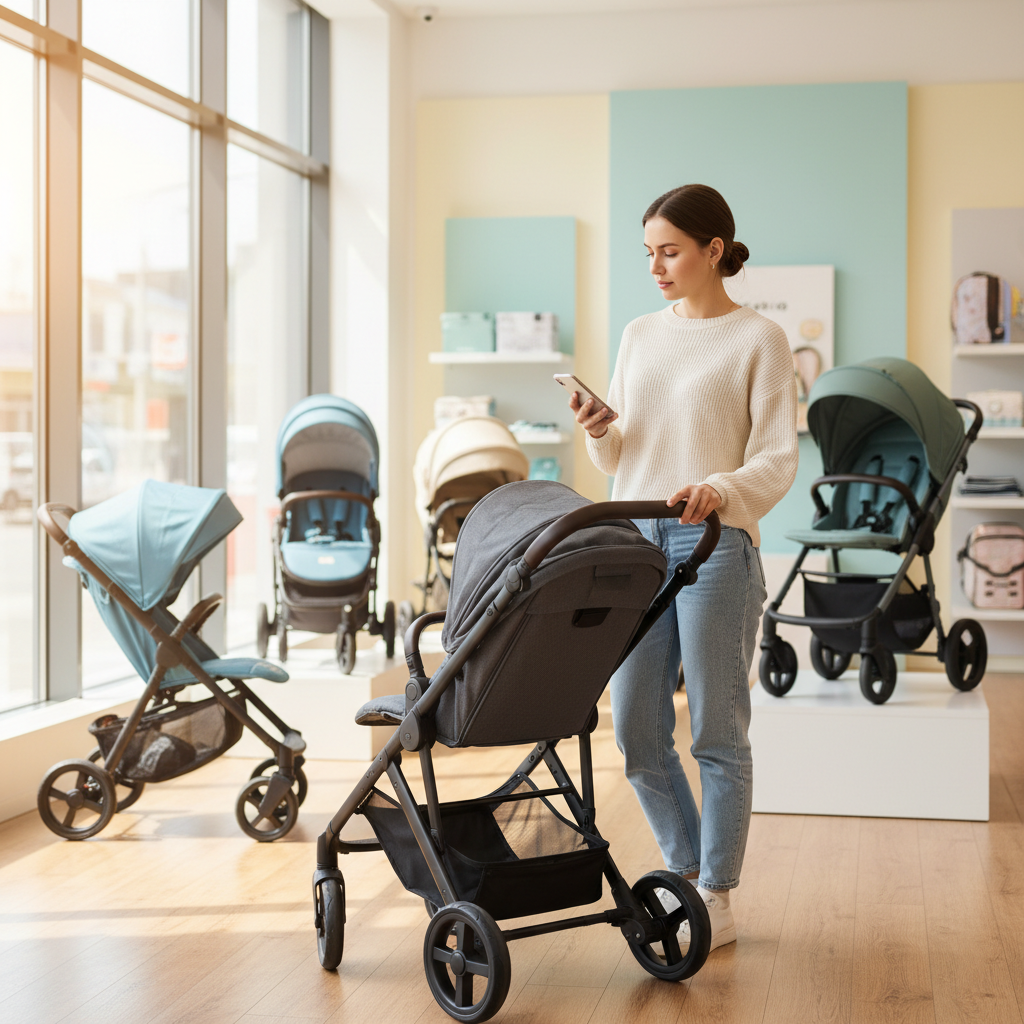
- by WengGracy
Stroller Quiz: Answer 5 Questions & Find Your Perfect Match
- by WengGracy
Picture this: you are 32 weeks pregnant, staring at 47 open browser tabs, each one a different stroller, and you have no idea which one is right for you. Sound familiar? You are not alone. The global baby stroller market was valued at USD 5.55 billion with hundreds of models flooding the shelves, and most first-time parents spend more than 12 hours researching this one purchase. That is more time than most people spend choosing a car.
This stroller quiz cuts through the noise. In under two minutes, you will answer 5 simple questions about your daily life, terrain, baby's age, budget, and family plans. By the end, you will know exactly which stroller type fits you, what features to prioritize, and which common mistakes to skip. No brand bias. No fluff. Just the practical guidance you wish your best friend had given you. At Mamazing, we built this stroller finder tool because we believe the right answer to "which stroller is best for me" depends entirely on your life, not on whatever model went viral last week.
Ready to find your match? Start with Question 1 below and we will match you to your stroller type.
Most quizzes ask you about stroller specs you have never heard of. This one is different. We ask about your life: where you walk, how you travel, when your baby will use it, what you can spend, and whether more kids are in the plan. Each answer maps to one or two stroller categories explained later in the article. If you want a deeper pediatric perspective alongside this quiz, our pediatrician tips on choosing a baby stroller covers the same lifestyle and age factors from a clinical angle.
Why a quiz format and not a generic "top ten" list? Because every roundup assumes a generic parent. You are not generic. A stroller that earns five stars from a suburban mom of one might be a nightmare for a city dad of twins. The stroller selector quiz approach is faster, smarter, and more honest because it filters noise based on your real situation rather than someone else's review.
Grab a coffee. Answer honestly. The trick to learning how to choose a stroller is matching the gear to the lifestyle you actually live, not the one you wish you had.

Your daily routine is the single biggest predictor of stroller satisfaction. A jogging stroller is overkill if you mostly hit Target. A lightweight umbrella is misery if you live for trail walks.
Maps to: A → lightweight or travel stroller; B → full-size stroller or travel system; C → jogging or all-terrain stroller; D → compact travel stroller.
Wheels are the part of the stroller you will judge every single day. Air-filled tires roll smoothly over gravel but require maintenance. Foam-filled tires are zero-maintenance but bumpier. Plastic wheels are featherweight but fail on grass.
Maps to: A → lightweight or frame stroller; B → mid-size or full-size stroller; C → all-terrain stroller; D → jogging stroller with pneumatic tires and a hand brake.
This is the question most parents skip, and it is the one that creates the biggest regrets. A newborn cannot safely sit upright in a regular stroller seat. Infants need a fully flat surface for sleep, which means newborns require a bassinet, lie-flat recline, or car seat attachment.
Maps to: A → travel system, bassinet stroller, or full lie-flat recline; B → travel system or full recline; C → most types including jogging; D → umbrella or compact stroller.
Crucial safety note: Jogging strollers are not safe for babies under 6 months during a run. Pediatric guidance warns that infants under 8 months old should not ride in jogging strollers while the parent runs, because their neck muscles cannot handle the vibration.
Counterintuitive truth: the most expensive stroller is rarely the best stroller for you. The Consumer Reports stroller buying guide notes that prices range from under $100 to more than $1,000, and many mid-range models outperform luxury flagships in real-world testing. For a side-by-side breakdown of typical price tiers and folded dimensions, our stroller sizes and prices guide shows what you actually get at each spend level.
| Budget | What You Get | Who It Suits |
|---|---|---|
| Under $200 | Functional umbrella or basic single stroller | Occasional users, secondary travel stroller |
| $200–$400 | Solid mid-range travel system or lightweight | Most first-time parents (sweet spot) |
| $400–$700 | Premium materials, longer lifespan | Daily users who want only one stroller |
| $700+ | Flagship models, best-in-class features | Multi-year, multi-child families |
Total cost includes accessories: car seat adapter, bassinet, rain cover, and footmuff can add $200 to a "deal."
If there is even a 50% chance of a second baby within two years, you will save real money by buying a convertible single-to-double stroller now instead of replacing your single later.
Maps to: A → any single stroller from Q1–Q4; B → single-to-double convertible; C → tandem or side-by-side double; D → stroller wagon or double with glider board.
Based on your answers, here are the five stroller categories — and the one (or two) that fits your family. Read the match that lines up with your Q1 and Q3 answers first; those are the two strongest predictors.
Best for: city dwellers, frequent flyers, babies 6+ months.
Watch-outs: smaller storage basket, less suspension, may feel rough on gravel paths.
Best for: suburban drivers, mixed terrain, newborn through toddler.
Watch-outs: heavier to lift, may not fit small car trunks, often pricier than lightweight options.
Best for: newborns, young infants, suburban drivers, any budget.
A travel system bundles a stroller with an infant car seat that clicks in and out without waking your sleeping baby. For most families in the first 12 months, this is the most practical setup. The NHTSA recommends keeping babies rear-facing for as long as possible, and travel systems make that daily routine genuinely easier.
Best for: runners, hikers, rough terrain, babies 6+ months.
Real example: One Mamazing reader runs the Boston Marathon course twice a week with her 9-month-old in a fixed-wheel jogger. She told us the hand brake "is the feature I did not know I needed until the first hill." Without it, runners can lose control on declines.
Best for: two kids under 3, twins, or close-in-age siblings.
| Style | Strength | Trade-off |
|---|---|---|
| Tandem (front-to-back) | Fits standard doorways | Back seat has limited view |
| Side-by-side | Equal view and legroom for both kids | Wider than most doorways |
Ready to shop by stroller type? Mamazing has curated the best strollers across all five categories — lightweight travel models, full-size daily drivers, travel systems, joggers, and doubles — at every budget.
You know your type. Now lock in the model with this checklist. These are the features that separate a stroller you use daily from one that lives in the garage.

Stroller safety is non-negotiable. The CPSC stroller and carriage safety standard sets federal requirements for hinges, locks, and brakes — confirm your pick complies before purchase, and check the active recalls list before buying any used or older model.
Honest answer: most families end up with two. A full-size for daily use and a lightweight for travel and errands. If your budget allows only one, a quality convertible (like a full-size that accepts a bassinet, infant car seat, and toddler seat) reduces the need for a second purchase. Spending $500 once usually beats spending $250 twice.
Counterintuitive trend: Resale value matters more than retail price. Premium strollers from established brands often hold 60-70% of their value after two years of use, while budget models lose nearly all resale value within twelve months. If you plan to sell once your child outgrows the stroller, the higher sticker price can actually translate to a lower true cost of ownership.
Real-world example: A Mamazing reader in Brooklyn bought a $189 umbrella stroller for "casual" use, then bought a $480 full-size six months later because the umbrella was too uncomfortable for her infant. Total spend: $669 plus accessories. Her neighbor bought a single $529 convertible upfront, added the bassinet attachment for $179, and stopped shopping. Same family stage, different math. The takeaway: skipping the cheap "starter" stroller is often the budget move.
There is no single best stroller for every family. The right choice depends on lifestyle, terrain, your baby's age, budget, and whether more children are coming. For most first-time parents who drive, a travel system is the most practical starting point. City-dwelling parents tend to prefer a lightweight stroller paired with a car seat adapter.
No. Newborns need a fully flat recline to support a developing spine and open airway. Safe options include a travel system with an infant car seat, a stroller with a bassinet attachment, or a full-size stroller with a lie-flat seat. Most lightweight strollers are not newborn-safe without an adapter.
Jogging strollers are generally not recommended for running with babies under 6 months, and many manufacturers set the limit at 8 months. The vibration of running can harm babies who cannot hold their head up yet. For walking pace (not running), a supported car seat adapter may be used earlier — always check the specific manufacturer's guidelines.
For most families, yes — especially during the first 12 months. Transferring a sleeping baby from car to stroller without unbuckling is genuinely magical. Once the infant car seat is outgrown (around 12–18 months), you are left with just the stroller frame, so confirm the stroller itself is worth using long-term.
A lightweight compact stroller — ideally under 18 lbs with a true one-hand fold. Look for a model you can fold while holding your baby, that fits under a transit seat or in an airplane overhead bin, and that is narrow enough for subway turnstiles.
Measure your trunk opening (width and depth) before you buy. Manufacturers list folded dimensions on every product page. Compact strollers usually fold to around 20 x 17 x 10 inches; full-size strollers fold larger, often 30 inches or more on the longest side.
If both children will be under 3 at the same time and you walk a lot, a double stroller earns its keep. The choice is tandem vs side-by-side: tandems fit through doorways; side-by-sides give both kids an equal view. If your older child mostly walks independently, a single stroller with a glider board is a cheaper alternative.
You answered the 5 questions. You know whether you need a lightweight, a full-size, a travel system, a jogging stroller, or a double. Now it is just about picking the right model in that category — the part that used to feel overwhelming should now feel doable. The stroller quiz framework you just used works because it starts with your life, not with marketing copy.
Mamazing's stroller collection is organized by exactly the categories you just learned. Every stroller meets safety standards, and every listing surfaces the specs that matter most: weight, folded dimensions, age compatibility, and car seat fit. Shop by your quiz result, compare two or three finalists, and trust your gut.
Still stuck between two types? Re-read the match section for both and pick the one that fits your Q1 (lifestyle) and Q3 (baby age) answers. Those two questions carry the most weight. Your perfect stroller is the one you reach for every single day without thinking — and now you know how to find it.
Featured Products


Small Nursery Layout Ideas: Finding the Perfect Spot for Your Nursery Chair
Does a Nursing Chair Help Baby Sleep?