
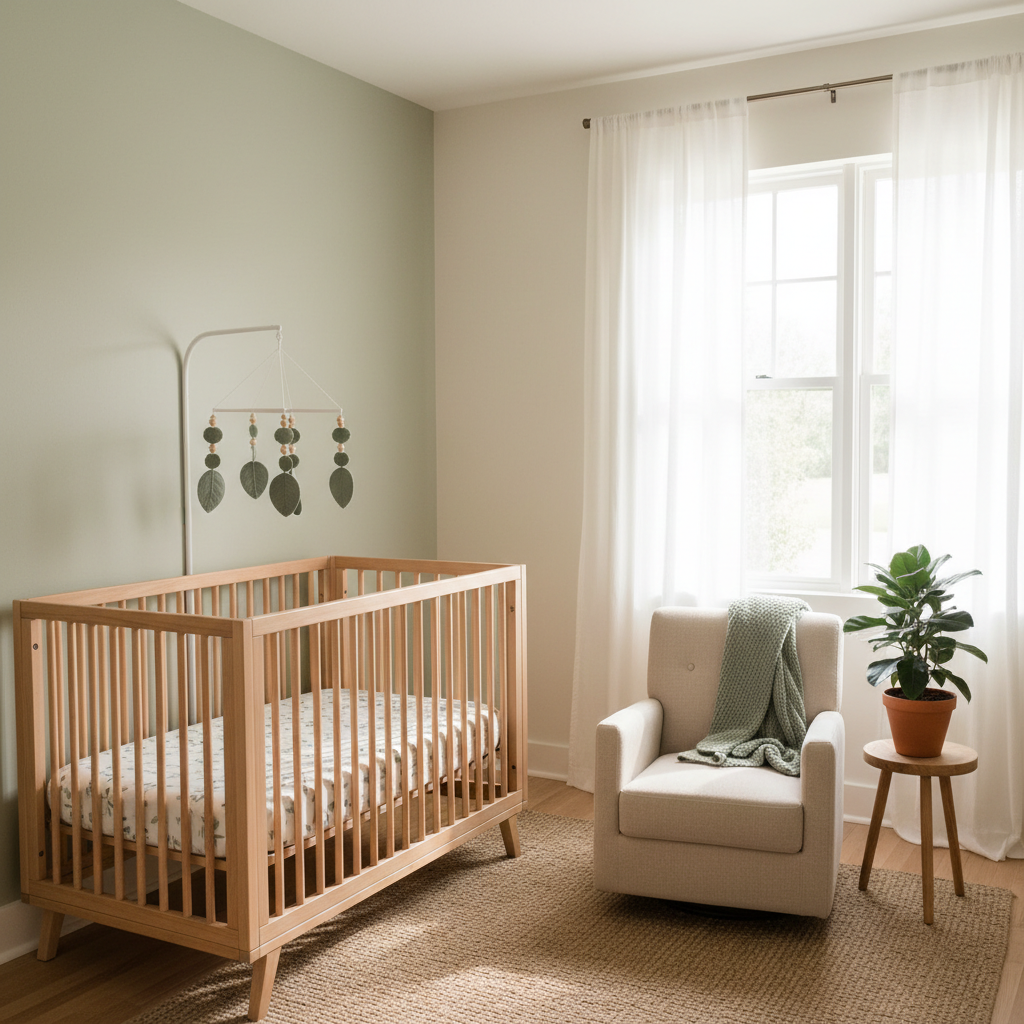
Small Nursery Layout Ideas: Finding the Perfect Spot for Your Nursery Chair
- by WengGracy
You are standing in a small, mostly empty room with a tape measure in one hand and a baby registry on your phone. The crib? You can picture it. The dresser? Probably fine on that wall. But the nursery chair, the glider you keep going back and forth on, suddenly feels impossible to place. Sound familiar? You are not the only expecting parent staring at four walls and wondering how a full-size feeding chair is supposed to disappear into a 10-by-10 footprint.
Here is the counterintuitive truth most layout guides miss: the chair should be your first decision, not the last. It has the most clearance requirements, the heaviest emotional workload (count the hours you will spend in it), and the trickiest motion footprint. At Mamazing, we have spent thousands of conversations with parents who realized this too late. So this guide flips the script. We will walk through small nursery layout ideas built around chair placement first, share six real layouts that work, and help you decide on the best glider for small nursery setups. By the end, you will know exactly where your nursery chair goes, why, and how the rest of the room falls into place around it.
Most parents follow the same instinct. Pick a crib wall. Slide the dresser in. Then panic when the only spot left for a chair is wedged between a closet door and a window. That backfire is so common it is almost a rite of passage. The reason is simple: the chair is the most-used, most-constrained piece in the room, yet it gets placed last.
Consider how much the chair actually does. According to the American Academy of Pediatrics' HealthyChildren feeding guide, newborns feed 8 to 12 times per day, and families typically use their nursery chair for feedings, rocking baby to sleep, reading aloud, and quiet skin-to-skin time, often clocking more hours there than anywhere else in the house during the newborn months. A chair that ends up jammed in a corner with no caddy space, blocked dresser drawers, or unsafe proximity to window cords is not a small inconvenience. It is a daily frustration during your most exhausted weeks.
Here is what tape measures miss. The dimensions on a product page show the chair sitting still. But gliders glide, recliners recline, and ottomans extend. That live footprint, the motion envelope, is what your room actually has to accommodate.
Use this rule of thumb when planning:
That is the true zone the chair occupies, and it dictates where the crib and dresser can realistically go.
Before you click "add to cart" on anything, spend twenty minutes with painter's tape on the floor. This is the single highest-leverage thing you can do for a small nursery.
A 10-by-10 nursery is technically 100 square feet, but that is not your real estate. Subtract the non-negotiable obstructions first:
What is left is your live zone. Common small nursery sizes break down like this:
| Room Size | Total Sq Ft | Typical Live Zone | Realistic for Full-Size Glider? |
|---|---|---|---|
| 9 x 11 | 99 | ~70 sq ft | Compact glider only |
| 10 x 10 | 100 | ~75 sq ft | Compact glider recommended |
| 10 x 12 | 120 | ~90 sq ft | Standard glider works |
| 8 x 12 | 96 | ~65 sq ft (narrow) | Narrow glider only |
Every nursery, no matter how small, has three jobs to do. A sleep zone (the crib). A change zone (dresser or changing table). And a feed zone (your chair). Your goal is to give each zone breathing room without crossing paths during a 3 a.m. fumble.
The feed zone is the most flexible. It needs no plumbing, no specific ventilation, and no structural wall anchoring. That is exactly why you can place it last in execution, but you must plan for it first.
The primary walking path, from doorway to crib, must stay clear at a minimum of 30 inches. Windows create real constraints for the crib. The American Academy of Pediatrics recommends keeping cribs away from windows, blinds, and cords to prevent strangulation hazards. Your chair, however, can often live near a window beautifully. Natural light is a gift during daytime feeds and reading.
Here are six configurations that consistently work. Each one starts with the chair and lets the rest of the room follow.

Best for: Most 10x10 and 10x12 rooms.
Tuck the chair diagonally into the corner farthest from the door, angled toward the crib. This frees the center of the room and creates a cozy, protected feeding nook. Look for a compact glider 28-32 inches wide with an upright back and minimal recline depth. You will want 3 inches of wall clearance behind, 24 inches in front, and 12 inches to one side for a caddy.
Best for: Rooms 10x12 or larger, parents prioritizing speed during night feeds.
Align the chair with the crib on the same long wall, close enough that you can reach in without standing. Put the dresser on the short wall opposite. A narrow glider under 30 inches wide or one with a swivel base shines here, because the swivel lets you turn toward the crib without scooting the chair.
Best for: Rooms with two walls of equal length where you want clear sightlines.
Place the chair on the wall directly across from the crib. You face baby while seated, which is ideal for monitoring during feeds. This setup also creates the widest open walking path from door to crib. A standard-depth glider with an ottoman fits here without crowding.
Best for: Rooms where the crib needs to avoid the window wall.
Position the chair just beside or below a window. Daytime feeds get gentle natural light, and blackout curtains take care of nighttime sleep. A swivel glider is your friend here because you can pivot away from window glare during midday naps while keeping the same footprint.
Best for: Long, narrow rooms like 8x12.
When the door wall is the only option, place a high-back, narrow profile glider just inside the entry. Leave 18 inches of door-swing clearance. Skip the standalone ottoman here, it blocks the entry path, and reach for a wall-mounted caddy instead of a side table.
Best for: Apartment living, studio conversions, nursery-office hybrids.
Carve out a defined "nursery zone" within a master bedroom or office. The chair itself becomes part of the visual boundary, ideally a multi-use upholstered glider in boucle, neutral linen, or warm walnut that transitions easily into adult living spaces later. Add a small indoor plant nearby and you have leaned into 2026's biophilic small-space trend without sacrificing function.
Once you know where the chair goes, the question becomes what kind of chair belongs there. In small rooms, the answer is rarely the biggest, plushest recliner you can find.

If you want a deeper side-by-side breakdown, our guide on rocking chair vs glider for nursery rooms walks through the motion, noise, and footprint differences in detail.
| Chair Type | Wall Clearance | Footprint | Best For Small Nurseries? |
|---|---|---|---|
| Glider | 3-4 inches | Smallest | Yes, top choice |
| Rocking chair | 12-16 inches | Medium | Only if room allows |
| Recliner | 10-14 inches | Largest | Rarely under 120 sq ft |
For most small nurseries under 120 square feet, a compact glider is the optimal choice. The stationary base means it sits closer to walls, and the linear glide is quieter than an arc-motion rocker.
Look for chairs that measure 28-32 inches wide with a depth under 36 inches in the upright position. Always check the reclined depth too, since that can balloon to 55-65 inches once a footrest extends. Use the tape test: outline the chair's full reclined footprint with painter's tape on the floor before purchase. If you can walk around it comfortably while taped out, you can live with it for real.
Among glider chairs for nursery rooms, the Lullapod line was designed around the exact measurement realities described above. The Zen, Standard, and Max models map neatly to the layouts in this article: a compact footprint that fits a corner placement, a swivel base for crib-side configurations, and GREENGUARD Gold certification for low chemical emissions. The whisper-quiet glide mechanism means no creak when you finally stand up after a sleeping baby. It is, in our admittedly biased view, one of the best glider for small nursery options on the market, because it was engineered for the rooms real parents have, not the rooms they wish they had.
If you read a few parenting forums, you will see the same regrets over and over. Most of them are fixable, but only if you spot them before delivery day.
The chair's listed dimensions assume it is stationary. Once you glide, recline, or stretch out, that footprint expands by 12-24 inches. Always plan for the live footprint.
The door creates a non-negotiable clearance bubble. Any furniture inside it becomes a daily annoyance, especially when you are carrying a sleeping baby and trying to nudge the door open with your hip.
Maintain at least 18-24 inches between the chair and crib rails. Crowding the sleep zone makes lifting baby in and out awkward and creates a real safety issue once your little one is old enough to grab and climb.
A separate ottoman adds 18-24 inches to the chair's depth. In a small room, a built-in footrest, a power recline, or a small storage pouf is often more efficient.
A chair in front of the dresser means moving it for every onesie. Map drawer swing arcs alongside the chair footprint before committing.
Once your chair, crib, and dresser have homes, a few design choices make the room feel twice as big.
The 2026 nursery palette leans into earthbound neutrals: warm whites, sage green, hazelnut, soft terracotta. Heavy dark walls in rooms under 100 square feet tend to swallow light. Furniture with visible legs, especially the chair, creates visual airiness because your eye can travel under it.
Wall-mounted shelves, tall narrow dressers, and over-door organizers preserve floor space for the chair and walking path. Think up, not out.
Convertible cribs, dressers with built-in changing toppers, and ottomans with storage lids do double duty. Even the chair should be selected with post-nursery life in mind. A well-designed glider transitions naturally into a living room reading corner once feeding days end.
Biophilic design (a leading 2026 nursery trend) is about bringing nature inside. One small non-toxic plant, natural wood finishes, rattan storage baskets, and linen upholstery create a soothing environment without consuming square footage. The EPA notes that indoor air quality can be 2-5 times worse than outdoor air, which makes choosing low-emission furniture and natural materials more than aesthetic, it is functional too.
Once your nursery is designed around comfort and intention, that same instinct tends to follow you out the door. The glider that keeps your baby calm during night feeds is doing the same job as a well-engineered stroller on a morning walk: supporting baby's body, minimizing overstimulation, and giving you one less thing to fight with. Parents who obsess over glider dimensions tend to obsess over stroller weight and fold, too, because compact, purposeful design matters whether you are in a 10x10 nursery or navigating a city sidewalk.
If you are ready to bring that same thinking to your outings, explore strollers designed with the same comfort-first philosophy as your nursery chair, engineered for the kind of intentional parent who already measured their door swing twice.
The corner farthest from the door, angled toward the crib, is the most flexible starting point. It keeps the walking path clear, creates a defined feeding nook, and does not block drawers or the crib. Your exact best spot depends on door swing, window placement, and room shape.
Yes, and corner placement is one of the most effective configurations for small nurseries. Choose a glider over a rocker because the glider's stationary base needs only 3-4 inches of wall clearance, while a rocker requires 12-16 inches. Angle the chair about 45 degrees outward for comfortable seating and easier entry.
Both configurations work. Facing the crib gives you a clear sightline and the most open walking path. Beside the crib is faster for nighttime transfers and reach-ins. In rooms under 100 square feet, beside the crib is usually the more space-efficient choice.
Look for one that is 28-32 inches wide, under 36 inches deep upright, with a quiet glide mechanism and minimal recline depth or a built-in footrest. Swivel capability is highly useful in tight spaces. Mamazing's Lullapod line was designed specifically around these dimensions for compact nurseries.
Plan for 3-4 inches behind the chair, 24 inches in front for leg extension, and 12-18 inches to one side for a caddy. If the chair reclines, add the full reclined length (often 55-65 inches) to your depth calculation. Always tape out this zone on the floor before buying.
A glider. Its base stays fixed while the seat moves on a linear track, so it can sit much closer to walls and other furniture. A rocking chair's arc motion pushes backward into the room with each rock, requiring 12-16 inches of clear space behind it that small nurseries rarely have.
Three essentials: a safe sleep surface (crib or bassinet), a changing station (dresser with topper or dedicated changing table), and a comfortable nursery chair for feeding and soothing. Everything else, bookshelves, toy storage, play mats, can wait until you confirm these three fit with clear walking paths.
Picture that parent at the start of this article, standing in the empty room with a tape measure. Now they have a framework. Start with the chair. Map its motion envelope. Place the crib and dresser around it. Use the three-zone rule for sleep, change, and feed. Tape it all out before you buy. The small nursery layout ideas in this guide are not magic, they are just disciplined planning that respects how the room will actually be used at 3 a.m.
Whether you settle on the classic corner, a beside-the-crib nursing station, or a window nook, the right chair makes the whole space feel intentional. At Mamazing, we believe small nurseries can absolutely deliver big comfort, and it usually starts with finding the perfect spot for your glider. When you are ready to choose, our Lullapod line of glider chairs for nursery rooms was built to fit the small-space realities you just measured. Take a breath, trust your tape, and enjoy the calm corner you are about to create.
Featured Products


How to Rock Baby to Sleep in a Nursery Chair: 7 Proven Techniques
Stroller Quiz: Answer 5 Questions & Find Your Perfect Match