
- by WengGracy
Built-In Footrest vs Ottoman for a Nursing Chair: Which One Is Right for You?
- by WengGracy
It is 3 a.m. The baby has finally settled after a long feed, eyelids fluttering toward sleep. You sink back into the chair, and your tired foot stretches forward — either hooking around an ottoman that has drifted slightly out of reach, or pressing a small button that silently lifts the footrest into place. That single, sleepy moment is the heart of the nursing chair footrest debate. If you are building a registry or outfitting a nursery right now, you have probably asked yourself the same question thousands of expecting parents ask each week: do you want a glider paired with a separate ottoman, or a chair with a built-in footrest? At Mamazing, we hear this question constantly, and most existing buying guides skim past the real trade-offs. This guide breaks the decision down across six criteria — comfort, space, postpartum recovery, convenience, budget, and longevity — so you can match the right nursing chair footrest setup to your body, your room, and the months of feeds ahead.
Before you compare anything, you need to know exactly what you are choosing between. The two main categories sound simple, but the design philosophies behind them are very different.
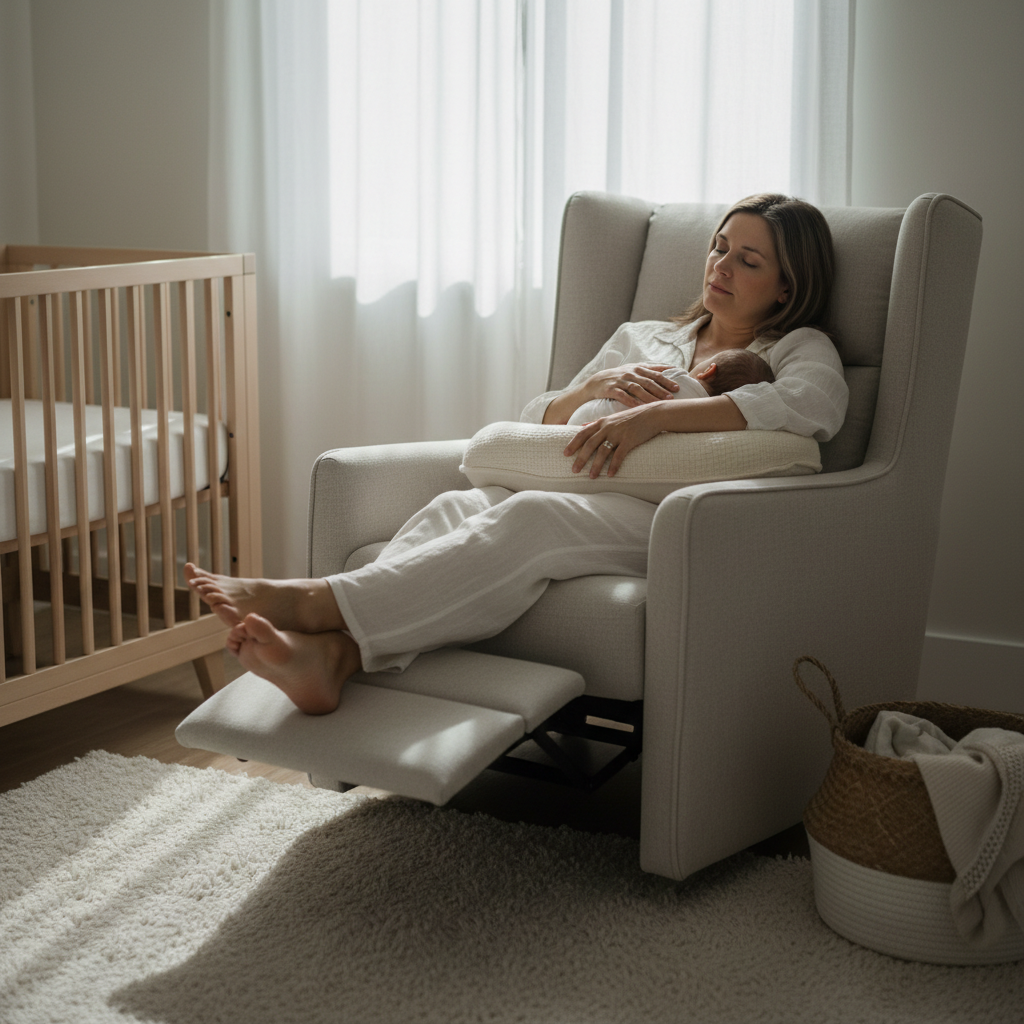
A built-in footrest is integrated into the chair itself. It extends from under the seat when the chair reclines, either by pulling a side lever (manual) or pressing a button (powered). Premium designs add independent footrest control, meaning the footrest can rise without the backrest tilting back — a hybrid comfort position no separate ottoman can match. This is the category covered by built in footrest glider and recliner-style searches.
A separate ottoman is a standalone piece. It either glides in sync with the chair (a gliding ottoman engineered to mirror the chair's motion) or stays stationary like a padded footstool. Gliding ottomans create a continuous soothing rhythm for both parent and baby; stationary ottomans are simpler and double as a surface for water bottles, burp cloths, or a phone.
If you have searched ottoman vs recliner footrest, here is the clarification missing from most guides: a recliner is the chair type that typically includes the built-in footrest, while an ottoman is the accessory that pairs with a glider or rocker that does not recline on its own. Some hybrid models — the built in footrest glider category — bridge both worlds by adding a small extendable footrest to a traditional glider frame. For a fuller breakdown of how these chair categories differ in motion, recline, and feeding ergonomics, our glider vs recliner for nursery comparison walks through the trade-offs in more depth.
Here is the head-to-head comparison the top-ranking nursery buying guides do not give you. Each section ends with a clear winner for that specific criterion, so you can weight the trade-offs against your own priorities.

Good nursing posture requires your feet supported so your knees sit at or slightly above hip level. Both options can achieve this, but only if the height is right. A separate ottoman has one fixed height. If you are 5'2" or 5'11", the same ottoman will not support both of you equally — and a mismatch actively worsens posture and increases lower back load. According to the CDC's NIOSH ergonomics guidance, proper seated support is one of the most important factors in reducing musculoskeletal strain during prolonged seated tasks — and feeding a newborn qualifies as one of the most prolonged seated tasks a new parent will ever do.
A built-in footrest with multiple positions removes the height-matching guesswork. For nursery chair leg support specifically, an independently adjustable built-in footrest wins because it lets you elevate your legs without reclining the backrest — keeping you upright for nursing while still supporting circulation. Gliding ottomans do offer one ergonomic edge: synchronized motion reduces leg fatigue during long sessions and creates a soothing rhythm many parents love. If motion soothing is high on your priority list, our guide to the best rocking chair for nursery comfort and recline options covers how to weigh rocking, gliding, and reclining together.
Winner: Built-in footrest for adjustability and independence; gliding ottoman for motion experience.
A glider plus ottoman combination eats more floor space than most parents expect. The ottoman alone takes up 2-3 square feet, separate from the chair's footprint, and it needs clear placement directly in front of the chair. A recliner with a built-in footrest needs roughly 18-24 inches of front clearance when fully extended, but no additional ottoman footprint at all.
There is also a hazard issue most reviews ignore. The CDC's child development milestones note that infants typically begin crawling and pulling to stand between 8 and 12 months. A separate ottoman at floor level becomes both an obstacle and a climb-on risk during that exact window. Wall-hugging recliners are specifically engineered for small-space nurseries because they shift the seat forward rather than pushing the back outward, so the chair can sit close to a wall even when reclined. If you are working with a tight floor plan, our roundup of the best nursery chair for small spaces compares compact recliner and glider models built for apartments.
Winner: Built-in footrest — clearly — for small nurseries and beyond the newborn stage.
This is the most medically meaningful criterion, and the one nearly every competing buying guide skips. Postpartum leg swelling — clinically called edema — is common in the first one to four weeks after birth. The National Library of Medicine's MedlinePlus guidance recommends raising your legs above heart level to reduce fluid accumulation and improve venous return. A built-in footrest on a power recliner makes that elevation effortless and adjustable. A separate ottoman only elevates to one fixed, much lower height.
The c-section context matters even more. Roughly 32% of U.S. births are by cesarean delivery, according to CDC NCHS data. After a c-section, the American College of Obstetricians and Gynecologists advises allowing time to heal before any strenuous activity during recovery. Reaching forward and dragging an ottoman closer is exactly the kind of movement to avoid. A built-in footrest — especially a power-operated one — removes that motion entirely. For nursery chair leg support during recovery, this is a real, daily difference, not a marketing line.
Winner: Built-in footrest, especially powered, for postpartum recovery and c-section healing.
Overnight feeds are the real test. One hand holds the baby. The other has to manage the footrest, the lights, sometimes the bottle, and your own sleep-deprived brain. Newborns feed often — the CDC reports newborns typically nurse 8 to 12 times per day in the first weeks — so the small friction of repositioning an ottoman compounds quickly.
A built-in footrest only needs a button press or a single lever pull. Even manual models put the lever on the armrest or chair side within easy reach. A separate ottoman has to be nudged into place before you sit down, and if you sit first and realize it has drifted an inch too far, you either stretch awkwardly or stand back up. Gliding ottomans reduce that drift because they follow the chair's motion, but they still require initial setup.
Winner: Built-in footrest for overnight and single-handed convenience; gliding ottoman reduces drift mid-session.
Cost is where the ottoman bundle holds genuine ground. Here is a clean breakdown of typical mid-market price tiers:
| Setup | Typical Mid-Tier Price | Key Trade-Off |
|---|---|---|
| Glider + separate ottoman bundle | $150-$500 | Lowest entry cost; ottoman adds $80-$200 |
| Manual built-in footrest recliner | $300-$800 | Comparable to mid-tier glider bundle |
| Power recliner with independent footrest | $1,200-$1,800+ | Includes dual-motor, ergonomic premium features |
One detail most buying guides miss: some entry-level chairs include a basic built-in footrest under $300. The idea that a built-in footrest is automatically a premium feature is not universally true. At the high end, a power recliner nursing chair like the Mamazing Lullapod Max bundles features — dual-motor independent control, HugAssist armrests, 360-degree swivel — that no separate ottoman setup can replicate at any price.
Winner: Ottoman bundle for entry-level budgets; built-in footrest for long-term value at mid-to-premium tiers.
Most parents use a nursing chair for one to three years in the nursery before it moves elsewhere in the home. The longevity gap between the two setups is wider than most buyers realize.
A matching glider ottoman rarely fits aesthetically in a living room or primary bedroom. It often ends up orphaned — stored in a closet or sold off — which cuts the real return on your original investment. A recliner with a built-in footrest is a standard adult furniture piece. It transitions naturally into a living room, home office, or quiet reading nook. The chair and footrest also wear together, keeping the look unified, while a separate ottoman tends to accumulate different wear and fade patterns from the chair over time, creating a mismatched final appearance.
Winner: Built-in footrest, by a wide margin, for post-nursery longevity.
Comparisons are useful only if they translate into a clear decision. Here is how to map the trade-offs to your actual situation.

If a built-in footrest recliner sounds like the right fit for the way you plan to feed, recover, and live with your chair for the next few years, the collection below is curated for nursery use — from manual recline models to independently adjustable motorized footrests.
Not strictly required, but strongly recommended. Without foot support, most adults' feet either dangle or rest awkwardly, which shifts your weight into the lower back and creates the slumped posture behind so much mid-back and neck pain during long feeds. A footrest — built-in or separate — keeps your knees at the right angle so your spine maintains its natural curve. Petite parents benefit the most.
If you choose the separate-ottoman route, a gliding ottoman that syncs with the chair's motion provides a more continuous soothing rhythm and removes the jarring sensation of only the chair (not your legs) being in motion. A stationary footstool still works, but you lose that synchronized benefit. Parents who rely on motion-based soothing should always pick the gliding ottoman.
The standard recommendation is one to four inches below your chair's seat height. That keeps your knees at or slightly above hip level, which supports natural lumbar curvature and healthy leg circulation. Too low, and your knees drop below your hips, loading the lower back. Too high, and the front of the seat presses into the back of your thighs, restricting blood flow during long sessions.
Yes. A recliner with a built-in footrest is the direct functional replacement for a glider-plus-ottoman setup. The extending footrest provides the same foot and lower-leg support an ottoman would, with the added benefits of variable recline angle and — in powered models — independent footrest height adjustment that does not force the backrest to recline at the same time.
For parents with c-section recovery, postpartum edema, or chronic back issues, a power recliner nursing chair is genuinely worth it. One-touch adjustment removes the physical effort of repositioning during exhausted overnight sessions. Independent footrest control — lifting your legs without reclining the back — is a feature you simply cannot get from any manual chair or any ottoman setup, no matter the price.
Return to that 3 a.m. moment one more time — only this time, you know which setup will serve you best. Whether you end up reaching for an ottoman that glides gently alongside you, or pressing a button that silently raises the footrest, the goal is the same: staying comfortable enough to keep feeding, present enough to bond, and supported enough to sink into rest while the baby sleeps. The right nursing chair footrest setup is the one that fits your room, your budget, your body, and the months of feeds ahead. For tight spaces, faster recovery, and a chair you will actually keep using years from now, a built-in footrest tends to win on every long-term measure. For a smaller upfront budget and a love of synchronized motion, a glider with a gliding ottoman still earns its place. Choose with the next year in mind, not just the next week — and at Mamazing, we are here to help you build the calm, ergonomic nursing setup your family deserves.
Featured Products


What to Do If Your Baby Hates the Stroller?
Hypoallergenic Nursing Chair: Best Materials for Sensitive Babies