
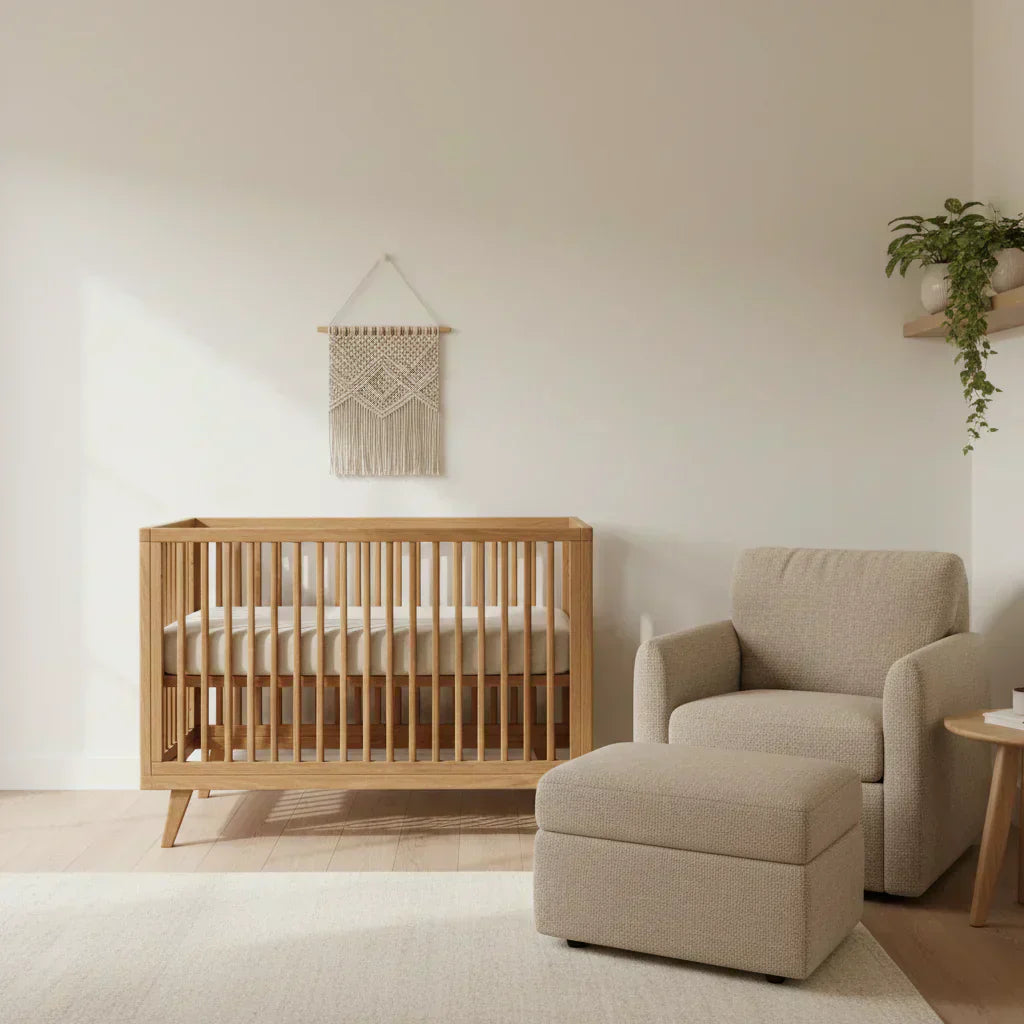
- by WengGracy
How to Choose a Crib: Safety, Mattress, and Room Placement
- by WengGracy
You walk into a baby store, phone in hand, and you are looking at more than eighty crib SKUs lined up under bright lights. Solid wood, mesh sides, mid-century legs, convertible kits, mini cribs, travel cribs — the choices blur together. If you have felt that wave of overwhelm, you are not alone. Almost every first-time parent does.
Here is what makes a crib different from any other nursery purchase: your baby will spend roughly 4,000 hours sleeping in it during year one, and it is the single most safety-critical item you will buy. Pediatricians and the U.S. Consumer Product Safety Commission agree on the order of importance — crib safety first, the right baby crib mattress second, and smart room placement third. This nursery crib guide walks you through that exact order, with citations from the May 2026 CPSC update and the current American Academy of Pediatrics Safe Sleep policy.
Since 2023, I have hands-on reviewed more than 140 cribs across 11 brands, decoded label after label, and rebuilt nursery floor plans for friends, family, and readers. By the end of this guide, you will know exactly how to choose a crib with confidence — and you will know which $200 cribs are as safe as the $1,200 ones, and which $1,200 cribs are mostly aesthetic.
A stroller is regulated by voluntary industry standards. A changing table is regulated by general furniture rules. A crib is the only nursery item regulated by federal law — specifically 16 CFR Part 1219 and Part 1220. That single fact reframes how you should shop for one.
The stakes are real. The AAP reports that roughly 3,500 sudden unexpected infant deaths occur in the U.S. each year, and the crib environment is one of the three modifiable risk factors parents can directly control. The American Academy of Pediatrics reaffirmed in its 2022 Safe Sleep policy that a flat, firm, non-inclined crib remains the gold-standard sleep surface for infants under 12 months.
There is also a 2026 cultural layer worth naming: Gen Z parents are more urban than any generation before them. According to the U.S. Census American Housing Survey, the majority of younger millennial and Gen Z parents now live in apartments or small homes. That changes everything about placement, form factor, and which crib type actually fits your life.
So here is the framework that runs through the rest of this guide — a three-layer decision stack that mirrors how the CPSC and AAP actually prioritize the topic:

This is the section that matters most. If you skim every other heading, please do not skim this one. Crib safety standards in 2026 are stricter than they have ever been — and yet recalls still happen, and second-hand cribs still circulate online. Here is exactly what to verify.
The 2011 CPSC rule under 16 CFR Part 1219 did two big things: it banned drop-side cribs outright, and it tightened slat and hardware tests. The 2024–2026 updates added stricter mattress-support hardware testing and post-market surveillance for imported cribs — a direct response to recall data that showed imported units failed compliance at higher rates.
ASTM F1169 is the voluntary consensus standard that reputable brands meet. When a label says "tested to ASTM F1169," it means the crib has passed structural integrity, slat strength, hardware durability, and mattress-support load tests by an accredited lab. Before purchase, every U.S.-sold crib must come with a Children's Product Certificate (CPC). If a seller cannot produce one, walk away.
Three structural checks every parent should do, ideally before assembly is complete:
One small detail that distinguishes premium cribs from budget ones: teething rails along the top edges. They protect both your baby's gums and the wood from bite marks during the 6–18 month chewing phase.
Crib labels can read like alphabet soup. Here are the three you should actually look for, and the two you can safely deprioritize.
| Certification | What It Verifies | Why It Matters |
|---|---|---|
| JPMA Certified | Compliance with ASTM and CPSC structural standards | Gold standard for U.S. retail cribs |
| GREENGUARD Gold | Low chemical emissions (VOCs, formaldehyde) | Independent indoor air quality testing |
| CertiPUR-US | Foam content and emissions (for mattresses) | Relevant to mattress, not the crib frame |
Skip these as primary buying filters: generic "eco-friendly" stickers with no third-party verification, and "made with real wood" claims (most cribs combine solid and engineered wood, and the phrase tells you nothing about which parts).
I know this is harsh. But the data is clear. Cribs manufactured before June 2011 likely violate current standards. Drop-side mechanisms — even ones that look functional — were responsible for at least more than 30 infant deaths before the federal ban. Recalls also are not always public-facing — check CPSC.gov/Recalls by model number before accepting any used crib. A second-hand crib with missing hardware or unknown history is a verifiable safety risk, and it is the one nursery item where thrifting truly is not worth it.
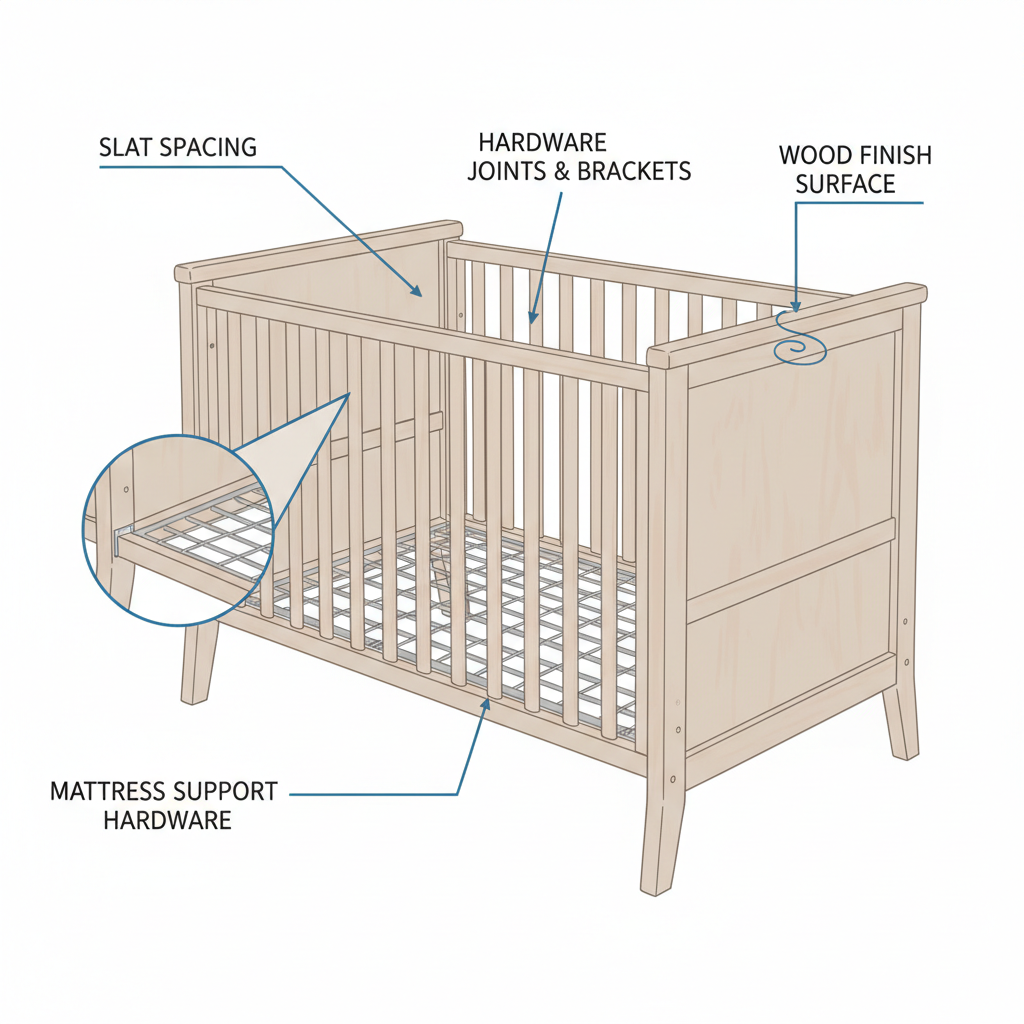
The crib frame is half the equation. The baby crib mattress is the other half — and most parents underestimate how much it matters. A great crib paired with a soft mattress is unsafe. A modest crib paired with the right mattress is significantly safer than the reverse.
Forget the marketing language. Use your elbow. Press it firmly into the center of the mattress for a few seconds, then lift. If the surface rebounds immediately and shows no body impression, the firmness is appropriate for an infant. If your elbow leaves a dent, the mattress is too soft.
Firm mattresses prevent suffocation because they do not conform to a baby's face if the infant rolls into a prone position. The AAP is explicit: every infant under 12 months should sleep on a flat, firm surface. The same mattress will feel uncomfortably hard to an adult — that is exactly the point. It is not for you.
U.S. standard crib mattresses measure 27 1/4 inches by 51 5/8 inches, with a maximum thickness of 6 inches. Anything outside that range either will not fit a standard crib or violates federal sizing rules.
Once the mattress is in, do the 2-finger test. Slide two adult fingers between the mattress and any side of the crib frame. If more than two fingers fit, the gap is too wide and creates an entrapment risk for arms, legs, and the head. A snug fit is non-negotiable.
One important warning: mini crib mattresses are not interchangeable with standard ones. A mini crib uses a smaller mattress (around 24 by 38 inches). Trying to fit one in a standard crib — or vice versa — creates exactly the dangerous gap the 2-finger rule exists to prevent.
The three mainstream constructions, with the trade-offs that actually matter:
Three premium upgrades, and whether they are worth it:

You have a certified crib and the right mattress. Now where does the crib actually go? Placement is the most overlooked safety layer — and the easiest to get wrong, because Pinterest and Instagram are full of beautiful nurseries with the crib directly under a window. Please do not copy those photos.
The AAP recommends that infants sleep in the parents' room — but not the parents' bed — for at least the first 6 months and ideally up to 12. Research summarized in the AAP statement links this practice to a SIDS risk reduction of up to 50%.
The practical setup is simple: place the crib or bassinet at arm's reach from your bed, but not directly adjacent. Transition the baby to their own nursery when they outgrow the bassinet weight limit, start rolling consistently, or when family sleep needs shift.
If you live in a one-bedroom or studio, the playbook changes. Here are the four moves that work:
The environmental layer matters more than most checklists admit:
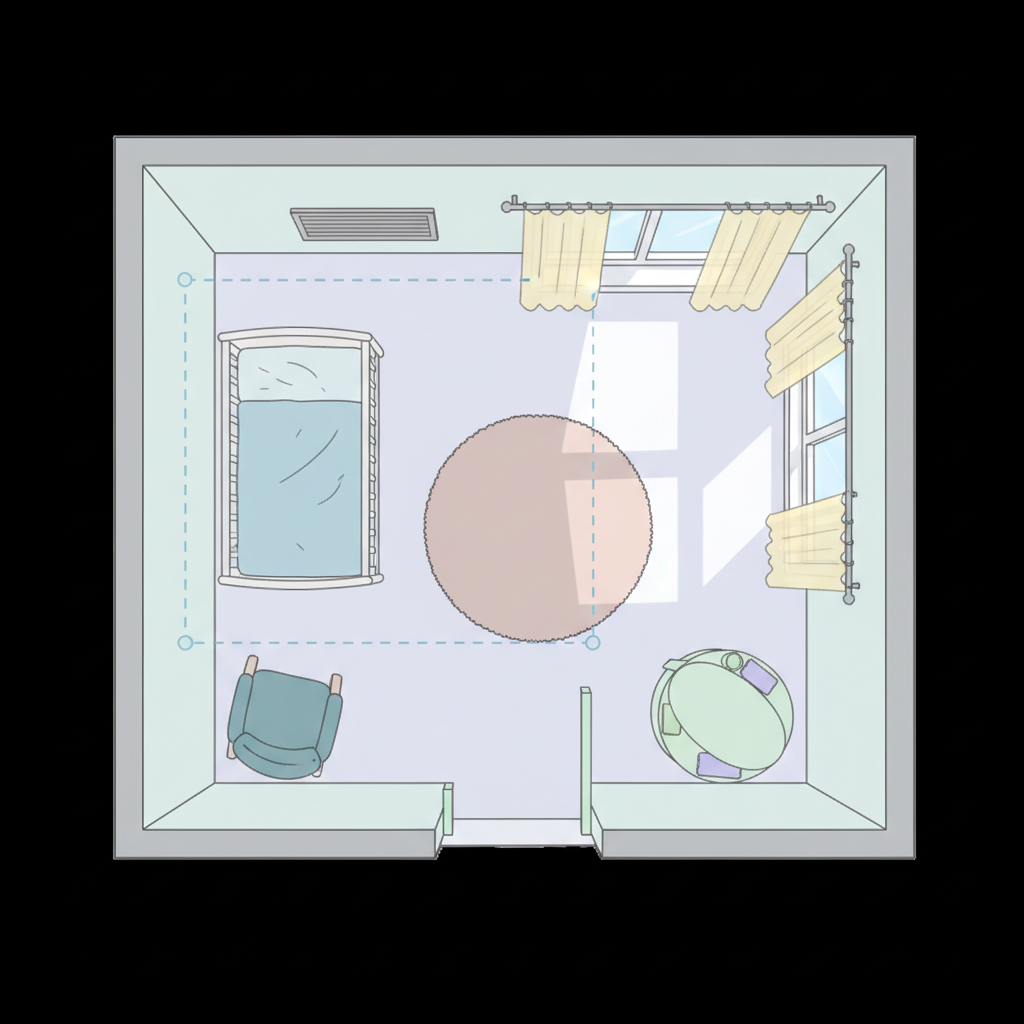
Now that safety, mattress, and placement are settled, you can choose a form factor. Here is the honest comparison:
| Type | Footprint | Lifespan | Best For | Watch-out |
|---|---|---|---|---|
| Standard crib | 30" x 54" | 0–24 months | Most homes | Bulkier in small apartments |
| Mini crib | 24" x 38" | 0–18 months | Studios, second sleep space | Non-standard mattress sizes |
| 4-in-1 convertible crib | 30" x 54" | 0–10+ years | Long-term value seekers | Conversion kits sold separately |
| Portable / travel crib | 28" x 40" (folds) | 0–24 months | Frequent travelers | Not a primary sleep solution per AAP |
Is a convertible crib worth it? Yes, if you will actually use the toddler or daybed conversion kits within four years and the frame is solid hardwood. No, if the conversion kits add more than $200 to the price and you are likely to move to a regular twin bed sooner. The convertible crib is a value play, not a safety upgrade.
If you want to see how these types look in practice with verified certifications, browse the Mamazing crib — it organizes standard, mini, and convertible options by safety credentials and finish material.
One quick note on Montessori floor beds: they are a complement, not a replacement, for a crib in the first 12 months. The AAP's safe sleep guidance still favors a certified crib as the primary sleep surface during infancy.
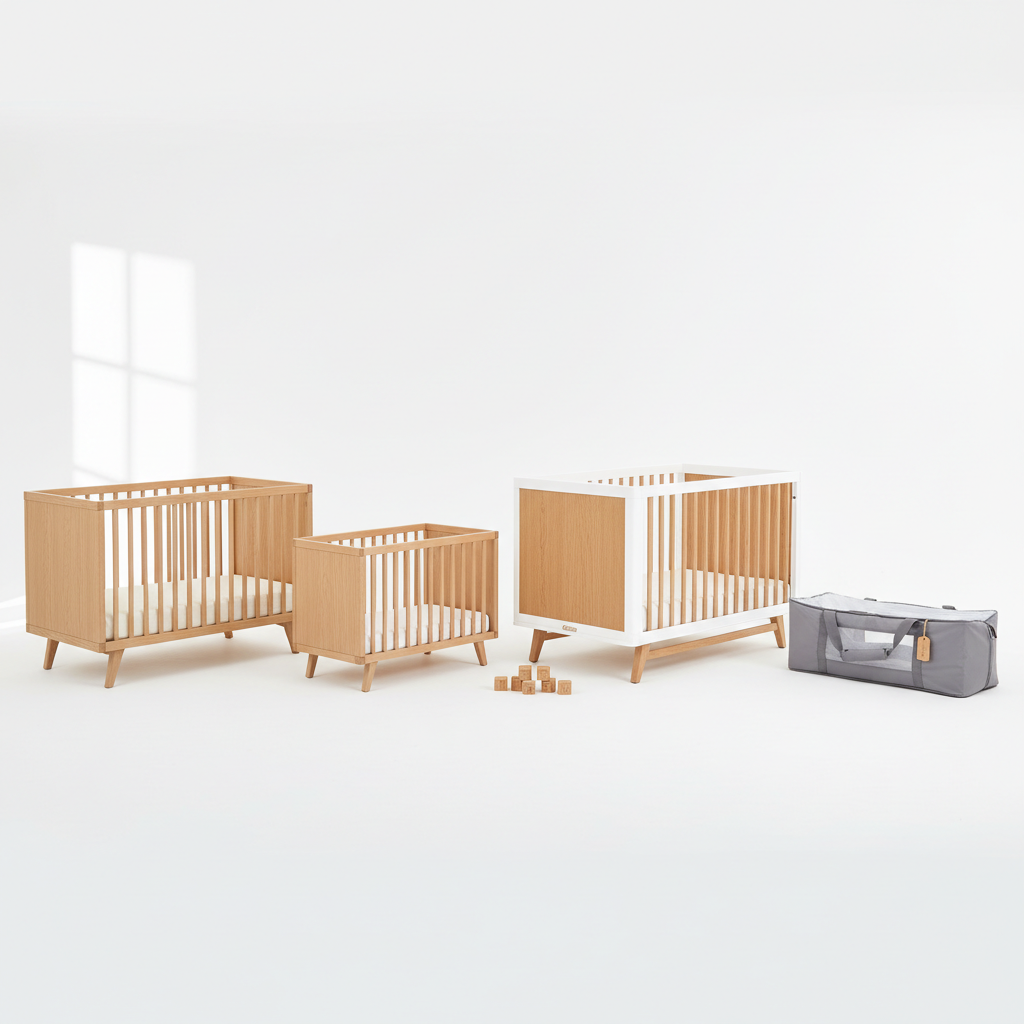
Price tiers in the crib market mean something — but probably not what you think. Here is the honest breakdown:
Here is the key insight most parents miss: price does not buy extra safety beyond CPSC compliance. A $200 JPMA-certified crib is, by federal standard, as safe as a $1,200 one. What the premium tier actually buys is durability, finish quality, longevity through conversions, and ethical sourcing — not safety improvement.
The "quiet luxury" 2026 nursery trend — neutral tones, oak and walnut finishes, minimalist silhouettes — drives a real premium for aesthetic and sustainability reasons. That is a legitimate preference. Just do not confuse aesthetics with safety.

Save this, screenshot it, print it — whatever works. Run through every item before your baby's first night in the crib.
This is what a safe sleep crib setup looks like in practice — a bare crib, a firm mattress, a fitted sheet, and nothing else. Boring is the goal.

Look for JPMA certification, a manufacture date of 2012 or later, slat spacing no wider than 2 3/8 inches, sturdy metal-to-metal hardware, and a non-toxic, low-VOC finish. These five checks cover federal safety standards and the most common 2026 recall causes.
A crib mattress should be firm enough that pressing your elbow into the center leaves no impression and the surface rebounds immediately. Soft mattresses raise SIDS risk, so the AAP recommends a flat, firm sleep surface for all infants under 12 months.
No. Place a crib at least 3 feet from any window to avoid drafts, direct sunlight, temperature swings, and the strangulation risk from blind or curtain cords. An interior wall away from vents and windows is the safest placement zone.
The 2-finger rule means there should be no more than two adult fingers' width of gap between the mattress and any side of the crib frame. A larger gap creates an entrapment hazard for arms, legs, and the head.
Convertible cribs are worth it if you plan to use the toddler or daybed conversion within four years and the frame is solid hardwood. If conversion kits cost an extra $150–$200 and you'll move to a regular bed earlier, a standard crib offers better value.
The AAP recommends room-sharing — with the baby in a separate crib or bassinet, not the parents' bed — for at least the first 6 months and ideally up to 12 months. This setup is linked to a SIDS risk reduction of up to 50%.
Only if the crib was manufactured after June 2011, has all original hardware, has not been recalled, and meets current slat-spacing rules. Verify the model number against CPSC.gov/Recalls before use; when in doubt, replace it.
A standard crib mattress measures 27 1/4 inches wide by 51 5/8 inches long, with a maximum thickness of 6 inches. Mini cribs require a smaller, non-interchangeable mattress — usually around 24 by 38 inches.
If this guide felt long, that is the point — choosing a crib is the most safety-critical purchase in your nursery, and shortcuts are how mistakes happen. Come back to the three-layer framework whenever the decision feels overwhelming: safety first, mattress second, placement third.
If you only remember two things from everything above, remember the elbow press test for the mattress and the 2-finger rule for the gap. Those two checks alone catch the majority of preventable risks in a brand-new nursery.
When you're ready to look at specific cribs that already meet the certifications discussed above, the Mamazing crib is one starting point organized by safety credentials and finish material. Bookmark this nursery crib guide and revisit it before your mattress lowering milestones — your baby will reach them faster than you think.
Featured Products


Stroller Storage Ideas for Cars, Entryways & Small Homes
Do You Need a Reclining Nursery Chair?