
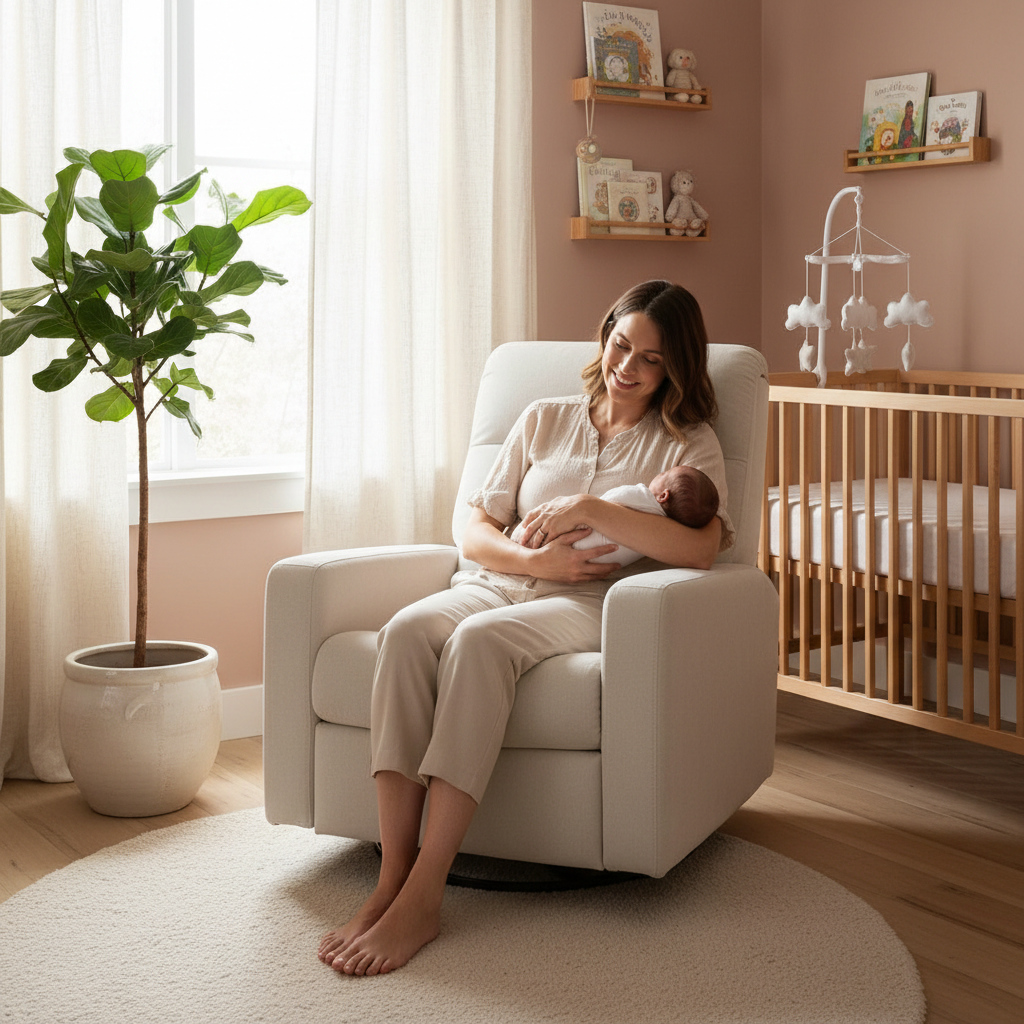
- by WengGracy
Are Electric Nursery Glider Recliners Worth It? A Deep Dive Review
- by WengGracy
An electric nursery glider recliner sounds like the kind of upgrade you either love forever or regret when the box arrives. It promises one-touch reclining, easier late-night feeds, smoother recovery days, and a little less wrestling with a footrest while holding a baby. But it also costs more, needs an outlet, and adds a motor to a chair you may use every day.
This electric glider recliner review is for parents asking the real question: is an electric nursing chair worth it, or is a manual glider good enough? The short answer is that a nursery glider recliner electric model is worth it for high-use feeding routines, postpartum recovery, and anyone who wants effortless recline while holding baby. It is less compelling if your nursery is tiny, your budget is tight, or you only need a simple rocking seat.
Mamazing designs nursing chairs for the ordinary, repeated moments of early parenthood: feeding, soothing, pumping, sitting back down after you just stood up, and doing it all again. The right chair should make those moments easier, not just look beautiful in nursery photos.
An electric nursery glider recliner is most worth it when you expect the chair to become a daily workstation, not a decorative corner seat. If you will feed, pump, soothe, read, and recover there for months, the power mechanism can reduce friction in small but meaningful ways.
It is worth considering if:
It may not be worth the upgrade if you have no convenient outlet, your room cannot handle recline clearance, or you would rather spend the budget on a crib mattress, storage, stroller, or other gear you know you will use daily.
If you are still choosing between chair types, start with this glider vs recliner for nursery guide first. If you already know you want powered comfort, browse a nursery glider recliner electric option that fits your space, feeding style, and support needs.
A standard glider moves back and forth on a fixed track. A manual recliner lets you lean back and lift the leg rest with a handle, lever, or body pressure. An electric nursery recliner uses a motor so you can recline or return upright with a button.

Depending on the model, power features may include:
The important distinction is control. With a manual chair, your legs and core help open or close the recliner. With power recline, the chair does more of that transition. That sounds minor until you are holding a sleeping newborn, recovering from a C-section, or trying not to wake a baby with the clunk of a manual footrest.
The trade-off is that electric mechanisms add weight, a cord, a motor, and more parts that could eventually need service. A power nursery recliner is not automatically better. It is better when the powered movement solves a real daily problem.
The best electric glider recliner review should not stop at whether the chair reclines. Almost every power recliner can do that. The real test is whether it supports a parent during repetitive, tired, one-handed tasks.
For nursery use, smoothness matters more than range. You want a glide that helps soothe without jerky movement. The recline should be gradual enough that you can adjust while holding baby without feeling dropped backward.
A power recliner does not need to be silent, but it should not grind, buzz loudly, or startle a sleepy baby. If you can test in person, listen while moving from upright to reclined and back again. If shopping online, read reviews that mention motor noise after several weeks, not only first-day impressions.
A soft chair can feel luxurious for five minutes and tiring after thirty. Look for a seat that lets you sit back without sinking so deeply that your knees rise too high or your lower back rounds. Armrests should support your elbows while feeding. If the armrests are too low, your shoulders do extra work.
Measure before you fall in love with a chair. You need space for the chair's back, leg rest, swivel or glide path, side table, and walking route. In a compact nursery, a chair that technically fits may still feel annoying if you have to move a hamper every time you recline.
Power recliners need electricity, and nurseries collect cords quickly: monitor, lamp, sound machine, humidifier, pump, and phone charger. A good setup keeps the recliner cord away from walkways, wheels, curious toddlers, and the glide mechanism. The power feature is only convenient if the cord does not create a daily hassle.
The most honest way to judge the electric upgrade is to separate comfort from convenience. A manual chair can be comfortable. A power chair can be comfortable and easier to operate while your hands are busy. That ease is the upgrade.
| Factor | Power recliner advantage | Trade-off | Worth-it signal |
|---|---|---|---|
| Recline control | Button operation | Needs power | You often hold baby while adjusting |
| Postpartum use | Less leg and core effort | Higher price | Recovery comfort matters |
| Night feeds | Smoother position changes | Motor noise varies | You feed often overnight |
| Room setup | Can replace glider plus ottoman | Needs outlet and clearance | Your layout supports it |
| Long-term use | Works beyond baby stage | More parts than manual chairs | You want a family-room chair later |
For many families, the main power nursery recliner pros cons question comes down to frequency. If you use the chair once a day, manual may be enough. If you use it six to ten times a day across feeding, pumping, burping, reading, and soothing, the power mechanism starts to feel less like a luxury and more like a daily convenience tool.
An electric nursery recliner can be a wonderful feeding and soothing chair. It is not a crib, bassinet, play yard, or safe sleep product. This distinction matters because recliners are comfortable for adults, and comfort can make tired parents sleepy.

CPSC safe sleep guidance says babies should be moved to a crib, bassinet, play yard, or bedside sleeper if they fall asleep elsewhere, and warns that a seated or semi-reclined position can cause a baby's head to tip forward and block the airway in its Safe Sleep guidance. NICHD's Safe to Sleep program also says babies should never sleep on an adult bed, couch, or armchair and notes that couches and armchairs are especially dangerous when an adult falls asleep while feeding or comforting baby in its safe sleep environment guidance.
That does not mean you should avoid recliners. It means you should use them with a clear plan:
Recliner mechanisms deserve respect around mobile babies and toddlers. CPSC has warned parents about child accidents in recliner chairs involving children climbing or playing on the leg rest while the chair was reclined in a national safety alert. Older CPSC recliner recalls also identified spaces between the seat and footrest as possible child head entrapment hazards when openings were too large in a recliner recall notice.
The takeaway is simple: buy for adult comfort, feed with supervision, and treat the recliner mechanism like a moving part that children should not play with.
An electric nursing chair is most valuable when it removes a specific pain point. The best buyers are not necessarily the parents with the biggest nursery. They are the parents who will benefit from easier transitions several times a day.
After birth, small movements can feel surprisingly big. If standing, bending, or pushing a manual footrest is uncomfortable, power recline can make the chair easier to use. This can be especially helpful after a C-section because you can change position with less abdominal effort.
When you are half awake, every extra step feels larger. A quiet button recline, supportive arms, and a stable seat can make night feeds smoother. The value is not only comfort. It is fewer awkward movements when you are tired.
Pumping often requires a predictable seat, easy reach, and enough support to sit for a full session. A power nursery recliner can help if it lets you sit upright for setup, recline slightly for comfort, and keep pump controls close without balancing everything on your lap.
If multiple caregivers will use the chair, electric controls can make the experience more consistent. A grandparent, partner, or babysitter may find a power button easier than a stiff manual handle or footrest.
A good electric glider recliner can move to a bedroom or reading corner after the baby stage. If you see it as a long-term comfort chair rather than a short-term nursery purchase, the cost can be easier to justify.
Manual recliners still make sense. They are often lighter, simpler, less expensive, and easier to place away from an outlet. Electric recliners make sense when convenience, recovery, and easy adjustment matter more than the lowest price.
| Choose manual if | Choose electric if |
|---|---|
| You want the lowest cost. | You want one-touch recline. |
| No outlet is nearby. | An outlet is easy to reach safely. |
| You rarely recline while holding baby. | You adjust positions during feeds often. |
| You prefer fewer mechanical parts. | Convenience matters more than simplicity. |
| The room is extremely tight. | The room has enough recline clearance. |
If you are comparing several chairs and want a broader list of glider styles, a best nursery glider guide can help you map comfort features to room size. If you want a closer look at a Mamazing powered option, read this Mamazing recliner review as a product-specific next step.
Before you decide that an electric nursing chair is worth it, check the unglamorous details. These details decide whether the chair feels wonderful in your actual nursery.
Do not measure only the chair width. Measure the back clearance, front leg-rest clearance, swivel path, and the space you need to walk around while carrying baby. If the recliner blocks the crib, dresser, or doorway when open, daily use will feel cramped.
The return motion matters as much as the recline. You will often need to sit up while holding baby, answering the door, or reaching for a burp cloth. The motion should feel controlled, not sudden.
Nursery chairs face milk, spit-up, lotion, snacks, and sleepy coffee mistakes. Look for upholstery that feels soft but is realistic to clean. Light fabrics can be beautiful, but stain resistance matters if this is your main feeding chair.
The safest cord is the one you are not stepping over. Place the chair near an outlet if possible, use the manufacturer-approved power setup, and keep cords out of the chair's moving path. Avoid creating a loop where a toddler could pull or trip.
Because electric chairs include motors and controls, warranty clarity matters. Check what is covered, how long the motor is covered, and what service looks like if a button or mechanism stops working.
Electric nursery glider recliners are worth it if you expect frequent feeding, pumping, soothing, or postpartum recovery use. They are less necessary if you only need occasional rocking or have limited space and budget.
An electric nursing chair can be safe for supervised feeding and soothing when used according to the manufacturer's instructions. It should not be used as a baby sleep space, and children should not play on the recliner mechanism or leg rest.
The main pros are one-touch recline, easier position changes, better late-night convenience, and less effort during recovery. The main cons are higher cost, outlet dependence, heavier weight, cord management, and more mechanical parts.
They need enough space for the backrest, leg rest, glide or swivel movement, and a safe cord route. Some models are compact, but you should measure the full open position before buying.
Power recline may be more comfortable after a C-section because you can adjust without pushing a manual footrest with your legs or core. Always follow your clinician's guidance for recovery and lifting.
No. If baby falls asleep, move them to a firm, flat, approved sleep surface such as a crib, bassinet, play yard, or bedside sleeper. A recliner is for supervised feeding and soothing, not infant sleep.
Check seat support, arm height, motor noise, recline clearance, cord placement, upholstery care, warranty coverage, and how easily the chair returns upright while you are holding baby.
A well-made electric nursery chair should last beyond the baby stage if the frame, upholstery, motor, and controls are durable. Warranty terms and customer support are important because powered parts are more complex than manual mechanisms.
So, is an electric nursing chair worth it? Yes, if the power mechanism solves a daily problem: easier reclining while holding baby, more comfortable recovery, smoother night feeds, or long-term use beyond the nursery. No, if you only need a simple seat, cannot place it safely near power, or would rather keep the nursery budget lean.
The smartest choice is not the most expensive chair. It is the chair that fits your room, your body, your feeding routine, and your safety plan. Mamazing nursing chairs are designed around those real routines, so your nursery chair can earn its place every day, not just on delivery day.
Featured Products


Correct Posture in a Nursing Chair: How to Prevent Back and Neck Pain
Essential Nursery Furniture Checklist for New Parents