
- by FangRussell
Small Nursing Chair for Nursery: How to Choose a Compact Chair for Small Spaces
- by FangRussell
If your nursery is short on floor space, a small nursing chair can absolutely be worth it. The key is not just buying the narrowest chair you can find. It is choosing one with a manageable footprint, enough wall and swivel clearance, supportive arms and back, and a seat you can still use comfortably during long feeds, contact naps, and middle-of-the-night settling.
That is why the best small nursing chair for nursery use usually balances four things at once: compact size, motion that works in a tight room, feeding comfort, and easy day-to-day cleanup. If you start there, you are much more likely to end up with a chair that fits your room and still feels good at 2 a.m.
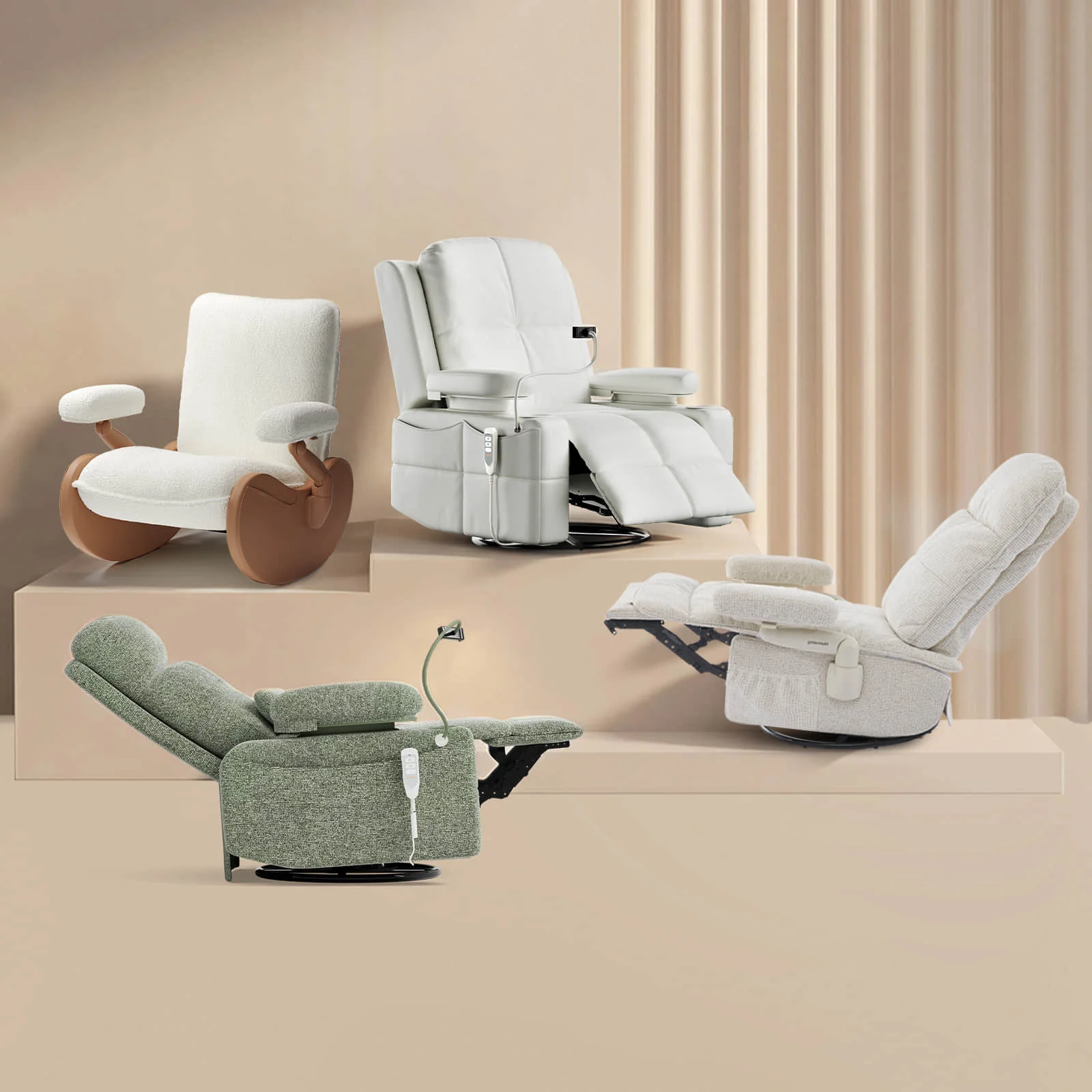
In other words, small should mean space-smart, not stripped down. This guide will help you figure out what to measure, which chair styles work best in a tight nursery, and when a compact glider or recliner is a better choice than a classic rocker. Along the way, we will also point you toward a few Mamazing options if you already know you want something made for feeding comfort and small-room practicality.
A small nursing chair makes sense when your nursery has to hold more than one job at once. Most parents are not furnishing a showroom. They are trying to fit a crib, storage, a changing setup, and enough walking room into a standard bedroom or a converted corner. In that setting, a bulky recliner can make the room feel harder to use, not more comfortable.

A smaller chair can actually work better if it still gives you the support you need in the places that matter most. For nursery use, that usually means:
The goal is not to make the chair disappear. The goal is to make it feel like it belongs in the room and in your routine.
If you are wondering how to choose a nursery chair for small spaces, start with measurements and movement before you get distracted by fabric or color. A chair can look slim on a product page and still become awkward once it reclines, swivels, or needs space behind it.
Here are the four things that matter most:
A good small-space checklist is simple: measure the chair upright, measure it in motion, and picture yourself getting in and out while holding a baby. That real-life test is often more useful than any marketing phrase like “compact” or “space-saving.”
Before you commit to a compact nursing chair, measure three dimensions in your nursery:
If you have a very narrow nursery, it also helps to tape the chair footprint on the floor before you buy. That makes it easier to judge walking paths, drawer clearance, and whether you still have space for a basket or side table.
For a small nursery, the best motion type is usually the one that gives you the most comfort with the least wasted movement. That is why many parents in tighter rooms end up preferring a glider or compact recliner over a traditional rocking chair.

If your top priority is a narrow nursing chair that still feels practical, a compact glider is often the safest starting point. If your top priority is recovery comfort or longer feeds, a compact recliner with an integrated footrest can make more sense than a chair-plus-ottoman setup.
In a small nursery, a separate ottoman can become one more thing to step around. That is why integrated leg support is such a strong space-saving feature. You still get the ability to put your feet up, but when you are done, the footrest disappears back into the chair footprint instead of permanently claiming floor space.
That matters most if your chair sits near a crib, a dresser, or the doorway. A smaller room usually rewards furniture that can shift between “in use” and “out of the way” without needing extra pieces around it.
A small nursing chair only works if it supports the way you actually feed and settle your baby. Parents often worry that a compact chair will feel cramped, but discomfort usually comes less from the overall size and more from missing support in the wrong places.
Look for these features first:
This is also where a compact chair can surprise you in a good way. A chair with a snugger seat, good lumbar support, and well-placed arms can feel more useful than a much larger recliner that encourages slouching.
If you are searching for a narrow nursing chair or compact nursing chair, it helps to separate small footprint from small support. They are not the same thing. A chair can have a slimmer profile while still giving you full back support, stable arm placement, and enough room to shift your position naturally.
That is why comfort testing should focus on the tasks you will actually do there: feeding, burping, reading, holding a sleeping baby, and standing back up without strain. If the chair works for those moments, it is doing its job, even if it is not oversized.
If you want one fast answer to what makes a space saving nursing chair worth buying, prioritize features that solve a real small-room problem rather than just sounding impressive.
Mamazing models are designed around many of these same priorities. For example, if you want a compact chair that still gives you deep recline and washable fabric, the Mamazing nursing chair collection is the most direct place to compare what fits your room and feeding style.
Once you know what matters, the choice becomes easier. If you prefer a compact chair with smooth motion and a strong small-space profile, start by comparing which model solves your biggest constraint: room size, cleanup, or recline comfort.
| Model | Best for | Small-space strength |
|---|---|---|
| Lullacloud | Parents who want deep recline and washable fabric | Slim profile, swivel, integrated leg rest |
| Lullapod | Parents who want an all-in-one recliner feel | No separate ottoman, easy transition beyond the nursery |
If you are still comparing chair types, Mamazing's guide to the best rocking chair for nursery is a useful next read. And if your main question is broader than this article's small-space focus, the guide on how to choose the best nursing chair helps you compare comfort priorities in more detail.
Many nursery chair regrets happen because parents only compare width. In reality, the most common small-room mistakes are choosing a chair that cannot recline cleanly, blocks a drawer or closet door, or leaves nowhere to put a bottle, water, or burp cloth.

Before you buy, ask yourself:
Those questions usually lead to a better answer than chasing the smallest possible dimensions.
A compact chair is often the right answer for a small nursery, but not always. If you are very tall, recovering from a difficult birth, or know you need long, frequent contact-nap sessions, an ultra-small seat can start to feel limiting even if it technically fits the room.
That does not mean you need the biggest recliner available. It means you should be honest about how you will use the chair. If your priority is maximum lounge comfort, a slightly larger glider recliner may be a better choice than the narrowest chair on the page. If your priority is preserving walking space and keeping the nursery functional, a more compact seat will usually win.
The best answer is often a middle ground: compact enough for the room, supportive enough for the way you feed, soothe, and stand up. That is why measuring the room and thinking through your nightly routine matters more than chasing any single keyword like small, narrow, or compact in isolation.
If you want one last filter before making a decision, use this checklist:
If a chair clears those five tests, it is much more likely to become a useful part of your nursery instead of a piece you work around. That is the real goal of a small-space nursery chair: less compromise in the room, and less strain on you.
Start by measuring the chair upright, then measure its recline and motion clearance. After that, prioritize arm support, back comfort, and whether the chair still feels easy to use beside the crib, dresser, or side table. In a small nursery, fit and function matter more than a chair simply looking compact online.
Yes, if it supports your back, arms, and seated posture well. A compact chair can feel more comfortable than a larger one when the seat is stable, the backrest is supportive, and your elbows have somewhere natural to rest during feeding.
A glider is often easier in a small nursery because its movement is more controlled and usually needs less awkward clearance than a traditional rocker. A rocking chair can still work, but you need to be more careful about how much arc space it needs behind and in front.
Not necessarily. In a tight room, an integrated footrest is often more practical because it gives you feet-up comfort without taking up permanent floor space. A separate ottoman can still be nice, but it is one more object to navigate around at night.
The best size is the one that leaves safe walking room around the crib and still allows the chair to move freely. Rather than chasing a single “ideal” number, compare upright footprint, reclined length, and swivel or rocking clearance together before you buy.
The best small nursing chair for nursery use is the one that fits your room without making feeding and soothing feel harder. For most parents, that means choosing a chair that stays compact in footprint but does not cut corners on arm support, back comfort, motion quality, or cleanup.
If your nursery is especially tight, start with the practical questions first: how much clearance do you really have, how often will you want to recline, and do you need a glider, a rocker, or a compact recliner? Once you answer those, the shortlist gets much simpler. And if you want to compare space-smart options built around feeding comfort, Mamazing can be a natural next step.
Featured Products


Best Nursery Chair for Small Spaces: How to Choose a Compact Chair That Still Feels Comfortable
How to Choose a Baby Stroller