
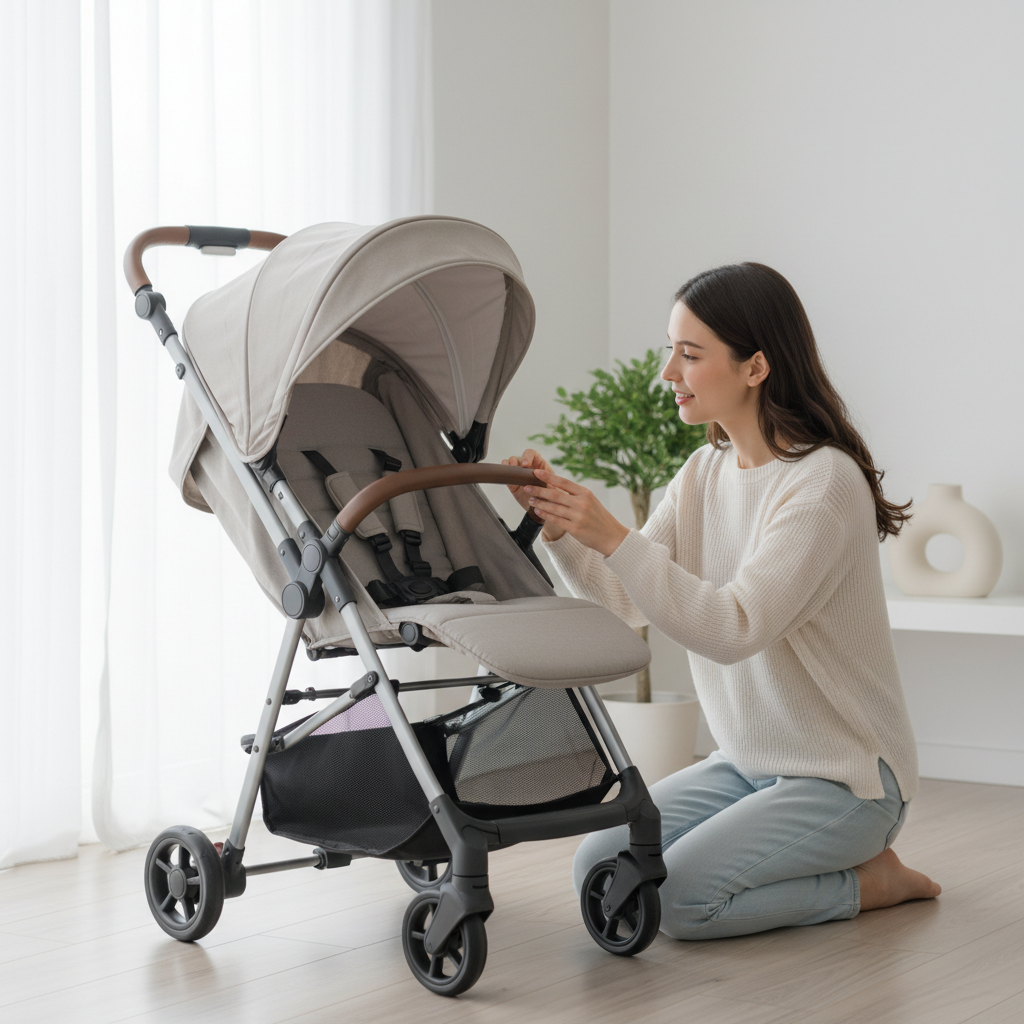
Buying a Used Stroller: Is It Safe? What to Check Before You Buy
- by WengGracy
You found a barely-used premium stroller on Facebook Marketplace for $150. The original price tag was $900. It looks clean. The seller is nice. Your gut says "score." But then a tiny voice asks: is it safe to buy a used stroller for my baby? That hesitation is healthy, and you are in the right place. At Mamazing, we believe smart moms ask hard questions before they hand over cash, especially when the purchase is a stroller. A stroller is not just baby furniture. It is a mobile safety seat with brakes, harnesses, locking mechanisms, and structural joints that all need to work the first time, every time.
The good news is that buying a used stroller can be both wallet-friendly and safe when you know exactly what to inspect. This complete used stroller safety guide walks you through the real risks, the full inspection checklist, the recall check process, deal breakers, and the smart places to shop. By the end, you will know whether to buy that bargain or walk away with confidence.
You are not alone if a secondhand stroller has crossed your radar. The secondhand baby gear market has exploded into a massive industry. According to GoodBuy Gear's 2025 Resale Report, secondhand items now account for roughly 32% of total baby gear value, with the broader resale market valued well over $20 billion. Beyond the dollar amount, families have collectively diverted more than one million baby and kid items from landfills through resale platforms. If you are still weighing new versus secondhand, our deep dive on whether a used stroller is really worth buying walks through the savings and trade-offs in plain language.
Two big forces are driving this shift:
Add the sustainability mindset of Gen Z and Millennial parents, and "secondhand" is no longer code for "compromise." For many, it is intentional parenting. Still, there is one rule that does not bend: a stroller is safety equipment. If the inspection process below feels like more than you want to take on, or if the stroller you found raises any of the deal breakers later in this guide, buying new may be the right move.
Here is the uncomfortable truth: a stroller that looks pristine on the outside can still be unsafe. Wear is rarely visible, and the parts most likely to fail are the parts you are least likely to inspect.
Stroller injuries are not rare. A Scientific American analysis of national CPSC injury surveillance data reports roughly 361,000 children visited U.S. emergency rooms for stroller- or carrier-related injuries over a 20-year window, with falls and tip-overs leading the list. Many of these injuries trace back to invisible wear: micro-cracks at hinge joints, brittle plastic clips, frayed harness webbing, and weakened folding latches.
The harness is the single most underestimated risk. Nylon webbing, the material used for nearly every modern stroller harness, degrades when exposed to ultraviolet light. National Webbing's industrial research shows nylon can lose 25% to 40% of its tensile strength after six months of direct sun exposure, with losses exceeding 50% under prolonged UV conditions. A faded shoulder strap is not just a cosmetic issue. It is a sign the fibers may no longer hold under stress.
Now layer on the recall problem. According to a Consumer Reports investigation citing CPSC data, recall completion rates are often less than 10 percent, meaning the overwhelming majority of recalled units stay in circulation, drift through resale channels, and end up in someone's nursery.
One more line in the sand: strollers manufactured before September 10, 2015 predate the mandatory federal ASTM F833 stroller safety standard. If you cannot confirm the manufacture date is on or after that day, you are buying a stroller that was never legally required to meet today's harness, structural, and stability rules. For a fuller breakdown of how this standard compares to JPMA and European EN certifications, see our guide to stroller safety standards explained.
Before you talk price, before you load it into your car, before anything: check the recall status. Federal law prohibits sellers from offloading recalled products, but enforcement in private resale is nearly impossible. The responsibility falls to you.
Here is the four-step recall check you can complete in under five minutes:
If the tracking label is missing, illegible, or has been peeled off, you cannot verify the model identity or recall status. That is an automatic walk-away. The CPSC consumer hotline (800-638-2772) can help if you find the label but cannot read every detail. Recalls are not relics either. In early 2026, CPSC ordered the recall of certain AliExpress-sold convertible strollers after reports of fall hazards, a fresh reminder that stroller recalls remain an active threat to families shopping resale.
You cleared the recall check. Excellent. Now you need to physically inspect the stroller, in person, with the seller present. Never buy a stroller from photos alone. Bring this used stroller inspection checklist with you and work through every item:

| # | Component | What to Test | Pass Criteria |
|---|---|---|---|
| 1 | Frame | Visual scan of all tubes and joints | No cracks, dents, rust, or bent metal at hinges |
| 2 | Folding latch | Fold and unfold three times | Latch clicks audibly and locks firmly |
| 3 | Brakes | Engage on flat ground, push to test slip | Both rear wheels lock solidly with no movement |
| 4 | Wheels | Spin each wheel; test swivel lock | Smooth rotation, no wobble or grinding |
| 5 | Seat recline | Move through all positions | Glides smoothly, locks at each angle |
| 6 | Five-point harness | Count strap points; buckle and unbuckle | Two shoulder, two waist, one crotch; clicks and releases cleanly |
| 7 | Harness hardware | Inspect plastic buckles and sliders | No cracks, brittleness, or heavy discoloration |
| 8 | Harness webbing | Run fingers full length of every strap | No fraying, stiffness, thinning, or cut fibers |
| 9 | Canopy | Open and close; check seams | Attachment points intact, no torn seams |
| 10 | Hardware | Check every visible bolt and screw | None missing; all snug |
| 11 | Tracking label | Locate and read | Present, legible, dated 9/10/2015 or later |
| 12 | Owner's manual | Request from seller | Provided, or downloadable from manufacturer site |
A few extra pointers as you go:
If the seller hovers, rushes you, or pushes back on a thorough inspection, that is a red flag in itself. A confident seller welcomes scrutiny because it builds trust.
Now to the part every mom thinks about but few articles tackle honestly: how do you deal with the "ick factor"? Strollers live a rough life. Crushed snacks, leaky bottles, rain puddles, daycare drop-offs, dog parks. Even when the surface looks clean, micro-cracks in plastic, silicone, and rubber components can harbor bacteria and mold. For a step-by-step refresher on technique, our guide to cleaning a stroller the right way covers fabrics, frames, and harness webbing in detail.

Before you buy, do this visual hygiene check:
If mold lives on the surface fabric only, you can usually clean it. If it has soaked into the foam padding, the part needs to be replaced or the stroller passed on.
Give the handle bar, the snack tray, and every buckle extra attention. These are the highest-bacteria touch zones, and they happen to be the same spots a baby chews on when no one is looking.
If you only deep-dive into one section of this guide, make it this one. The harness is the seatbelt of the stroller world, and it is the most commonly overlooked piece on resale checks.
Nylon webbing is engineered to be strong, but it is not engineered to last forever. Ultraviolet light is its enemy. Every hour a stroller spends in direct sun, the polymer chains in the harness weaken. By the time a strap looks visibly faded, it has likely lost a measurable percentage of its load-bearing strength. After three years of daily outdoor use, the loss can exceed half of the original tensile rating.
Here is how to read the warning signs on harness webbing:
Most stroller manufacturers quietly recommend retiring harness components after five to seven years of normal use. Confirm the brand's stance directly before buying any stroller that is approaching that age. Some brands sell replacement harness assemblies. Others do not. If replacement straps are not available and the originals show any of the above, walk away.
Padding and cushioning have their own warning signs. Chemical or "off-gassing" smells suggest old foam is breaking down. Pilling and worn-through patches over rigid foam create pressure points. Any of these are reasons to negotiate hard or pass entirely.
Not every secondhand source is equal. Where you shop changes how much risk you absorb. Here is the honest ranking from highest to lowest confidence:
| Source | Confidence | Why |
|---|---|---|
| Certified resellers (GoodBuy Gear, similar) | Highest | Items are inspected, recall-checked, and graded before listing. Return policies exist. |
| Family or close friends | High | Known usage history. Still apply the full inspection checklist. |
| Local consignment baby stores | Medium-High | Staff often vet condition. You inspect in person. |
| Facebook Marketplace (local pickup) | Medium | You inspect in person and meet the seller. No platform-level vetting. |
| Goodwill / Salvation Army | Lower | No history, no manual, no inspection. Possible if the checklist passes. |
| Yard and garage sales | Lower | Same risk profile as thrift stores. Bring the checklist. |
| eBay / Craigslist (shipped) | Lowest | No in-person inspection. Photos hide structural issues. Shipping itself can damage frames. |
The single rule that overrides every source: never buy a used stroller you cannot inspect in person before paying. No exception. A photo cannot show you a hairline crack. A video cannot show you fiber fatigue on a harness strap. A friendly message cannot tell you whether a stroller was in a car accident or a flooded garage. Hands and eyes only.
If a seller refuses an in-person inspection or insists on shipping or no-questions-asked sales, that is a hard pass.
You have done the research. You have brought the checklist. Now you need permission to say no, and you deserve it. Walking away from an unsafe used stroller is not a wasted trip. It is the win. The following are absolute deal breakers. If even one applies, do not buy:
If the used stroller you found has any of these deal breakers, you are better off investing in a new one built to today's standards. Start by reading how pediatricians recommend choosing baby gear, then narrow down models with the features that matter most to your family. A new stroller with current certifications removes every uncertainty this article has named.
One last note on walking away. Sellers are not entitled to your money, and you are not obligated to apologize for prioritizing your baby's safety. A polite "thanks, I'm going to pass" closes the conversation cleanly.
Unlike car seats, strollers do not carry a universal printed expiration date. However, most manufacturers privately recommend replacing strollers after five to seven years because of material aging, UV-degraded harness webbing, and accumulated wear on folding mechanisms. If a stroller shows structural fatigue or harness damage before that mark, retire it sooner regardless of age.
Locate the tracking label on the underside of the frame to confirm the brand, model number, and manufacture date. Then search cpsc.gov/Recalls by brand and model. Read every active recall for that brand. If the tracking label is missing or unreadable, you cannot verify recall status, and that alone is a reason not to buy.
It is generally the safest form of used stroller buying because the usage history is known and the seller has no reason to hide damage. Still apply the full structural and harness inspection checklist, verify the model is not under recall, and confirm the manufacture date is September 10, 2015 or later.
Surface mold on fabric can often be treated with a 1:1 white vinegar and water solution, followed by thorough drying in direct sunlight. However, if mold has penetrated foam padding or if a musty smell persists after a full cleaning, do not use the stroller. Mold spores can trigger respiratory issues in infants, and the risk is not worth the savings.
Only if it passes every item on the structural and harness inspection checklist, is not on any CPSC recall list, was manufactured on or after September 10, 2015, has a fully functional five-point harness, and meets the manufacturer's lie-flat or near-flat specifications for newborn use. When any of those boxes is uncertain, a new stroller certified for newborn use is the cleaner choice.
Look for a manufacture date on or after September 10, 2015. That is when the federal ASTM F833 standard became mandatory in the United States, requiring tested harness placement, structural integrity, stability under load, and folding latch safety. Anything earlier predates those rules.
Appearance is not a safety indicator. UV-degraded harness webbing, micro-cracks in plastic clips, and weakened frame joints are all invisible to a quick glance. A used stroller that looks pristine still needs the full hands-on functional inspection in this guide before you trust it with your baby.
Here is what to take away. Buying a used stroller can absolutely be safe, sustainable, and budget-smart, but only when you treat the stroller like the safety device it is. Check recalls first. Run the twelve-point inspection. Inspect the harness with the seriousness it deserves. Walk away from any deal breaker. Clean deeply after purchase. Register the stroller in your name. That is the formula.
If the used stroller you found checks every box, congratulations. You just saved hundreds of dollars and kept a perfectly good piece of gear out of the landfill. If the inspection raised concerns, or if the whole process feels like more than you want to manage as a new or expecting mom, there is no shame in choosing new. At Mamazing, we curate strollers that meet current safety standards straight out of the box, so you spend less time inspecting and more time enjoying those first stroller walks.
For a broader look at choosing baby gear with confidence, read how pediatricians recommend choosing baby gear. You are doing the work that matters, mama. Your baby is lucky to have you asking the hard questions.
Featured Products


3-in-1 Strollers: Are They Really Worth It for New Parents?
How to Rock Baby to Sleep in a Nursery Chair: 7 Proven Techniques