
- by Artorias Tse
How to Choose the Best Travel Stroller for Your Next Trip
- by Artorias Tse
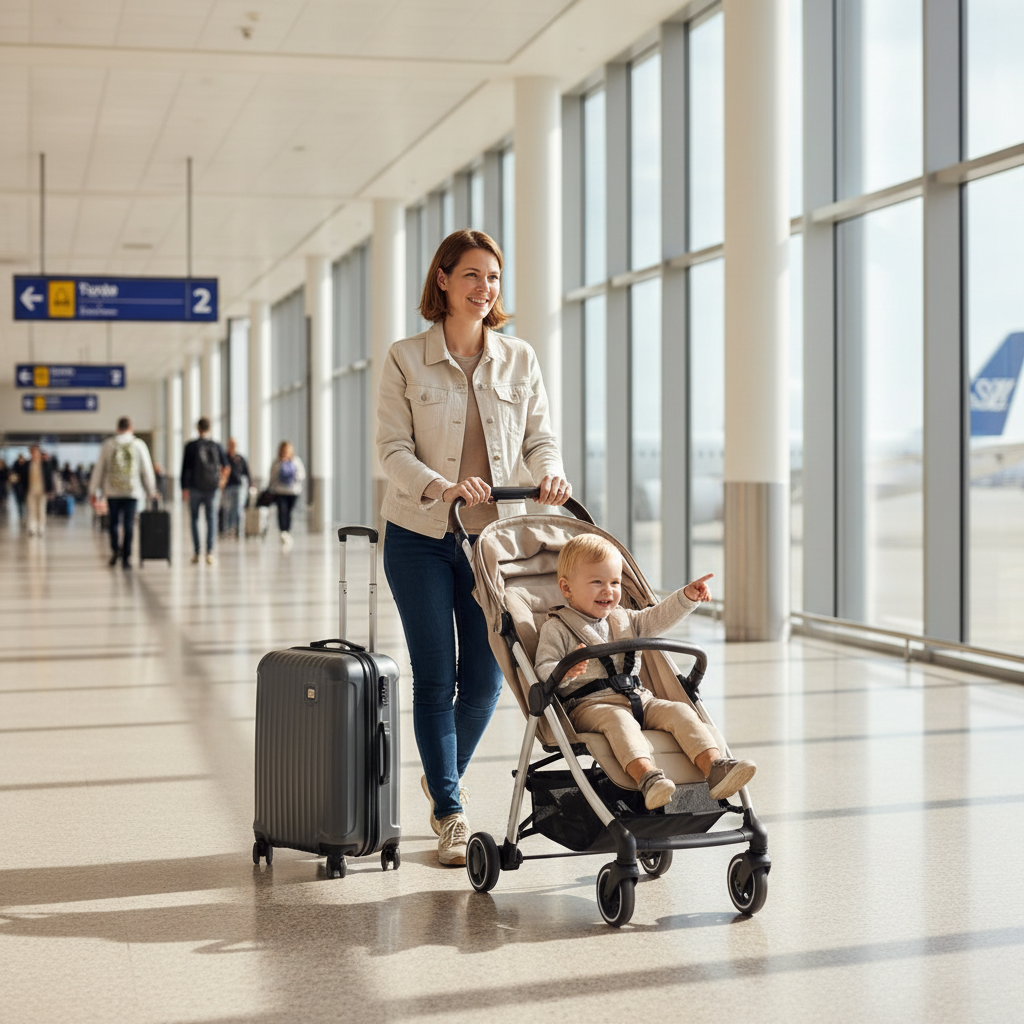
If you want the short answer first, the best stroller for travel is usually the one you can fold quickly, lift without a second thought, steer through tight spaces, and still trust when your child is tired, sweaty, or asleep between stops. That sounds simple, but it is where many family trips go wrong: parents buy for the product page, then discover at the airport gate, on a cobblestone street, or halfway through a long museum day that the stroller does not actually fit the trip.
Travel with kids does not have to mean shrinking your world. It just means choosing gear that matches the way you really move. If your plan includes airports, public transit, taxis, hotel elevators, narrow sidewalks, or rougher walking paths, a good travel stroller should make those transitions easier instead of adding one more thing to wrestle with. In this guide, you will learn how to choose a travel stroller based on weight, fold, comfort, safety, terrain, and toddler practicality, so you can buy once with a much clearer idea of what will work.
A lot of parents start by asking for the lightest stroller they can find. Lightweight matters, but it is not the whole story. A stroller can be light and still feel annoying if it folds awkwardly, tips when you hang a bag on it, or struggles on uneven streets. That is why it helps to judge a stroller the way you would judge a suitcase: not just by specs, but by how it behaves during a real travel day.
A good travel stroller is not just a smaller stroller. It is a stroller that saves effort in motion. The strongest choices usually combine low carry weight, a compact fold, predictable steering, enough comfort for naps-on-the-go, and a setup that does not make you dread transitions.
When you compare options, focus on these six areas first:
If you already know you need more help comparing feature tradeoffs, Mamazing's guide on what makes a good travel stroller is a useful next layer after this article.
The smartest way to choose a travel stroller is to work backward from the trip you are actually taking. “Travel stroller” is a broad label. A stroller that feels perfect for airport hops and hotel elevators may feel underbuilt on broken sidewalks or park paths. On the other hand, a stroller that handles rougher ground beautifully may feel bulky when you are trying to stash it in a taxi or weave through a crowded train station.
For flights, train stations, and dense city travel, portability usually wins. You want a stroller that folds fast, stands or carries neatly when collapsed, and does not take over every doorway, cafe aisle, or security line. This is the use case where a compact travel stroller can feel worth every penny. If you will be lifting it repeatedly, shaving a few pounds matters. If you will be opening and closing it several times a day, folding mechanics matter just as much.
This is also the trip type where parents often overbuy. A stroller with oversized wheels, extra padding, and a big frame can sound reassuring online, then feel exhausting when you are moving through terminals and public transit. If your itinerary is mostly paved and fast-paced, lean toward compactness first.
Queries like “best travel stroller for Europe” usually come from a very real anxiety: old streets, uneven sidewalks, public transit, tight hotel rooms, and a lot of walking. In that situation, the best choice is rarely the absolute smallest stroller and rarely the heaviest all-terrain model either. What you want is balance: enough wheel quality and suspension to deal with rougher patches, but still compact enough to fold, carry, and store without turning every transfer into a scene.
If Europe travel is your main use case, pay extra attention to wheel quality, steering on uneven surfaces, and how stable the stroller feels once a tired toddler is leaning sideways. A little more wheel competence often matters more than chasing the tiniest folded footprint.
Road-trip families usually have more flexibility on folded size, so comfort and endurance become more important. A slightly larger seat, better canopy coverage, and smoother rolling wheels can make a long day feel easier for everyone. You may not need a stroller that fits overhead-bin dimensions; you may need one that stays pleasant after three hours of stop-and-go walking.
If your trip includes zoos, parks, boardwalks, or long sightseeing days, think less about “smallest possible” and more about “least annoying over ten hours.” That mindset often leads to better choices.

The main difference is not just size. A regular stroller is often built for daily comfort and storage capacity first. A travel stroller is built for transitions. That means it should be easier to fold, easier to carry, easier to steer through busy spaces, and less frustrating when plans change quickly.
| What you care about | Travel stroller | Regular stroller |
|---|---|---|
| Lifting and carrying | Usually lighter and easier to lift repeatedly | Often heavier, especially after a long day |
| Fold and storage | Faster fold, smaller footprint, easier in taxis and hotel rooms | Bulkier when folded, less convenient in transit |
| Comfort for long outings | Good models balance comfort with portability | Can feel roomier, but that often comes with size tradeoffs |
| Rough-surface performance | Varies widely; some are great, some are shaky | Often more stable if wheels and frame are larger |
| Best for | Flights, transit, compact storage, mixed city travel | Home routines, long neighborhood walks, fewer fold-and-carry moments |
If you want a deeper look at portability-focused options, Mamazing's article on a lightweight stroller for travel pairs well with this comparison.
Sometimes yes, but not by default. An all-terrain or off-road-friendly stroller makes sense when your trip includes gravel paths, rough sidewalks, park trails, older streets, or frequent curb bumps. Bigger wheels and better suspension can reduce the constant jolting that makes a stroller feel cheap and tiring to push.
What many parents miss is the tradeoff. The more terrain-capable a stroller becomes, the more likely it is to gain weight, occupy more trunk space, or feel less nimble in cramped settings. So the better question is not “Is all-terrain better?” It is “Will rough ground be a regular part of this trip?” If the answer is yes, it is worth giving up a little compactness for more wheel confidence. If the answer is no, a slimmer travel-first design usually feels easier day after day.
This matters because `off road stroller` is not always a true off-road question. Sometimes parents really mean “I need something that will not rattle apart on imperfect sidewalks.” That is a smaller ask than full outdoor performance. If your walking surfaces are mixed, look for competent wheels and suspension rather than the most rugged-looking frame.
If you know you will be splitting time between smoother travel days and rougher paths, a model with stronger wheel performance can be worth considering. For example, the Mamazing Ultra Air X sits closer to that “travel but not fragile” middle ground, while the Ultra Air Compact Stroller is the kind of profile that makes more sense when portability is the top priority. The point is not to buy by label, but to match the stroller to your actual surfaces.
Safety features matter most when they are easy to use under stress. On a travel day, nobody is at their most patient. That is why a stroller should not just be technically safe; it should be safe in a tired-parent, moving-fast, real-world way.
Start with the basics: a secure harness, dependable brakes, a fold lock, and a frame that feels stable when your child shifts weight. HealthyChildren.org also recommends checking for openings where a child could get trapped and making sure the stroller cannot collapse unexpectedly.
For trips that include flights or long transport days, the CDC Yellow Book guidance on traveling safely with infants and children is a useful reminder that children should be restrained safely during travel and that transitions create extra risk when adults are distracted. In stroller terms, that means buckling up even for “just a minute,” especially in busy terminals, curbside pickup zones, and sloped streets.
One more boundary matters if your baby tends to nap in the stroller. Transit naps happen, and you do not need to panic about every doze. But for regular sleep, the safest move is still a flat, safe sleep environment once you reasonably can. The Safe to Sleep campaign from NICHD emphasizes a firm, flat sleep surface for routine sleep. So if your baby falls asleep in the stroller during the day, treat that as supervised travel sleep, not a substitute for their regular sleep setup.
Two smaller habits make a bigger difference than parents expect:
A toddler travel stroller needs more than a low weight. It needs patience built into the design. Toddlers lean sideways, ask to get in and out, drop snacks, resist straps, and suddenly decide they are done walking right when you are farthest from the hotel. That means your stroller should feel stable, easy to buckle, and comfortable enough that riding still feels like a relief rather than a punishment.
Look at the seat height, weight limit, recline, foot support, and canopy before you look at accessories. For a toddler, a stroller that is technically usable but cramped or upright-only can become a fight. A slightly more comfortable seat often pays off more than an extra cup holder ever will.
Toddler travel is also where storage becomes more strategic. You are likely carrying snacks, layers, wipes, and a rotating cast of small objects that apparently cannot be left behind. A decent basket helps you keep that load low and centered instead of hanging it from the handle and messing with stability.
If your main concern is finding a lighter option without losing the basics, this roundup on a good lightweight stroller for travel can help you think through the usual tradeoffs.
If two strollers seem close, use this checklist instead of staring at product photos for another hour:
If you can answer those questions clearly, you are usually close to the right choice. If you cannot, you probably need less marketing language and more real-use comparison.

A travel stroller is usually easier to fold, carry, and store, which makes it better for airports, transit, taxis, and compact hotel rooms. A regular stroller can feel roomier for daily life, but it is often heavier and more awkward once you have to lift and fold it several times in one day.
For most parents, “light enough” means you can lift it quickly without bracing yourself or resenting it by the end of the day. You do not need the lightest model on the market if that means giving up too much comfort or wheel quality.
Yes, if your trip includes rough sidewalks, gravel, park paths, or older streets often enough to make wheel quality matter. No, if most of your trip is airports, malls, smooth pavement, and tight storage, because the extra bulk can become the bigger problem.
Start with a compact fold, easy carrying, and wheels that can handle uneven streets without feeling flimsy. Europe trips often involve more walking, tighter spaces, and more transit changes than parents expect, so balance matters more than chasing either the tiniest or the most rugged model.
Sometimes, but usually only if you accept a compromise. The best middle-ground stroller is not the absolute smallest or the most rugged; it is the one that stays manageable in transit while still feeling steady on imperfect ground.
Usually yes, especially on long travel days when a toddler is walking one minute and melting down the next. The key is choosing a stroller with enough seat comfort, canopy coverage, and stability that it still feels practical for a bigger child.
The right travel stroller does not need to be perfect at everything. It needs to be right for the way your family actually moves. If your trips are flight-heavy and compact, prioritize weight and fold. If your days involve more walking and rougher surfaces, give more importance to wheels, steering, and comfort. If you are shopping for a toddler, focus on stability and seat usability instead of just chasing the smallest spec sheet.
And if you are still comparing options, that is normal. The best buying decision usually comes from matching your stroller to your trip, not to somebody else's highlight reel. When you are ready to narrow the field, Mamazing's compact and travel-ready options are a sensible place to compare next, especially if you want one model built around portability and another that leans more confidently into mixed terrain. Either way, choose the stroller that will make you feel calmer on a messy travel day. That is usually the one you will be happiest you packed.
Featured Products


Baby Registry Checklist: Newborn Essentials You Actually Need
Stroller on Bus Tips: How to Use Public Transit With a Foldable Stroller