Best Recliner for Nursery: How to Choose the Right Chair for Feeding, Recovery, and Sleep
by FangRussell
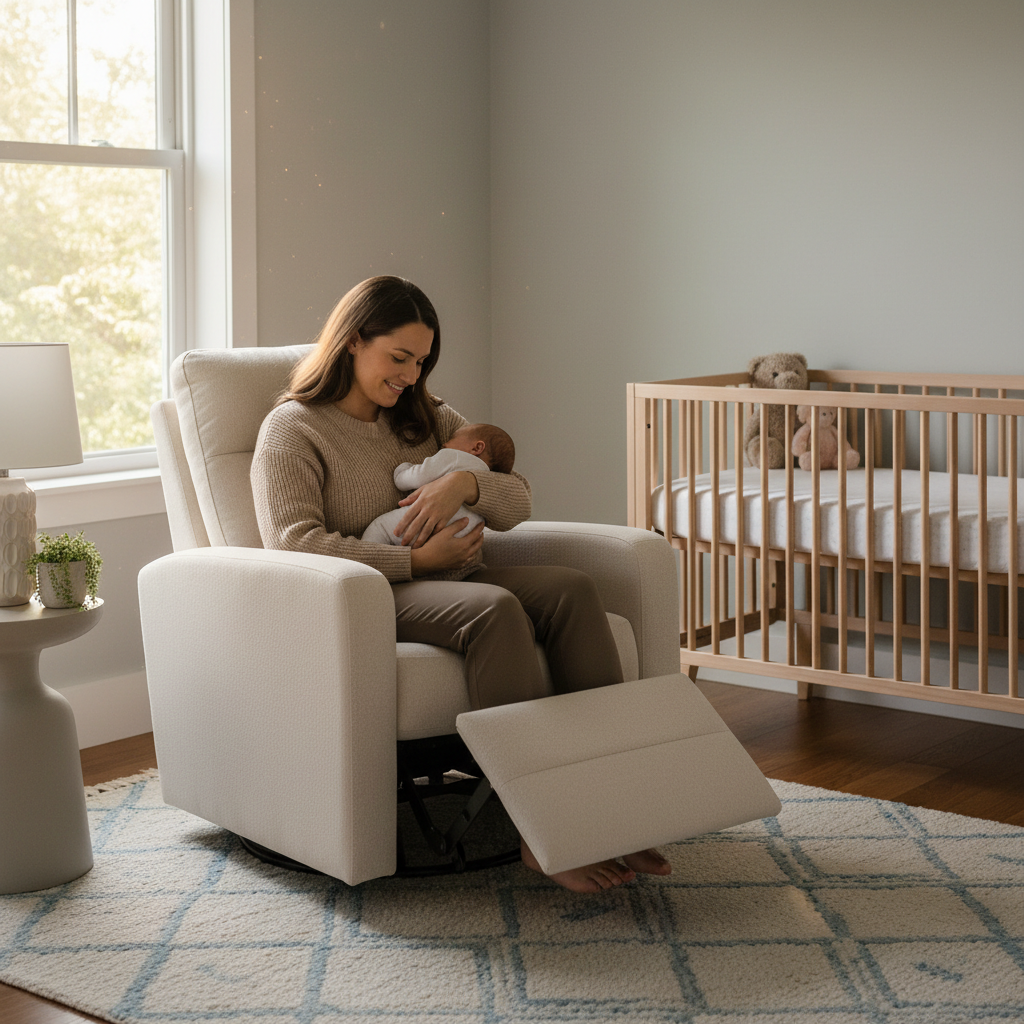
If you want the short answer first, the best recliner for nursery use is the one that matches your real routine: a deep manual recline if you want value and simple comfort, a power recliner if night feeds and recovery support are the priority, and a compact footprint if your nursery has almost no spare floor space. The mistake most parents make is shopping for a pretty chair before they think about how often they will feed, rock, pump, rest, and stand up while holding a sleepy baby.
That is why this guide starts with decision-making instead of fluff. You will see how to compare the most comfortable recliner for nursery life, when a power model is actually worth the price, what matters most for new moms and c-section recovery, and where Mamazing chairs fit if you want a nursery recliner that works hard without taking over the whole room.
Quick answer: the best recliner for nursery depends on how you feed, recover, and rest
The search for the best nursery recliner gets easier when you stop asking for the single “best” chair and start asking which chair is best for your body, your room, and your nights. In practice, most parents fall into one of these groups:
You want the best recliner for nursery comfort on a tighter budget: a manual recliner with a deep backrest, steady rocking motion, and supportive armrests is usually enough.
You expect lots of night feeds or pumping sessions: a power recliner is easier to adjust quietly when your baby is asleep on you.
You are choosing the best recliner for new moms or postpartum recovery: prioritize easy entry and exit, arm support, and a footrest that reduces pressure on your lower body.
You are furnishing a small nursery: footprint, wall clearance, swivel range, and outlet placement matter more than oversized cushioning.
What makes the most comfortable recliner for nursery?
The most comfortable recliner for nursery life is rarely the one with the puffiest seat. Comfort comes from support that still feels good after the third feed of the night, not just for five minutes in a showroom. A smart nursery chair should help you stay close to your baby without forcing your shoulders up, your wrists down, or your lower back into a fight.
Arm support matters more than extra padding
Parents often think softness equals comfort, but feeding comfort is mostly about where your elbows and forearms can rest. If the armrests sit too low, you end up shrugging your shoulders. If they sit too wide, you start stacking random pillows and leaning inward. That is when neck tension and upper-back fatigue show up fast. The best recliners for nursery use give you a stable place to anchor your arms so you can bring the baby to your body instead of folding your body toward the baby.
This is also why some parents who search for the best recliner chair for nursery use end up happier with a purpose-built nursing recliner than with a generic living room chair. Good arm support makes bottle feeds easier, breastfeeding positions steadier, and contact naps less punishing on your shoulders.
Head, neck, and lumbar support decide whether long feeds feel easy or brutal
If you are shopping for the most comfortable nursery recliner, check three things before fabric swatches: where your head lands, whether your lower back keeps its natural curve, and whether your feet can stay grounded when the chair is upright. A high or adjustable headrest matters if you are tall, if you pump often, or if you know you will sit in the chair for long stretches. Lumbar support matters because feeding sessions are repetitive. When the lower back collapses, your rib cage flares, your neck cranes forward, and the chair feels worse every week.
Seat height matters too. A chair that feels cozy but leaves your knees too high or too low can be frustrating when you are trying to stand up one-handed. The best nursery recliners feel calm when you sit down and predictable when you stand up.
A quiet recline and easy exit matter at 2 a.m.
The best recliner for nursery sleep support is not about turning the nursery into a guest room. It is about small mechanical details that make the hard hours easier: a footrest that does not slam, a recline motion you can control gradually, and an exit that does not require a dramatic shove with both hands. These are the details parents remember after week two.
Use this quick comfort checklist when comparing chairs:
Can you rest your elbows naturally without stacking pillows?
Can your head stay supported when you lean back?
Does your lower back still feel supported after 20 minutes?
Can you stand up smoothly while keeping one arm free?
Is the motion quiet enough for middle-of-the-night feeds?
Power vs. manual recliner for nursery
The power-vs-manual question matters because it changes both comfort and workflow. If you are specifically comparing the best power recliner for nursery setups with a manual option, the right answer is usually about how you use the chair, not which spec sheet looks fancier.
Question
Manual recliner
Power recliner
Best for budget?
Usually yes
Usually no
Quiet nighttime adjustment?
Good if the mechanism is smooth, but not always effortless
Best choice for gradual, low-noise movement
Best for recovery or limited mobility?
Can work, but requires more body effort
Often easier when your core and lower body are tired
Works without outlet planning?
Yes
No, placement matters
Best for simple maintenance?
Fewer electronics
More features, more planning
A manual recliner is often the best recliner for nursery shoppers who want straightforward comfort, lower cost, and fewer moving parts. It also makes sense if the chair will later move into a bedroom or reading corner where you do not care about USB ports or motorized adjustments.
A power recliner earns its price when your nursery routine is intense. If you expect long night feeds, frequent pumping, or you simply hate the jolt of pushing a chair open while holding a sleeping baby, a power model is easier to love. The best electric nursery recliner feels less like a luxury feature and more like friction removed from the hardest part of the day.
This is where brand context matters. On Mamazing’s current product pages, the Lullacloud Nursery Chair is positioned as the simpler manual option, with a 165-degree recline, 360-degree swivel, adjustable headrest, and removable washable cover. The Lullapod Nursery Chair is the more feature-heavy power option, with motorized recline, built-in charging, phone and cup holders, and lift-up arm support. If your shortlist already includes Mamazing, the real choice is not “Which one is better?” but “Do I want low-friction power support or deep manual recline with easier cleaning?”
Best recliner for new moms and c-section recovery
The best recliner for new moms should reduce the number of awkward movements you make when your body is still healing. If you had a c-section, this matters even more. Cleveland Clinic says c-section recovery commonly takes about six weeks, and during that time the chair that felt “cute enough” in the store may suddenly feel terrible if it forces you to twist, lunge, or press hard through your abdomen to stand up.
That is why the best chair for c section recovery is usually not the fluffiest one. It is the one that helps you settle in without collapsing backward and helps you stand up without bracing awkwardly through your core. If you are choosing with postpartum recovery in mind, prioritize:
a supportive seat height that lets your feet stay planted;
armrests that actually carry your elbows during feeding;
a controlled recline rather than a sudden drop;
space for a small side table so water, burp cloths, and your phone are within reach.
If you are searching for the best recliner for expecting parents, think beyond the newborn stage. The right chair should still work when you are cluster feeding, bottle feeding, reading board books, or trying to settle a toddler after a bad dream. Recovery needs may get the chair into the nursery, but long-term comfort is what makes it a smart purchase.
Nursery chair vs. recliner: do you actually need a recliner?
Not every nursery needs a recliner. But many parents who begin by shopping for a glider, rocker, or standard nursery chair eventually realize they want a chair that can do three jobs at once: soothe the baby, support feeding posture, and give the parent a place to rest without balancing on the edge of a seat.
A standard nursery chair can work if you mostly want an upright place to feed and read. A rocker is useful if rhythmic motion helps you settle your baby fast. A glider often feels smoother and quieter than a traditional rocker. A recliner wins when adjustability matters most. That is why the best recliners for nursery life are especially appealing if your nights are long, your feeds are frequent, or you know you need more recovery support than a basic chair can offer.
If you are still split between categories, Mamazing already has a helpful nursery glider vs. recliner guide and a separate article on nursery rocking chair recliners. Those are useful next clicks if you want a deeper breakdown of motion styles after you finish this page.
My practical take: if you have a straightforward recovery, limited time in the chair, and plenty of support at home, you may not need a recliner. If you expect to spend multiple hours a day feeding, pumping, contact napping, or recovering in that chair, a recliner quickly starts to feel less optional and more foundational.
How to choose a nursery recliner for small spaces
The best nursery chair for small spaces is not automatically the narrowest one. Small rooms punish bad planning more than big rooms do, so you need to think in movement zones, not just width. Measure the footprint of the chair, the recline clearance behind it, the swivel path beside it, and the space between the front edge of the chair and the dresser or crib.
Use this small-space checklist before you buy:
Check wall clearance: deep recline can eat more room than the upright footprint suggests.
Test seat height: shorter parents usually care more about planted feet than total chair depth.
Map the side table: if there is no place for water and wipes, the chair will feel less usable.
Plan the outlet: a power recliner without easy access to an outlet is a daily annoyance.
Think about future room flow: can you still move around the crib, hamper, and changing area when the chair is fully open?
This is one reason compact manual chairs stay popular. A power recliner can still be the best recliner for nursery comfort in a smaller room, but only if the room layout supports it. Otherwise, the chair becomes the room.
If you want to compare more compact alternatives before deciding, the Mamazing article on best rated rocking chairs for nursery is a useful internal next step, especially if you are balancing comfort against footprint.
Mamazing picks: which chair fits your routine best?
A comparison page only helps if it makes the decision easier, so here is the cleanest way to think about Mamazing’s two best-known nursery recliner options.
Use case
Mamazing Lullacloud
Mamazing Lullapod
Best fit
Parents who want a budget-friendlier manual recliner with deep recline
Parents who want power recline, built-in charging, and premium convenience
Power recline, lift-up armrests, Type-C and USB ports, cup and phone holders
Best for
Value, easy cleaning, deep rest, smaller budgets
Night feeds, postpartum support, tech convenience, less body effort
Trade-off
No built-in charging or motorized movement
Higher price and more space planning
If you want the best nursery recliner for price-to-function value, the Lullacloud is the safer recommendation. If you want the best power recliner for nursery routines that feel nonstop, the Lullapod is easier to justify. That balance also answers many “mamazing recliner reviews” and “mamazing chair dupe” searches: the chair is worth it when the support features solve a real daily problem for you, not just when the silhouette looks stylish online.
In other words, do not buy a premium chair because you feel like you should. Buy one because you already know which pain point you are paying to remove.
Final verdict
The best recliner for nursery use is the one you can still trust when you are tired, sore, and one hand short. For some families, that means a simple manual recliner with strong basics. For others, especially those focused on recovery, quieter night feeds, and fewer awkward movements, it means stepping up to a power recliner.
If you want to keep comparing within the Mamazing lineup, start with the chair that matches your routine instead of the chair with the longest feature list. Then look at motion, support, cleaning, and space in that order. That approach usually leads to a better choice than chasing the trendiest nursery recliner on social media. When you are ready, explore Mamazing’s nursery chair collection and related buying guides to narrow the field with a clearer checklist in mind.
FAQ
Do you need a recliner in a nursery?
You do not always need one, but a recliner makes sense if you expect long feeding sessions, frequent rocking, contact naps on your chest, or postpartum recovery needs that make a basic chair feel too upright and unforgiving.
Is a power recliner worth it for a nursery?
Yes, if quiet movement, smoother recline changes, and easier body positioning will make your daily routine noticeably easier; otherwise, a well-designed manual recliner can still be the best value.
What is the best recliner for c-section recovery?
The best option is a recliner with supportive armrests, planted-foot seat height, controlled recline, and an easy exit, because those features reduce the awkward pushing, twisting, and abdominal strain that feel worst during early recovery.
What makes a recliner comfortable for night feeds?
Stable arm support, head and neck support, lumbar support, quiet motion, and a footrest you can adjust without jolting the baby matter more than extra-soft cushioning alone.
Is the Mamazing recliner worth it if you are comparing dupes?
It is worth it when the specific support features, such as deeper recline, adjustable armrests, washable covers, or power convenience, match your routine better than a lookalike chair that only copies the aesthetic.



What Is a Gliding Recliner? How It Works, Benefits, and Rocker vs Glider Differences
Lullapod Nursery Chair Review: Is It Worth It for Feeding, Comfort, and Small Nurseries?