
- by FangRussell
What Is a Gliding Recliner? How It Works, Benefits, and Rocker vs Glider Differences
- by FangRussell
If you are wondering what a gliding recliner is, the simplest answer is that it is a chair that combines two ideas in one piece of furniture: the smooth back-and-forth motion of a glider and the lean-back comfort of a recliner. It is designed to feel gentler than a traditional rocker while giving the adult a more supportive place to sit, rest, feed, soothe, or unwind.
That basic definition matters because many people see the words glider, rocker, and recliner used almost interchangeably when they shop, especially for a nursery. In practice, they are not the same. A gliding recliner sits in the middle of those categories: it offers motion, but on a more controlled track than a rocker, and it offers more body support than a standard upright chair.
This guide is for readers who want the real answer before they decide whether one belongs in a nursery, a living room, or a reading corner. We will cover how a gliding recliner works, how it compares with a rocking chair, what features actually matter, and where it tends to be most useful.
A gliding recliner is a motion chair that moves in a level, back-and-forth path while also allowing the backrest and footrest to recline. The “gliding” part refers to the smooth horizontal motion. The “recliner” part means you can lean back and usually raise a footrest for a more restful position.
That makes it different from a standard rocking chair, which moves in a curved arc and usually does not offer the same full-body support. It also makes it different from a basic recliner, which may lean back but does not necessarily give you the calming glide that many parents and comfort-focused buyers want.
In other words, a gliding recliner is best understood as a hybrid comfort chair. It is often chosen by parents who want a gentler soothing motion in the nursery, but it can also appeal to anyone who wants a chair that feels more stable than a rocker and more versatile than a simple recliner.

The main difference is in the base. Instead of curved rails like a rocker, a gliding recliner usually moves on a fixed mechanism that lets the seat travel smoothly forward and backward while staying more level. That level path is one reason many people describe a glider recliner chair as feeling calmer, more controlled, and easier to stop without a jolt.
Most models combine several movement functions:
That combination is part of why this chair category shows up in nurseries and living rooms alike. It is not just about motion for motion’s sake. It is about being able to shift between soothing movement, upright support, and deeper relaxation without changing chairs.
If you want broader category context, our recliner chair guide is a useful companion read for understanding where gliding recliners sit inside the larger recliner category.
That practical flexibility is easy to underestimate when you first shop. People often compare only shape or fabric, but the mechanism changes how the chair behaves over a long evening. A chair that can glide gently while you stay upright, then recline when you want to rest, solves a different problem than a chair that only rocks or only leans back. That is why the category feels more useful in real life than the name alone might suggest.
The most important comparison is not “which one is better in every situation?” but “which one matches the kind of support and motion I actually want?” That is where the rocker vs glider difference becomes clearer.
A rocking chair moves in an arc. Some people love that feeling, but others find it less steady, especially when they are holding a baby, standing up repeatedly, or trying to settle into a more supportive feeding position. A standard recliner, on the other hand, gives you lean-back comfort but may offer no soothing movement at all. A gliding recliner sits between the two by pairing motion with more all-body support.
That is also why the live GSC signal around “rocking vs gliding recliner” matters here. Readers are not just looking for a definition. They are trying to understand the tradeoff.
For a deeper nursery-specific comparison, Mamazing’s glider vs recliner for nursery comparison is the natural next read.
People usually buy a gliding recliner for one of three reasons: they want gentler motion, they want a more supportive chair for longer sitting sessions, or they want one piece of furniture that can work in more than one room or life stage.
For parents, the appeal is easy to understand. The glide can feel calmer than a rocker when feeding or soothing, and the recline can make long nights feel a little less punishing. For non-parents, the same chair can function as a reading chair, a recovery chair, or simply the most comfortable seat in the room.
That said, it helps to describe the benefits carefully. A gliding recliner is not a medical device, and it should not be sold as a cure for pain, swelling, or sleep problems. The better way to describe the benefit is that many people find the combination of motion, back support, and reclining more comfortable than a fixed armchair.
Comfort also depends on how the chair supports ordinary use. HealthyChildren notes that when feeding in a chair, sturdy back and arm support can make the position more comfortable and help keep the baby aligned instead of forcing the adult to hunch forward. That guidance appears in HealthyChildren’s breastfeeding positioning guide. That does not mean every gliding recliner is automatically ideal, but it does explain why supportive armrests and a stable backrest matter so much in nursery seating.
It also explains why some buyers end up disappointed when they focus only on looks. A beautiful chair can still feel wrong if the seat is too deep, the armrests are too low, or the motion feels awkward once you are actually holding a baby or trying to read for an hour. The best gliding recliner usually feels less impressive in marketing language than it does in everyday use: it simply makes the posture and motion demands of sitting easier to live with.

Yes, often—but only if the chair’s footprint, recline clearance, and armrest shape actually fit your room. This is one of the most common practical questions behind the “what is a gliding recliner” search, especially for parents furnishing a nursery.
In a nursery, a gliding recliner can make sense because it combines soothing movement with a more supportive sitting position for feeding, holding, or settling a baby. A nursery recliner guide such as this nursery recliner guide can help if you are comparing this chair type specifically for baby-related use.
For small spaces, the answer depends less on the category name and more on the actual chair design. Some gliding recliners have compact profiles or “wall-friendly” layouts that reduce how much room you need behind the chair. Others feel much larger in use than they look on a product page because the armrests, swivel base, or full recline need more breathing room.
If you are using one in a nursery, there is also an important safety boundary: a gliding recliner can be a useful place to feed, cuddle, or soothe a baby, but it is not a safe infant sleep surface. HealthyChildren’s safe-sleep guidance says babies who fall asleep in a stroller, carrier, or other sitting device should be moved to a firm, non-inclined sleep surface as soon as possible, and it also says babies should never be put to sleep on an armchair or sofa. You can review that directly in HealthyChildren’s safe-sleep recommendations.
That distinction matters because nursery marketing sometimes blurs “good for soothing” and “safe for sleep.” They are not the same thing.
For small spaces, another overlooked detail is traffic flow. A chair can technically fit in the room and still make the room harder to live in if the recline blocks a dresser, the swivel hits a side table, or the front edge lands too close to the crib path. Measuring the chair in its full-use position often tells you more than measuring the wall where you plan to place it.
Once the definition is clear, the next question is usually what features separate a useful glider recliner chair from one that only sounds good in a product description. The best features are the ones that affect everyday use, not just showroom appeal.
This is also where it helps to avoid getting trapped by branded feature names too early. Special armrests, charging ports, or extra recline can all be useful, but they only matter if the base comfort and layout are already right for your room and your routine.
If you are already comparing nursery-focused shopping criteria, the best recliner for nursery guide is a logical follow-up.
Safety and durability matter more when a recliner will live in a home with children. The smooth motion that makes a gliding recliner appealing can also create pinch points or moving sections that deserve respect, especially around the leg rest and lower mechanism area.
The Consumer Product Safety Commission has warned parents about child accidents involving recliner chairs, including serious injuries and deaths when young children were climbing or playing on the leg rest and became trapped in the opening between the seat and the leg rest. That warning is older, but it is still relevant as a common-sense safety boundary for any recliner-style chair in a family home. The notice is here: CPSC recliner safety warning.
For everyday use, long-term practicality usually comes down to fabric, mechanism protection, and how easily the chair fits into life after the nursery stage. A good gliding recliner should not feel disposable once the newborn phase ends. The best ones transition into a living room, bedroom, reading nook, or recovery corner without looking out of place.
Cleaning also matters more than buyers expect. If the chair is likely to see feeding spills, pet hair, or constant family traffic, easy-care fabric or removable covers can be more valuable than flashy add-ons. A chair that stays usable and looks presentable over time often turns out to be the better investment.
This long-term view is part of what makes the category appealing. A gliding recliner does not have to be “nursery furniture forever.” Many buyers actually get the most value from one when the chair keeps working after the original use case changes. If it still feels comfortable for reading, resting, or everyday lounging a year later, that versatility becomes part of the product’s real benefit.
Once you understand the category, product examples can become more useful rather than more confusing. Instead of treating specific Mamazing features as the definition of a gliding recliner, it makes more sense to use them as examples of two different ways this chair type can be designed.
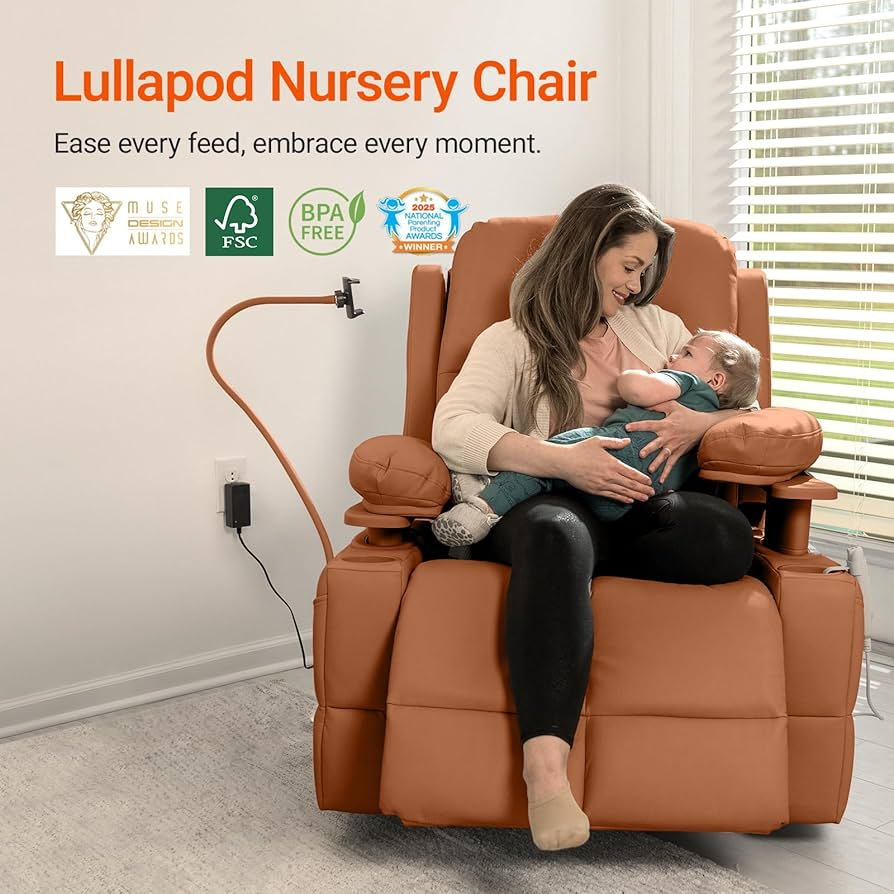
One path prioritizes deep rest, simple controls, and easy cleaning. The other leans more into powered convenience, integrated charging, and a more tech-forward setup. Neither path changes the basic meaning of a gliding recliner, but each can fit a different kind of buyer.
| Feature | Lullacloud (Manual) | Lullapod (Power) |
|---|---|---|
| Motion | Glide, rock, 360° swivel | Glide, rock, 240° swivel |
| Recline | 165° deep recline | 135° power recline |
| Armrests | 360° rotatable / pull-up | 45° rotatable / power lift-up |
| Cleaning | Removable washable cover | Stain-resistant fabric |
| Tech | Minimalist setup | USB / Type-C ports |
| Best fit | Deep rest, simpler setup, smaller rooms | Powered convenience, living-room crossover |
Used this way, the comparison table supports a real buying question: which kind of gliding recliner setup fits your room, your preferences, and the way you plan to use it?
A rocker moves in a curved arc, while a glider moves in a smoother back-and-forth path on a fixed mechanism. Many people find a glider feels steadier and easier to control, especially for longer sitting sessions.
It can be, as long as the chair has a compact footprint and the recline clearance works in your room. Always check full-use dimensions rather than only the product’s seated footprint.
Most modern gliders are designed to need very little day-to-day maintenance. Keeping the area under and around the mechanism clean and following the manufacturer’s care instructions is usually enough unless the brand specifies otherwise.
Yes. Many people choose a gliding recliner because it can transition out of the nursery and still work as a reading chair, TV chair, or comfort chair in another room.
Yes, it can be useful for feeding or soothing if the chair gives you stable back and arm support. But it should not be treated as a safe infant sleep surface, and babies who fall asleep in sitting devices should be moved to a firm, flat sleep space as soon as practical.
A gliding recliner is not just a trend term for nursery furniture. It is a specific type of motion chair that combines a smoother glide with the support and flexibility of a recliner. If you want a chair that feels gentler than a rocker and more versatile than a standard recliner, it often makes a strong case for itself.
The best way to choose one is to stay focused on the real question behind the search: not just what a gliding recliner is, but whether the motion, support, size, and maintenance fit the way you actually live. If you are still comparing nursery-specific options, Mamazing’s related guides on nursery recliners, recliner chairs, and glider-vs-recliner decisions can help you narrow the field without losing sight of what matters most.
Featured Products


What Is a Nursery Recliner? Do You Need One?
Best Recliner for Nursery: How to Choose the Right Chair for Feeding, Recovery, and Sleep