
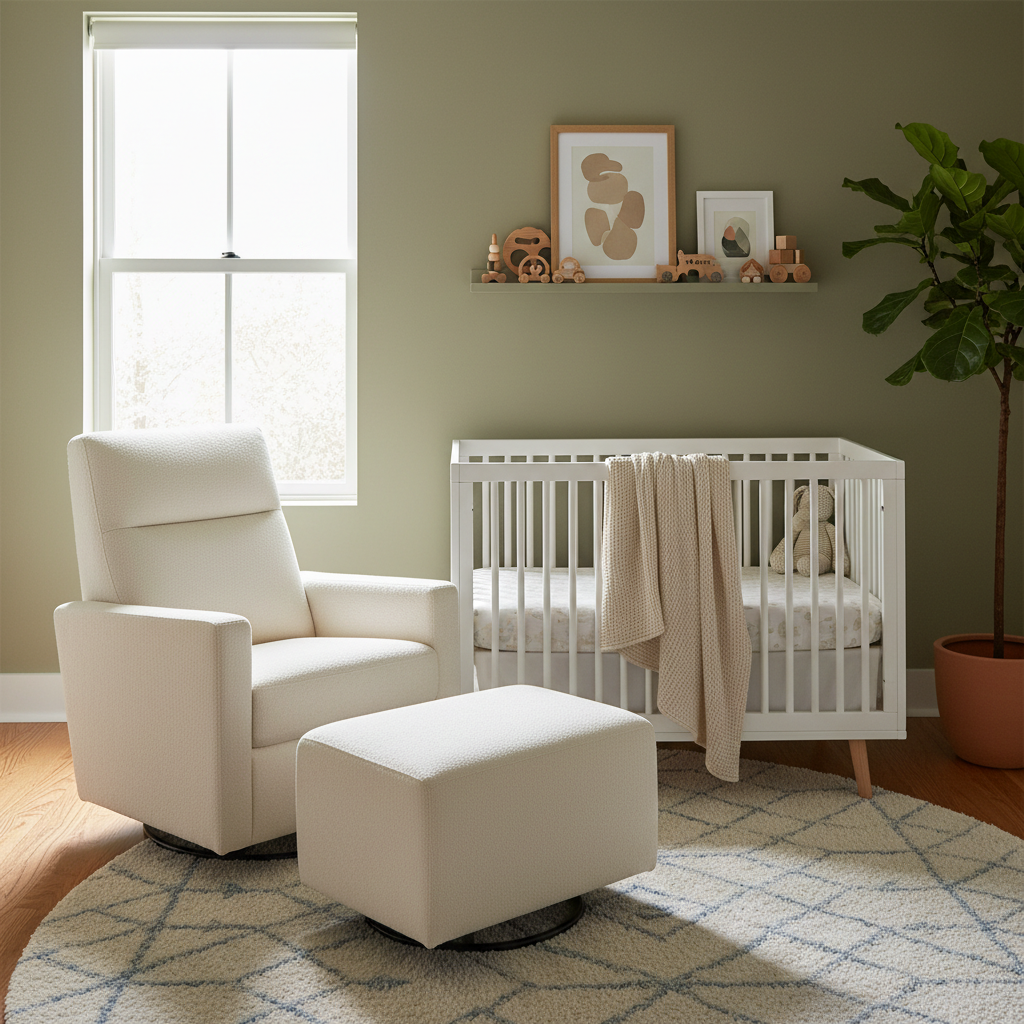
- by WengGracy
What Is a Glider Chair? Everything New Parents Need to Know
- by WengGracy
If you are setting up a nursery, you have probably noticed one confusing thing: every chair seems to have a slightly different name. Glider chair. Nursery glider. Rocker. Recliner. Swivel glider. Nursing chair. At some point, it starts to sound like furniture brands are testing how much vocabulary a tired parent can absorb before midnight.
Here is the simple version: a glider chair is a cushioned chair that moves back and forth on a fixed track instead of rocking on curved legs. That smooth, controlled motion is why many parents use one for feeding, soothing, contact naps while awake and supervised, bedtime stories, and those long nights when a baby needs a steady rhythm more than another gadget.
This guide keeps the nursery glider explained angle practical. We will cover what a glider is, how it works, what does a glider chair do in real parenting routines, how it differs from a rocking chair or recliner, and what to check before choosing a glider chair for nursery use.
A glider chair is a seat that moves in a smooth forward-and-back motion while the base stays in contact with the floor. Instead of tipping over curved runners like a traditional rocking chair, a glider uses a track, linkage, or bearing-style mechanism under the seat. The result is usually quieter, flatter, and easier to control with small movements from your feet.
For new parents, that matters because nursery time is repetitive. You may sit down for a short feed and end up there for forty minutes. You may soothe a baby who is almost asleep, then need to stand up without a big creak or a dramatic shift. A glider chair is built for those small, repeated motions.
Think of it this way:
That last category is common in nurseries because it blends soothing motion with full-body support. But the core idea of a glider is still the same: smooth motion without the curved-rocker arc.
The easiest way to understand a nursery glider is to look underneath the seat. Most gliders have a stationary base and a moving seat frame connected by metal arms, tracks, or bearing hardware. When you push gently with your feet, the seat moves forward and backward along that hardware while the base stays put.
This creates three everyday advantages:
Not every glider feels the same. Some move only forward and backward. Some swivel. Some recline. Some have a matching ottoman that glides with the chair. Some nursery chairs are marketed as gliders even when they are really hybrid glider-rockers or gliding recliners. The label is less important than the motion, the support, and how safely the chair fits your room.
So, what does a glider chair do beyond looking cozy in the corner? Its real job is to make repeated baby-care moments more comfortable and predictable. Newborn care involves a lot of holding, feeding, burping, calming, and waiting. A good glider gives you a dedicated place where your body is supported and your baby can feel a consistent rhythm.

The CDC's breastfeeding data for infants born in 2022 shows that 85.7% of U.S. infants were ever breastfed, and 62.1% were breastfed at 6 months. Even if you bottle-feed, combo-feed, pump, or switch methods over time, feeding sessions are a major part of early baby life. A supportive chair is not a medical tool, but it can reduce the daily friction around those sessions.
In a nursery, a glider chair often helps with:
The best use of a glider is not to "make the baby sleep in the chair." It is to support the adult who is feeding, comforting, and transferring the baby to a safe sleep space afterward.
The nursery chair category gets confusing because the same chair can belong to more than one group. A glider can recline. A rocking chair can swivel. A nursery recliner can also glide. The clearest way to compare them is by motion and use case.
| Chair Type | How It Moves | Best For | Watch For |
|---|---|---|---|
| Glider chair | Slides forward and back | Feeding, soothing, small motions | Track quality and clearance |
| Rocking chair | Rocks on curved runners | Classic rocking rhythm | Backward arc and floor marks |
| Recliner | Back leans, footrest lifts | Full-body resting support | Wall and footrest space |
| Gliding recliner | Glides and reclines | Nursery comfort and flexibility | Lock, power, and safety features |
If you want a deeper comparison between the two classic nursery motions, read Mamazing's rocking chair vs glider for nursery guide. If your decision is mainly between motion and reclining comfort, the glider vs recliner for nursery comparison is the better next step.
A glider chair is worth it when you expect to spend real time feeding, soothing, or reading in the nursery and you want a dedicated chair that supports those routines. It is less essential if you already have a comfortable, supportive seat in the room, have very limited space, or prefer to feed elsewhere.
The biggest mistake is treating a nursery glider like a decorative purchase. New parents do not need a chair that only photographs well. They need one that works at 3 a.m., when the lights are low and the adult sitting in it is sore, sleepy, and holding a baby with one arm.
A glider is more likely to be worth it if:
It may be less worth it if your nursery is too tight for safe clearance, if you already have a chair that supports your body well, or if you strongly prefer a firmer upright seat. A nursery glider should solve a real comfort problem, not create a traffic jam between the crib and dresser.
Once you understand the basic definition, the next step is choosing a chair by feel and function. "Glider" on the product page is only a starting point. The details decide whether you will actually enjoy using it.
Armrests should let your shoulders relax while holding a baby. If they are too low, you may hunch. If they are too high, your shoulders creep toward your ears. For feeding, the best arm height is the one that works with your body, your pillow setup, and your baby's position.
A pretty low-back chair can look elegant, but many parents prefer a higher back for late-night feeds. If you want head support, check the chair height before buying. Tall parents should be especially careful here, because "cozy" can become "neck unsupported" very quickly.
The glide should feel smooth and controlled, not jerky. Listen for squeaks. Notice whether the chair moves with small foot pressure. If the mechanism feels stiff in a showroom or out of the box, it may become annoying during repeated use.
Milk drips, spit-up, lotion, snack crumbs, and toddler hands are all part of the chair's future. Performance fabric, removable cushions, or wipeable upholstery can matter more than the exact shade of beige, gray, or white.
Measure the full chair, not just the seat width. Include the glide path, recline path, swivel radius, and space for your legs or ottoman. A chair that technically fits but blocks a drawer or bumps the crib will feel frustrating fast.
For a broader comfort checklist beyond gliders, Mamazing's best nursing chair guide walks through support, cleaning, and nursery fit in more detail.
A glider chair can be a helpful nursery seat, but it is not a baby sleep product. This distinction matters. The American Academy of Pediatrics says babies should sleep on a firm, flat sleep surface, and notes that surfaces inclined more than 10 degrees are not safe for infant sleep. The AAP also warns that the risk of sleep-related infant death is up to 67 times higher when infants sleep with someone on a couch, soft armchair, or cushion.

CPSC safe sleep guidance is similarly direct: inclined products with an angle greater than 10 degrees, including rockers, gliders, soothers, and swings, should never be used for infant sleep. That does not mean you cannot sit in a glider while feeding or soothing. It means that once your baby is asleep, the safest move is a transfer to a crib, bassinet, portable crib, or play yard that meets current safety standards.
Use this practical safety checklist:
There is also a room-safety layer. CPSC's Anchor It campaign highlights furniture tip-over as a hidden hazard and reports that tip-over incidents send 38,000 Americans to emergency rooms each year. A glider itself may not be the item you anchor, but the nursery around it should be planned carefully: anchor dressers and bookshelves, keep heavy objects low, and do not place tempting climbable furniture near the crib.
After all the terminology, the decision can be refreshingly human: sit in the chair and imagine the hardest version of the routine. Not the perfectly staged nursery photo. The version where you are holding a baby, reaching for water, trying not to wake anyone, and standing up quietly.
Ask these questions:
If the answer is mostly yes, the chair is probably doing its job. If the answer is mostly no, a different glider, recliner, or nursing chair style may fit your life better.
No. A glider chair moves forward and backward on a fixed base, while a rocking chair moves on curved runners. Both can soothe, but a glider usually feels smoother and more contained.
You do not absolutely need one, but many parents find it useful for feeding, soothing, and bedtime routines. It is most worth it when it fits your room, supports your body, and makes repeated baby-care tasks easier.
No. A glider chair is for an awake adult to sit in while holding, feeding, or soothing a baby. If your baby falls asleep, move them to a firm, flat, approved sleep surface on their back.
A glider describes motion: the chair moves forward and backward. A recliner describes posture: the back leans and the footrest may lift. Some nursery chairs are both gliders and recliners.
It depends on the chair. Measure width, depth, glide path, recline path, and swivel radius if it swivels. Leave enough clearance so the chair does not hit the wall, crib, dresser, or side table.
Prioritize supportive arms, a comfortable seat height, quiet motion, back support, easy-clean fabric, and safe clearance around the base. The best nursery glider is the one that fits your body and your room.
A glider chair is not nursery magic, but it can be one of the most-used pieces of furniture in the first year. Its value comes from the quiet repetition: feed, burp, soothe, read, reset, repeat. When the motion is smooth and the support is right, the chair becomes less about decor and more about making long parenting moments feel a little easier.
If you are choosing one now, start with the basics: safe room fit, comfortable support, easy cleaning, and a motion that feels natural to you. From there, a nursery glider can move from newborn feeds to toddler story time without needing to be replaced the moment baby outgrows the bassinet.
Featured Products


How Stroller Weight Affects Your Daily Life: The Real Parent Test
Postpartum Back Pain: How the Right Nursing Chair Can Help