
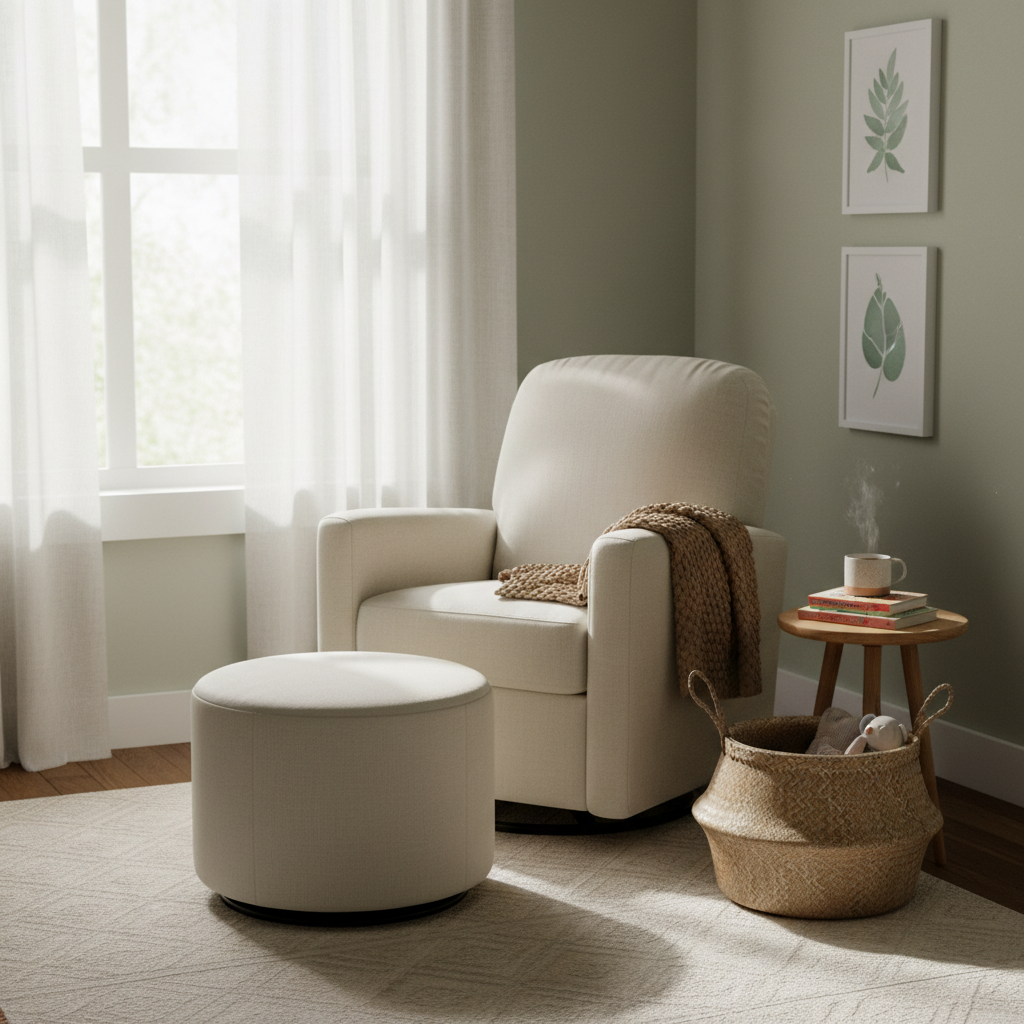
The Complete Nursery Glider Checklist for First-Time Parents
- by Gracyweng
It is 3 a.m. The house is silent except for a small, hungry cry. You shuffle into the nursery, lower yourself into a chair, and settle in for the next forty-five minutes. That chair? It is about to become the most-used piece of furniture you own. Yet most first-time parents pick one based on a photo, a paint swatch, or a registry suggestion, only to discover the armrests are too low, the glide squeaks, or the seat is too shallow to support a feeding pillow. This nursery glider checklist exists so you do not have to learn those lessons the hard way. At Mamazing, we have spent years studying what makes a nursing chair work for the long haul, and this first time parent nursery checklist distills that into something you can actually use, whether you are shopping in-store, scrolling specs online, or building a baby registry.
What follows is not a list of brand names. It is an evaluation framework, organized into five categories: comfort, motion, safety, space, and practicality. You will leave this page knowing exactly what to look for, what to test, and what to skip. Let's get into it.
Before you spend a dime, ask the honest question: is this furniture essential for you? The answer depends on a few factors that have nothing to do with marketing.
If you fall into the second group, you can delay this purchase. If you fall into the first, keep reading. The next section is the heart of the article.
Think of this nursery chair checklist as a scoring tool. You can use it in a furniture showroom, while reading product specs on a brand's site, or during a phone call with a registry consultant. A chair that checks most of these boxes is likely to serve you well through the first year and beyond.

Postpartum ergonomics matter more than aesthetics. Recovering from a cesarean, pelvic floor strain, or simple all-night exhaustion makes armrest height and seat firmness more important than the color of the upholstery. A chair that looks beautiful but forces you to hunch will become the chair you stop using.
A counterintuitive truth most buying guides miss: the smoothest glider is not always the best. A motion that is too frictionless can feel unstable when you are trying to keep a sleeping newborn still. Look for controlled, dampened movement, not a chair that swings freely.
One safety reminder no first-time parent should skip: the glider is for awake feeding and soothing only. The AAP advises that babies sleep on a firm, flat surface, never in an inclined or soft seating surface. If you fall asleep with the baby in the glider, it can become a fall or suffocation risk. Transfer your sleeping baby to the crib or bassinet every time.
A practical trick: use painter's tape on the nursery floor to mock up the chair's footprint before it ships. You will be shocked at how often a chair that looked perfect online overwhelms a small room in real life. This single step has saved countless parents from a costly return.
Here is the contrarian take most reviews avoid: spending more does not always buy you more. A $1,200 designer glider with boucle upholstery may look gorgeous on Instagram, but boucle snags, traps milk, and is nearly impossible to clean. A $500 chair with performance fabric will outlast it in a real nursery. Buy for function, then for style.
One of the most common questions in expecting-parent forums is which type of nursery chair to choose. Each has a different motion profile and serves a slightly different need. If you want a deeper side-by-side breakdown, our guide on the rocking chair versus glider debate covers feeding posture and small-space trade-offs in more detail. Here is a side-by-side comparison.
| Type | Motion | Best For | Trade-Off |
|---|---|---|---|
| Glider | Smooth linear forward and back on a fixed track | Calm feeding sessions, stable latch position | Often does not fully recline |
| Rocking Chair | Arc-based tipping motion on curved runners | Parents who prefer a pronounced bounce | Less stability for feeding, can squeak |
| Swivel Glider | 360-degree rotation plus glide | Small rooms, easy repositioning | Slightly larger base footprint |
| Power Recliner | Motorized full recline | C-section recovery, chronic back pain | Needs more floor clearance, higher price |
The honest takeaway: the type matters less than whether the motion is quiet and the ergonomics fit your body. A budget glider that fits you well beats a premium recliner that does not.
Whether you are walking into a showroom or evaluating a product page online, use the same systematic approach. The chair has to work for your body, your room, and your routine.

If you are testing in person:
If you are buying online:
If you want to see examples of gliders that are designed around the comfort, safety, and performance fabric criteria above, the curated collection below is a useful place to start your comparison. Each chair pairs postpartum-friendly ergonomics with easy-clean fabric, so you can use this checklist as a scoring tool rather than starting from scratch.
Bookmark or screenshot this section. It is the printable summary version of everything above, designed to bring with you to a store or pull up while comparing online options.
| Category | Checkpoints |
|---|---|
| Comfort | Lumbar contact, armrest at elbow height, flat-foot seat depth, firm-but-cushioned seat, headrest, nursing-pillow-friendly seat width |
| Motion | Quiet glide, motion type matches use case, one-handed recline, stationary lock, easy stand-up |
| Safety | Reinforced frame, GREENGUARD Gold, OEKO-TEX 100, TSCA Title VI, no added flame retardants, ASTM compliant, no pinch points |
| Space | Floor footprint measured, 12 to 18 inches wall clearance, does not block traffic, ottoman footprint accounted for, repurposable later |
| Practicality | Wipeable performance fabric, stain-camouflaging color, 250+ lb capacity, easy assembly, USB or storage extras, 1+ year warranty, transitional style |
Not immediately, but most parents still buy before birth so the nursery is ready when the baby transitions. The AAP recommends room-sharing for at least six months, so your glider may live in your bedroom for that period before moving into the nursery.
A glider moves forward and back on a fixed track. The motion is controlled and smooth. A rocking chair tips on a curved base, creating a more pronounced arc that relies on your body weight. Gliders are generally quieter and more stable for feeding, while rockers offer a stronger bounce that some babies prefer for soothing.
The functional sweet spot for most families is roughly $300 to $700. Below $200, frame quality and cushion longevity become real concerns. Above $800, you are typically paying for aesthetics, premium upholstery, or motorized recline features rather than core function. Set your budget based on how many hours you expect to spend in the chair, not on Instagram aspiration.
Not required, but useful if your chair does not recline. An ottoman elevates your feet, which reduces lower back strain during long feeding sessions. If your nursery is tight on space, a wall-hugging recliner can eliminate the need for a separate ottoman entirely.
No. The AAP advises against infant sleep in any inclined or soft seating surface. Use the glider for awake feeding and soothing only, and always transfer a sleeping baby to a firm, flat sleep surface like a crib or bassinet. The CDC reports about 3,700 sudden unexpected infant deaths each year in the United States, and safe sleep practices remain a critical prevention factor.
Prioritize GREENGUARD Gold for low chemical emissions, OEKO-TEX Standard 100 for fabric safety, TSCA Title VI for formaldehyde limits in composite wood, California Proposition 65 compliance, and ASTM furniture safety standards. These certifications signal that the manufacturer tests for indoor air quality and material safety.
The second trimester, roughly weeks 14 to 27, is ideal. This window gives you time for shipping and assembly before third-trimester fatigue peaks, and it allows you to make comfort adjustments while you can still move around easily. Buying earlier also lets you put the glider on your registry while time is on your side.
Yes, and this is a major value driver. The best nursery gliders have a timeless enough profile to transition into a living room, primary bedroom reading nook, or home office. Prioritize a neutral color and a non-bulky silhouette if you want the chair to outlive the nursery years.
Often yes. A swivel function lets you rotate to reach a side table, grab a burp cloth, or pivot toward a partner without standing up. In a tight room, that 360-degree rotation often replaces the need for repositioning the entire chair.
You will spend more time in your nursery glider during the first four months than in almost any other piece of furniture you own. That is the simple, unsentimental reason this nursery glider checklist exists. Comfort, motion, safety, space, and practicality are the five categories that actually determine whether a chair earns its place in your home. Aesthetics matter, but they come after function.
If you are ready to apply this first time parent nursery checklist to real options, browse chairs built with postpartum ergonomics and easy-clean performance fabrics in mind at Mamazing. Better yet, bookmark this page and bring it with you, whether you are shopping in a showroom or comparing tabs at midnight. The right chair is the one that meets your body, your room, and your budget without compromise. Take the time to evaluate, and your future 3 a.m. self will thank you.
Featured Products


How to Clean a Baby Stroller: A Complete Guide to Keeping It Hygienic
Rocking Chair vs Recliner for Nursery: Which One Wins?