
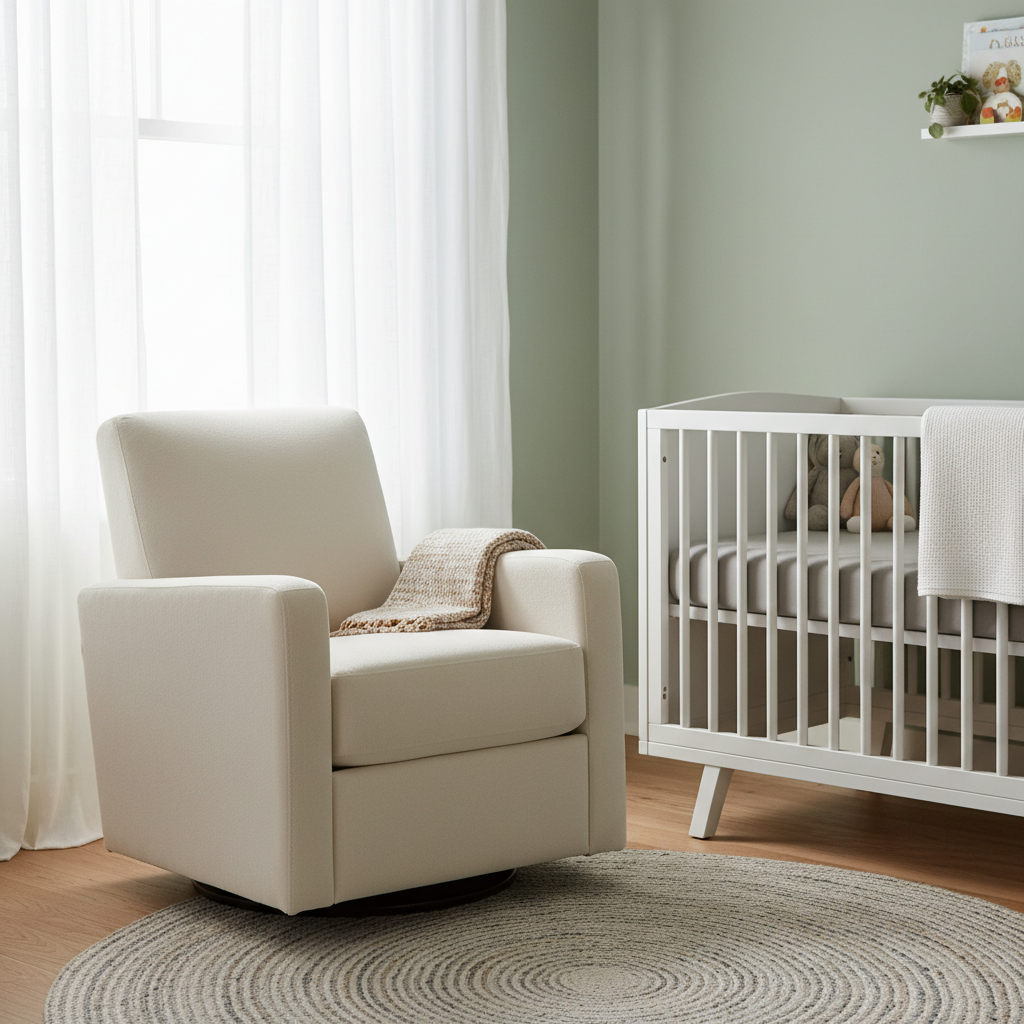
- by WengGracy
Do You Need a Locking Glider Chair for the Nursery?
- by WengGracy
Picture this: it is 3 a.m., you are finally getting your newborn back to sleep in the nursery glider, and suddenly your toddler pads in barefoot and grabs the chair to climb up. Your stomach drops. You freeze mid-rock. Could a tiny finger get pinched? Could the chair slide and knock him over? If that scene makes your shoulders tense, you are exactly the parent who has been Googling "locking glider chair" at midnight. Good news from your friends at Mamazing: a few smart features can take that worry off your plate for years to come.
This parent-to-parent guide walks you through what a locking glider chair really does, when the lock-out feature actually matters, and how to choose a safe glider for toddler-friendly homes. You will leave knowing whether a lockable nursing chair belongs on your registry or in your second-baby setup, plus what to look for so you do not overpay for fluff you do not need.
Before we get into the lock, it helps to know what a glider chair is and how it differs from other nursery seating. A glider is a nursery chair that moves on a fixed, parallel track instead of curved rails like a traditional rocker. That gliding mechanism gives you a smooth, whisper-quiet back-and-forth motion that does not wake a sleeping baby on your chest. Most parents find it gentler on the lower back than a rocker, too.
The "locking" part is a small but mighty add-on. A nursery glider lock feature, sometimes called a stop-lock or lock-out mechanism, freezes the chair in a stationary position so it cannot glide at all. Better models offer multi-position locks, meaning you can stop the glide arc at the front, middle, or reclined point. Engage it, and the moving parts simply stop being moving parts.
Quick comparison so you can keep the categories straight:
| Chair Type | Motion | Lockable? | Toddler-Friendly? |
|---|---|---|---|
| Locking glider | Smooth parallel glide | Yes | Best choice |
| Standard glider | Smooth parallel glide | No | Depends on base design |
| Rocking chair | Curved rocker rails | No | Higher tip risk |
Here is the uncomfortable truth most registry checklists skip: gliders have moving parts, and moving parts plus curious toddlers can equal pinched fingers. The U.S. Consumer Product Safety Commission has a long history of recalling glider rockers specifically because exposed scissor-action mechanisms caught small fingers. In one widely cited example, CPSC recalled glider recliners due to entrapment and finger-crushing hazards after receiving multiple incident reports of children's fingertips being severed in the gliding mechanism.

That risk is not theoretical. The American Academy of Pediatrics points out that more children are seen in emergency rooms for injuries from furniture and other items in the home than from many of the hazards parents typically worry about. A nursery glider sits right at toddler eye level and invites exactly the kind of pushing, climbing, and finger-poking that turns a relaxing chair into an ER trip.
So when does locking the chair actually matter? Three moments to memorize:
One more design detail matters: the base. A glider with an enclosed base hides the gliding track entirely, eliminating the gap where fingers get caught. An open wooden-rail base looks pretty in Pinterest photos but leaves the pinch points wide open. If you are choosing between two unlocked gliders, the enclosed-base version is hands-down the safer pick.
We promised parent-to-parent honesty, so here it is: not every household truly needs the lock. But most do, and the families that benefit most often do not realize it until baby number two is on the way.
You probably need a locking glider chair if:
You can probably skip it if:
Is a locking glider worth the slightly higher price? In our parent-tested view, yes, almost always. The premium for a lock-out mechanism is usually modest, and the peace of mind during those bleary 2 a.m. transfers is genuinely priceless. Spending a little more now is cheaper than reshopping in two years when toddler number two arrives.
One word of caution about DIY fixes: some parents wedge a book or door stopper under an unlocked glider. It is better than nothing in a pinch, but it is not a real safety solution. Anything you jam in can shift, and the chair can still tip forward when you stand up. If safety is the goal, buy the lock built in.
When you are comparing models, the lock is the headliner, but a truly safe glider for toddler-era life nails a handful of other details too. Use this checklist as your registry filter:

And speaking of how long you will be in it: new parents put serious mileage on this one piece of furniture. According to the American Academy of Pediatrics, newborns can sleep around 14 to 17 hours a day, and a lot of that sleep gets coached, soothed, and fed from the nursery chair. Comfort and safety are not optional extras here; they are the job description.
Aesthetic Pinterest boards love a classic wooden rocker. We get the appeal, and there are real soothing benefits, as we explore in our guide on whether rocking chairs are actually good for babies. But from a pure safety standpoint with a mobile toddler in the home, the answer is not close.
| Safety Factor | Locking Glider | Traditional Rocker |
|---|---|---|
| Lock-out feature | Yes | No |
| Tip risk | Low (flat base) | Higher (curved rails) |
| Pinch points | Eliminated when locked | Front/back rail gap |
| Toddler climb-safety | Stable when locked | Tips forward easily |
| Multi-child households | Recommended | Use with caution |
A locking glider chair gives you the gentle motion you want for soothing baby plus the freeze-frame stability you need the second your toddler walks in. A rocker simply cannot offer that second mode. For multi-child households especially, this is not a close call.
Once you have decided a lockable nursing chair belongs in your nursery, the next question is where to actually find one that checks every box on the list above. Look for retailers that disclose the lock mechanism style, base design, fabric certifications, and weight capacity upfront, not buried in a Q and A tab.
If you would like a curated starting point, Mamazing's nursing chair collection focuses on locking glider chairs designed with parent-tested safety features, enclosed bases, plush ergonomic support, and nursery-ready styling. Every chair in the collection is built around the lock-out feature so you do not have to sort through models that look the part but skip the safety hardware.
Before you click "add to registry," do one last sweep:
Not strictly required, but strongly recommended, especially for households with toddlers, older siblings, or pets. The nursery glider lock feature prevents pinch injuries when the chair is unoccupied and gives you stability when standing up while holding a sleeping baby. If your home will never have a mobile child near the chair, you can skip it, but for most families the lock is worth the small premium.
The lock-out feature, sometimes called a stop-lock or stationary lock, lets you fix the glider in a non-moving position. When engaged, the chair cannot glide forward or backward at all. Better models offer multi-position locks so you can stop the chair at the upright, middle, or reclined point of the glide arc depending on what you need.
Yes. With the lock engaged, there are no moving parts for tiny fingers to get caught between, which makes a locking glider chair the safest option for nurseries with curious toddlers. Gliders without locks, particularly those with exposed wooden rail bases, are the highest-risk option for households with mobile little ones.
Lock the glider any time it is unoccupied and a crawling, cruising, or walking child has access to the nursery. Also lock it the moment you stand up while holding your baby, so the chair does not slide back and throw off your balance. Many parents make it a habit to engage the lock right after every feeding, the same way you would clip the buckle on a high chair.
Yes, with a few precautions. Prioritize models with an enclosed base that fully covers the gliding mechanism. If your current glider has an open wooden base with exposed rails, consider adding a temporary stop, blocking access with a baby gate, or only using the chair when you are present. The safest long-term fix, though, is a lockable nursing chair built with the feature included.
Gliders move on a fixed parallel track and, when designed with a lock-out feature, can be frozen in place, making them significantly safer around toddlers. Rocking chairs move on curved open rails, cannot be locked, and are more prone to tipping if a child pulls or climbs on them. For households with toddlers or older siblings, a locking glider chair is the clearly safer choice.
You will spend more time in your nursery chair than almost any other piece of furniture in your house during baby's first year. Estimates suggest new parents log over 1,800 hours nursing, soothing, and rocking in that single chair. That is a lot of late-night moments where you need the chair to do exactly two things flawlessly: feel good on your back and stay safe for every little one in your home.
A locking glider chair handles both jobs. The lock-out feature shuts down pinch points, prevents slide-aways during standing transfers, and turns the chair into a toddler-proof zone the second you flip the switch. Pair it with an enclosed base, sturdy footprint, and non-toxic materials, and you have nursery furniture that earns its registry slot for years, not months.
At Mamazing, we believe choosing baby gear should feel less like a stress test and more like a confident yes. Whether this is your first baby or your third, take the extra minute to confirm the lock-out feature before you click buy. Your future 3 a.m. self, and the toddler who will inevitably wander in, will thank you.
Featured Products


How to Fix Squeaky Stroller Wheels: A Complete Parent's Guide