
- by WengGracy
Can You Store a Stroller in a Garage or Outside?
- by WengGracy
You spent more on a stroller than on your first car payment, and now it's parked on a damp garage floor next to the lawnmower. Sound familiar? With roughly 3.6 million babies born each year in the US, millions of households are wrestling with the same question: is it actually safe to leave this thing in the garage — or worse, outside? The short answer from Mamazing is yes, with the right prep your garage (and even certain outdoor spots) can be a perfectly safe home for stroller storage. The longer answer involves a few non-negotiable steps that protect your investment from rust, mold, and UV damage. Stick with us — this complete stroller storage garage guide walks you through every option, from premium indoor closets to balcony hooks, plus the exact stroller storage tips parents wish they had known before their first wheel started squeaking.
Yes, a garage is a perfectly acceptable place for stroller storage — as long as you respect three non-negotiable conditions. The stroller must be fully clean and bone-dry before you fold it. It needs to be lifted off the damp concrete floor. And it should be covered or positioned away from condensation zones like the garage door or water heater.
Why so picky? Garage environments are surprisingly hostile to baby gear. Humidity swings dramatically between seasons, and concrete floors release moisture vapor year-round. The EPA notes that mold will grow on damp organic surfaces within 24 to 48 hours, and stroller fabric is a perfect host. Add gasoline fumes from your car, off-gassing from pesticides on the shelf, and freezing winter temperatures, and your stroller is in a more demanding environment than you might guess.
That said, don't panic. Millions of parents store strollers in garages every day without issue. The trick is knowing what to do and what to skip — and that's exactly what the rest of this guide covers.
Not every storage spot is created equal. If you're weighing your options — indoor closet versus garage versus that covered patio out back — here is how the choices stack up, ranked from ideal to "use with serious caution."

| Rank | Storage Location | Verdict | Best For |
|---|---|---|---|
| 1 | Indoor climate-controlled space (closet, mudroom, laundry room) | Ideal | Long-term and daily storage |
| 2 | Attached garage | Good with prep | Active use; weekly outings |
| 3 | Detached or unheated garage | Acceptable with moisture barriers | Medium-term storage |
| 4 | Covered carport | OK short-term with cover | Quick storage between uses |
| 5 | Apartment balcony or covered porch | Workable with weatherproof bag | Urban no-garage parents |
| 6 | Fully exposed outdoor (no cover) | Not recommended | Never — UV, rust, and rain risk |
An indoor mudroom or hall closet wins every time because temperature and humidity stay consistent. Your attached garage comes in a close second when you follow the prep rules below. Detached garages and carports work, but they need extra moisture control. Balconies are the rising star for urban apartment dwellers — and with the right cover, they hold up surprisingly well. If you live in a tight apartment or rental, our companion guide on renter-friendly stroller storage ideas for cars, entryways, and small homes covers no-drill solutions that complement everything in this article.
Fully exposed outdoor storage with no roof, no cover, no shelter? Skip it. The combination of UV, rain, and temperature swings degrades even premium strollers in a single season. If that's your only option right now, scroll to Section 4 — we have you covered.
Ready for the practical part? Whether you're tucking your stroller away tonight or planning a full garage refresh, these five steps are what separate "still looks new in three years" from "why are the wheels rusted shut?"

Wipe down the entire frame with a damp cloth, then go back over it with a dry one. Pay special attention to the folding joints — that's where rust starts. Vacuum out cracker crumbs, sand, and snack debris from the seat; they attract pests and trap moisture. If the fabric is damp from a rainy walk, let it air-dry completely for at least 24 hours before folding. Storing a damp stroller is the single fastest way to grow mold. The CDC reports that excessive moisture indoors leads to mold growth that can trigger respiratory issues — not something you want near a baby.
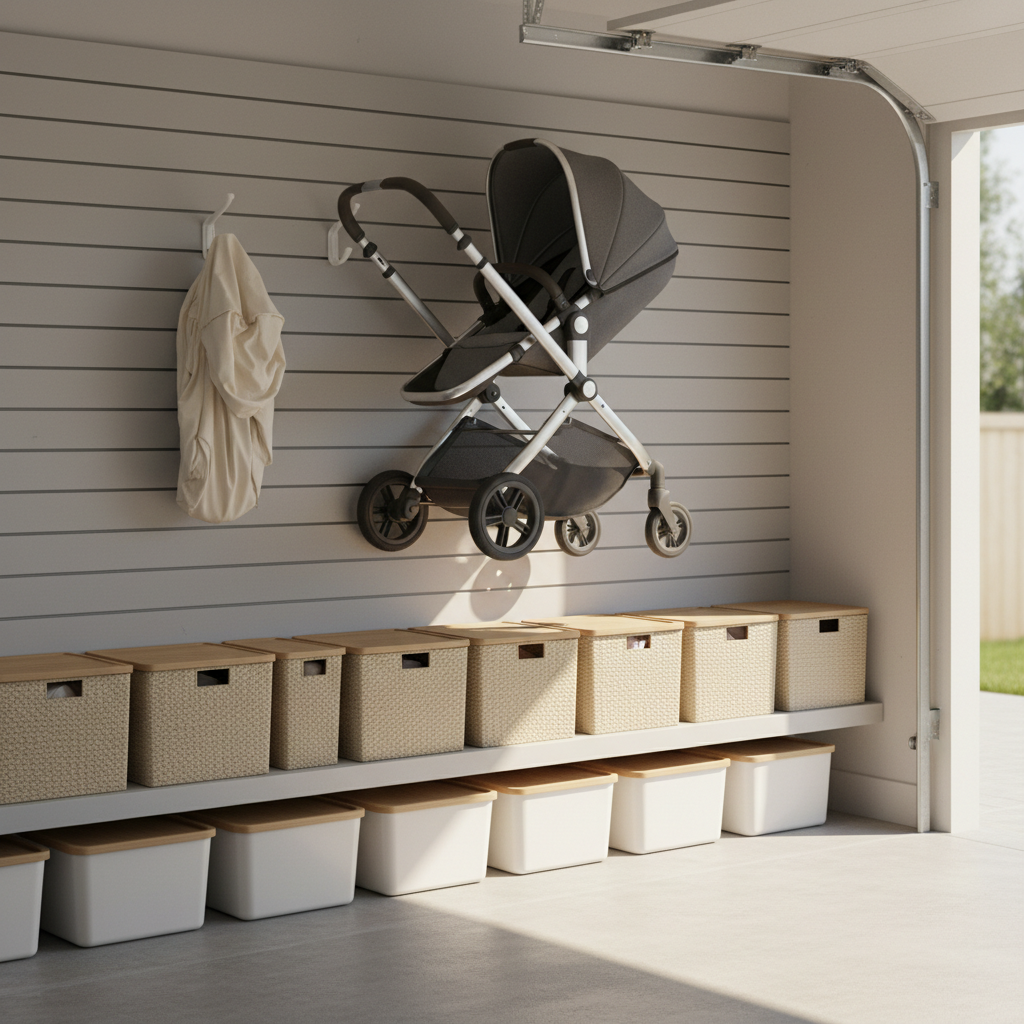
Concrete garage floors release moisture vapor even when they look dry. Wall-mounted stroller hooks are the gold standard for garage stroller organization — they keep the stroller elevated, save floor space, and look surprisingly clean. A slatwall system lets you reposition hooks as your gear inventory grows. For freestanding storage, a sturdy garage shelf works too. If you have a double stroller, this matters even more: hanging a stroller in the garage requires heavy-duty hooks rated for at least 50 pounds, ideally anchored into wall studs.
Metal garage doors sweat when temperatures swing, especially overnight in spring and fall. Damp corners near floor drains, the water heater, or HVAC equipment hold pockets of humidity. Avoid these spots. Position your stroller on an interior wall, ideally one shared with the heated part of your house — that wall stays warmer and drier than exterior walls.
A breathable waterproof stroller cover is your friend. Avoid plastic tarps and airtight covers — they trap condensation and create the exact mold-friendly environment you're trying to prevent. Look for fitted covers with UV-resistant coating and ventilation panels. Gate-check travel bags pull double duty as long-term covers.
Drop a few silica gel desiccant packets inside the stroller cover or hang them from the frame. They're cheap, last for months, and absorb stray humidity. If your garage stays damp seasonally, a small dehumidifier protecting all your stored gear pays for itself fast.
Maybe you don't have a garage. Maybe your garage is so packed with bikes and holiday boxes that the stroller has to live on the porch. Can you store a stroller outside without ruining it? Yes — but only if you know what you're protecting it from.
Outdoor storage exposes your stroller to three distinct threats, and they're not equal. UV fading is mostly cosmetic — your canopy will look sun-bleached but still function. Rust on folding joints, axles, and the frame is structural — it shortens your stroller's working life and can make it unsafe. Mold on fabric upholstery is a hygiene problem, especially since the seat is where your baby sits. The EPA explains that UV radiation breaks down materials over time, weakening polymers and fading dyes. Cover those three risks and outdoor storage becomes manageable for weeks or even months at a time.
Stroller rust prevention starts with one rule: never fold and store a damp stroller. After every rainy walk, wipe down the frame and let it air-dry fully. Apply a thin coat of silicone-based lubricant to all hinges, axles, and folding joints every 60 to 90 days. Why silicone instead of WD-40? WD-40 attracts dust and leaves a sticky residue. Silicone spray repels water without grabbing debris. In winter, wipe off road salt and sand immediately — salt is rust's favorite accelerant. Check the underside of the frame and the wheel attachment points; that's where corrosion hides until it's too late.
Not all outdoor stroller storage covers are equal. Look for breathable waterproof fabric (rip-stop nylon or polyester with a PU coating), a fitted shape that hugs your specific stroller model, UV-resistant coating, and vented panels to release trapped moisture. Skip anything that looks like a plain plastic bag — it'll create a sauna inside. Gate-check travel bags from airlines double brilliantly as long-term storage covers.
Urban parents, this section is for you. A covered balcony with a wall-mounted pulley hook keeps the stroller off the floor and out of foot traffic. A decorative weatherproof storage box on a covered porch works for fold-flat strollers. Avoid fully exposed balconies in rain-heavy climates unless you have a fitted cover — and even then, plan to inspect monthly. For more space-saving tactics — including trunk organizers and narrow-entry hacks — see our deep dive on stroller storage ideas for small homes and car trunks.
Planning for baby number two? You're in good company. The average gap between first and second births in the US is around two to three years according to Census fertility data, which means your stroller is about to enter long-term stroller storage. Here's how to do it right.
Go deeper than your everyday wipe-down. Remove all detachable fabric pieces — seat pad, canopy, harness pads — and hand-wash them according to the care label. Degrease the wheel axles with a clean cloth and apply silicone lubricant to every metal joint. If your stroller folds, fold it loosely rather than locking the tightest position; this reduces stress on hinges over months of storage.
An indoor climate-controlled space wins for long-term storage every time. If a garage is your only option, layer your defenses: breathable cover, silica gel packets refreshed every six months, and elevated storage on hooks or a shelf. Avoid attic storage unless it's insulated — attic temperatures can exceed 130 degrees Fahrenheit in summer, and that kind of heat warps plastic and degrades fabric.
Visit your stored stroller every 60 to 90 days. Look for mold spots, especially on fabric edges and folding creases. Lubricate the hinges again. Check the wheels — air-filled tires lose pressure over time, and foam-filled wheels can develop flat spots from constant ground contact. Five minutes every two months keeps your stroller ready for baby number two with no surprises.
Here's something most storage guides skip: the easiest stroller to store is one designed for storage from day one. If you're shopping new — or replacing one that didn't survive its last garage stint — a few design features make a massive difference in long-term durability.
Frame material matters most. Aluminum frames resist rust dramatically better than steel. They're also lighter, which makes hanging them on wall hooks far easier. Steel frames are sturdier in some respects, but they need vigilant rust prevention, especially in humid climates.
Compact fold depth changes everything. A one-hand compact fold stroller fits into tighter closets, hangs more easily, and tucks into apartment entryways without becoming a tripping hazard. Look for self-standing folds — they don't fall over and scratch your floors or your car interior.
UV-treated, removable fabric. Strollers with washable, removable seat fabric are infinitely more forgiving over years of storage. If a corner gets a mold spot, you can pop the fabric off and run it through the wash rather than scrubbing in place.
Wheel construction. Foam-filled wheels never go flat — a real win for long-term storage. Air-filled wheels offer smoother rides but require pressure checks during storage.
If you're stroller shopping with storage and longevity in mind — or preparing for baby number two — exploring a curated baby stroller collection with rust-resistant aluminum frames and compact folds is a smart starting point. Mamazing's lineup of best baby strollers is built for parents who want gear that lasts well beyond the first child.
Yes, a garage is a suitable place to store a stroller as long as the stroller is clean and completely dry before storage, elevated off the damp floor, and covered to protect against dust and humidity fluctuations. Avoid storing near garage door condensation zones or damp corners close to the water heater or HVAC unit.
Leaving a stroller outside short-term is acceptable if it is covered with a waterproof, breathable stroller cover. Long-term outdoor exposure without protection causes UV fading of fabric, rust on metal joints and axles, and mold on upholstery — all of which shorten the stroller's lifespan significantly.
To prevent stroller rust in the garage, always store the stroller dry, keep it elevated off the floor, and apply a thin coat of silicone-based lubricant to hinges, axles, and folding joints every 60 to 90 days. Avoid WD-40, which attracts dust. In humid garages, add silica gel packets inside the stroller cover.
In a small apartment, use a wall-mounted hook in the entryway or hallway to hang the stroller vertically. A folded stroller with a compact footprint can also fit in a closet near the front door. For covered balconies or porches, a fitted weatherproof stroller bag provides outdoor storage with weather protection.
Extended outdoor exposure without a protective cover will degrade a stroller over time. UV rays fade and weaken fabric, rain promotes rust on metal components, and temperature swings crack plastic fittings. A fitted waterproof stroller cover eliminates most of these risks for medium-term outdoor storage.
Use heavy-duty wall-mounted hooks rated for at least 50 pounds (higher for double strollers). Slatwall or pegboard rail systems let you adjust hook position as storage needs change. Hook the stroller at the rear axle bar or frame handle bar with the stroller folded. Always verify the hook is anchored into a wall stud.
Yes — always cover a stroller stored outside. Choose a breathable waterproof cover rather than airtight plastic sheeting, which traps condensation and accelerates mold. A fitted cover with ventilation panels or a UV-resistant travel bag offers the best protection without creating a moisture trap.
For storage of 6 months or longer, deep-clean the stroller, remove and wash all fabric pieces, lubricate all metal joints with silicone spray, and store in a cool, dry, ventilated space. Use a breathable cover with silica gel packets inside. Check every 60 to 90 days for mold spots or lubrication needs.
Yes. High garage humidity causes rust on steel-frame strollers and mold on fabric upholstery. An unheated garage with poor ventilation is the most common culprit. Mitigation: keep the stroller elevated, use a breathable cover, place silica gel packets nearby, and consider a small dehumidifier if the garage retains moisture seasonally.
The best mold prevention is drying the stroller completely before storage — never fold and store a damp stroller. Store in a ventilated space with low humidity, use silica gel desiccant packets, and inspect every 60 to 90 days. If mold is found, treat immediately with a mild vinegar solution before it spreads to deeper fabric layers.
Stroller storage in a garage is completely manageable when you follow three rules: store it clean and dry, keep it off the floor, and cover it with a breathable waterproof cover. Outdoor storage works for short stints with the same protections plus regular silicone lubrication of metal joints. For long-term storage between babies, plan on a deeper clean, climate-controlled space when possible, and a quick check-in every two to three months. The right stroller — built with aluminum, designed for compact folding, with removable fabric — makes every part of this easier and lasts well into baby number two and beyond. Browse the Mamazing baby stroller collection to find a model that's ready to roll for years, not just one season. Your future self (and your next baby) will thank you.
Featured Products


Can You Use a Baby Stroller as a Dog Stroller?
How to Fix a Stuck Stroller Brake: A Parent's Step-by-Step Guide