
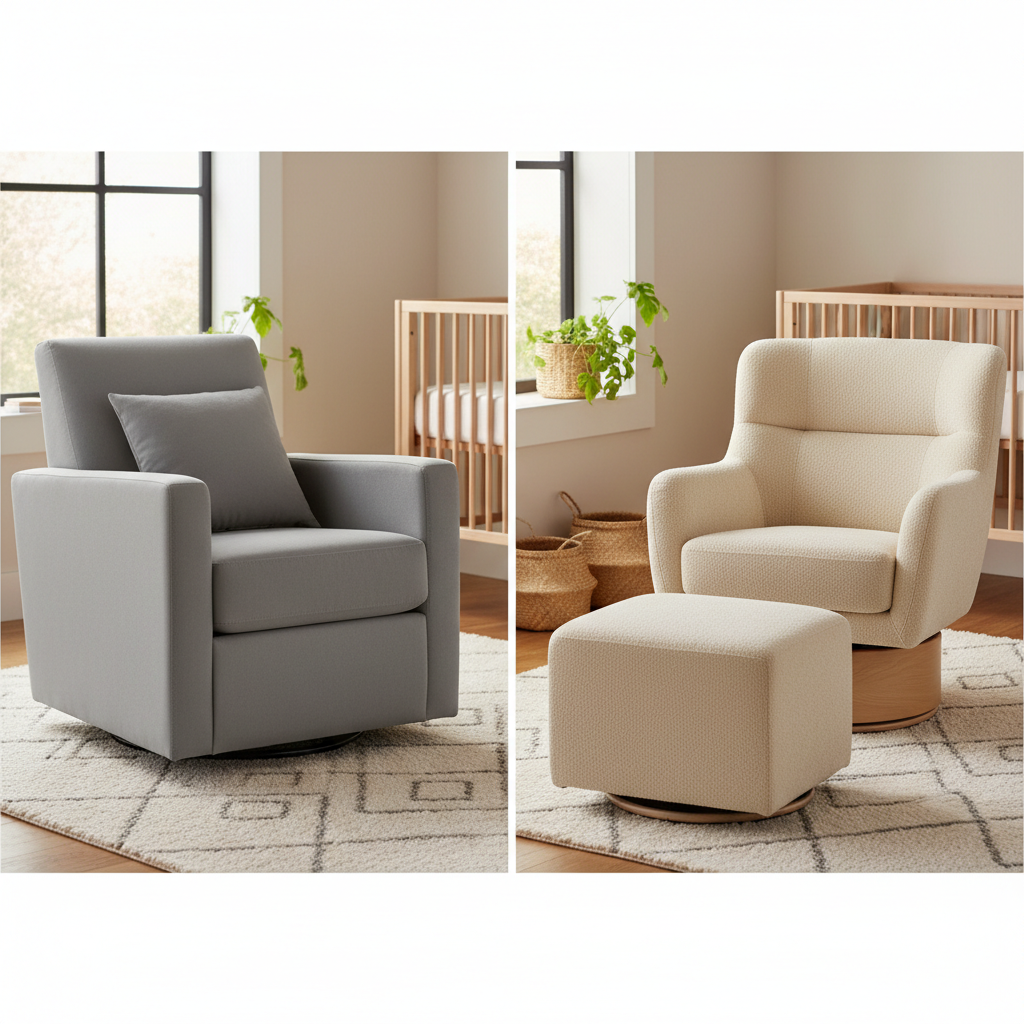
- by WengGracy
Budget vs Luxury Nursing Chairs: What Actually Changes When You Pay More?
- by WengGracy
You open a baby registry tab, type in "nursing chair," and your jaw drops. One chair costs $189. The chair next to it costs $1,499. They look almost identical in the thumbnail. So what gives? If you are an expecting or new parent staring at the budget vs luxury nursing chair question, you are not alone, and you are not wrong to feel confused. Most articles either push you toward the cheapest pick or sell you the dream of a $1,500 throne. Neither helps you decide. At Mamazing, we design nursing chairs across comfort tiers, so we want to give you the real, no-fluff comparison: what changes inside that chair when the price climbs, what you actually feel, and where your money is genuinely working harder for you and your baby.
This guide breaks down every single difference, foam to frame to fabric to features, so you can spend smart, not just spend more. The counterintuitive truth most parenting blogs avoid: the biggest price-tier gaps are not the ones you can see in a product photo. They are the ones you only notice at 3am, six months in, when the cushion has flattened, the glide has started ticking, and the fabric has its first permanent milk stain.
Before we start the affordable recliner comparison, you need a shared vocabulary. Nursing chairs roughly fall into three price tiers, and each tier reflects very real differences in materials, mechanisms, certifications, and brand support, not just markup. If you are still narrowing down the basics, our comprehensive guide to choosing the best nursing chair walks through the foundational features every parent should weigh first.
| Price Tier | Typical Price | Best For |
|---|---|---|
| Budget | $150 – $350 | Short-term use, tight budget, test-first parents |
| Mid-Range | $350 – $700 | Balance seekers, first-time parents with moderate budget |
| Premium / Luxury | $700 – $1,500+ | Long-term investment, postpartum recovery needs, multi-child families |
Why such a wide range? The honest answer: higher-density foam, durable hardwood frames, certified low-emission materials, and sealed ball-bearing mechanisms all cost more to source and engineer. Brand markup exists, but most of the price gap is real material and engineering, not just a logo tax.
Here is the silent factor competitor articles skip: the skeleton. The frame decides whether your chair stays solid and silent for years or starts to wobble, squeak, and lean before your baby's first birthday.
A wobble at the base or a squeak in the glide is not just annoying. At 3am, when you have finally rocked your baby into a doze, one squeak resets the entire process. The frame is the chair's quiet engine. Pay for it once, or pay for it twice. For a deeper look at the mechanism side of this decision, our breakdown of the best nursery glider for new parents compares glide mechanisms feature by feature.
Sit in a $200 glider, then sit in a $900 one. You will feel the difference before you say a word. It is the foam.

Why does this matter so much for nursing? Because feeding sessions are not five minutes. The CDC reports that the vast majority of U.S. infants are ever breastfed, and each session often runs 20 to 45 minutes, multiple times a day, for many months. A cushion that pancakes by month three forces you to slump, which then forces your lower back to do the work your chair should be doing.
One quick at-home test: press your palm into the cushion and release. If the foam springs back fast and flat, that is premium territory. If your handprint lingers like wet sand, that is budget foam telling on itself.
Spit-up. Diaper blowouts. Sticky pacifier fingers. Your nursing chair will be tested. The fabric tier determines whether your chair still looks loved or just looks tired after year one.
| Factor | Budget Typical | Premium Typical |
|---|---|---|
| Base material | Standard polyester | Performance fabric / engineered weave |
| Stain resistance | Low, untreated | High, built into the fiber |
| Cleaning method | Spot clean only | Wipe-clean or washable covers |
| Pilling / wear life | 6 – 12 months | 3 – 5+ years |
| Certification | None typical | GREENGUARD Gold common |
| Nursery air quality | Unknown VOCs | Low VOC certified |
Certifications matter more than they sound. GREENGUARD certification demonstrates a commitment to healthier indoor environments with strict low-emission standards, which is no small thing when your newborn will be breathing nursery air around the clock. CertiPUR-US foam certification confirms foam is made without ozone depleters, certain flame retardants, and heavy metals, all things you do not want off-gassing two feet from your baby's face.
The boucle trap: cheap boucle pills, sheds, and looks tired within months. Engineered performance boucle, the kind you find on luxury breastfeeding chairs, resists pilling and wipes clean. If you love that nursery-aesthetic boucle look from TikTok, save up for the real thing or skip it.
One nursery trend worth noting: the Japandi-inspired neutral palette dominating nursery reveal videos is not just aesthetic. Warm oatmeal, bone, and sand tones in performance fabric tend to hide milk droplets and the inevitable banana smudge far better than crisp white or moody charcoal. A timeless tone also makes the chair easier to re-home in your living room when nursery days end, which directly improves your cost-per-use math later.
Motion is the soul of a nursing chair. Smooth, near-silent motion soothes babies; jerky or noisy motion wakes them up. This is where the cheap vs expensive nursery glider gap is largest, and most obvious.
Why this matters: rhythmic gliding mimics the soothing motion babies remember from the womb. The American Academy of Pediatrics reminds caregivers to always transfer a drowsy baby to a flat, firm sleep surface, but the soothing itself often starts in your chair. A motion that grates instead of glides undermines that ritual. If you want a real-world look at how a high-end powered recline performs at 3am, our hands-on Mamazing electric rocking recliner review walks through what changes when motion is powered and silent.
Some features are honestly nice-to-haves. Some change your entire 3am routine. Here is what tends to appear, and disappear, at each tier.

| Feature | Budget ($150–$350) | Mid-Range ($350–$700) | Premium ($700–$1,500+) |
|---|---|---|---|
| Lumbar support pillow | Rarely | Sometimes | Standard |
| Adjustable headrest | No | Occasionally | Yes |
| USB / USB-C charging port | No | Rarely | Common |
| Side storage pockets | Sometimes | Yes | Yes |
| Reclining function | No | Manual | Power / electric |
| Independent footrest adjust | No | No | Yes |
| 360 swivel | No | Sometimes | Yes |
| Massage / airbag | No | No | Highest tier only |
| Washable cover option | No | Rare | Common |
| Lock-out mechanism | No | Sometimes | Yes |
A small but real example: a built-in USB port. Sounds gimmicky. Then it is 3am, your phone is at 6%, your baby is finally latched, and the cable is across the room. Suddenly that gimmick is the best $50 in feature cost you ever spent.
After walking through every feature tier, most parents land on the same realization: they want something in the mid-to-premium range that delivers lumbar support, smooth glide, and easy-clean fabric, without paying extra for massage modes they will never use. If that sounds like you, take a look at the full Mamazing nursing chair lineup below, organized by use case.
This is the section that gets cut from most competitor articles, and it is the most important one for your body. A nursing chair is not just baby furniture, it is postpartum recovery furniture.
Consider what your body is doing while you feed. Research on postpartum recovery notes that relaxin, the hormone that loosens ligaments during pregnancy, remains elevated for months postpartum, leaving the lumbar spine more vulnerable to strain. Translation: your back is on its weakest setting precisely when you start spending hours a day seated in one chair.
Where budget chairs fall short for postpartum bodies:
Premium chairs let you tune the chair to your body, not the other way around. If you have a history of lower back issues, sciatica, or pelvic floor concerns, this is not a place to save money. ACOG notes postpartum pain can persist for weeks or months, and the chair you sit in for 6+ hours a day either helps or hurts that recovery.
This is where the math gets interesting. The sticker price is not what you actually pay; the cost per hour of use is.
Then there is the "buy cheap twice" trap, which any parenting forum search will confirm: parents purchase a budget glider, find it uncomfortable or noisy by month four, then buy a second chair. Total spent often exceeds what a single mid-range or premium chair would have cost.
The second-baby argument is also under-discussed. A premium chair purchased for baby #1 typically still looks and functions like new for baby #2; many budget chairs do not. And a well-built, neutral-toned chair earns its keep long after the nursery years, often migrating to the living room as a reading chair or accent piece.
If you ever browse second-time parent forums, you will see the same regret on repeat: "I should have just bought the nicer chair the first time." That is the real shape of the cost-per-use argument, not theoretical math, but lived experience from parents on their second baby trading up.
Here is the framework most articles will not give you, because they are either selling cheap or selling expensive. The honest answer depends on you.
Helpful related reads from the Mamazing guides library: our full nursing chair buying guide, our breakdown of rocking chair vs recliner for the nursery, and our roundup of the most comfortable rocking chairs for the nursery.
Budget nursing chairs typically use standard polyurethane foam, basic plastic glide mechanisms, and no recline function. Luxury nursing chairs use high-resiliency foam, sealed ball-bearing glide tracks, performance fabrics with stain resistance, and features like power recline, 360-degree swivel, adjustable headrests, and USB charging ports.
For most parents, yes. Feeding sessions often run 20 to 45 minutes multiple times a day for many months. A chair with proper lumbar support, smooth motion, and the right arm height meaningfully reduces postpartum back and neck pain across those hours.
Budget chairs typically show foam compression and mechanism wear within 1 to 2 years of daily use. Premium chairs with high-resiliency foam and quality mechanisms often remain in strong condition for 5 to 8 years, and sometimes longer when re-homed to the living room.
Performance boucle (engineered boucle) is practical, it resists staining, wipes clean, and holds its texture. Standard boucle on budget chairs tends to pill and shed within months.
Yes. A well-made chair with a neutral design easily transitions to a living room accent chair, reading nook, or home office seat once the nursery years wrap up.
Budget nursing chairs typically use standard polyurethane foam, basic plastic glide mechanisms, and no recline function. Luxury nursing chairs use high-resiliency foam, sealed ball-bearing glide tracks, performance fabrics with stain resistance, and features like power recline, 360-degree swivel, adjustable headrests, and USB charging ports.
For most parents, yes. Feeding sessions often run 20 to 45 minutes multiple times a day for many months. A chair with proper lumbar support, smooth motion, and the right arm height meaningfully reduces postpartum back and neck pain across those hours.
Budget chairs typically show foam compression and mechanism wear within 1 to 2 years of daily use. Premium chairs with high-resiliency foam and quality mechanisms often remain in strong condition for 5 to 8 years, and sometimes longer when re-homed to the living room.
Performance boucle (engineered boucle) is practical, it resists staining, wipes clean, and holds its texture. Standard boucle on budget chairs tends to pill and shed within months.
Yes. A well-made chair with a neutral design easily transitions to a living room accent chair, reading nook, or home office seat once the nursery years wrap up.
Here is the truth nobody puts on the price tag: this chair is where the first year actually happens. The 3am feeds. The first smiles. The quiet rocks back to sleep. The afternoon naps that turn into your nap too. Whether you go budget, mid-range, or invest in a luxury breastfeeding chair, the right decision is the one that supports your back, soothes your baby, and earns its place in your home, not the one that wins a spec-sheet contest. Mamazing builds nursing chairs across the comfort spectrum precisely so you can match the chair to your real life, not the other way around. Take your time, sit in a few if you can, and remember: the best budget vs luxury nursing chair answer is whichever one you will still love at 3am, twelve months from now.
Featured Products


How to Stop Baby Slouching in the Stroller: Age-by-Age Fixes and What to Look for in Your Next Stroller
Should You Put a Nursing Chair on Your Baby Registry?