
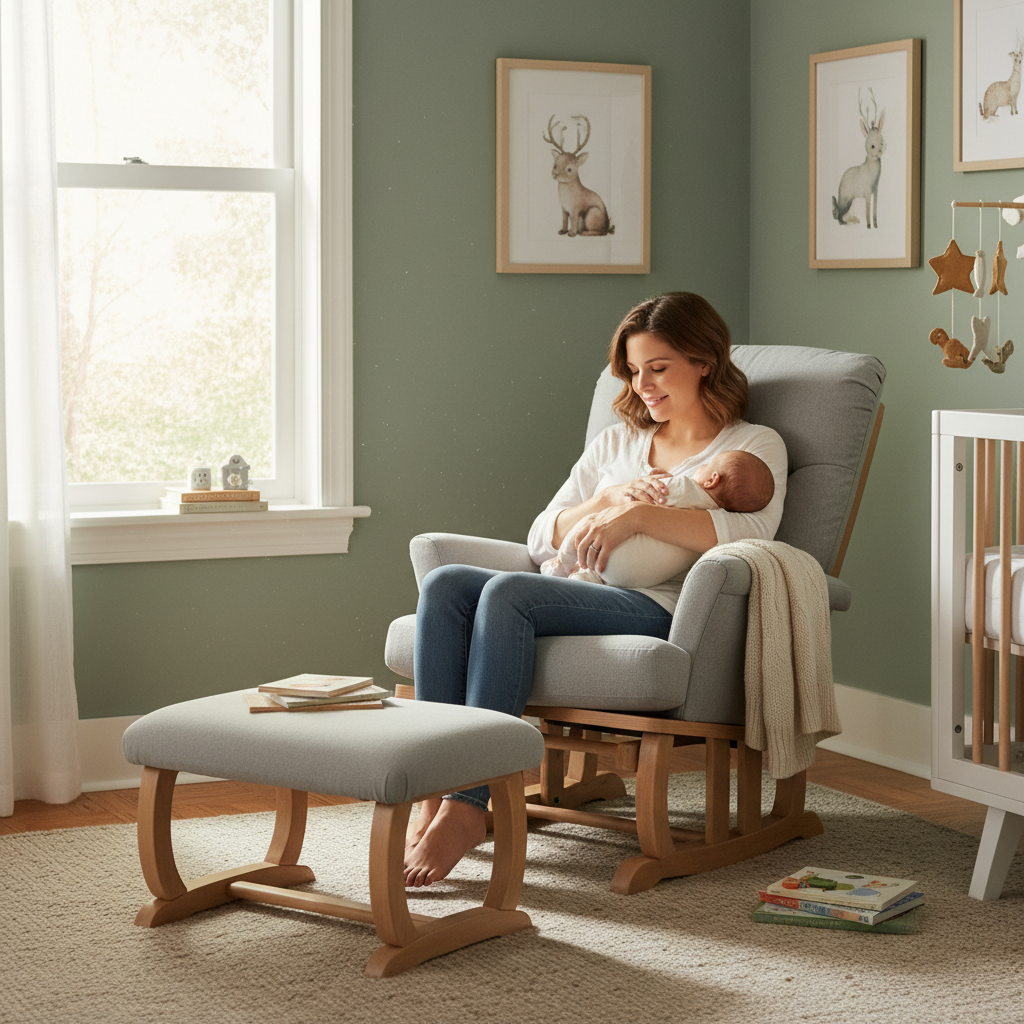
- by WengGracy
Best Nursery Glider for New Parents: How to Choose One That's Actually Worth It
- by WengGracy
If you are building a registry, trying to stay inside a budget, and wondering whether the best nursery glider for new parents is truly a need or just another expensive "nice to have," you are not overthinking it. This is one of those purchases that can feel either essential or completely optional depending on how your first months actually unfold. The tricky part is that both can be true.
Here is the part many roundup posts skip: a nursery glider can make night feeds, burping, cluster-feeding evenings, and contact naps feel far more manageable, but it is not a sleep surface. Mamazing believes comfort and safety have to be discussed together, especially because the American Academy of Pediatrics says thousands of U.S. babies still die suddenly and unexpectedly during sleep each year. So if you are asking do I need a nursery glider, the better question is this: will this chair reduce friction in your real routine without creating a false sense of sleep safety?
This guide is built for that exact decision. Instead of giving you another generic best nursery glider list, it walks you through when a glider is worth it, what matters most for feeding and postpartum recovery, how to think about small spaces, and which features actually keep paying off after the newborn stage. If you later want a broader roundup, Mamazing already has a detailed guide to best nursery glider picks, but this article is the one to read first if you want to buy with less regret.
Short answer: not every new parent needs one, but the right nursery glider is absolutely worth it when it supports the tasks you repeat half-awake every day.
A glider usually earns its floor space when your days look like this: feed, burp, sway, settle, stand up, transfer, repeat. If you expect frequent night feeds, want a dedicated place for breastfeeding or bottle feeding, or know that one parent will spend long stretches soothing baby alone, a supportive chair quickly stops feeling optional.
This is especially true if you want one predictable station with a side table, burp cloths, water bottle, charger, and foot support already within reach. In that setup, a nursery glider is not just furniture. It becomes part of your workflow.
You may not need a nursery-specific glider if your baby will room-share at first, you already have a supportive recliner in the living room, or you know you are more likely to feed in bed than in the nursery. The AAP recommends keeping your baby's sleep area in your room for at least the first six months, and notes that room-sharing can reduce SIDS risk by as much as 50% by keeping baby nearby in a separate sleep space for the first six months and says room-sharing may cut risk by as much as 50%.
If that is your plan, the chair you use most in the first months may not live in the nursery at all. That is why "best nursery glider for new parents" is really a placement question as much as a product question.
Before you buy, picture the first 12 weeks instead of the fully styled nursery reveal:
If you answer "yes" to the last three, a glider or glider recliner moves much higher on the priority list.
Most first-time parents do not need three different chairs. You just need the motion and support that match your body, your room, and your feeding routine.

| Chair type | Best for | Tradeoff | What to check |
|---|---|---|---|
| Glider | Calm, steady feeds | May not fully recline | Arm height and quiet motion |
| Rocker | Parents who like more bounce | Less stable while latching | Forward tip and floor contact |
| Recliner | Long sessions and resting back | Can be bulky | Footrest and wall clearance |
| Glider recliner | All-in-one comfort | Usually costs more | Easy exit with baby in arms |
For many new parents, a glider hits the sweet spot because the movement is smoother and more linear than a rocker. You do not need to manage a bigger forward-backward arc, which can feel helpful when you are latching a newborn, supporting a bottle, or waiting out a stubborn burp.
A rocker can still be the right call if you personally relax better with a deeper, old-school rocking motion and you are not especially sensitive to a chair that shifts your weight more dramatically. Some parents love that familiar feel. Others realize it is harder to stay centered while feeding. That is why a five-minute showroom sit is not enough; try the chair as if you are holding a sleeping baby.
If your body needs more support than motion, a recliner or glider recliner often wins. This matters even more if you are planning for a C-section or want a backup plan in case recovery is harder than expected. Cleveland Clinic notes that recovery from a C-section typically takes about six weeks, so an easy footrest and easier exit can deserve a higher priority than decorative details. That does not prove every parent needs power recline, but it does mean "How hard is it to stand up while holding a baby?" is the right question to test.
If you want a deeper side-by-side breakdown before deciding between a glider, rocker, or recliner, Mamazing also has a guide focused on rocking chair vs glider for nursery use.
The best nursery glider for breastfeeding or bottle feeding is rarely the one with the longest feature list. It is the one that quietly supports your body without demanding extra effort.
Look for arms high enough that your elbows do not collapse downward while you hold baby, but not so high that your shoulders creep toward your ears. You want your feet flat on the floor, your knees comfortable, and your lap naturally positioned for a pillow if you use one. Shorter parents should be ruthless about seat height. Taller parents should check whether the seat depth and head support still work when they lean back.
The question is not whether the chair reclines. The question is whether it reclines without becoming awkward to leave. Some chairs feel wonderful until you try to close the footrest while holding a drowsy baby. Test the entire movement: recline, sit up, stand, and pivot away. If that sequence feels clumsy in a store, it will feel worse at 3 a.m.
Measure width, depth, and recline clearance before you buy. Then measure the path into the room. A chair that technically fits the nursery but blocks a dresser drawer, closet door, or bassinet route is not a good fit. If you are furnishing a tighter room, do not guess; use a dedicated guide for the best nursery glider for small spaces so you can compare footprint and clearance more carefully.
New parents often shop with their eyes first and their ears last. Reverse that. Listen for clicks, squeaks, and abrupt resistance in the glide or recline. Then think about spit-up, milk drips, snack crumbs, and future story time. Performance fabric, removable cushions, or wipeable upholstery are not glamorous features, but they age better than a chair that only looks good on delivery day.
When you test a chair, do not just sink in and smile. Sit all the way back. Put both feet down. Rest your elbows where they would land during a feed. Lean back, then return upright without using momentum. Pretend you are holding a baby against your chest and try to stand. If your heels lift, your head floats without support, your shoulders tense, or the footrest feels like a trap, that is not your chair. This quick test is often more useful than comparing a dozen online feature badges.
This is where the decision gets easier. Stop asking which chair is universally best and start asking which setup removes the most friction from your exact life.

Prioritize stable arms, supportive lumbar comfort, and a footrest you can operate without a wrestling match. A power recline can be worth the extra money if repeated bending and pushing feel miserable in early recovery. If budget is tight, choose easier exit over extra tech.
Choose a compact glider or swivel glider with a modest footprint, controlled glide, and minimal wall clearance. But also ask whether the chair belongs in the nursery at all. If baby will sleep in your room early on, a chair near your bedroom or main living area may work harder for you than a larger statement chair tucked into the nursery corner.
This is the most overlooked scenario. You do not want a chair that fits one partner perfectly and leaves the other dangling or hunched. The safest compromise is usually a medium seat depth, solid head support, room for a nursing pillow, and an ottoman or footrest that helps the shorter parent feel grounded. Shared chairs should feel neutral, not "custom" to one body.
Skip the overly nursery-coded silhouette and buy the chair you would still want in a reading corner two years from now. The best nursery glider for new parents is often the one that survives the newborn stage, the book-reading stage, and the "can you sit here while I fall asleep?" stage.
A small but important pattern shows up here: the best chair is usually the one that makes transitions easier, not the one that looks most nap-friendly. Smooth exits, easy pivots, and a chair that still works when two adults trade shifts can matter more than extra padding.
These mistakes are not dramatic. They are just expensive.
This section matters because exhausted parents naturally push comfort routines until they become sleep routines. That is where you need a hard line.
The CPSC says babies who fall asleep elsewhere should be moved to a crib, bassinet, play yard, or bedside sleeper, and it also says inclined products over 10 degrees, including rockers and gliders, should never be used for infant sleep. The AAP gives the same practical advice: move a sleeping baby to a firm, flat sleep surface as soon as possible.
So yes, use your glider to feed, cuddle, burp, read, and calm. Just do not let "baby always falls asleep here" become your definition of safe enough. The best nursery glider for new parents is the one that supports a safer transfer, not the one that tempts you to skip it.
The best choice is not a single chair for every family. It is the chair type that best matches your hardest moments.
If you are still deciding whether you need a glider at all, it can help to widen the comparison and browse Mamazing's guide to best nursery chairs before you lock into one category. If you already know a glider is right for you, use this article as your filter: quiet motion, good arm support, true fit for both parents, realistic room placement, and safe sleep boundaries you will actually respect.
That is the Mamazing approach too. The right chair should feel good in the beautiful nursery photo, but more importantly, it should make the messy, repetitive, half-awake parts of new parent life easier. If a chair helps you feed comfortably, stand confidently, and transfer baby more safely, it is doing its job.
Not always. A nursery glider is most worth it when you expect frequent feeds, long soothing sessions, or want one reliable chair that makes sitting down and standing up with baby easier.
Yes, it can still be worth it, but the best location may not be the nursery. If your baby will room-share early on, the chair that helps most may belong in your bedroom or main living area instead.
For many new parents, a glider offers the best mix of smooth motion and feeding stability. A recliner can be better if recovery and back support matter more than motion, while a rocker works best for parents who genuinely like a stronger rocking feel.
Focus on arm height, seat height, lower-back support, and whether your feet rest comfortably on the floor. The best breastfeeding chair helps you hold baby without lifting your shoulders or fighting the footrest.
It can be, especially if pushing a manual footrest closed would strain your abdomen. Power recline is not mandatory, but easier exit is a real advantage during the first weeks of recovery.
Yes, if you buy for footprint instead of just appearance. Measure the chair width, room pathway, and recline clearance before ordering, and consider compact gliders or swivel gliders for tighter layouts.
No. If your baby falls asleep in the glider, move them to a firm, flat sleep surface such as a crib, bassinet, play yard, or bedside sleeper as soon as possible (CPSC safe sleep guidance).
Featured Products


Nursing Chair Emotional Mother's Day: A Tribute to Every Mom Who Cried and Laughed There
Mother's Day Nursing Chair Gift Mistakes New Moms Don't Need