
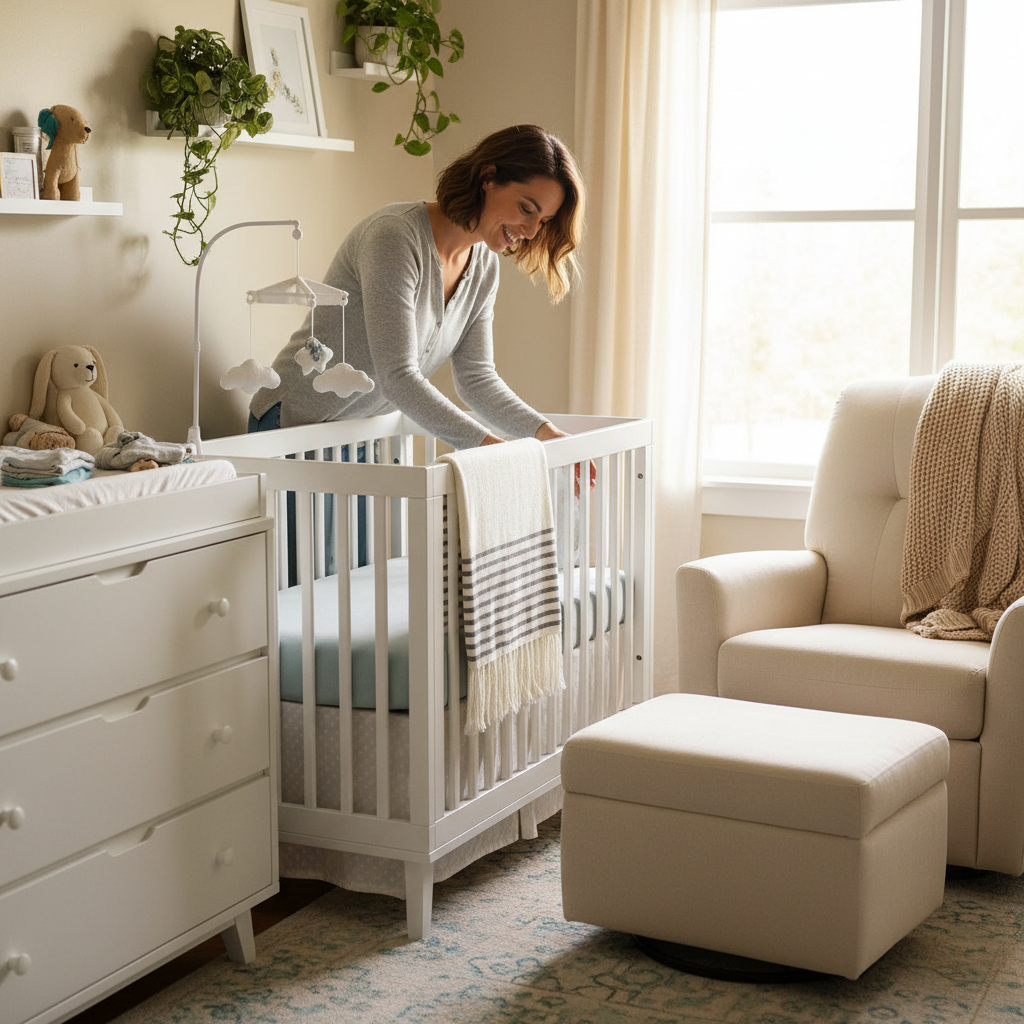
- by WengGracy
Essential Nursery Furniture Checklist for New Parents
- by WengGracy
It is easy to walk into nursery planning and suddenly feel like a tiny baby needs a full apartment of furniture. The truth is calmer: most families can start with a few hardworking pieces, then add more once daily routines become real. This nursery furniture checklist is designed to help you buy in the right order, avoid clutter, and set up a room that works at 2 a.m., not just in photos.
If you are also building out bottles, diapers, clothes, travel gear, and other newborn supplies, Mamazing has a broader baby registry checklist. Here, we are staying focused on furniture: sleep, diapering, feeding, storage, and the layout choices that make those zones safer and easier to use.
If you are asking "what furniture do I need for nursery setup?", start with five basics: a safe sleep space, a firm mattress that fits that sleep space, a changing surface, clothing and diaper storage, and a supportive place for feeding or soothing. Everything else is useful only if it solves a real problem in your home.
Think of the nursery as four zones instead of a shopping list. The sleep zone protects rest. The diapering zone keeps changes quick. The feeding zone supports the adult who will be sitting there often. The storage zone keeps tiny things from taking over the room. Once those zones are covered, your nursery must haves are mostly handled.
| Priority | Furniture | Why It Matters | Space-Saving Substitute |
|---|---|---|---|
| Must-have | Crib, bassinet, or play yard | Dedicated sleep surface | Mini crib or portable play yard |
| Must-have | Firm fitted mattress | Snug, flat sleep setup | Only the mattress made for that product |
| Must-have | Dresser or storage | Clothes, diapers, linens | Closet bins or armoire |
| Very useful | Nursing chair or glider | Feeding and soothing comfort | Supportive chair nearby |
| Optional | Bookshelf, toy storage, ottoman | Later organization | Baskets, carts, closet shelves |
A good nursery furniture checklist should tell you what to buy first and what can wait. The counterintuitive part: the prettiest items are often the least urgent. Your baby will not care whether the book ledges match the crib. You, however, will care whether diapers are within reach and whether the chair supports your back during a long feeding session.

Before the due date, prioritize a safe sleep space, a mattress that fits correctly, a changing surface, and basic storage. That could mean a full crib, a bassinet in your bedroom, or a play yard that meets current standards. For safety, the American Academy of Pediatrics says infants should sleep on their backs in their own sleep space, using a crib, bassinet, or portable play yard with a firm, flat mattress and fitted sheet, with loose blankets and soft items kept out of the sleep area (AAP safe sleep guidance).
For diapering, you need a stable surface at a comfortable height. For storage, you need a place for pajamas, swaddles, burp cloths, diapers, wipes, and backup crib sheets. A dresser with a changing topper often handles both jobs with less floor space than a separate changing table.
A feeding chair, small side table, hamper, and rolling cart move quickly from "nice idea" to "why did we wait?" once nights become repetitive. These pieces do not need to be fancy. They need to be reachable, wipeable, quiet, and stable. A side table that holds water, burp cloths, nipple cream, a dim light, and your phone can make night feeds less chaotic.
Bookshelves, toy bins, a wardrobe, an ottoman, and decorative storage can wait until you know how your room functions. Babies do not need much toy storage at first. Many newborn books fit in a basket. A wardrobe helps if the room has no closet, but if closet space exists, drawer dividers and bins may be enough.
Skip oversized nursery sets if they crowd the room. Skip open decorative shelves over or near the crib. Skip heavy toy chests for a newborn. Skip extra seating unless another adult truly uses the room at the same time. The best nursery furniture is the furniture you can move around safely while carrying a sleepy baby.
Sleep furniture is the first decision because it has the clearest safety rules. A crib, bassinet, mini crib, or play yard can all work when used as intended, assembled correctly, and paired with the manufacturer-approved mattress. The main question is not which one looks best. It is where your baby will actually sleep and how long you need the piece to last.
A full-size crib is the long-term choice for a dedicated nursery. It usually lasts beyond the newborn stage and gives you a stable sleep zone once baby outgrows a bassinet. If you choose a crib, check the hardware, slats, mattress fit, and assembly instructions carefully. The CPSC notes that cribs should have a firm, tight-fitting mattress, properly installed hardware, and slats no more than 2 3/8 inches apart (CPSC crib safety tips).
A bassinet can be helpful if you plan to keep baby beside your bed early on. It is smaller and easier to place in an adult bedroom, but it has weight and milestone limits. Treat it as a temporary sleep solution, not a replacement for every stage. Once baby reaches the product limit or starts showing new movement skills, follow the bassinet manual and transition to a suitable crib or play yard.
A mini crib or play yard can be a smart piece of nursery furniture for apartments, shared bedrooms, or grandparent homes. The key is to use the exact mattress and fitted sheet designed for the product. Avoid adding extra padding to make it softer. Softer is not safer for infant sleep, even if it feels more comfortable to an adult hand.
The changing zone is where a lot of nursery design advice gets too precious. You do not need a showroom station. You need a flat, stable surface, supplies within adult reach, and enough storage that you are not opening five drawers during one diaper change.
A separate changing table makes sense when you have floor space and want open shelves for diapers, wipes, creams, and spare outfits. It can also be useful if your dresser is too tall or too narrow to use comfortably. Choose one that feels stable and gives you a clear place to keep one hand on baby.
For many families, a dresser with a changing topper is the better long-term buy. It handles newborn diaper changes now and regular clothing storage later. This is especially helpful if you are trying to keep your nursery furniture checklist short. Use drawer organizers for tiny clothes and keep daily diaper supplies in the top drawer or a nearby caddy.
Newborn clothing is small, but the categories multiply quickly: sleepers, bodysuits, socks, hats, swaddles, sleep sacks, burp cloths, backup sheets, and outgrown sizes. A three- or four-drawer dresser is enough for many babies if you rotate sizes and store future clothing elsewhere. If the nursery has no closet, add a compact wardrobe or closet system before adding decorative storage.
A nursing chair is not required for survival, but it often becomes one of the most-used pieces of nursery furniture. Feeding, rocking, burping, reading, and settling can all happen in the same spot, which helps your body and your baby recognize the rhythm of the room. If you are comparing options, Mamazing's nursing chair collection is a natural place to start looking at supportive seating built for nursery routines.

Look for back support, arm height, smooth movement, easy-clean fabric, and a seat that lets your feet touch the floor or rest comfortably on an ottoman. The chair should fit your room with enough clearance to move without bumping the crib, dresser, or wall. If two caregivers will use it, choose for the taller or more frequent feeder rather than the person who likes the style most.
A glider moves smoothly forward and back. A rocker moves in an arc. A recliner offers more leg support but needs more clearance. None of these labels matters as much as comfort, quiet motion, and fit.
Place a side table, slim cart, or small shelf close enough to reach while seated. Stock it with burp cloths, a water bottle, snacks, a dim lamp, and feeding supplies. Keep cords secured and away from the crib. Most importantly, use the chair for awake feeding and soothing, not as an infant sleep space. The AAP specifically advises avoiding infant sleep on couches, armchairs, and seating devices (AAP sleep surface guidance).
Small spaces reward ruthless editing. A tiny nursery does not need tiny versions of every possible item. It needs fewer pieces with better jobs. Start with the furniture you touch every day, then let decor and secondary storage come later.
For a nursery nook or shared bedroom, the simplest setup is a safe sleep space, a dresser that doubles as a changing station, and a compact feeding chair or feeding spot nearby. This covers the main routines without blocking pathways. If the chair will not fit in the room, place it just outside the nursery zone and keep a portable caddy close.
Avoid furniture that forces you to turn sideways while carrying baby. Avoid tall shelving near the crib. Avoid a large dresser if the drawers cannot open fully. In a small room, an inch-perfect layout is less important than open walking space and clear reach zones.
Once the basic checklist is clear, quality matters more than quantity. Good nursery furniture should feel stable, clean easily, and survive more than one phase of babyhood. It should also match how your home actually works. If you move often, heavy heirloom pieces may be less practical than modular furniture. If you have pets or older siblings, closed storage may beat open baskets.
Check product recalls, assembly hardware, mattress fit, weight limits, and anti-tip hardware before baby arrives. Anchor dressers, wardrobes, and bookcases to the wall. CPSC's Anchor It campaign reported a nearly 50-percent decline in tip-over-related injuries and deaths in the U.S. after years of prevention efforts, and the agency continues to emphasize anchoring furniture as a simple safety step (CPSC Anchor It campaign).
Choose finishes and fabrics that can handle milk, spit-up, diaper cream, and frequent wiping. If you are concerned about materials, off-gassing, or certifications, use this article as the planning checklist and Mamazing's deeper guide to non-toxic nursery furniture for material-by-material shopping guidance.
Convertible furniture is worth it when you genuinely plan to use the later stages and have a place to store conversion parts. A crib that becomes a toddler bed can be helpful. A giant set that includes pieces you do not have room for is not a bargain. Buy for the room you have now, with a sensible nod to the next year.
Layout turns furniture into a working room. Before you assemble everything, tape rough furniture footprints on the floor. Open closet doors, dresser drawers, and the nursery chair recline path if applicable. Then walk the route from door to crib, crib to changing area, and chair to crib while imagining a baby in your arms.
Place the crib away from windows, blind cords, curtain cords, heaters, lamps, shelves, and anything baby could pull down later. Keep the sleep area visually calm and physically bare. Wall art can go elsewhere; the crib zone should be the least busy part of the room.
Put the changing surface near diapers, wipes, spare clothes, and a hamper. Keep creams and small objects out of baby's reach, especially as rolling and grabbing begin. A diaper pail is useful, but it does not have to sit directly beside the changing pad if space is tight.
Place the feeding chair where light can be dim, supplies are reachable, and the path back to the crib is clear. If you use a lamp, monitor, sound machine, or charger nearby, manage cords before baby becomes mobile. The feeding zone should feel restful for you, but it should still follow the same practical safety thinking as the rest of the nursery.
You need a safe sleep space, a fitted mattress for that sleep product, a changing surface, clothing and diaper storage, and a supportive place for feeding or soothing. A crib, dresser with changing topper, and nursery chair cover most families' daily routines.
The most important nursery must haves are the pieces tied to sleep, diapering, and storage. Start with a crib, bassinet, or play yard; a firm mattress; a stable changing area; and a dresser or closet system.
No, you do not need both if one safe sleep space fits your home and routine. A bassinet can be convenient for the newborn stage, while a crib lasts longer. Many families choose one first and add the other only if it solves a real space or sleep-location problem.
You can use a dresser with a secure changing topper or changing pad if the surface is stable and comfortable for you. This is often the smarter nursery furniture choice because the dresser remains useful after diaper changes move elsewhere.
A nursing chair is not strictly necessary, but it is very useful for feeding, soothing, reading, and settling baby while you are awake. Choose one with good support, quiet motion, and fabric that is easy to clean.
Bookshelves, toy storage, extra seating, decorative shelves, and large wardrobes can usually wait. Add them after you understand your baby's routines and your storage gaps.
Use a three-piece setup: safe sleep space, dresser-changing station, and compact feeding spot. Choose furniture that does double duty, keep walkways open, and use closet bins or rolling carts instead of bulky extras.
Check crib assembly, mattress fit, product limits, recall status, cord placement, and furniture anchors. Keep the crib away from windows, cords, shelves, heaters, and loose bedding, and anchor dressers or bookcases to the wall.
The best nursery is not the fullest nursery. It is the room, corner, or shared space that helps you repeat the same newborn routines with less friction. Start with the true nursery furniture essentials, keep the sleep area simple, and choose comfort pieces that support the caregiver as much as the baby. Mamazing's approach is simple: buy fewer pieces with better purpose, then let your real family rhythm decide what comes next.
Featured Products


Are Electric Nursery Glider Recliners Worth It? A Deep Dive Review
Best Foldable Stroller: One-Hand Fold, Compact Storage & Travel-Ready Picks