
- by WengGracy
How to Create a Safe and Sleep-Friendly Nursery
- by WengGracy
A beautiful nursery is lovely. A safe, sleep-friendly nursery is useful at 2 a.m., when your baby is restless, your eyes are half open, and you need the room to help you do the right thing without thinking too hard. The best baby sleep environment is not built around a theme, a paint color, or a photo-worthy shelf. It starts with a safe sleep surface, a clear crib, steady routines, and small room choices that make sleep easier to repeat.
That matters because parents are often given two different messages at once: make the nursery cozy, but also keep it safe. Cozy can sound like pillows, blankets, bumpers, loungers, plush toys, and soft nests. Safe sleep guidance points in the opposite direction: firm, flat, clear, and simple. Once you understand that difference, a safe baby sleep setup becomes much less confusing.
This guide walks through the nursery from the crib outward: sleep surface, mattress, light, sound, temperature, layout, feeding zone, and bedtime check. Mamazing designs nursery essentials for real family routines, so the goal is practical: a room that supports safer sleep habits and feels easier for tired parents to use night after night.
The first question is not "What should the nursery look like?" It is "What should the room make easy?" A good baby sleep environment makes it easy to place your baby on a safe surface, keep the sleep area clear, move around in dim light, reach what you need, and settle your baby without turning the room into daytime.
Decor can come later. The sleep system comes first. That means you choose the crib or bassinet location before you choose wall art. You decide where diapers, burp cloths, swaddles, sleep sacks, and feeding items live before buying more baskets. You make sure cords, curtains, shelves, and furniture do not create hazards near the sleep space.
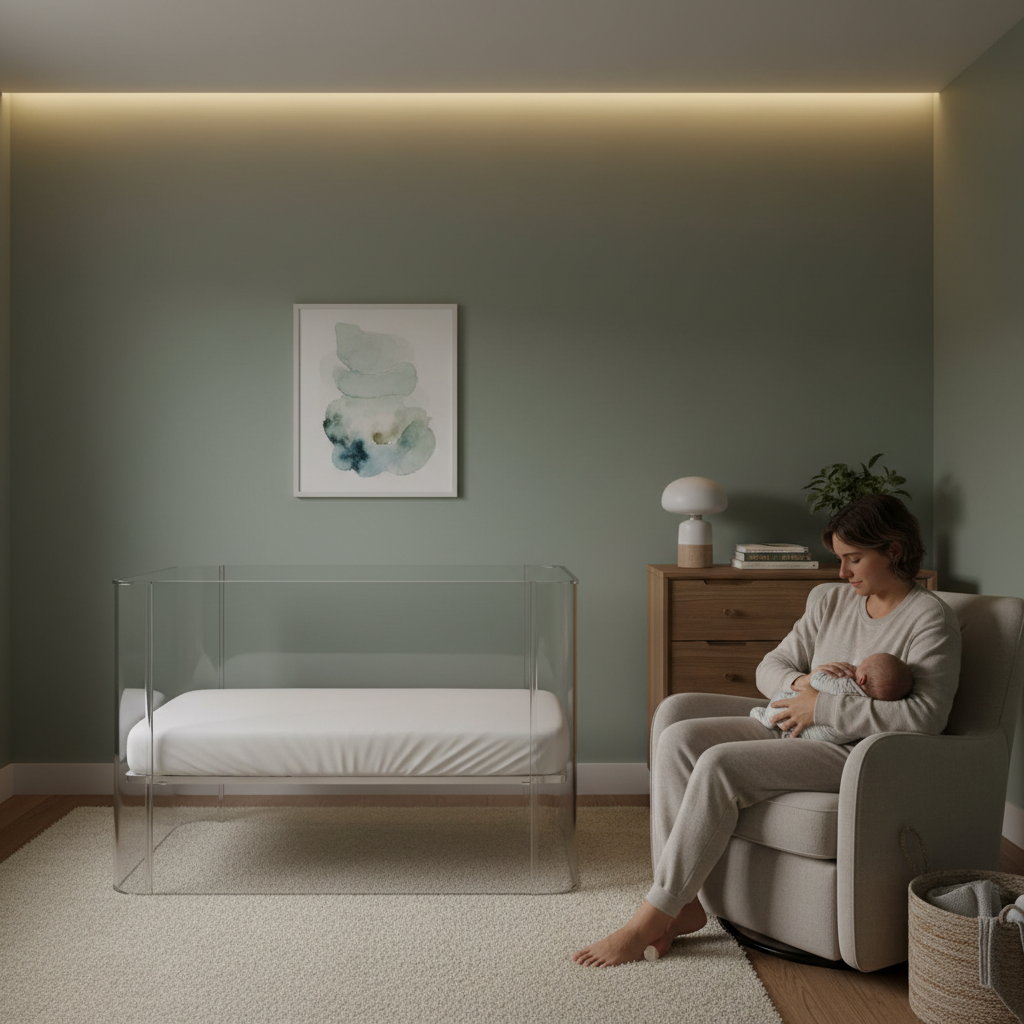
A useful nursery is usually calm because it is simple, not because every object is soft. The sleep area should be the least decorated part of the room. Save the visual warmth for walls, rugs placed away from the crib, storage, and a comfortable parent chair. The crib itself should stay boring in the best possible way.
If you want a more mood-focused version, check how to create a calm sleeping space for your baby. Here, we stay closer to the safety and setup decisions that shape daily sleep.
A safe baby sleep setup is built on a few rules that do not need to be reinvented. The CDC recommends placing babies on their backs for every sleep, using a firm and flat sleep surface, keeping soft bedding out of the sleep area, and having babies sleep in their own separate space in the same room as caregivers when possible: CDC safe sleep recommendations. HealthyChildren, from the American Academy of Pediatrics, gives similar guidance and notes that babies should sleep on a firm, flat, non-inclined surface: AAP safe sleep guidance.

In everyday nursery terms, that means:
This is where many nursery plans drift off course. Parents want the room to look loving, so they add soft things to the crib. But babies do not need a decorated crib. They need a clear, flat, stable place to sleep. You can make the nursery warm and personal around the crib without putting extra items inside it.
The crib is the anchor of the baby room sleep setup. It should feel sturdy, meet current safety standards, and fit the nursery layout without forcing you to squeeze through tight corners at night. The U.S. Consumer Product Safety Commission notes that full-size and non-full-size cribs sold in the United States must meet federal safety standards, and parents should avoid cribs with missing, broken, or loose parts: CPSC safe sleep information.
When choosing the sleep surface, focus on fit and simplicity. The mattress should fit the crib snugly, the sheet should stay tight, and there should be no gap that makes you pause. If a setup requires clever tucking, extra padding, wedges, or improvised fixes, it is not the right setup.
For families building a nursery from scratch or upgrading from a temporary sleep space, safe nursery cribs are a natural place to start. A crib will not magically make a baby sleep through the night, and no product should promise that. What a good crib can do is support the sleep habits you want to repeat: firm surface, clear space, stable design, and a predictable place for every nap and bedtime.
Think about the parent experience too. Can you reach the crib without crossing toys, cords, or a laundry pile? Can you place your baby down smoothly from the side where you naturally stand? Is there room to step back without bumping a dresser? A sleep-friendly nursery is not only about the baby falling asleep. It is also about you being able to move safely when you are tired.
Once the sleep surface is safe, the next layer is the room environment. These nursery sleep tips do not replace safe sleep basics. They simply make the room easier to settle in.
Light is the easiest place to start. Babies do not need a pitch-black nursery from day one, but darkness can help older babies understand that nighttime is different from daytime. Use blackout curtains if outside light is strong, and choose a small dim night light for feeds or diaper changes. The goal is enough light for safety, not enough light for play.
Sound is personal. Some babies sleep through household noise; others startle easily. A steady white noise machine can help mask sudden sounds, but keep the volume moderate and place it away from the crib. The nursery should not feel like a concert. It should feel predictable.
Temperature should feel comfortable for a lightly clothed adult. Instead of loose blankets, use season-appropriate pajamas or a wearable sleep sack if your baby is old enough and the product is appropriate for their stage. Check your baby at the chest or back of the neck rather than judging by hands and feet, which can feel cool even when the baby is comfortable.
One caution: do not solve sleep with unsafe additions. If your baby seems cold, choose appropriate sleepwear instead of a loose blanket. If your baby seems restless, review wake windows and feeding before adding gadgets. If your baby is suddenly waking often, the issue may be developmental; check the baby sleep regression guide to decide whether the room is the problem or the timing is.
A good baby room sleep setup has zones. The sleep zone is simple and clear. The feeding or soothing zone is comfortable for the adult. The changing zone is stocked but not cluttered. The storage zone keeps extras out of the crib and off the floor.

Start with the crib location. Keep it away from windows, blind cords, curtain ties, heaters, lamps, wall shelves, heavy frames, and anything your baby could eventually grab. Even if your newborn cannot reach today, babies change quickly. The safest nursery layout anticipates the rolling, sitting, pulling, and grabbing stages before they arrive.
Then plan your path. You should be able to enter the room, reach the crib, sit for a feed, change a diaper, and leave without stepping over baskets or navigating sharp furniture corners. Small details matter when you are sleep-deprived. A low night light near the path can be more useful than a bright overhead fixture.
Keep the parent chair close enough to be convenient but not so close that blankets, pillows, phone cords, or nursing accessories migrate into the crib. A side table or small caddy can hold water, burp cloths, and feeding supplies. That way the crib stays clear, and your comfort items have a home.
It also helps to design the nursery for the version of your baby who is coming next, not only the baby you have today. A newborn mostly needs safe sleep, feeding support, and a simple changing setup. A rolling baby needs fewer loose items nearby and a crib surface that stays clear every time. A baby who can sit or pull up needs the mattress height reviewed, the wall area checked again, and tempting objects moved farther away.
This is why a sleep-friendly nursery should never feel too permanent. Leave room to adjust. The mobile that was cute for a tiny newborn may need to come down. The storage basket that sat safely beside the crib may need to move across the room. The chair that worked for night feeds may need a clearer path once your baby is sleeping longer and you are doing fewer wake-ups. A nursery that evolves is easier to keep safe than one built around a perfect first-day layout.
Parents also need a realistic landing place for things that do not belong in the crib. If there is no shelf, hook, basket, or drawer within reach, extra blankets and burp cloths tend to land on the crib rail. Give every common item a home outside the sleep space. That small habit protects the clear crib rule without making the room feel strict or inconvenient.
The fastest way to improve a baby sleep environment is to remove what does not belong. The NIH Safe to Sleep campaign emphasizes a firm, flat sleep surface and keeping soft objects and loose bedding away from the baby's sleep area: NIH Safe to Sleep environment guidance.
Keep these out of the crib or bassinet during sleep:
It can feel strange to leave the crib so empty. But empty is not uncaring. Empty is intentional. The love shows up in the routine, the clean sheet, the safe surface, the steady response, and the parent who has one less hazard to worry about in the dark.
| Nursery Area | Keep | Remove | Why It Helps |
|---|---|---|---|
| Crib | Firm mattress, fitted sheet | Pillows, bumpers, toys | Clear sleep space |
| Pathway | Dim light, open floor | Loose cords, baskets | Safer night checks |
| Feeding zone | Chair, small caddy | Items on crib rail | Less clutter drift |
| Windows | Secure coverings | Dangling cords | Reduces hazards |
A checklist makes safe habits easier when you are tired. Before naps and bedtime, run through the same short scan. Baby on back. Crib clear. Sheet tight. Room comfortable. Cords away. Monitor placed safely. Diaper and feeding supplies stocked outside the crib. Parent path open.
Then ask one practical question: "If my baby wakes in an hour, can I respond safely in this room?" If the answer is yes, your nursery is doing its job. If the answer is no, fix the friction point. Move the hamper, clear the chair, refill the wipes, adjust the night light, or put the extra blanket somewhere that is not the crib rail.
Remember that the nursery will need updates as your baby grows. Once your baby rolls, the sleep setup changes. Once they sit or pull up, crib height and nearby objects matter more. Once they sleep longer stretches, you may notice light, noise, or schedule issues more clearly. A sleep-friendly nursery is not a one-time project. It is a room you keep tuning as your baby becomes more capable.
Also keep expectations realistic. A better baby sleep environment can support sleep, but it cannot erase hunger, growth spurts, illness, teething, or developmental changes. If you are wondering what sleep is typical by age, check how much newborns sleep to separate room problems from normal baby sleep patterns.
That distinction is important. A sleep-friendly nursery is not the same thing as sleep training, and it is not a promise that your baby will stop waking. It is the foundation underneath whatever responsive routine your family chooses. When the room is safe, simple, and predictable, you have fewer variables to troubleshoot. If sleep gets messy, you can look at feeding, timing, illness, growth, or comfort without wondering whether the nursery itself is working against you.
The safest baby sleep environment is a firm, flat sleep surface designed for infant sleep, with a tightly fitted sheet and no pillows, loose blankets, bumpers, stuffed toys, or soft objects in the sleep area.
A safe baby sleep setup should include an approved crib, bassinet, or play yard; a firm mattress; a fitted sheet; and appropriate sleepwear. The sleep space itself should stay clear.
Use darkness, a steady routine, moderate white noise, comfortable temperature, and an uncluttered layout. Keep cozy decor outside the crib rather than adding soft items to the sleep space.
Place the crib away from windows, blind cords, curtain ties, heaters, lamps, shelves, heavy frames, and anything your baby could grab. Leave a clear path so nighttime checks are safer.
Many older babies sleep better in a darker room because it helps signal nighttime. Newborns may not need full darkness, but dim light during night care can help keep the room calm.
A better crib cannot guarantee longer sleep, but a safe, sturdy crib can make bedtime more consistent. It gives your baby a predictable sleep place and helps you keep the sleep surface clear.
Final takeaway:
A safe and sleep-friendly nursery is not complicated once you put the decisions in the right order. Start with the sleep surface. Keep the crib clear. Manage light, sound, and temperature in simple ways. Arrange the room so tired parents can move safely. Then add the style around those choices, not inside the crib.
The best baby sleep environment is the one you can repeat every night. Safe, simple, calm, and easy to use is enough. In fact, for infant sleep, it is often exactly right.
The safest baby sleep environment is a firm, flat sleep surface designed for infant sleep, with a tightly fitted sheet and no pillows, loose blankets, bumpers, stuffed toys, or soft objects in the sleep area.
A safe baby sleep setup should include an approved crib, bassinet, or play yard; a firm mattress; a fitted sheet; and appropriate sleepwear. The sleep space itself should stay clear.
Use darkness, a steady routine, moderate white noise, comfortable temperature, and an uncluttered layout. Keep cozy decor outside the crib rather than adding soft items to the sleep space.
Place the crib away from windows, blind cords, curtain ties, heaters, lamps, shelves, heavy frames, and anything your baby could grab. Leave a clear path so nighttime checks are safer.
Many older babies sleep better in a darker room because it helps signal nighttime. Newborns may not need full darkness, but dim light during night care can help keep the room calm.
A better crib cannot guarantee longer sleep, but a safe, sturdy crib can make bedtime more consistent. It gives your baby a predictable sleep place and helps you keep the sleep surface clear.
Featured Products


Why Babies Cry in Their Sleep: Normal Signs vs. Red Flags
Is White Noise Safe for Babies? How to Use It Correctly