
- by WengGracy
Why Babies Cry in Their Sleep: Normal Signs vs. Red Flags
- by WengGracy
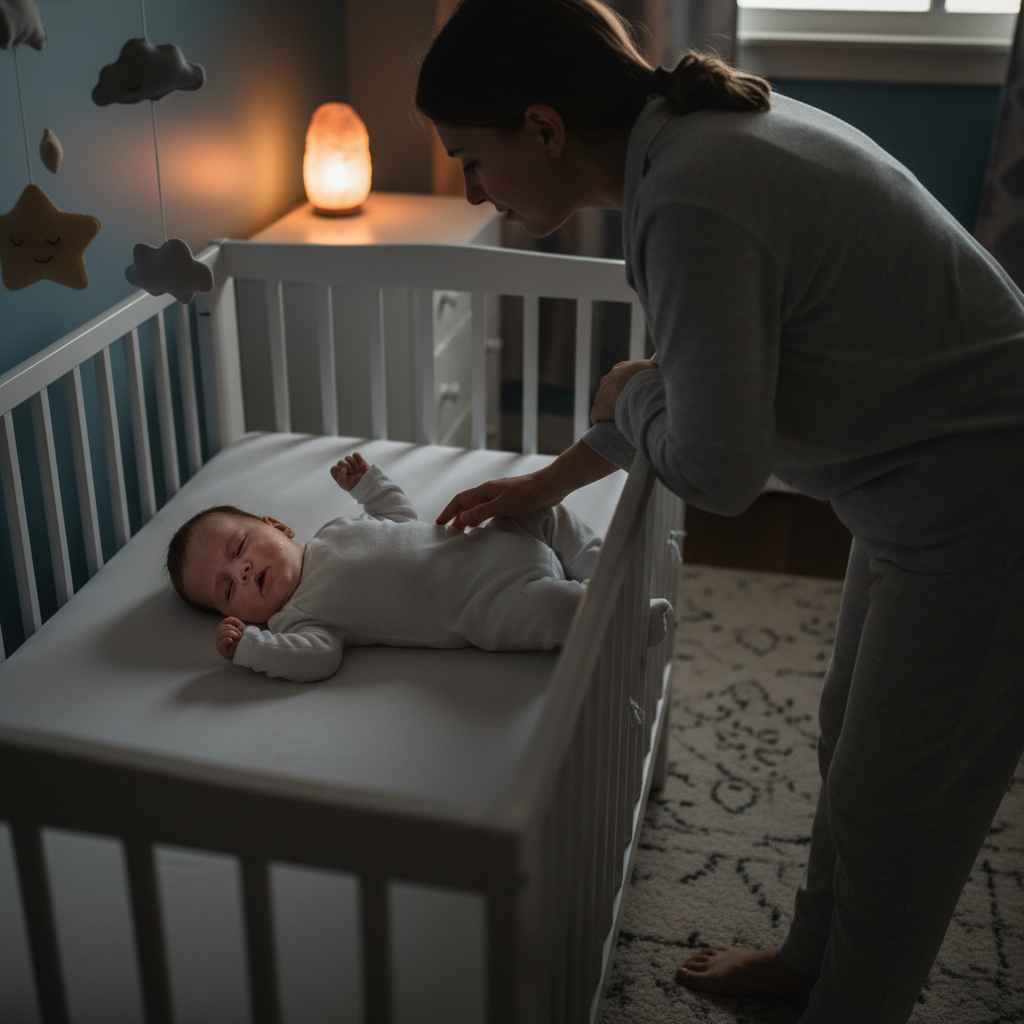
You finally get the baby down. The room is quiet. Then you hear a tiny cry, a whimper, maybe a short burst that sounds serious enough to make your whole body sit up before your brain does. Baby crying in sleep can feel alarming because it happens in the dark, when you cannot immediately tell whether your baby is awake, hungry, uncomfortable, or just moving through a noisy sleep cycle.
The reassuring answer is that many babies cry, squeak, grunt, grimace, or fuss briefly while still asleep. Newborn crying while sleeping is especially common because newborn sleep is light, active, and full of movement. The important part is learning the difference between normal baby sleep crying and red flags that deserve a closer look.
This guide gives you a calm way to decide what to do next: pause and observe, soothe gently, check a need, or call your pediatrician. Mamazing designs nursery gear for real nights, not perfect-photo nights, so the goal here is practical comfort: help your baby sleep safely, and help you respond without turning every little sound into a full wake-up.
Yes, baby crying in sleep is often normal when it is brief, soft, and not paired with signs of illness or distress. Many babies make noise during active sleep. They may flutter their eyelids, move their arms, breathe unevenly for a few seconds, whimper, fuss, or let out a short cry and then settle again.
The first move is usually not to scoop your baby up right away. Pause for a moment and watch. If your baby is still asleep, breathing comfortably, and settling, you may not need to do anything. If the crying grows stronger, your baby wakes fully, or you notice a red flag such as fever, trouble breathing, unusual limpness, repeated vomiting, or a cry that sounds sharply different from normal, check your baby and contact your pediatrician or urgent care as appropriate.
Think of sleep crying as a signal, not a diagnosis. Sometimes it means nothing more than a sleep-cycle shift. Sometimes it means hunger, gas, a wet diaper, teething discomfort, or overtiredness. And occasionally, it is part of a bigger medical picture. The difference is usually in the pattern, the baby's overall condition, and whether the cry resolves with ordinary comfort.
Normal baby sleep crying tends to be short, variable, and mixed with other sleepy sounds. A baby may cry for a few seconds, pause, wiggle, make a face, and go quiet again. The cry may sound more like a complaint than a full awake wail. Your baby's body may stay relaxed, and the eyes may remain closed.
Common normal signs include:
This is where many parents accidentally make nights harder. A tiny cry can trigger an immediate pickup, which may wake a baby who was already settling. Of course, you should always respond when your baby truly needs you. But if the sound is brief and your baby looks safe and comfortable, a short pause can protect sleep for both of you.
A helpful rule is to separate "sound" from "state." Sound is the cry, whimper, grunt, or fuss you hear through the monitor. State is what your baby is actually doing. Are the eyes closed? Is the body relaxed? Is breathing easy? Is the cry already fading? A loud little sound can happen during a normal sleep transition, while a quieter cry paired with stiff posture, color change, or poor breathing deserves more attention.
Sleep movement can also look dramatic. If your baby's main pattern is kicking, squirming, and little cries, check normal sleep movements to separate ordinary restlessness from signs worth tracking.
Newborns are noisy sleepers. They spend a lot of time in active sleep, and active sleep can include movement, facial expressions, little sounds, and brief crying. That is why newborn crying while sleeping often looks more intense than parents expect. A newborn may sound upset, then be completely still a few seconds later.

Newborns also wake often because their stomachs are small and their sleep cycles are short. Hunger, gas, immature digestion, a startle reflex, or a wet diaper can all turn a sleepy whimper into real crying. If your newborn keeps escalating, is rooting, sucking on hands, or has gone a typical feeding interval, it is reasonable to check for hunger.
The age difference matters. A 2-week-old who whimpers in sleep is often doing ordinary newborn sleep. A 9-month-old who suddenly starts intense night crying may be dealing with teething, separation anxiety, illness, schedule changes, or a new sleep association. The sound alone is less useful than the pattern around it.
If your main concern is the newborn stage, read the deeper guide to newborn crying in sleep. This article stays broader: what is normal, what is not, and how to decide what to do tonight.
Most baby sleep crying is not an emergency. Still, a few signs should move you from "watch and wait" to "check now." If your baby seems ill, has trouble breathing, is difficult to wake, has blue or gray color around the lips, has a seizure-like episode, or has a cry that sounds weak, high-pitched, or sharply different from usual, seek medical help right away.
Medical organizations give similar guidance: crying becomes more concerning when it comes with fever, breathing trouble, repeated vomiting, poor feeding, unusual drowsiness, or signs of pain. For example, Mayo Clinic advises contacting a baby's health care provider when crying is paired with symptoms such as fever, vomiting, diarrhea, poor feeding, or trouble breathing in young infants: Mayo Clinic infant crying guidance.
| What You Notice | Often Normal | Check Now | Call for Help |
|---|---|---|---|
| Cry length | A few seconds | Keeps building | Inconsolable or unusual |
| Breathing | Comfortable | Congested but calm | Labored, blue, pauses |
| Feeding | Feeds normally after waking | Less interested once | Refuses feeds repeatedly |
| Temperature | No fever signs | Feels warm, check temp | Fever in young infant |
Trust your baseline knowledge of your baby. A parent who says, "This cry is not like my baby," is noticing something useful. You do not need to wait for a perfect checklist match before calling the pediatrician.
Age changes the threshold, too. A very young infant with fever or poor feeding should be handled more urgently than an older baby with one restless night and no other symptoms. If your baby was premature, has a known medical condition, or has recently been sick, follow the specific plan your clinician gave you. General sleep advice is useful, but your baby's history matters more than any blog checklist.
When baby sleep crying starts, try a low-stimulation response first. Give yourself ten to thirty seconds to observe. Look at your baby's color, breathing, body tone, and whether the cry is fading or escalating. If your baby settles, you can let sleep continue.
If the crying continues, move through the simplest checks:
Avoid turning every sleep cry into a full event. Bright lights, excited voices, repeated pickup-and-put-down cycles, and long middle-of-the-night play can teach an older baby that every brief wake is a social hour. Newborns still need responsive feeding and care, but even then, keeping the environment boring can make resettling easier.
If you do need to pick your baby up, keep the goal narrow: solve the need, then return to sleep. That may mean a feed, a burp, a diaper change, or a few minutes upright if your pediatrician has suggested that for reflux discomfort. Try not to add new steps every night unless they are truly helping. Babies learn patterns quickly, and parents get exhausted quickly, so a simple repeatable response is kinder to everyone.
If the crying is not brief and seems to happen after bedtime rather than during sleep, the issue may be closer to baby crying at night than sleep whimpering. That pattern may call for a closer look at wake windows, feeding rhythm, overtiredness, and how your baby falls asleep.
You cannot control every whimper. You can control the sleep environment. Safe sleep guidance is consistent on the big pieces: place babies on their backs for sleep, use a firm and flat surface, and keep loose blankets, pillows, bumpers, and soft objects out of the sleep area. The CDC summarizes these safe sleep basics for reducing sleep-related infant risks: CDC safe sleep recommendations. HealthyChildren, from the American Academy of Pediatrics, gives similar guidance and notes that babies should sleep on a firm, flat, non-inclined surface: AAP safe sleep guidance.

This matters for baby crying in sleep because parents are sometimes tempted to "fix" sleep crying with unsafe shortcuts: a pillow to prop the baby, a loose blanket, a swing for unsupervised sleep, or an inclined position. Those may seem soothing, but they are not safe sleep solutions.
A better approach is simple and boring in the best way: a firm mattress, fitted sheet, clear sleep space, comfortable room temperature, and a crib or sleep surface that makes safe sleep easy to repeat. If you are building the nursery or upgrading the sleep space, safe, sturdy cribs can help you create a setup that supports safe sleep habits without adding clutter.
A crib will not magically stop baby sleep crying. No honest product can promise that. What it can do is give you one less thing to second-guess when your baby makes noise at 2 a.m. You know the surface is appropriate, the space is clear, and your next decision can focus on your baby's cues.
One isolated night of baby whimpers in sleep is usually less important than a pattern. Start tracking if crying becomes more frequent, lasts longer, happens at the same time every night, or comes with feeding changes, fewer wet diapers, fever, congestion, rash, vomiting, diarrhea, or unusual sleepiness.
A simple note on your phone is enough. Record the time, how long the crying lasted, what the cry sounded like, whether your baby woke, what helped, and any symptoms. You are not trying to become a sleep scientist. You are giving your pediatrician a clearer picture if you need to call.
Also look at the daytime story. A baby who is cheerful, feeding well, gaining weight, and having normal diapers is in a different category from a baby who is suddenly hard to feed, unusually sleepy, or crying with signs of pain. Night sounds make more sense when you connect them to the whole day.
Pattern tracking is also useful because it keeps you from changing five things at once. If you adjust bedtime, room temperature, feeding timing, and soothing style on the same night, it is hard to know what helped. Change one small thing when the situation is not urgent, then watch for a few nights. If symptoms appear or your instincts say the crying is different, skip the experiment and call for medical guidance.
For many families, the calmest plan is this: pause first, check gently, protect safe sleep, and escalate when your baby's overall condition tells you something is wrong. Baby crying in sleep is not something you can eliminate completely, but you can become much more confident about what it means.
Not always. If the crying is brief, your baby is breathing comfortably, and they seem to be settling, you can pause and observe. Wake or pick up your baby if the crying escalates, your baby seems uncomfortable, or you notice a red flag.
Yes. Newborn crying while sleeping is often linked to active sleep, short sleep cycles, hunger, gas, or immature digestion. Older babies may cry in sleep because of teething, schedule changes, overtiredness, separation anxiety, illness, or sleep associations.
Teething can make some babies more restless at night, especially if they are also drooling, chewing, or fussy during the day. If your baby has fever, poor feeding, repeated vomiting, or seems very unwell, do not assume it is only teething.
Usually, you cannot know from the sound alone. Brief baby whimpers in sleep are often just active sleep or a sleep-cycle transition. Older babies can have upset dreams, but short whimpers that stop quickly are usually not a reason to worry.
Call your pediatrician if the cry is unusual or inconsolable, your baby has fever, breathing trouble, repeated vomiting, poor feeding, fewer wet diapers, unusual sleepiness, blue or gray color, or you feel something is not right.
A crib does not prevent normal sleep crying, but a safe crib setup can make your response calmer. When the sleep space is firm, flat, clear, and appropriate, you can focus on your baby's cues instead of worrying about the environment tonight.
Final takeaway:
Baby crying in sleep is often normal, especially when it is brief and your baby settles without fully waking. Newborns can be particularly noisy because active sleep looks and sounds busy. The red flags are less about one tiny whimper and more about the whole picture: breathing, color, feeding, temperature, alertness, and whether the cry sounds dramatically different from usual.
When in doubt, check your baby. When concerned, call your pediatrician. And when your baby is simply fussing through a sleep cycle, give yourself permission to pause before rushing in. A safe sleep space, a calm response, and a little pattern-tracking can turn the scariest nighttime question into one you know how to handle.
Not always. If the crying is brief, your baby is breathing comfortably, and they seem to be settling, you can pause and observe. Wake or pick up your baby if the crying escalates, your baby seems uncomfortable, or you notice a red flag.
Yes. Newborn crying while sleeping is often linked to active sleep, short sleep cycles, hunger, gas, or immature digestion. Older babies may cry in sleep because of teething, schedule changes, overtiredness, separation anxiety, illness, or sleep associations.
Teething can make some babies more restless at night, especially if they are also drooling, chewing, or fussy during the day. If your baby has fever, poor feeding, repeated vomiting, or seems very unwell, do not assume it is only teething.
Usually, you cannot know from the sound alone. Brief baby whimpers in sleep are often just active sleep or a sleep-cycle transition. Older babies can have upset dreams, but short whimpers that stop quickly are usually not a reason to worry.
Call your pediatrician if the cry is unusual or inconsolable, your baby has fever, breathing trouble, repeated vomiting, poor feeding, fewer wet diapers, unusual sleepiness, blue or gray color, or you feel something is not right.
A crib does not prevent normal sleep crying, but a safe crib setup can make your response calmer. When the sleep space is firm, flat, clear, and appropriate, you can focus on your baby's cues instead of worrying about the environment tonight.
Featured Products


Contact Napping: How to Transition Baby to Independent Sleep
How to Create a Safe and Sleep-Friendly Nursery