
- by Artorias Tse
Day Trips With a Baby: How to Pack and Use a Foldable Stroller
- by Artorias Tse
If you want the short answer, a foldable stroller can make day trips with a baby much easier, but only if you treat it as part of a simple outing system instead of a magic fix. The best setup is usually a stroller that folds quickly, steers easily, carries your essentials without turning into a rolling closet, and keeps your baby comfortable through feeds, short naps, weather changes, and those awkward in-between moments when everyone is suddenly tired at once.
That is where many day-trip guides miss the point. They talk about “bringing everything just in case,” but the real win is bringing the right things in the right format. A foldable stroller helps because it gives you a predictable base: a place for your baby to ride, a basket for the essentials, a shade canopy, and a faster way to move through parking lots, parks, museums, cafes, and sidewalks without feeling like you packed for a week away.
So if you are planning a park morning, a zoo visit, a waterfront walk, a farmer's market stop, or a long lunch that may spill into nap time, this guide will help you figure out what to pack, how to handle weather and safety, and when a foldable stroller is enough for the whole outing. If you are still getting your first setup together, Mamazing's guide to preparing for your baby's first trip with a travel stroller is a useful next read too.
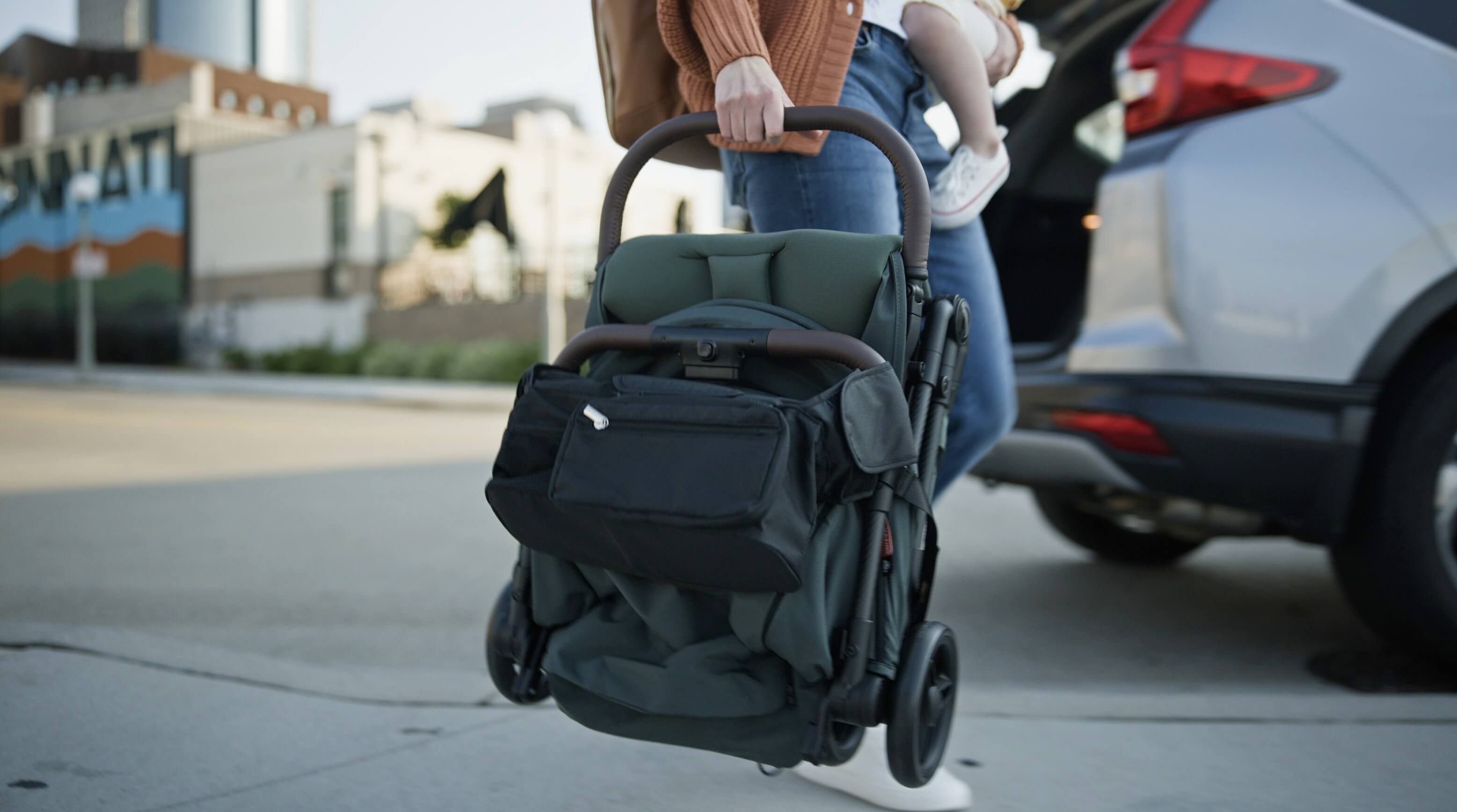
A foldable stroller works well for day trips because it lowers friction. You can get it in and out of the car faster, navigate tighter spaces more easily, and carry what you need without feeling locked into a bulky full-day travel system.
That matters more than it sounds. A day trip with a baby is rarely just one thing. It is parking, unloading, buckling, walking, stopping to feed, checking the diaper bag, finding shade, watching the clock, and deciding whether to stay longer or head home. A stroller that folds quickly and pushes easily gives you more flexibility at every one of those transitions.
It also helps you stay realistic. For most families, the goal is not to recreate home while you are out. The goal is to keep your baby fed, dry, shaded, and reasonably settled while giving yourself a smoother way to move through the day. That is why a compact folding stroller often makes more sense for a day trip than a heavier full-size stroller that is great in theory but annoying to unload, lift, and steer once you are actually out of the driveway.
The other advantage is mental. When your stroller setup is simple, you are less likely to overpack. You stop asking, “What if everything goes wrong?” and start asking, “What do we actually need to enjoy the next four to six hours?” That shift alone can make outings feel much more manageable.
If you are still comparing models, Mamazing's article on what is a good travel stroller can help you think through weight, storage, shade, recline, and fold speed before you buy.
The easiest way to avoid overpacking is to split your gear into three buckets: must-have care items, comfort items, and weather extras. Once those are covered, stop. You do not need to bring half the nursery for a half-day outing.
| Category | What to bring | Why it matters |
|---|---|---|
| Must-have care | Diapers, wipes, changing pad, one full spare outfit, feeding supplies, burp cloths, water for the parent, and a small first-aid kit | These cover the things that end outings fastest when you are missing them. |
| Comfort | Light blanket, pacifier if used, favorite small toy, bib, and a stroller-friendly snack setup for older babies | These help with waiting, transitions, fussiness, and surprise delays. |
| Weather extras | Hat, rain cover, stroller fan if appropriate, extra socks, light layer, or footmuff depending on season | These are the items that keep a pleasant outing from turning into a rushed exit. |
A good rule is to pack for one more feed, one more diaper, and one more hour than you think you will need. That gives you margin without tipping into panic-packing.
It also helps to pack by access speed, not just by category. Keep diapers, wipes, and feeding basics where you can grab them one-handed. Put backup clothing and less likely extras deeper in the basket or bag. When your baby is crying in a public bathroom or your stroller is parked awkwardly next to a cafe table, that difference matters.
If your baby is old enough for solids or snacks, pre-portion them. If you are bottle feeding, pre-measure what you can safely prepare in advance. If you are breastfeeding, think through where you will want to stop and sit. The smoother the routine feels in your head before you leave, the calmer it usually feels once you are out.
Weather is where many easy day trips become harder than expected. The trick is not to fear every forecast. It is to match your layers, stroller accessories, and outing length to the conditions you are actually walking into.
In warm weather, shade and airflow matter more than heavy coverage. A stroller canopy helps, but it is not enough on its own if the day is bright, hot, or still. The American Academy of Pediatrics, via HealthyChildren, recommends practical sun protection such as shade, hats, protective clothing, and careful sunscreen use for older babies in addition to limiting direct exposure when possible. See the AAP's guidance on sun safety for babies and children.
For a hot-weather outing, keep your setup light: breathable clothing, a hat, water for yourself, and a route that gives you easy access to indoor stops or natural shade. A stroller fan can help with airflow, but it does not replace breaks, hydration, or good timing. Morning outings are often easier than pushing through peak afternoon heat.

If your baby starts looking flushed, unusually sleepy, or suddenly miserable, do not talk yourself into staying longer. Day trips go better when you leave a little early instead of one meltdown too late.
For cool or wet weather, layers win. Dress your baby so you can take one layer off or add one quickly without rebuilding the whole outfit in public. A compact rain cover is usually more useful than a heavy blanket because it protects against both drizzle and wind while still letting you move.
Rainy-day packing should stay simple: dry backup clothing, a towel or cloth for wet seats or wet hands, and a safe place to stash damp layers afterward. If you already know the weather will stay rough for most of the outing, shorten the plan before you leave. That is usually a better decision than hoping things will improve while your diaper bag gets heavier and your baby gets colder.
In colder weather, the biggest mistake is confusing bulk with warmth. Too many thick layers can make it harder to buckle your baby securely and can also make transitions awkward once you move indoors. A better plan is close-fitting layers, warm socks, a hat, and a stroller cover or footmuff suited to the temperature.
Cold-weather day trips usually work best when you build in warm stops: a library, a cafe, a museum lobby, a family restroom, or even a short car break. You do not have to prove anything by staying outside longer than your baby is comfortable.
The most useful stroller safety advice is usually basic, not dramatic. Most problems come from rushing, uneven ground, overloading handles, or assuming a familiar routine is safe in every setting.
Before you head out, check the fold lock, brakes, harness, and wheels. The U.S. Consumer Product Safety Commission has long highlighted stroller-related risks linked to falls, restraint issues, and mechanical failures, which is why basic pre-trip checks matter more than many parents expect. Their stroller safety information and standards overview are a useful reminder to check latches, restraints, and moving parts before regular use: CPSC carriage and stroller guidance.
Once you are out, keep the harness use consistent, especially in crowded areas or whenever you stop on uneven ground. Avoid hanging heavy bags from the handlebar. It feels convenient, but it can change the stroller's balance quickly, especially when you take your baby out and the seat is suddenly lighter.
If you are navigating curbs, ramps, transit platforms, or restaurant aisles, slow down sooner than you think you need to. Day trips are tiring, and most careless stroller moments happen late in the outing, not at the start.
Heat safety is really outing-length safety. If the day is hot, shorten the route, choose shadier stops, and keep asking yourself whether your stroller setup is still comfortable or just technically workable. A canopy, breathable seat fabric, and occasional shade breaks go farther than piling on accessories that reduce airflow.
It is also smart to keep your expectations flexible. If the weather turns harsher than the forecast suggested, the successful version of the day may be one pleasant stop instead of three. That still counts.
Public places bring their own rhythm. Crowded sidewalks, long lines, outdoor tables, and fast-moving pedestrians all make a foldable stroller more useful, but only if you keep your setup tidy. The less gear hanging off the frame, the easier it is to steer, turn, and brake quickly.
In restaurants or busy gathering spaces, park the stroller where servers and passersby can move around you. Avoid escalators with the stroller. Use elevators or ramps instead. And if older siblings are with you, give them one clear rule before you unload: stay next to the stroller when you stop moving. Simple rules hold up better than long speeches once everyone is excited.
This is the part that determines whether a day trip feels manageable or exhausting. Babies do not become different people just because you packed well. They still get hungry, overstimulated, sleepy, and annoyed by waiting. The goal is not to prevent every hard moment. The goal is to recover from them faster.
For feeds, think in terms of location, not just supplies. Before you leave, know where you would stop if your baby needed to eat earlier than expected. That might be a bench in the shade, a quieter room in a museum, your parked car, or a cafe corner that feels comfortable enough for ten calm minutes.
For diaper changes, speed is everything. Keep your changing kit as a grab-and-go pouch rather than loose items floating around the bag. You want to be able to reach for one small setup, not unpack your whole stroller basket in a cramped restroom.
Naps are where expectations matter most. A stroller nap can absolutely save a day trip, but it should not tempt you into treating the stroller like a perfect all-purpose sleep space. The Safe to Sleep campaign emphasizes that if a baby falls asleep in a seated device, they should be moved to a firm, flat sleep surface as soon as practical and safe to do so. Their guidance on safe sleep environments is the right boundary to keep in mind.
In real life, that means a stroller nap can be a useful bridge during an outing, especially if your baby dozes off while you are walking. But if the nap becomes long, the outing should start winding down. A day trip works best when the stroller supports your routine, not when it quietly replaces the parts of the routine that matter most at home.
Meltdowns deserve a practical mindset too. Most of them come down to one of five things: hunger, tiredness, heat, overstimulation, or a schedule that went one stop too far. When your baby is clearly done, the kindest move is often to leave, not to squeeze more value out of the day. Experienced parents know that good outings usually end on purpose.
For most baby day trips, a foldable stroller is enough. It is usually the best fit for paved walks, errands with scenic stops, family lunches, shopping districts, zoos, parks with smooth paths, and travel days when you will fold and unfold the stroller multiple times.
It may be less ideal if the outing is built around rough terrain, deep gravel, long dirt trails, or a baby who still needs a very specific recline or support setup that your compact stroller does not handle well. In those cases, a larger stroller or a carrier-and-stroller combination may make more sense.
The question to ask is not “Can this stroller do everything?” It is “Will this stroller make today's plan easier?” If the answer is yes, that is enough. A foldable stroller does not need to be your all-terrain hero to be the right day-trip choice.
And if your outings are starting to look more like airport days, city breaks, or holiday schedules with lots of transitions, Mamazing's guide to holiday travel with a foldable stroller may give you a better next-step framework than a generic stroller roundup.
The bigger point is this: the best day-trip stroller is the one that helps you get out the door more often. If it folds fast, fits your trunk, handles your usual sidewalks, and holds what you actually bring, it is already doing the job well.
Pack for one more feed, one more diaper, and one more hour than you expect. For most outings, that means diapers, wipes, a changing pad, feeding supplies, one spare outfit, a light layer, water for you, and just a few comfort items instead of a full backup wardrobe.
Usually, yes, if your day is built around regular stops, smooth walking surfaces, and a realistic pace. It may be less ideal for rough terrain or outings where your baby needs a more specialized support or recline setup.
Use layers, shade, and short adjustment breaks instead of overcompensating with bulk. In heat, focus on airflow and timing. In cold or wet weather, focus on easy-to-change layers and keeping your baby dry rather than wrapping the stroller in too much heavy gear.
That depends on the stroller's seat design and your baby's head, neck, and trunk control, so the safest default is to follow the manufacturer's age and fit guidance for that specific model. If your baby still needs more support than the seat provides, wait or use the configuration intended for younger infants.
It is usually faster to load, easier to steer in tight places, and simpler to fold between stops. For many families, that makes the whole outing feel lighter and less complicated, which matters more on a real day trip than owning the biggest basket or the heaviest frame.
A short stroller nap can be helpful during an outing, but it should stay a bridge, not the whole sleep plan. If the nap gets long or you are back somewhere safe to transition, move your baby to a firm, flat sleep surface as soon as practical.
A good day trip with a baby is not the one where nothing goes wrong. It is the one where you were prepared enough that the small things stayed small. A foldable stroller helps by giving you a lighter, more flexible base for feeds, shade, storage, and movement, which is exactly what most family outings need.
So keep the plan simple. Pack the essentials, build in weather flexibility, expect one unpredictable moment, and let the stroller do what it does best: make the day easier to carry. If you are refining your setup, Mamazing's guide to stroller safety features to look for is a smart companion piece before your next outing.



Stroller Storage Ideas: Smart Solutions for Small Spaces, Trunks, and Everyday Outings
Best Stroller for Winter and Snow: Top Picks for Real Cold-Weather Walks