
- by Artorias Tse
Your Baby's First Trip with a Travel Stroller: What to Pack, Check, and Practice
- by Artorias Tse
If this is your baby's first trip, the biggest mistake is not forgetting one tiny accessory. It is assuming you can figure everything out at the airport. The smoothest trips usually come from doing three things before travel day: choosing the right travel stroller, checking how you will handle it in transit, and practicing the parts that feel awkward at home first.
That matters because a travel stroller can make the day much easier, but only if it actually fits the trip you are taking. A stroller that feels great on neighborhood walks may be annoying in a security line, frustrating at a train platform, or bulky when you are trying to board quickly with a baby and a diaper bag.
The first trip is usually where you notice the gap between “nice stroller” and “useful travel stroller.” One looks good in theory. The other keeps the day moving.
This guide is for the real first-trip questions: how to choose a travel stroller, what to pack with it, what to expect at the airport, and which comfort and safety checks are worth doing before you leave. At Mamazing, we think good travel prep should feel practical, not performative.

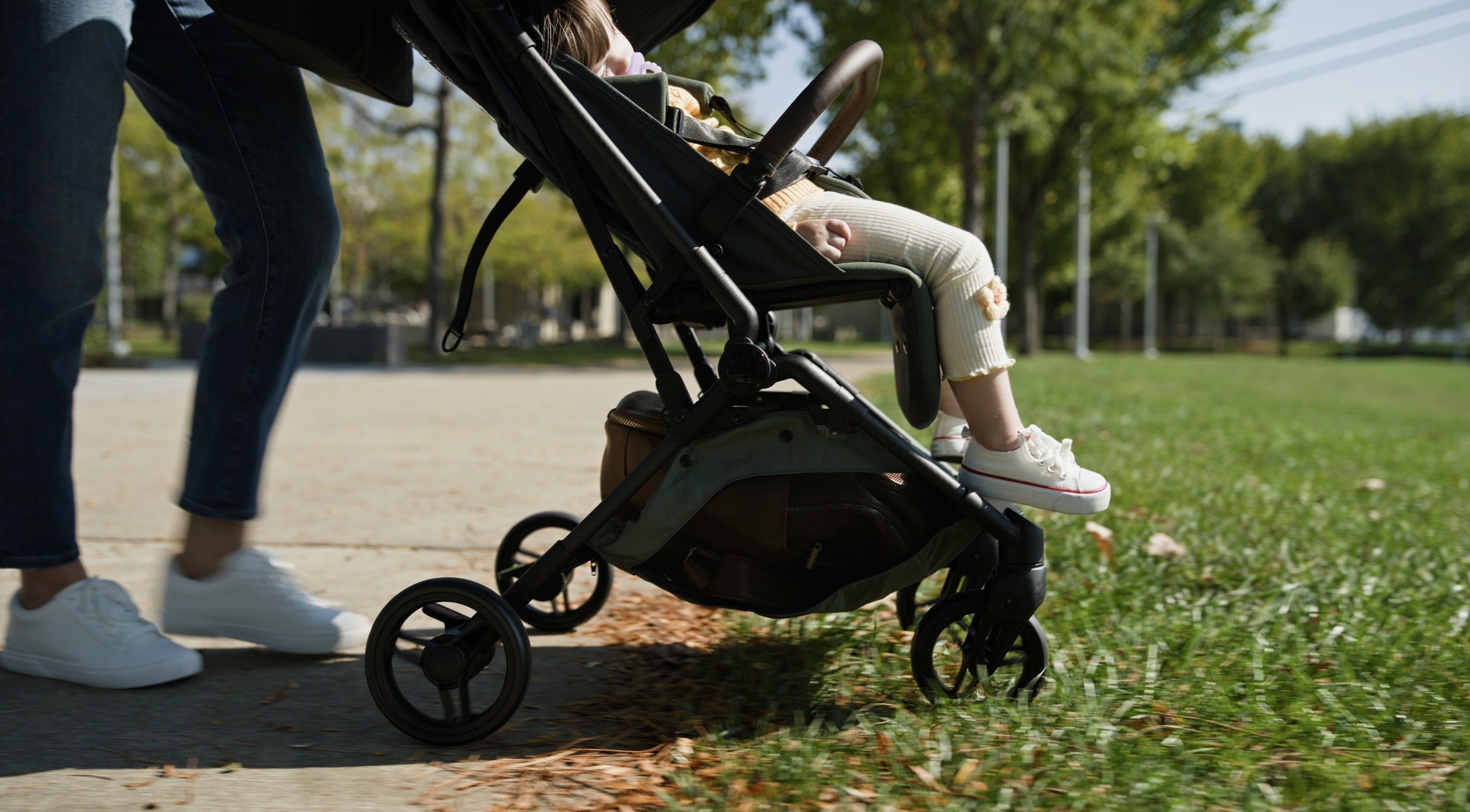
A travel stroller is helpful because it reduces friction. It gives you a place for your baby to rest, a predictable way to move through long terminals or crowded streets, and a storage zone for the things you need constantly. On a first trip, that predictability matters more than parents usually expect.
It can also make transitions easier. If you are moving between the car, the check-in line, security, the gate, and then ground transportation at your destination, a lightweight stroller with a quick fold can take a lot of stress out of the day. That does not mean every family needs the tiniest stroller on the market. It means you want one that matches how you actually plan to travel.
The more useful question is not “Do people travel with strollers?” Of course they do. The better question is: Will this stroller make my day easier at the exact points where travel gets messy? That is the standard worth using.
The best travel stroller for your baby's first trip is not always the lightest or cheapest one. It is the one you can fold without panic, steer with one hand when necessary, and use safely for your baby's age and size.
Start with the basics that matter on travel day rather than on a store floor. A good first-trip stroller should feel easy to fold, easy to lift, and easy to park without rolling away. If you are flying, folded size matters. If you are walking a lot outdoors, wheel quality and canopy coverage matter more than shaving off one extra pound.
| Feature | Why it matters on a first trip |
|---|---|
| Fast fold | Helps at security, boarding, taxis, and tight transitions |
| Low carrying weight | Makes stairs, gate checks, and loading much easier |
| Proper harness and brakes | Important when you are distracted or in crowded spaces |
| Sunshade and ventilation | Helps with naps, heat, and long waits |
| Basket access | Lets you reach diapers, wipes, and snacks quickly |
If you are still choosing between models, Mamazing also has a more detailed guide on how to choose the best travel stroller for your next trip. It is a good next read if you are still comparing features instead of packing yet.
Compact is great when you are moving quickly through airports, city sidewalks, or rideshare pickups. But the most compact stroller is not automatically the best choice if your baby still needs a flatter recline, stronger sun coverage, or a more supportive seat for longer outings.
This matters even more if your destination includes uneven streets, long sightseeing days, or a lot of outdoor time. For some families, the smartest first-trip choice is a slightly sturdier stroller that still folds well, not the smallest stroller possible. The best travel stroller is the one that saves you effort without quietly taking away comfort.
Before travel day, you want to know how your stroller will move through the journey: checked at the counter, gate-checked, carried onto the train, or folded into a car trunk. That part should not be a surprise.
Airline stroller rules can vary, so this is the part you should always check directly with your carrier shortly before departure. Policies can differ on weight, folded size, whether the stroller can go in the cabin, and whether it needs to be checked at the counter or at the gate.
In practical terms, most parents usually end up choosing between three options:
If you are flying with a small child, the FAA's guidance on child restraint systems for children on commercial flights is also worth reading before the trip. It focuses more on in-flight safety than on strollers, but it is a useful reminder that travel convenience and child safety are not the same thing, especially once you are on the aircraft.
If you are flying in the United States, the Transportation Security Administration says strollers and umbrella strollers must be screened, usually by X-ray, and larger equipment may need a visual or physical inspection. Their current guidance is on the TSA page for traveling with children.
The useful takeaway is simple: empty loose items out of stroller pockets and baskets before you reach the screening area, and be ready to remove your baby and fold the stroller. That one bit of prep saves more stress than parents realize.
If this is also your first flight with a baby, Mamazing's guide to flying with a baby for the first time pairs well with stroller prep because it covers the wider airport-day rhythm too.
You do not need to turn the stroller into a moving storage unit. In fact, overpacking is one of the easiest ways to make a travel stroller harder to steer, slower to fold, and more annoying at security. The better goal is to keep only the items you will need quickly and often.
For most first trips, the genuinely useful stroller extras are boring ones: a travel bag if you plan to check the stroller, a rain cover if weather is uncertain, a sunshade or good canopy for long outdoor stretches, and a compact organizer if it does not make folding awkward.
Accessories become less useful when they add bulk, snag easily, or have to be removed every single time you fold the stroller. That is a good rule to keep in mind when you are shopping for cup holders, hooks, and add-ons. If it makes the fold more annoying, it may not be worth bringing.
The stroller basket should hold the things that save you from digging through a larger bag every twenty minutes. Think diapers, wipes, a change of clothes, a small blanket, snacks if your baby is old enough, and one or two comfort items. Keep valuables like passports, phones, and wallets on your body or in a secure personal bag instead of leaving them exposed in the basket.
| Pack in the stroller basket | Keep elsewhere |
|---|---|
| Diapers and wipes | Passports and ID |
| Snacks and bottle basics | Phone and wallet |
| Extra baby clothes | Anything breakable |
| Light blanket or muslin | Heavy loose shopping bags |
| One or two small toys | Anything that throws off balance |
This may be the most underrated part of all travel stroller prep. If you have never folded the stroller while holding your baby, juggling a bag, or standing in a slightly awkward space, then travel day should not be your first rehearsal.
Practice folding and unfolding the stroller several times before you leave. Time yourself once or twice if you want a reality check. Then try it with the basket loaded the way you expect to travel. That is often when you realize what has to come out before the fold works cleanly.
You should also test the brakes, the harness, the recline, and the wheels on more than one surface. A stroller that feels fine on smooth indoor flooring may feel very different on carpet, pavement, or rough sidewalks. First-trip confidence often comes less from buying the “perfect” stroller and more from already knowing how your stroller behaves.
If you can, do one full rehearsal with the actual items you plan to bring. Put the blanket, wipes, snacks, and extra clothes where they will really go. Fold the stroller, lift it, unfold it, and strap your baby in again. A short practice run will usually show you whether the bag placement is awkward, the basket is overloaded, or the fold is harder than it looked in your living room.
The airport goes more smoothly when you assume there will be one awkward handoff point: security, boarding, baggage, or a rushed connection. If you already know how you want to handle the stroller in those moments, you will feel calmer when they arrive.
If you are taking a flight, HealthyChildren.org also has current parent guidance on flying with a baby, including seating and safety considerations that are helpful beyond the stroller itself.
Destination planning matters too. If your trip involves cobblestones, beach paths, lots of stairs, or very hot weather, a stroller that feels great in an airport may feel less impressive at the destination. Before you leave, ask yourself where the stroller will be used most: terminals, sidewalks, museums, parks, or all-day sightseeing. That answer helps you decide whether you need maximum compactness, better wheels, stronger shade, or simply a lighter bag setup.
Travel days are distracting, which is why simple stroller safety habits matter more than usual. The goal is not perfection. It is reducing the mistakes that happen when everyone is tired and moving quickly.

One of the easiest wins is to do a final two-minute safety check before you leave home: harness working, brakes working, canopy attached, basket packed, fold tested, and rain cover or travel bag included if needed. That tiny routine prevents a lot of travel-day irritation.
Comfort is part of safety too. A baby who is too hot, hungry, overtired, or sitting awkwardly in a rushed setup usually reaches their limit faster, and then the whole travel day feels harder. If your baby is likely to nap in the stroller, check the recline and shade before you leave instead of improvising in the middle of the day. If your baby still needs frequent feeds or diaper changes, leave enough room in your timing that you are not trying to do everything while moving.
Not always, but it often makes the day easier. If you expect long walks, airport transitions, sightseeing, or naps on the go, a travel stroller can reduce a lot of strain compared with carrying your baby the entire time.
Usually yes. TSA says strollers and umbrella strollers must be screened, and larger equipment may need extra inspection. The practical part is being ready to remove your baby, empty loose items, and fold the stroller when you reach screening.
It depends on the stroller's folded size and your airline's rules. Gate-checking is often the easiest middle ground because you can use the stroller through the airport without needing it to fit in the cabin.
Pack only what you will need quickly: diapers, wipes, snacks, a light blanket, extra baby clothes, and one or two comfort items. Keep passports, phones, and wallets somewhere more secure.
Sometimes, but only if the stroller is designed for newborn use or supports the right recline or compatible setup. Always check the manufacturer's age and fit guidance before assuming a compact stroller is newborn-ready.
The best first trip is rarely the one where everything goes perfectly. It is the one where the basic logistics are already solved before the stress hits. If your stroller fits the trip, your basket is packed with the right essentials, and you have already practiced the fold, you are in a much better position than you think.
If you are still comparing stroller styles for air travel specifically, Mamazing's guide to the best travel stroller for airplane use can help you narrow the field. And if this first trip also includes your first flight with a baby, pair that stroller prep with the wider travel-day planning linked above.
It can also help to decide your “non-negotiables” before you leave home. For one family that might be easy naps. For another it might be fast airport transitions, or keeping diapers and snacks within reach at all times. Once you know what matters most for your day, it becomes much easier to tell which stroller features and accessories are actually helping and which ones are just adding clutter.
Your baby's first trip with a travel stroller does not need to feel like a test. Think of it more like a systems check: pick the right stroller, check the rules, pack lightly, and practice the awkward parts before the real day starts. That is usually what turns a stressful outing into a manageable one.
Featured Products


Best Budget Travel Stroller: What to Check Before You Buy an Affordable Travel Stroller
Best Travel & All-Terrain Baby Strollers (2026): Airports, Trails, Beach