
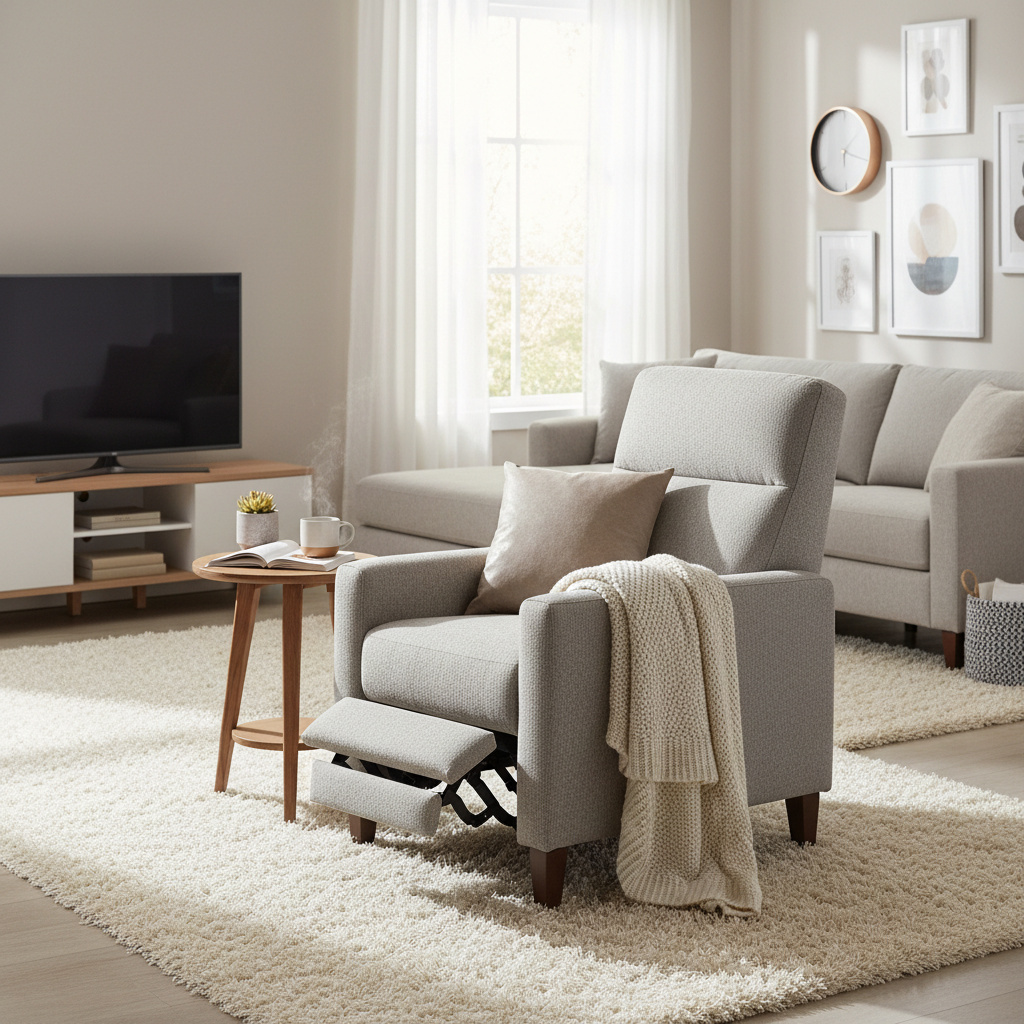
If you have searched what is a recliner chair, you are probably looking for a simple answer first and product details second. You want to know what makes a recliner different from a regular chair, how it works, what the main types are, and whether it is really worth considering for a living room, reading corner, recovery setup, or nursery.
Here is the simplest definition: a recliner chair is a chair with an adjustable back and a footrest that lets you lean back and support more of your body than a standard upright chair. Merriam-Webster's definition of recliner describes it as a chair with an adjustable back and footrest. In practical home-shopping language, that means a chair designed for more customizable comfort, whether the movement is manual, powered, rocking, gliding, swiveling, or some mix of those.
This guide is built around the search intent behind recliner chair meaning, define recliner, full recliner meaning, and different types of recliner chairs. You will get a quick definition first, then the main types, features, uses, and buying considerations, including why so many parents end up considering a recliner for the nursery.
Quick Answer: Recliner Chair Meaning
A recliner chair is a chair designed to let you sit back in a more supported, adjustable position than a standard armchair. The defining features are usually:
- a backrest that tilts or reclines
- a footrest that lifts or extends
- a mechanism that changes the sitting position
That is why the word recliner shows up in so many definition-style searches. People are not only asking what the word means. They are also asking what kind of experience the chair is built to provide: more body support, more flexibility, and often more comfort for longer sitting sessions.
How Is a Recliner Chair Different From a Regular Chair?
The easiest way to understand a recliner chair is to compare it with a standard upholstered chair.
| Chair type | What it does | Best for |
|---|---|---|
| Regular chair | Mostly fixed upright position | Shorter sitting, dining, casual seating |
| Recliner chair | Back reclines and feet are supported in a more relaxed position | Lounging, reading, feeding, longer sitting sessions |
| Glider or rocking recliner | Adds soothing motion on top of reclining comfort | Nursery use, calming routines, multi-purpose home seating |

The biggest difference is adjustability. A regular chair may be well cushioned, but it usually keeps you in one basic posture. A recliner lets you shift position, rest your legs, and lean back to a degree that better matches reading, relaxing, nursing, or recovering after a long day.
That does not automatically make recliners “better” for every room. It does mean they solve a different comfort problem than a fixed chair does.
That difference is especially important for shoppers who are deciding between a stylish accent chair and a true comfort chair. An accent chair may fit the room visually but still leave you unsupported during long reading sessions, bottle-feeding, or end-of-day rest. A recliner is usually chosen because comfort and adjustability are part of the job description, not just a side effect of thick cushions.
How Does a Recliner Chair Work?
Most recliner chairs work in one of two ways: manual recline or power recline.
Manual recliners use a lever, pull tab, or body weight shift to release the reclining mechanism. You lean back, and the chair changes position while the footrest rises or extends.
Power recliners use buttons, switches, or remote-style controls to move the backrest and footrest with an electric motor. These usually allow more gradual position changes and can feel easier to use if you want fine control.
That basic structure is one reason recliners are often associated with longer sitting comfort. The NIH Office of Research Services' ergonomic chair guidance emphasizes that a well-designed chair should support the back, legs, buttocks, and arms. A recliner is not the same thing as an office chair, but the same general comfort principles matter: support, fit, posture options, and the ability to sit without unnecessary strain.
So when people search how do recliner chairs work, the practical answer is this: a recliner changes your sitting angle and lower-body support in ways a standard chair cannot, either through a mechanical lever system or an electric motorized system.
Common Types of Recliner Chairs
There is not just one kind of recliner. The main types usually differ by motion, mechanism, and use case.
- Standard recliner: the classic living-room version with a reclining back and pop-up footrest.
- Power recliner: motorized position adjustment with button controls.
- Swivel recliner: rotates as well as reclines.
- Rocking recliner: combines recline with a traditional rocking motion.
- Glider recliner: combines recline with a smoother forward-back gliding motion.
- Lift chair recliner: includes a powered lifting function to help the user rise more easily.
For nursery shoppers, the difference between a standard recliner and a glider recliner often matters the most. A glider recliner is usually more appealing when the chair will be used for feeding, soothing, contact naps, and late-night settling. If that is your main interest, Mamazing's What Is a Gliding Recliner? goes deeper into that category.

What Does Full Recliner Mean?
This is one of the clearest GSC opportunity queries for this page. In most furniture-shopping language, full recliner usually means a chair that reclines deeply enough to create a much more lounged or near-extended sitting position than a partial recline. It does not always mean perfectly flat, and the exact recline angle depends on the model.
That matters because “recliner” and “full recliner” are not always interchangeable in shopper expectations. Some people only want a small lean-back angle for reading or feeding. Others want a chair that lets them rest much farther back with fuller leg support.
So if you are asking about full recliner meaning, the practical interpretation is: a recliner with a more complete or deeper recline range, often intended for maximum lounging comfort rather than just a slight backward tilt.
In real shopping terms, that means you should look beyond the label alone. Some chairs are marketed as recliners but only lean back modestly. Others offer a much deeper angle with fuller lower-body support. If deep recline matters to you for resting, contact naps, or simply stretching out, it is worth checking the actual recline description instead of assuming all recliners behave the same way.
Key Features to Look For in a Recliner Chair
Once you know the definition, the next question is usually what actually makes one recliner worth buying over another. The answer is rarely just “more padding.”
MedlinePlus' guide to good posture highlights the importance of back support, arm position, and lower-body support in seated comfort. Again, a recliner is not an office workstation chair, but these principles still help explain what shoppers should notice.
The most useful features to evaluate are:
- Back and lumbar support: Does the chair actually support your spine and shoulders, or just look plush?
- Armrest height and width: This matters a lot for reading, feeding, or longer sitting sessions.
- Footrest length: A short footrest can feel awkward for taller users.
- Motion options: Recline only, or recline plus glide, rock, or swivel?
- Fabric and cleanability: Especially important in family and nursery settings.
- Size and footprint: Recliners need more clearance than regular chairs.
- Ease of use: Manual is simpler; power gives more precise control.
If you are evaluating a chair for parent life specifically, features like removable covers, smooth quiet motion, supportive armrests, and easy one-hand adjustment tend to matter more than flashy add-ons.
This is also where many buyers make a better decision by ranking features instead of collecting them. For example, a nursery buyer may care far more about glide, washable upholstery, and arm support than about massage or USB ports. A living-room buyer may care more about footprint, fabric durability, and whether the chair reclines smoothly in a smaller space. The “best” recliner is usually the one whose features match the way you will actually use it.
What Is a Recliner Chair Used For?
A recliner chair is usually chosen for comfort-centered activities rather than formal seating. Common uses include:
- reading or watching TV
- longer lounging sessions
- leg-supported rest
- feeding and soothing a baby
- recovery-friendly seating after a tiring day or physical strain
This is also why recliners appear in so many different rooms. In a living room they function as a comfort chair. In a bedroom corner they can become a reading or recovery seat. In a nursery they often become the chair parents use most during the first year.
That wider usefulness is part of the appeal. A recliner can start as a nursery chair and later shift into a family-room or bedroom role instead of becoming dead furniture once the baby stage changes.
That long-term flexibility is one reason nursery buyers often justify a higher price point for a well-chosen recliner than they would for a simpler rocking chair. If the chair can work for feeding now, bedtime stories later, and regular home lounging after the nursery stage, it becomes easier to think of it as a real household furniture investment instead of a short-term baby purchase.
Why Parents Often Choose a Recliner for the Nursery
Parents are one of the clearest commercial-intent audiences for this topic. They are not just asking what a recliner chair means. They are also asking whether this kind of chair is worth the space in a nursery.
The answer often comes down to flexibility. A nursery recliner can support feeding, rocking or gliding, late-night soothing, and short rest periods in one place. That is why so many nursery buyers end up comparing recliners, gliders, and rocking chairs instead of treating them as the same category.
For many families, a nursery recliner is appealing because it can feel more multi-purpose than a simple rocker. It may be used for:
- breastfeeding or bottle-feeding with better arm support
- contact naps or bedtime wind-down routines
- more relaxed postpartum seating
- longer-term use after the nursery stage ends

If nursery use is your main goal, Mamazing's What Is a Nursery Recliner?, Is a Recliner Necessary for Nursery?, and Best Recliner for Nursery are the most natural next reads.
How to Choose the Right Recliner Chair
The right recliner depends less on hype and more on where and how you plan to use it.
Ask yourself these practical questions:
- Is this for broad home comfort or nursery-specific use? Nursery buyers usually care more about motion, arm support, and easy-clean fabric.
- How much space do I have behind and around the chair? Recliners need clearance, and some take up far more depth than they first appear to.
- Do I want manual simplicity or powered adjustment? Manual chairs can be more budget-friendly; power chairs can be easier to fine-tune.
- Do I need glide, rock, or swivel? Not every recliner has those motions.
- Will this still work for me after the current stage of life? This matters a lot for nursery furniture budgets.
The best buying mindset is usually not “Which recliner has the longest feature list?” It is “Which recliner solves my real comfort problem without becoming oversized, hard to clean, or awkward in my room?”
If possible, it also helps to think through your most common real-world use cases before buying. Will you mostly read in this chair? Feed a baby? Sit through contact naps? Use it in a compact nursery? Share it with a taller partner? Answers like those will often point you toward the right recline range, arm height, motion type, and upholstery much faster than scrolling through a long spec list.
FAQ
What is a recliner chair in simple words?
A recliner chair is a chair with an adjustable back and footrest that lets you lean back and sit in a more supported position than a regular upright chair.
What does full recliner mean?
Full recliner usually means a chair that reclines more deeply than a slight lean-back position. It often suggests fuller leg support and a more lounge-oriented seating angle.
How does a recliner chair work?
Most recliners work with either a manual mechanism, such as a lever or body-weight shift, or a powered motor system that adjusts the backrest and footrest with controls.
What are the main types of recliner chairs?
The main types include standard recliners, power recliners, swivel recliners, rocking recliners, glider recliners, and lift chair recliners. The best type depends on how and where you plan to use it.
Is a recliner chair good for a nursery?
It can be, especially if you want one chair for feeding, soothing, and longer sitting sessions. Many parents prefer glider or rocking recliners because they combine motion with reclined comfort.
What features should I look for in a recliner chair?
Look for strong back support, comfortable armrests, the right motion options, easy-clean upholstery, a manageable footprint, and a recline mechanism that feels smooth and practical for daily use.
Final Takeaway
If you were asking what a recliner chair is, the clearest answer is this: it is an adjustable comfort chair designed to let you lean back, support your legs, and sit in a more relaxed position than a regular chair. The details that matter most are how it reclines, what kind of motion it includes, how supportive it feels, and whether it fits your real-life use case.
For some people, that use case is a living room reading chair. For others, it is a nursery chair that has to handle feeding, soothing, and long nights. Once you understand the meaning, types, features, and uses, choosing the right recliner becomes much easier.
Best Nursery Rocking Chair Recliner for Feeding, Recovery, and Everyday Comfort
How to Clean a Leather Recliner Without Damaging the Finish