
- by Artorias Tse
History of Strollers: When They Were Invented and How Travel Strollers Evolved
- by Artorias Tse
Travel strollers feel like an everyday essential now, but they are the result of almost three centuries of design changes. Parents did not start with compact one-hand folds, carry straps, and overhead-bin-friendly frames. They started with heavy baby carriages, limited portability, and a completely different idea of what child transport was supposed to look like.
If you have ever wondered when strollers were invented, why umbrella strollers changed everything, or how we ended up with today’s lightweight travel models, this guide gives you the full arc without turning it into a dry museum note. You will see how stroller history moved from status symbol to practical parenting tool, which innovations actually mattered, and what the next phase of stroller design is likely to prioritize.
At Mamazing, we think the history matters because it explains why modern parents expect so much from a stroller. Portability, safety, comfort, city-friendly handling, and easier travel did not arrive all at once. Each became important because family life changed.
The earliest widely cited baby carriage dates to 1733. The McClung Museum at the University of Tennessee notes that William Kent designed an early carriage for the Duke of Devonshire’s children. It was ornate, expensive, and designed for elite use, which tells you a lot about what this first phase of stroller history really was: not mass-market parenting gear, but luxury transport for children.
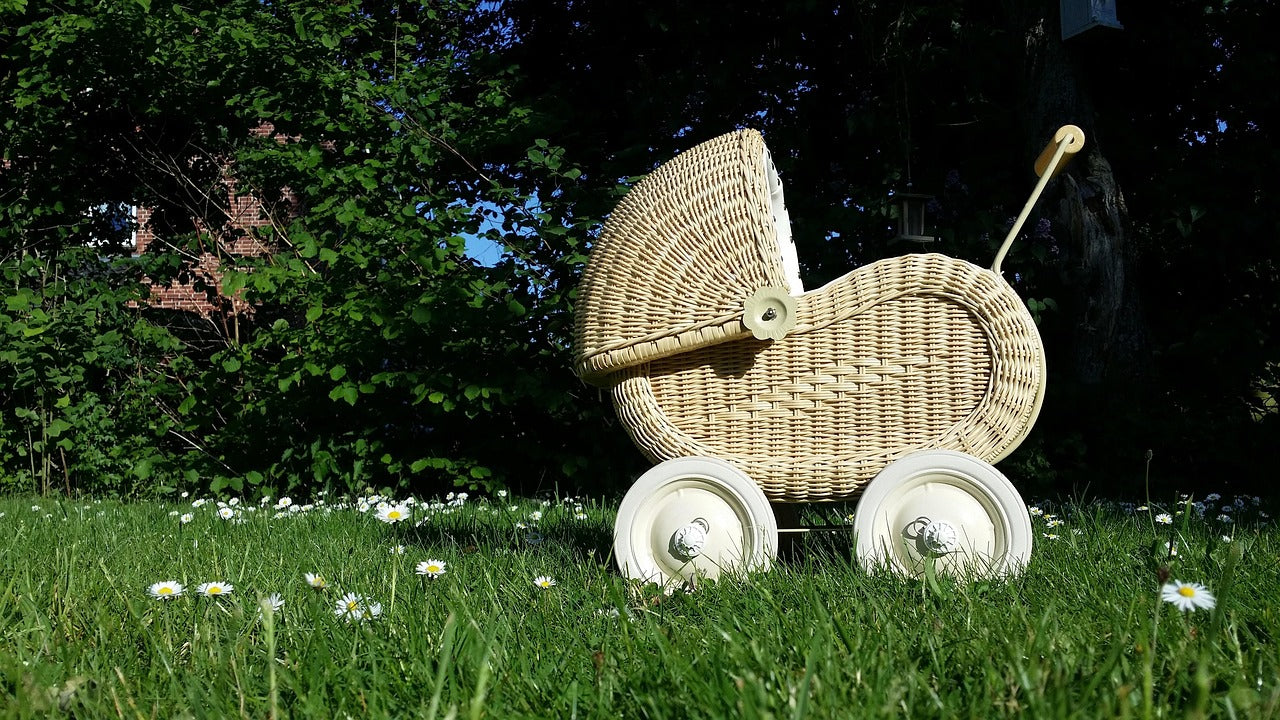
These early baby carriages were far closer to decorative rolling baskets than what most parents would call a stroller today. They were large, difficult to manage, and built for status as much as function. That is why it helps to separate the beginning of stroller history from the beginning of travel stroller history. The first is about the invention of wheeled child transport. The second is about portability, folding, and real mobility for everyday families.
During the 19th century, carriages gradually became more refined. Materials improved, wheels changed, and families beyond aristocratic households began using them more often. That same museum history also highlights William H. Richardson’s 1889 patent improvements, including a more maneuverable carriage design and a bassinet that could face the operator. That kind of change matters because it shows stroller evolution moving away from decoration and toward usability.
| Era | What changed | Why it mattered |
|---|---|---|
| 1730s | Luxury baby carriage appears | Marks the beginning of stroller history |
| 1800s | Carriages become more widely used and refined | Moves the category toward broader family use |
| Late 1800s | Better steering and operator-facing designs | Shows a shift toward parent convenience and control |
Even with those advances, these were still not travel-friendly products by modern standards. They were too big, too heavy, and too dependent on space. In other words, they helped move babies, but they did not yet help families move efficiently.
Early baby carriages were built for a different kind of life. They made sense in an era of slower outdoor routines, larger homes for the wealthiest families, and a much narrower idea of day-to-day mobility. They were not designed for stairs, compact trunks, busy sidewalks, train transfers, or gate-checking before a flight.
That is why “history of strollers” and “history of travel strollers” are related but not identical stories. The first asks when a child could be rolled instead of carried. The second asks when a stroller became light enough, foldable enough, and practical enough to travel with on purpose.
Several limits kept the old carriage era from becoming a true travel era:
This is also why modern readers often land on old stroller-history pages and leave unsatisfied. They are not only asking for a date. They are usually asking a more practical question: how did we get from the old carriage to the compact stroller I can actually use today?
The clearest turning point in stroller history came in the 1960s, when the category shifted from “child transport” to “portable parenting gear.” Maclaren’s company history explains that founder Owen Maclaren created the first umbrella stroller in 1965 after seeing how difficult it was for a mother to manage a traditional pram while carrying her baby.
That detail matters because it captures the logic behind the breakthrough. The innovation was not just that the stroller folded. It was that the design finally matched the actual strain of parenting in motion. A lighter aluminum frame, a more compact fold, and easier carrying changed what a stroller could be for ordinary trips.
This is the phase where stroller evolution starts to look recognizably modern. Once the umbrella stroller existed, the category no longer revolved mainly around carriage comfort and prestige. It had to answer different questions:
That is also why the umbrella stroller still shows up in so many conversations about stroller history. It represents the moment the industry stopped treating mobility as secondary and made portability part of the product identity itself.

Once portability became a real design goal, travel strollers kept evolving around the same basic promise: make family movement easier without giving up too much comfort or safety. The difference is that each generation pushed the balance further.
First came lighter frames and more predictable folds. Then manufacturers layered in features parents had been missing, like better seat recline, more useful storage, stronger canopies, improved wheels, and easier-to-use harnesses. The travel stroller stopped being a stripped-down backup and became, for many families, the primary stroller.
That shift happened because family routines changed. More parents needed a stroller that could work across airports, sidewalks, car trunks, cafes, elevators, and quick weekend trips. The “good enough for occasional travel” standard no longer felt good enough.
Modern travel stroller design tends to revolve around a few recurring priorities:
This is where internal comparisons become useful. If you are curious how today’s compact models build on that evolution, Mamazing’s guides to the best compact travel strollers and urban travel strollers show how those design priorities now play out in real buying decisions.
One of the most important parts of stroller evolution is not visual at all. It is the steady rise in safety expectations, testing, and regulation. Today, parents expect reliable brakes, better restraints, locking mechanisms that work, and better overall structural integrity. Those expectations became normal because stroller safety moved from assumption to standard.
The U.S. Consumer Product Safety Commission explains what counts as a carriage or stroller and outlines the federal requirements tied to these products. The category also connects to ASTM stroller standards. In 2014, CPSC announced a federal safety standard for carriages and strollers that addressed hazards such as brake failures, restraint issues, wheel problems, stability, and hinge injuries.
This is an important reminder when people romanticize older designs. Vintage-looking strollers can be beautiful, and earlier models were historically important, but that does not mean they match what parents now expect from safety engineering. Modern stroller progress is not only about style or gadgets. A lot of it is about avoiding failure points that used to be easier to overlook.
For current parents, the practical takeaway is simple: innovation is most meaningful when it reduces everyday friction and everyday risk at the same time.
Urban living played a major role in turning stroller design toward compactness. In a dense city, it is obvious when a stroller is too wide, too slow to fold, or too annoying to carry. The same is true when parents move often between a car, an elevator, public transit, and a small apartment.
That is why many of the most meaningful stroller changes have less to do with flashy technology and more to do with ordinary constraints. Narrower footprints, easier turns, one-hand steering, tighter folds, and better handling on mixed surfaces all became more important as everyday family movement became less linear.
This is also the point where “travel stroller” stopped meaning only “vacation stroller.” For many families, the daily school run, subway ride, parking garage, or coffee-shop stop feels like travel in miniature. A stroller that fails in those small transitions quickly feels outdated, even if it looks impressive in a product photo.
Modern stroller design for urban life often centers around these questions:
Those questions also explain why travel stroller design now overlaps so much with everyday stroller design. Parents are not only traveling a few times a year. Many are effectively “traveling” through compact, high-friction environments every day.
Not every new feature deserves equal credit in stroller history. Some changes genuinely transformed the product category. Others are more like optional embellishments that make a premium model look futuristic without changing daily life very much.
The innovations that usually mattered most were the ones that solved persistent friction:
By contrast, some “future” features can sound more impressive than useful. App-connected controls, extra electronics, or automation can be interesting, but they do not automatically matter more than a reliable fold, a stable push, or a frame you can lift one-handed while holding a diaper bag.
This is where articles about the future of strollers often lose readers. They start imagining self-driving products when most parents are still deciding whether the stroller will fit behind a car seat and handle a grocery run. Big ideas are fun, but the best stroller innovation usually feels boring in the best possible way: it makes daily use smoother and more dependable.
The future of travel strollers will probably look more like refinement than reinvention. Some experimental ideas will keep appearing, including more automation, tracking tools, and sensor-based safety features. But the biggest wins are more likely to come from small, cumulative improvements that make a stroller easier to live with.
The most believable next-wave priorities are:
That matters because parenting products usually last when they remove friction, not when they merely add novelty. A stroller future built around better materials, smarter folds, and calmer everyday use is a lot more believable than one built entirely around self-driving headlines. The category will still change, but the strongest ideas will probably be the ones parents feel in the first five minutes of use.
That is why the phrase “future stroller innovation” should probably be read with some skepticism. Parents do not need novelty for novelty’s sake. They need products that respect the way family movement actually works now: small spaces, quick transitions, lots of repetition, and not much patience for unnecessary friction.
The history of strollers is really the history of changing parent needs. What began as a luxury carriage in the 18th century gradually became a practical tool, then a foldable everyday essential, and finally a category shaped by modern travel, city life, and much higher safety expectations.
If you came here asking when strollers were invented, the short answer is 1733. If you came here asking when strollers started to feel like modern travel gear, the more useful answer is the 1960s umbrella stroller era and everything that followed from it. That is the point where stroller design stopped being mostly about carrying a child and started being about helping parents move through real life more easily.
And that is still the best way to judge stroller innovation today. The most meaningful progress is not the feature that sounds the most futuristic. It is the feature that makes an ordinary day feel lighter, smoother, safer, and easier to manage.
Most stroller histories trace the earliest baby carriage to 1733, when William Kent designed one for the Duke of Devonshire’s children. It looked nothing like a modern travel stroller, but it is usually treated as the starting point for stroller history.
A pram or baby carriage usually refers to the older lie-flat style made for very young babies, while a stroller usually means a pushchair with a seat for a baby or toddler who can sit more upright. In everyday use, people often mix the terms, but the older carriage style came first.
Because they finally made strollers easier to fold, carry, and store. Once parents started moving through airports, car trunks, public transit, and tighter homes more often, a lighter folding stroller solved a very real daily problem.
Usually, yes. Modern strollers benefit from stronger safety standards, better harness systems, improved brakes, and better testing than many older designs had. Safer does not mean foolproof, though, so fit, setup, and everyday use still matter.
Not always. Premium models often introduce new materials or convenience features first, but the most useful innovation is not necessarily the flashiest one. For many families, a lighter frame, a smoother fold, and reliable wheels matter more than app-connected extras.
The biggest gains will probably come from weight, fold quality, easier one-hand use, better recycled materials, and smarter safety details. Most parents care more about a stroller that works smoothly every day than one packed with gimmicks.
Featured Products


Top 5 Foldable Strollers for Urban Parents: Best Picks for City Living
Mamazing Recliner Review: A Nursery Chair for Feeding, Rocking, and Late-Night Resets