
- by FangRussell
Best Compact Travel Strollers for 2025: What to Compare Before You Buy
- by FangRussell
If you are searching for the best compact travel stroller in 2025, the most useful question is not just which stroller is the lightest. It is which stroller best matches the way your family actually moves. A great compact travel stroller should fold fast, store easily, feel manageable in airports and small spaces, and still give your child enough comfort for real outings instead of just short transfers.
That is why the best compact stroller 2025 search usually comes down to a few practical comparisons: carry weight, folded size, newborn fit, everyday comfort, and how well the stroller handles travel friction like stairs, taxis, security lines, and tight storage. Some parents need the smallest possible fold. Others need a stroller that still feels usable once the novelty of “ultra light” wears off.
At Mamazing, we think a good roundup should help readers compare tradeoffs honestly. This guide keeps the compact travel focus, preserves the quick-comparison parts of the original article, and makes the buying decision clearer for families comparing stroller options in 2025.
The best compact travel strollers in 2025 usually share the same core strengths: they fold smaller than full-size strollers, weigh less, travel more easily, and still give parents enough real-world usability to justify bringing them everywhere. The U.S. Consumer Product Safety Commission describes a stroller as a wheeled vehicle used to transport infants or children, generally in a sitting-up or semi-reclined position, and notes that strollers are normally used from infancy to 36 months. That baseline is helpful when comparing age ranges and stroller types in a roundup like this. You can review it in the CPSC carriages and strollers FAQ.

When parents compare the best compact travel strollers, five criteria usually matter more than everything else:
One of the most useful takeaways for readers searching `best smallest stroller 2025` or `best space saving stroller 2025` is that the smallest fold does not automatically make a stroller the best choice. The tiniest stroller may save space, but if the seat is less supportive, the basket is too small, or the fold feels awkward in real life, the daily experience can be less convenient than the spec sheet suggests.
The original article already contained the strongest reader-help asset on the page: a fast comparison table. Instead of removing it, the better move is to keep the structure and make it easier to use as a decision tool.
| Model | Weight | Typical use window | What it does best |
|---|---|---|---|
| Ultra Air | 11.6 lbs | 6–36 months | Light travel-friendly balance of portability and everyday use |
| Ultra Air X | 9.9 lbs | 6–36 months | Smallest, easiest-to-carry choice for parents who prioritize minimal bulk |
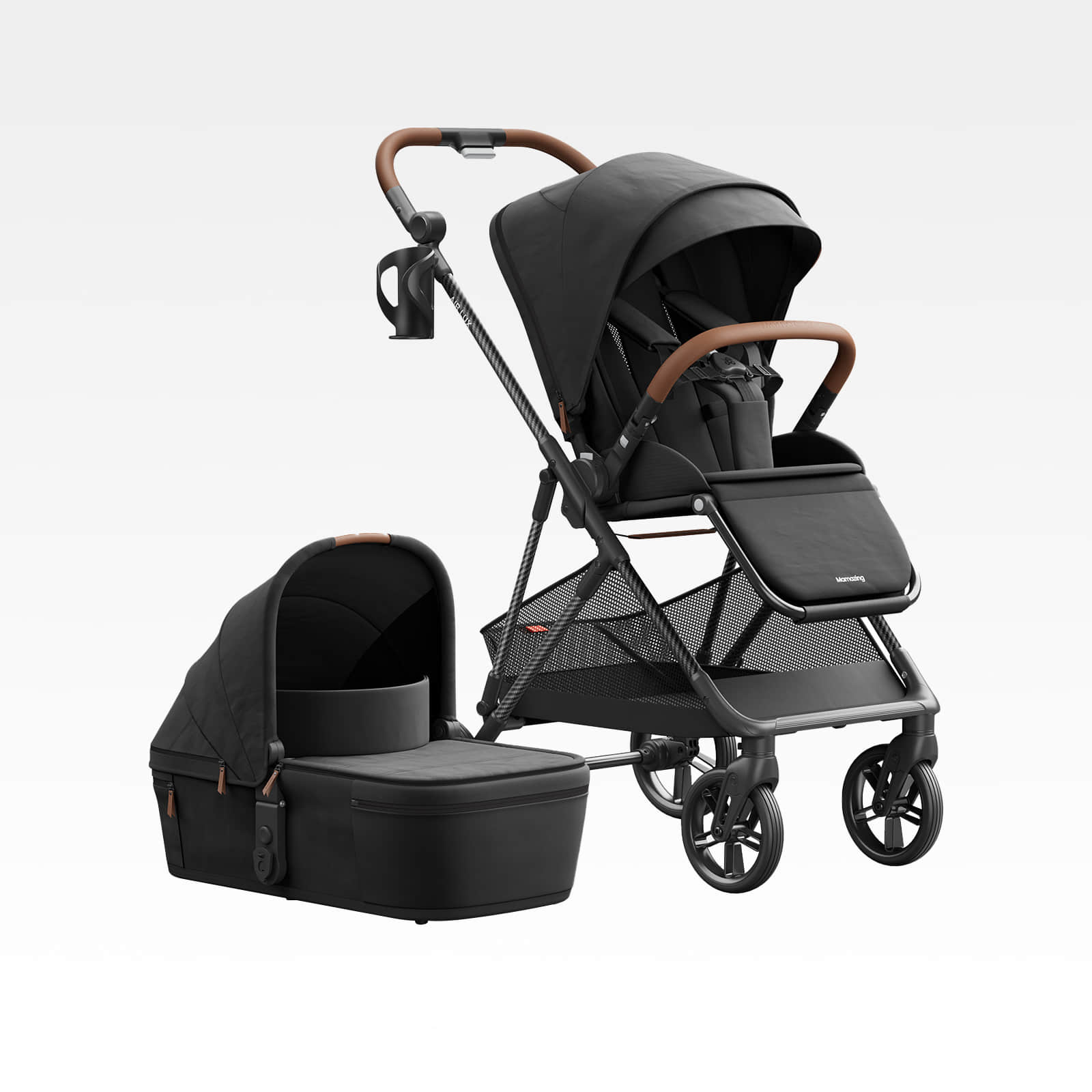
| Air Lux | 15.8 lbs | 0–36 months | More comfort-forward option with reversible-seat flexibility |
This table becomes more useful when you read it as a tradeoff map instead of a winner list. Ultra Air X stands out if your priority is the smallest and lightest fold-and-go option. Ultra Air is the better middle-ground choice if you want a lighter stroller without going all the way to the most minimal setup. Air Lux makes more sense if newborn use and comfort features matter enough that you can accept a bit more weight.
A simple way to compare them is to ask what problem you are solving first. If you mostly fly, use transit, or carry the stroller often, the lightest option may matter most. If you expect longer naps, younger-baby use, or more day-to-day strolling than airport-only use, a slightly larger stroller can still be the better travel stroller because it reduces comfort compromises.
| If your top priority is... | Start by looking at... |
|---|---|
| Lowest carry weight and fastest lifts | Ultra Air X |
| Balanced travel convenience and everyday use | Ultra Air |
| Earlier-stage use and more comfort flexibility | Air Lux |
If you want a broader shortlist beyond these three, Mamazing’s roundup of the best compact strollers for travel is the most natural next step.

Weight matters most when you lift your stroller often. Parents in apartment buildings, families using trains or taxis, and travelers navigating terminals feel the difference between 9.9 pounds and 15.8 pounds quickly. That is one reason “best compact stroller 2025” searches often overlap with “space saving” and “smallest stroller” queries.
If storage is the problem you are trying to solve, folded size may matter even more than overall weight. A stroller that folds flatter or narrower can fit more easily in a crowded trunk, a hallway closet, or the corner of a small apartment. For families comparing small-space options specifically, Mamazing’s guide to the most compact strollers for small living spaces gives a deeper breakdown of that angle.
If you routinely carry the stroller up stairs, lift it overhead, or move it in and out of rideshares, the lower carry weight of the Ultra Air X or Ultra Air becomes more meaningful. But if your stroller spends more time in use than in your arms, the extra comfort and newborn flexibility of a slightly heavier model can be worth it. “Best” depends on which inconvenience you are trying to reduce most.
Compact travel strollers are popular partly because they reduce airport stress, but it is better to describe them as airplane-friendly than airline-guaranteed. The Transportation Security Administration says strollers, umbrella strollers, car seats, and similar items must be screened, and equipment that does not fit through the X-ray machine may need visual or physical inspection. You can review that on TSA’s traveling with children page.
For most parents, airplane-friendly means a stroller that folds quickly, is easy to carry through the airport, and is small enough that it may work well for gate-checking or, depending on the model and airline, cabin storage. It does not mean every stroller will fit every aircraft overhead bin. That nuance matters, especially when comparing the “best compact travel stroller airplane” style of query.
It also helps to think through the full airport sequence instead of only the overhead-bin question. You may need to collapse the stroller while managing a diaper bag, pass it through screening, carry it on stairs or escalators, and reopen it quickly after landing. A stroller that shaves seconds and effort off those transitions often feels better in practice than one that only looks impressive in a dimensions chart.
A stroller that feels perfect in an airport may not be the same stroller that feels best for long urban walks, rough sidewalks, or daily use with a larger diaper load. The best compact travel stroller for your family should handle the hardest part of your routine, not just the prettiest one. If your routine leans more urban than air-travel-heavy, Mamazing’s guide to the best travel strollers for urban environments may help narrow things further.

Compact does not have to mean uncomfortable, but comfort is where the most minimal strollers often reveal their compromises. If your stroller use is mostly airports, short errands, and city transfers, a more minimal seat may be fine. If you expect regular naps, longer walks, or more all-day use, then seat padding, recline range, canopy coverage, and ride smoothness become more important.
Not every compact stroller is a true newborn stroller. Some start around 6 months, while others support earlier use through a more reclined seat, travel-system compatibility, or a more newborn-friendly setup. The Air Lux is the most obvious example in this lineup if you need a compact option that works earlier. That makes it less minimal than the lightest models, but more flexible for families who do not want to buy another stroller immediately.
This is one of the easiest places to make a buying mistake. Parents sometimes choose the smallest stroller because they expect travel to be the hardest part, then realize everyday comfort or early-stage compatibility matters more once the baby is actually in the seat. If newborn use is important, it is worth slowing down and checking the listed age guidance, recline behavior, and whether you need travel-system support from day one.
Many compact travel strollers are designed to support children through the baby and toddler years, often up to 50 pounds in the current product details. In real life, how long a family keeps using one depends on comfort expectations and stroller role. A compact stroller can last for years as a travel or secondary stroller even if a family later prefers something larger for all-day neighborhood use.
The safety section in the original article needed stronger grounding. A compact stroller can still be a very safe stroller, but buyers should look for basics like a secure 5-point harness, a brake that is easy to use, stable wheel control, and clear age and weight guidance. CPSC safety alerts have repeatedly emphasized stroller hazards when restraints are not used properly, which is why securing the harness every time matters even on quick stops. That broader caution is reflected on the CPSC safety alerts page.
A compact stroller focuses first on lower weight and easier folding. A travel system adds infant-car-seat compatibility and easier transitions for very young babies. Some parents want the smallest stroller possible. Others want a stroller that still handles newborn logistics well. That is why this distinction belongs on the page: the best compact travel stroller for a parent with a 10-month-old and frequent flights may not be the best compact option for a family starting from birth.
Durability matters because travel gear gets folded, lifted, rolled, and stored more aggressively than many everyday strollers. A compact travel stroller should still feel dependable after repeated use, not just look good on the first trip.
What often separates a stroller that feels great for one vacation from one that stays useful for years is how well it handles repeated folding, rougher curb transitions, and storage in busy family environments. Lighter weight is helpful, but durability still depends on how the frame, wheels, brakes, and locking points hold up after regular use.
Most families do not need a complicated care routine. What matters more is consistent upkeep: wipe the frame and wheels after travel, keep fabric clean, store the stroller indoors when possible, and occasionally check locking points and brakes. If durability is one of your main buying priorities, Mamazing’s article on pack lighter with a compact travel stroller gives useful adjacent context on why low-bulk gear matters when you travel often.
If you are still narrowing down the best compact travel stroller 2025 options, use this short checklist before you buy. Can you lift it comfortably with one hand? Does the folded size actually fit your trunk or storage space? Does the seat and age range match your child’s current stage instead of only the next trip? And if you travel often, are you comfortable with the airport routine the stroller requires?
This kind of checklist matters because the best compact travel stroller is rarely the same for every family. The right pick is usually the one that solves your hardest daily inconvenience first.
The best one combines a practical fold, manageable carry weight, enough comfort for real outings, and an age range that fits your family’s stage. The point is not just owning a smaller stroller. It is owning one that reduces friction in the way you actually travel and move every day.
Some can, but it depends on the model and the airline. Compact travel strollers are usually easier to carry through airports and simpler to gate-check, but cabin fit is not universal, so it is better to confirm the folded size against your airline’s current rules before you fly.
Sometimes, but not all of them are. Some compact strollers work best from around 6 months onward, while others offer a more newborn-friendly setup or compatibility that makes earlier use more realistic.
A compact stroller prioritizes portability and easier folding, while a travel system focuses more on infant-car-seat transitions and early-stage convenience. Some families want the smallest fold first, and some need newborn flexibility first.
Many compact travel strollers cover the baby and toddler years, often up to around 50 pounds in current model listings. In practice, families keep using them as long as the stroller still meets their comfort, size, and daily-use needs.
The best compact travel stroller for 2025 is not automatically the lightest, the smallest, or the most premium-looking. It is the one that best matches your travel habits, your storage reality, your child’s stage, and the amount of convenience you need from the fold itself.
If you are comparing options now, start with the hardest part of your routine: stairs, airports, small trunks, newborn use, or long travel days. Once you know which problem matters most, the right compact stroller choice usually becomes much clearer. At Mamazing, we believe that honest comparison makes better gear decisions than hype ever will.
Featured Products


The Ultimate Roundup: Best Compact Strollers for Small Spaces and Big Adventures
Good Compact Strollers That Last: Durability Tips from Seasoned Parents