
- by FangRussell
Rocking Recliner Chair for Nursery: Best Features for Feeding and Bedtime
- by FangRussell
If you want the short answer, the best rocking recliner chair for a nursery is not the one with the most features. It is the one that keeps you comfortable through feeding, soothing, and late-night transfers without taking over the room. For most parents, that means supportive arm height, an easy recline, stable rocking, fabric that can handle spit-up, and enough clearance to use the chair half-awake without fighting it.
That is where many nursery buying guides miss the point. They talk about softness, luxury, or design language, but the real question is simpler: will this chair still feel good after your third feed of the night, when your shoulders are tight, the room is dim, and you need one hand free for a burp cloth? A good rocking recliner chair should make that moment easier, not more awkward.
This guide is built around the questions parents actually ask before they buy: whether a rocker recliner chair helps with breastfeeding, how it compares with a glider, how much space it needs, which fabrics stay manageable, and whether a swivel base is truly worth paying for. If you are narrowing down options, start with Mamazing's nursing chair, then use the checkpoints below to decide what fits your room and routine.
The features that matter most are the ones you notice after 20 to 40 minutes in the chair, not the ones that look impressive in a product photo. If you are using a rocking recliner chair for nursery feeding and bedtime, comfort needs to be practical rather than plush for the sake of it.
If you are comparing a few models, imagine using each one while tired. Can you sit down, adjust your position, reach the side table, and stand back up without thinking too hard? That is a better buying test than any marketing phrase.
If your main goal is feeding comfort plus bedtime soothing, a rocking recliner usually gives you the broadest range of use. A glider feels a little more controlled and linear, while a standard recliner may be comfortable but misses the calming rhythm many parents want in a nursery.
| Chair type | Best for | Where it wins | Possible downside |
|---|---|---|---|
| Rocking recliner chair | Parents who want one chair for feeding, soothing, and real rest | Rocking plus recline makes long sessions easier | Needs enough clearance and can feel bulky in a tiny room |
| Glider | Parents who prefer controlled motion and a more upright feel | Usually smoother for small, repetitive soothing sessions | May feel less restful if you want a deeper recline |
| Standard recliner | Parents focused mostly on lounge comfort | Can feel roomy and supportive | Lacks the gentle motion that helps during bedtime routines |
If you already know you like a more settled, cocooning seat, a rocking chair recliner often feels more forgiving than a glider. If you want a tighter footprint and a more structured forward-back motion, a glider can still be a strong nursery choice. If you want more examples of how that trade-off plays out over time, Mamazing's guide to rocker recliner chairs that grow with your family is a helpful next read.

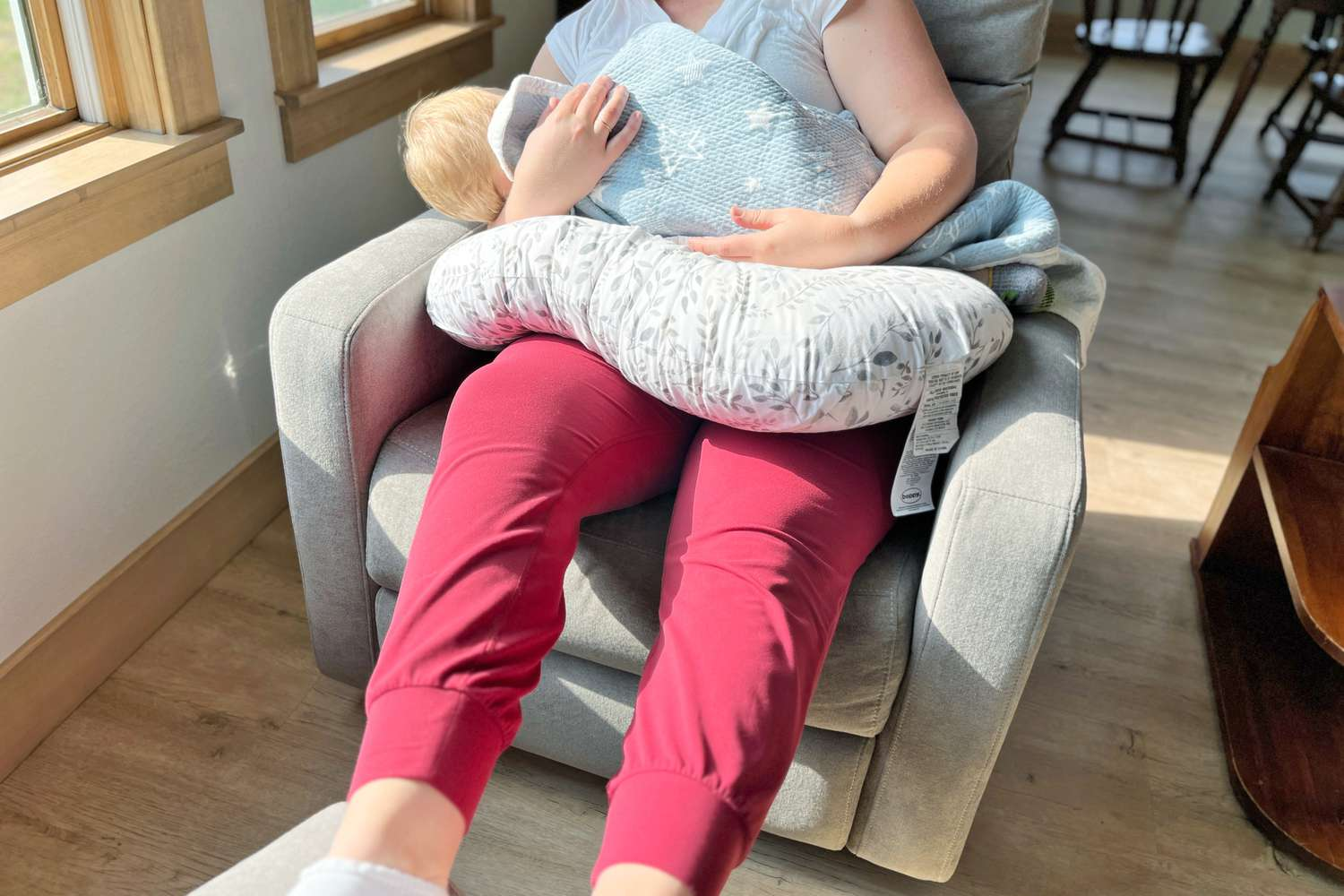
A recliner for breastfeeding works best when it helps you bring your baby to your body instead of pulling your body down toward your baby. That sounds minor, but it is often the difference between feeling supported and finishing a feed with a sore neck and tight shoulders.
The American Academy of Pediatrics notes that many parents nurse more comfortably in a chair with sturdy back support and arm support, and HealthyChildren's positioning guidance also suggests using pillows when needed so you do not lean into the feed. The NHS gives similar advice and recommends supporting your feet with a stool or low table if that helps you avoid hunching forward, which is why its breastfeeding positions guide is so useful when you are evaluating chair height and posture.
In practical terms, the best recliner for a nursing mom usually has armrests high enough to take some weight out of your shoulders, a seat height that lets your feet stay planted, and a back that supports you even when you shift positions. If your feet dangle or your elbows float, the chair will feel harder to use than it looked in the showroom.
A little recline can be wonderful during cluster feeds or bottle feeds, but too much recline can make it harder to reposition your baby or stand up smoothly. For nursery use, the sweet spot is usually a controlled, medium recline that softens the seat angle without dropping you so low that every transfer feels like a workout.
This is also where padded but firm seat construction matters. You want enough give to stay comfortable, but not so much sink that it becomes hard to adjust a latch, burp your baby upright, or reach for a muslin cloth. In other words, softness helps, but supportive geometry helps more.

A rocking recliner chair can be one of the most useful pieces in your bedtime routine because it creates a repeatable pattern: feed, cuddle, dim the lights, rock gently, and settle the room before the transfer. That predictable rhythm is part of why these chairs stay popular in nurseries.
But this is also the section where it helps to be clear about boundaries. A chair can be a great place to soothe your baby; it is not a safe sleep surface. HealthyChildren's safe sleep guidance warns against falling asleep with a baby on a couch or armchair and recommends moving your baby to a separate, flat sleep space once you are ready to settle them for sleep.
That does not make the chair less useful. It simply means the best bedtime setup is a chair placed close enough to the crib or bassinet that the final transfer feels easy rather than risky. If you know you are often exhausted at the end of the night, prioritize a layout that lets you stand up, pivot, and place your baby down in one calm motion.
That balance, calming but still safety-aware, is what separates a nursery recliner that feels helpful from one that becomes hard to use in real life.
A rocking recliner chair can work in a small nursery, but only if you plan around movement, not just footprint. Many parents measure the chair base and stop there, then realize too late that the recline path, rocking arc, and standing room need extra space.
As a simple rule, start by checking seat width, full recline depth, and how much room you need behind the chair. Many families feel comfortable with about 12 to 18 inches of rear clearance unless the chair is specifically designed as a wall-hugger. You also want enough room on at least one side for a side table and on the front edge for easy standing.
| Space checkpoint | Why it matters | What to look for |
|---|---|---|
| Rear clearance | Prevents the chair from hitting the wall during recline or rock | Wall-hugger designs need less; standard recliners need more |
| Walkway space | Lets you stand up while carrying your baby | Aim for a clear front path, not just a decorative fit |
| Side access | Makes night feeds less clumsy | Leave room for a table, basket, or pump station |
If your room is especially tight, compare your shortlist against more compact nursery seating too. Mamazing's roundup of best rated rocking chairs for nursery spaces can help if you are weighing a full recliner against smaller rocking options.
For many parents, yes, but only when the layout gives the swivel function something useful to do. A swivel rocker recliner chair is most valuable when you routinely reach between the crib, side table, lamp, pump, or dresser and do not want to stand up every time.
If your nursery is compact and everything sits directly in front of you, swivel becomes a nice bonus rather than a must-have. If you feed in multiple positions, share the room with storage furniture, or need to pivot toward different stations, swivel starts to feel genuinely practical.

The best fabric is the one you will not resent after a spilled bottle or a surprise spit-up. That usually means choosing between soft woven fabric for warmth and texture, or a smoother performance-style upholstery that wipes down faster.
If your priority is softness and a cozy look, fabric can feel especially inviting in a nursery. If your priority is low-stress cleanup, a wipeable surface may save you more frustration in the first year. The right answer depends on your household, not a universal rule.
This is one reason a nursery chair that looks great online is not always the right nursery chair in real life. Cleanup is part of comfort too.
Usually yes, if you buy with long-term use in mind. A good rocker recliner chair can move from the nursery to a reading corner, family room, guest room, or quiet office nook without feeling out of place. That is one of the strongest arguments for buying a chair that feels like real furniture rather than a short-term baby item.
It is probably worth it if you want one chair that can carry feeding, bedtime, postpartum recovery, and later everyday lounging. It may be less worth it if your nursery is extremely small, you already have a comfortable living-room recliner, or you know you strongly prefer the tighter motion of a glider.
The most honest buying question is not “is this beautiful?” It is “will this still be useful once the newborn phase is over?” If the answer is yes, a slightly better chair can be a smart buy rather than an indulgence.
If you are narrowing down your shortlist, use this quick filter before you buy:
If a chair clears those questions, it is usually a stronger choice than one that simply looks softer, trendier, or more premium on paper.
Yes, they can be safe for feeding when the chair feels stable and you stay awake, but it is not a safe place for your baby to sleep. If your baby falls asleep, move them to a separate, flat sleep surface as soon as you can.
Usually yes. A rocker recliner chair can make breastfeeding easier when the seat height, arm support, and foot support let you bring your baby up to you instead of hunching your shoulders forward.
A glider moves on a flatter, more controlled track, while a rocking recliner moves in an arc and usually gives you a deeper lounge feel. If you want a softer, sink-in seat with recline for long feeds, the rocking recliner often feels more versatile.
For most full-size models, plan for at least 12 to 18 inches of rear clearance unless the chair is a wall-hugger design. You also want enough side space to stand up easily while holding a baby.
It is worth it if you regularly reach for a side table, pump, lamp, or burp cloth station without wanting to get up. If your nursery layout is simple and everything sits directly beside you, a non-swivel model can save money without giving up comfort.
Choose the cleaning routine that matches the fabric. Vacuum seams, wipe spills quickly, and check the moving parts every so often so the recline and rocking action stay smooth instead of noisy.
The right rocking recliner chair gives you more than a place to sit. It gives you a reliable spot for feeds, burping, bedtime wind-downs, and those long in-between moments when comfort matters most. If your priorities are feeding support, calm motion, practical cleanup, and a chair that still earns its place after the nursery stage, a well-chosen rocker recliner can absolutely be worth it.
If you are ready to compare real options, start with Mamazing's nursing chair and use this guide to decide whether you need compact sizing, swivel convenience, easier-clean fabric, or a more lounge-like recline.
Featured Products


Swivel Rocking Chairs: Transform Your Nursery into a Peaceful Haven
2025 Best Rocking Chair for Nursery: Luxe Comfort on a Realistic Budget