
- by FangRussell
Best Rocking Chair for Nursery: How to Choose Comfort, Size, and Feeding Support
- by FangRussell
The best rocking chair for nursery use is not always the biggest, softest, or most expensive chair in the showroom. It is the chair that supports your body during feeds, fits the space you actually have, moves smoothly when your baby is overstimulated, and still feels comfortable during the quiet, repetitive routines that define the first year. If you expect to feed, soothe, read, or contact nap in that chair almost every day, comfort and practical support matter far more than a pretty silhouette alone.
That is why choosing among the best rocking chairs for nurseries comes down to a handful of real-life questions: Does the chair support your arms and lower back? Can your feet rest comfortably while you feed? Is the motion calming or irritating? Will the footprint work in a small nursery or apartment? And if you spend money on recline or swivel, will you actually use those features often enough to justify them?
This guide is built to answer those questions first. It compares the chair types parents usually consider, explains which comfort features matter most, shows how to choose the right size nursery rocking chair for your space, and ends with a short spotlight on one Mamazing option for parents who want rocker, recline, and swivel in one chair.
A nursery rocking chair earns its place when it makes the hardest parts of parenting feel a little easier. That usually means the chair supports long feeding sessions, helps you settle a fussy baby without awkward body strain, and gives you one predictable place to sit during bedtime, early mornings, and the middle-of-the-night stretches when you are too tired to troubleshoot furniture that only looked good online.

For most parents, the best rocking chair for nursery routines should do five things well:
The strongest nursery chairs are usually the ones that balance those five needs instead of chasing one extreme. A chair can look luxurious and still feel too deep for feeding. Another chair can fit a tiny room but feel exhausting if the arm support is poor. That is why “best” is really about fit for your routine, not just one feature or one price point.
If you only remember one thing while shopping, remember this: the best rocking chair for nursery comfort is the one your body can relax into repeatedly. Parents often underestimate how much repetitive feeding and soothing work is done from the shoulders, forearms, lower back, and hips. A chair that looks plush can still be tiring if your elbows have nowhere to rest or your feet never feel grounded.
The NHS breastfeeding positions guidance notes that many parents benefit from feeding in a comfortable chair with back support and support under the arms when needed. That is one reason arm height, seat depth, and lumbar support matter so much in a nursery chair, especially if you expect frequent feeds or pumping sessions in the same spot. See the NHS page on breastfeeding positions for the broader posture context.
When you compare chairs, focus on these comfort filters first:
For parents who expect to do a lot of feeding in the chair, those basics matter more than decorative details. They also matter more than trend language around “cozy” or “premium” because comfort that does not hold up during a 2 a.m. feed is not real comfort.
The best rocking chairs for nurseries are not all built the same way, and the right category depends on how you plan to use the chair. Some parents care most about a classic rocking feel. Others want a smoother glide, while many prefer a recliner because it can handle both feeding and post-feed downtime better.
Before you compare specific models, it helps to compare the chair types side by side.
| Chair type | Best for | Main tradeoff | How it feels in daily use |
|---|---|---|---|
| Traditional rocker | Classic motion and simpler style | Less cushioning and fewer features | Good if you want a lighter, simpler chair |
| Glider | Smooth, gentle nursery motion | May lack recline or swivel | Often feels calm and easy for repeated soothing |
| Upholstered rocker | Soft look with familiar rocking | Not always easy to clean | A good middle ground if the dimensions suit you |
| Rocking recliner | Feeding, soothing, recline, and longer sits | Usually costs more and takes more room | Strong fit for parents who want one do-it-all chair |
A traditional rocker usually works best if you want a simpler chair and do not mind fewer comfort extras. A glider often feels smoother and easier for repetitive soothing. An upholstered rocker can be a nice visual fit for many nurseries, but it still needs the right seat depth and arm support to be practical. A rocking recliner usually appeals most to parents who expect heavy daily use and want flexibility for feeding upright, settling slightly reclined, and staying comfortable longer.
If you want to go deeper into nursery chair comparisons after reading this guide, Mamazing also has our guide to choosing the best rocking chair for nursery use, which pairs well with the category breakdown here.
If your nursery is small, this question can matter more than the fabric or recline angle. A chair that technically fits the room may still feel wrong if you cannot walk around it comfortably, open drawers, reach the crib safely, or recline without bumping walls. That is why one of the most valuable questions in GSC — how to choose the right size nursery rocking chair for my space — should be answered directly.

When you size a nursery chair, think about three dimensions at once:
For small rooms, a compact footprint is helpful, but compact does not automatically mean comfortable. Petite parents may love a smaller chair that lets their feet stay grounded, while taller parents often need more seat depth and back height. If more than one adult will use the chair often, that matters too. The best nursery chair should fit the people using it, not just the floor plan.
It also helps to test the chair the way you plan to use it. Sit back fully, imagine holding a baby across your lap, and notice whether your elbows naturally land in a supported position or whether you immediately want extra pillows. A chair that feels roomy in a showroom but awkward in that position usually becomes frustrating much faster at home.
A smart rule is to measure the area with enough room for the chair in use, not just the chair at rest. Recliners and swivels often need more breathing room than first-time buyers expect. If you already know you are shopping more for practicality than luxury styling, you may also want to compare a few good rocking chairs for nursery use before choosing a larger or more premium piece.
A rocking recliner can be worth the higher price when the chair will do serious daily work. If you expect to spend a lot of time feeding, soothing, pumping, reading, or just sitting in the nursery during recovery and the newborn months, recline and swivel can become features you use constantly rather than luxuries you barely notice.
That said, not every parent needs one. A simpler rocker or glider may be enough if the room is small, the chair will be used less often, or you already have another comfortable place for longer sits. The deciding factor is usually how much range you want in one chair. If you want to feed upright, lean back gently during a contact nap, and rotate without standing every time you need to reach wipes, burp cloths, or water, a rocking recliner often makes more sense.
This is also the right place to add one sleep boundary that matters for tired parents. If you feed or soothe your baby in a nursery chair at night, the chair can be comforting, but it should not become the routine sleep place for the baby. HealthyChildren's safe sleep guidance recommends moving your baby back to a separate, flat sleep surface if you think you might fall asleep during feeds or if the baby falls asleep there. You can review that advice in the HealthyChildren safe sleep guide.
In other words, recline is valuable for parent comfort and flexibility, but the best nursery chair is still the one used thoughtfully within your nighttime routine.
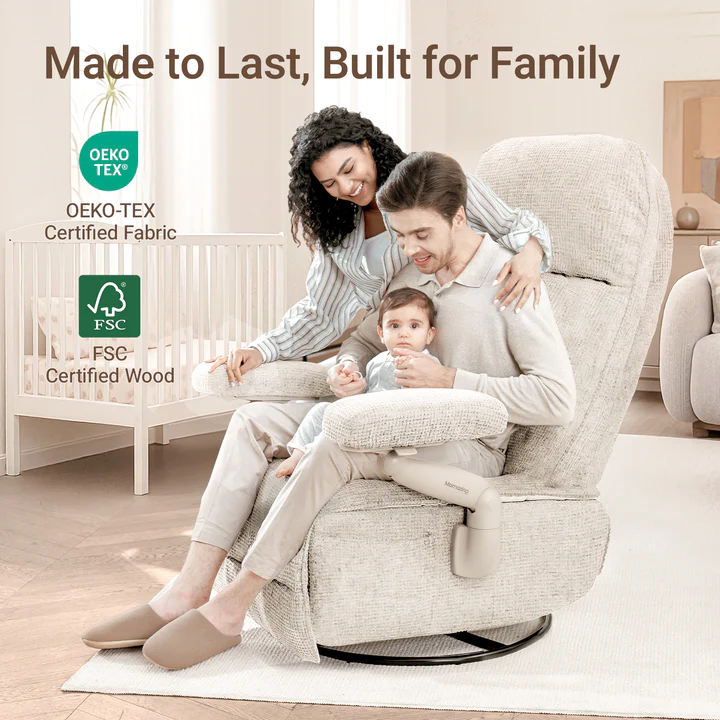
Once the category filters are clear, it makes sense to look at one example that brings several desirable features together. The Mamazing Lullacloud Nursery Chair is most relevant for parents who know they want a rocking recliner feel rather than a simpler wooden rocker or basic glider.

What makes Lullacloud stand out is not that it tries to be every possible nursery chair. It is that it targets one clear use case well: parents who want rocking, recline, and swivel in a chair that still feels compact enough for smaller homes. That combination can be particularly appealing if you expect the chair to be used for feeding, late-night soothing, and everyday lounging after the newborn stage.
Its strongest fit is usually for parents who care about these priorities:
That does not mean it is automatically the best rocking chair for every nursery. Parents with a very small budget, a strong preference for a lighter traditional rocker, or a different design style may lean elsewhere. But for families looking for a more full-featured rocking recliner, it is a practical option to compare against the broader field. If your next step is benchmarking premium options, Mamazing's roundup of best-rated rocking chairs for nursery comfort can help widen that comparison.
Before you click buy, take one last pass through the decision points that matter most. The best rocking chairs for nursery routines usually pass this checklist more consistently than chairs chosen only for style:
If you can answer those questions with confidence, you are usually much closer to the right choice than someone comparing only star ratings or aesthetics. That is also why a “best” chair can look different from family to family. Some homes need compact and easy. Others need plush and long-session comfortable. Others need one chair that can work hard for years.
Choose a rocker if you prefer a classic arc motion and often want a simpler chair. Choose a glider if you want a smoother, gentler feel for repetitive soothing and feeding. The better option is the one whose motion feels more natural to you during a real sit, not just the one that sounds better on paper.
No, a recline feature is not essential for every family, but it can be very helpful if you expect long feeding sessions, recovery-time sitting, or lots of soothing in the same chair. It is usually most worthwhile when the nursery chair will be used heavily every day.
Start with a chair that leaves enough room to walk, reach nearby furniture, and use any recline or swivel function comfortably. A smaller footprint helps in tight spaces, but the chair still needs to fit your body well enough for feeding and soothing. Compact should never mean cramped.
No, it is not strictly necessary, but many parents find it genuinely helpful. A supportive chair can make feeding posture easier to maintain, especially when you are feeding many times a day and want one reliable place with back and arm support.
Yes, many nursery chairs work well beyond the baby years if the shape and style still suit your home. That is one reason many parents prefer a chair that feels like a real living-space chair rather than something too nursery-specific.
The best rocking chair for nursery life is the chair that supports the routines you will actually repeat: feeding, settling, sitting quietly, and recovering in the middle of a long season of interrupted sleep. If you focus on arm support, motion quality, room fit, cleanability, and whether the chair will still be useful later, you will make a better choice than if you shop by looks alone.
And if you already know that rocker plus recline plus swivel is the combination that fits your home best, the Mamazing Lullacloud Nursery Chair is a practical next option to compare. The key is to let the buying framework lead first, then let the product shortlist follow.
Featured Products


G-Link Stroller Guide: Who It's For, What to Expect, and When to Choose a Single Stroller Instead
Best Strollers for Big Kids: Weight Limits, Comfort, and When 50 lbs Is Enough