
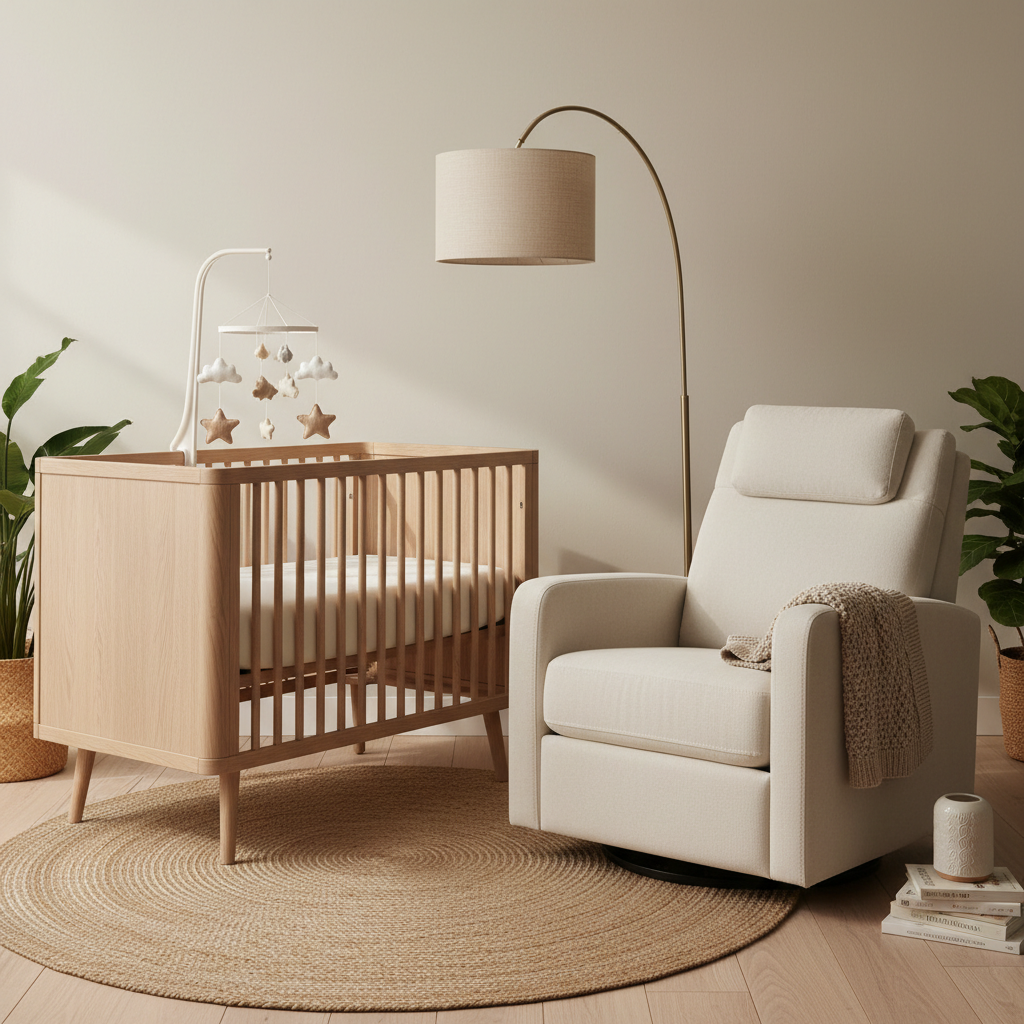
If you want the short answer, the best nursing chair is the one that lets you feed, soothe, and stand up again without straining your shoulders, lower back, wrists, or hips. That sounds obvious, but it is the part many buyers miss when they focus only on style, price, or whether the chair rocks.
A strong nursery chair should feel comfortable at 2 p.m. and at 2 a.m. It should support your arms while you hold the baby, fit your room without crowding the crib, and still feel worth keeping once the newborn phase is over. This guide breaks down what to look for first, how to compare gliders, rockers, recliners, and stationary chairs, and how to choose the best nursing chair for comfort, breastfeeding, and small spaces.
Quick Answer: How to Choose the Best Nursing Chair
Before you compare fabrics, colors, or trend features, test these five basics:
- Arm support: your elbows should rest comfortably while holding the baby.
- Back support: your lower back should feel supported, not rounded forward.
- Seat height and depth: you should be able to sit back without your feet dangling.
- Motion and exit ease: the chair should be easy to get out of one-handed.
- Room fit: it has to work in your nursery, not just in the showroom.
The most useful buying rule is this: choose the chair that supports your feeding posture first, your room second, and your style preferences third. The wrong order leads to a beautiful chair that feels tiring after twenty minutes.
If you are shopping before the baby arrives, try to imagine the least glamorous version of real life: a long evening feed, one hand holding the baby, a burp cloth slipping, your phone charging nearby, and you trying to stand up without twisting awkwardly. The best nursing chair should still feel right in that scenario, not only in a styled product photo.
What Type of Nursing Chair Is Best for Your Routine?
Different parents use a nursing chair in different ways. Some need gentle motion for every feed. Some mostly want back support and a comfortable place to settle the baby after burping. Some need a compact chair that can fit beside a dresser in a very small nursery. That is why “best nursing chair” is really a question about lifestyle, not only furniture type.
Glider
A glider is often the easiest all-round choice for feeding because the movement is smooth, quiet, and controlled. Many parents prefer it for repeated nursing or bottle-feeding sessions because the motion takes less effort than a traditional rocker. If you want one chair that feels modern, practical, and easy to use during long evenings, a glider is usually the safest bet. This is also the lane where many Mamazing shoppers start, especially if they want a chair that feels more stable and polished than a traditional wooden rocker.
Rocking chair
A rocker gives you the classic nursery motion and works well if you like a more natural back-and-forth rhythm. It can be a great option for soothing, but comfort depends heavily on arm shape, seat depth, and how much effort it takes to keep the motion going. Some parents love that rhythm. Others find it less restful during long feeds.
Recliner
A recliner earns its place if you know you want more leg support, expect extended recovery time after birth, or plan to spend a lot of time resting in the nursery. The tradeoff is size. Recliners usually take more space and need more wall clearance, so they are rarely the best fit for a truly tight room unless the model was designed for nursery use. If you are comparing motion types inside Mamazing's lineup, this is usually the point where it helps to look at both the core collection page and the brand's recliner-focused buying guides side by side.
Swivel or stationary chair
A swivel chair helps in rooms where you want more flexibility to reach a side table, bassinet, or storage without standing. A stationary chair can still work well if it has strong support and enough seat comfort, especially if you care more about long-term living-room use than nursery motion.
| Type | Best for | Watch out for |
|---|---|---|
| Glider | Frequent feeding, quiet motion, everyday use | Bulky arms or weak lumbar support |
| Rocker | Parents who prefer classic rhythmic motion | Less controlled motion in tight spaces |
| Recliner | Extra leg support and longer recovery sits | Larger footprint and more clearance needed |
| Swivel / stationary | Flexible room use and long-term furniture reuse | May miss the soothing motion some parents want |
If you want a direct product path after reading, Mamazing's nursing chair collection is the place to compare gliders and recliners in one view rather than jumping between random categories. And if you already know you want a powered glider-style option, the Mamazing electric nursery rocking glider chair is the most natural real-world example to benchmark for motion, seat support, and nursery-friendly proportions.
The Comfort Features That Matter Most During Feeding Sessions
This is the section that most directly answers searches like “comfortable chair for nursing” and “what makes a good nursing chair.” If a chair looks elegant but fails here, it is not the best nursing chair for real life.
Arm height and width
Your arms do a lot of work during feeding. If the armrests are too low, your shoulders will creep upward and your neck will tighten. If they are too wide, you will feel like you are reaching out instead of keeping the baby close. The HealthyChildren breastfeeding positioning guide explains how pillows and support under the baby help keep you from hunching and straining. A good chair makes that support easier, not harder.
Lower-back support
A nursing chair should let you sit back, not collapse forward. Look for a backrest that supports your lumbar area without pushing your shoulders too far forward. This matters even more if you plan to feed there several times a day.
Seat depth and firmness
Too-deep seats are a common problem. They look cozy, but if you cannot sit fully back while keeping your feet grounded, you will end up perched and unsupported. A seat that is slightly firm usually performs better over time than one that feels marshmallow-soft in the showroom and flat after a month.
Foot support
If your feet cannot rest comfortably, your whole feeding posture gets worse. That does not always mean you need a built-in recliner. Sometimes a simple stool or ottoman is enough. What matters is whether your knees, hips, and lower back can settle into a position that does not fight you.

Noise and motion smoothness
If a chair creaks, jerks, or needs effort to keep moving, that gets old fast. Especially in smaller homes or rooms where another parent may be sleeping nearby, quiet motion becomes part of comfort too. This is one reason many families end up preferring gliders for everyday feeding use.
How to Choose a Nursing Chair for Small Spaces
Queries around small rooms are one of the clearest opportunities on this page, and they deserve more than a passing note. A nursing chair for small spaces has to do three jobs at once: fit the room, stay functional during feeding, and still allow safe movement around the nursery.
Measure the real usable footprint
Do not measure only the wall. Measure the footprint after the crib, dresser, side table, and walk path are accounted for. Then check how much room the chair needs when gliding, rocking, swiveling, or reclining. In small nurseries, motion clearance matters just as much as width.
Look for visual lightness and actual mobility
A chair with slim arms, visible legs, and a narrower frame can make a compact room feel far less crowded. That is why parents searching for a small nursing chair for nursery often do better with compact gliders or tighter swivel chairs than with bulky overstuffed recliners.
Prioritize function over oversized cushions
Small rooms punish decorative excess. Giant rolled arms and thick wings can steal the exact inches you need for feeding comfort. In a tight nursery, choose support and proportion over lounge-room drama.
If you are deciding between multiple compact options, Mamazing's small-space nursery chair guide is a useful follow-up for room-fit comparisons, and the Lullapod nursery chair review is a practical next step if you want to see how a more compact Mamazing chair performs for feeding comfort and tight-room placement.

Materials, Cleaning, and Durability: What Holds Up Best?
The best nursing chair is not just comfortable in week one. It should still look and feel worth using after spit-up, snack crumbs, late-night drinks, and the general chaos of a lived-in nursery.
Easy-clean fabric matters more than luxury texture
Performance fabric, tightly woven upholstery, and removable or spot-clean-friendly surfaces usually age better than delicate fabrics that stain fast. This becomes even more important if the chair will stay in the family room after the nursery stage.
Frame stability matters more than gimmicks
A chair can have swivel, recline, USB ports, or extra settings, but if the frame feels weak or the movement feels loose, those extras do not make it a better buy. For a feeding chair, stable movement and a dependable seat matter more than novelty.
Think beyond the newborn phase
One smart buying question is: would I still want this chair in a reading corner or living room in two years? If the answer is yes, the purchase usually makes more sense. A convertible nursery chair is not always the fanciest option, but it often offers the best long-term value.
Safety and Late-Night Feeding: What Parents Often Miss
Comfort matters, but late-night use changes the equation. If you are shopping for the best breastfeeding chair, you also need to think about safety when you are tired.
The NICHD Safe to Sleep guidance warns that couches and armchairs are unsafe places for infant sleep. That does not mean you cannot feed in a glider or recliner. It means you should not treat the chair as a safe place to sleep with the baby if you drift off.
- Keep a small table within reach so you are not twisting awkwardly for water, burp cloths, or your phone.
- Use a pillow or stool if needed to support your feeding position instead of hunching.
- Choose easy one-handed exit if you often stand up holding the baby.
- Have a safe sleep plan so if you get sleepy, the baby can move to a firm separate sleep surface quickly.
That is one of the biggest practical differences between a “comfortable chair” and a genuinely good nursing chair: it supports tired parent use without encouraging risky habits.
How to Test a Nursing Chair Before You Buy
A chair can sound perfect online and still feel wrong for your body. Whether you shop in person or compare online models carefully, use the same mini-test every time.
- Sit all the way back. Can your lower back relax?
- Raise your arms as if you are feeding. Do your shoulders tense up?
- Put your feet where they will actually go. Flat floor, stool, or footrest?
- Lean forward and stand up. Can you do it smoothly without awkward effort?
- Check motion clearance. Would this still work when the room is fully set up?
- Ask if you would keep it later. If not, the value may not be as good as it looks.

This test matters because “best” is partly personal. The best nursing chair for a tall parent in a large nursery is not always the best nursing chair for a petite parent in a compact apartment nursery.
It also helps to test the chair with a pillow in your lap, because that changes how your elbows sit and how far forward you need to reach. A chair that feels fine without feeding support can suddenly feel too deep, too low, or too wide once you simulate real use.
Who Should Choose a Glider, Rocker, Recliner, or Stationary Chair?
If you are still undecided, use your routine to narrow the choice:
- Choose a glider if you want the safest all-round blend of motion, feeding comfort, and everyday practicality.
- Choose a rocker if you love the classic nursery rhythm and want a more traditional look.
- Choose a recliner if you need extra leg support or want a more lounge-like recovery chair.
- Choose a compact swivel or stationary chair if your room is small and you need more flexible placement.
If your top priority is motion feel, the Mamazing rocking chair guide is the best next read. If you care more about leg support and comfort after birth, the nursery recliner guide is a better match. And if you are thinking about feeding posture more than chair type, the breastfeeding positions guide helps connect chair choice to real body comfort. For parents ready to compare actual models instead of reading another roundup, the Mamazing nursing chair collection keeps the product path simple.
Helpful Mamazing Guides and Product Paths
If you are narrowing your shortlist now, these Mamazing pages are the most relevant next steps:
- Small Nursing Chair for Nursery if your room is compact.
- Lullapod Nursery Chair Review if you want a closer look at a compact Mamazing chair.
- Best Rocking Chair for Nursery if motion style matters most.
- Best Recliner for Nursery if you want more leg support and recovery comfort.
- Mamazing Electric Nursery Rocking Glider Chair if you want to jump straight to a product example.
- Mamazing Nursing Chair Collection if you are ready to compare product designs directly.
Frequently Asked Questions
What should I look for in a nursing chair first?
Start with comfort, arm height, lower-back support, and whether your feet can rest flat or on a stool while you hold the baby. After that, check seat depth, fabric, motion type, and whether the chair actually fits your nursery.
Is a glider or rocking chair better for breastfeeding?
A glider is often easier for frequent feeding because the motion is smoother and more controlled, while a traditional rocker can feel more rhythmic and classic. The better option is the one that supports your arms, back, and feeding posture without making you work to stay comfortable.
What is the best nursing chair for a small nursery?
In a small nursery, look for a narrow chair with a compact footprint, a tight turning radius, and enough wall clearance to move safely. Measure the room first and make sure you still have space for a side table, safe walking path, and crib clearance.
Do I really need a recliner in the nursery?
Not always. A recliner is helpful if you expect long feeding sessions, postpartum recovery needs, or want more leg support, but plenty of parents do well with a supportive glider or rocker plus a stool. The key is comfort and usable posture, not the recline feature by itself.
How long should a good nursing chair last?
A well-built nursing chair should last through the baby stage and often transition into a reading chair or living-room chair after that. Durable upholstery, a strong frame, and a seat that still feels supportive after long sessions matter more than short-term trend features.
Is it safe to feed a baby in a recliner if I might fall asleep?
You can feed in a recliner, but you should not plan to sleep there with your baby. The NICHD Safe to Sleep campaign warns that couches and armchairs are unsafe places for infant sleep, so if you feel yourself getting sleepy, move the baby to a firm, separate sleep space as soon as possible.
Final Takeaway
The best nursing chair is not the one with the most features or the prettiest showroom photo. It is the one that supports your body during real feeding sessions, fits your nursery without making the room awkward, and still feels useful after the newborn stage. If you focus on arm support, back comfort, seat fit, room clearance, and easy cleaning first, you will make a much better decision than if you shop by trend alone.
Choose the chair that helps you feel settled, supported, and able to reach what you need when holding the baby. That is what turns a nursery chair from just another piece of furniture into one of the most used spots in the house.


Are Rocking Chairs Good for Babies? Benefits, Safety, and Whether You Really Need One
5 Health Issues Common to Nursing Moms (and How to Avoid)