
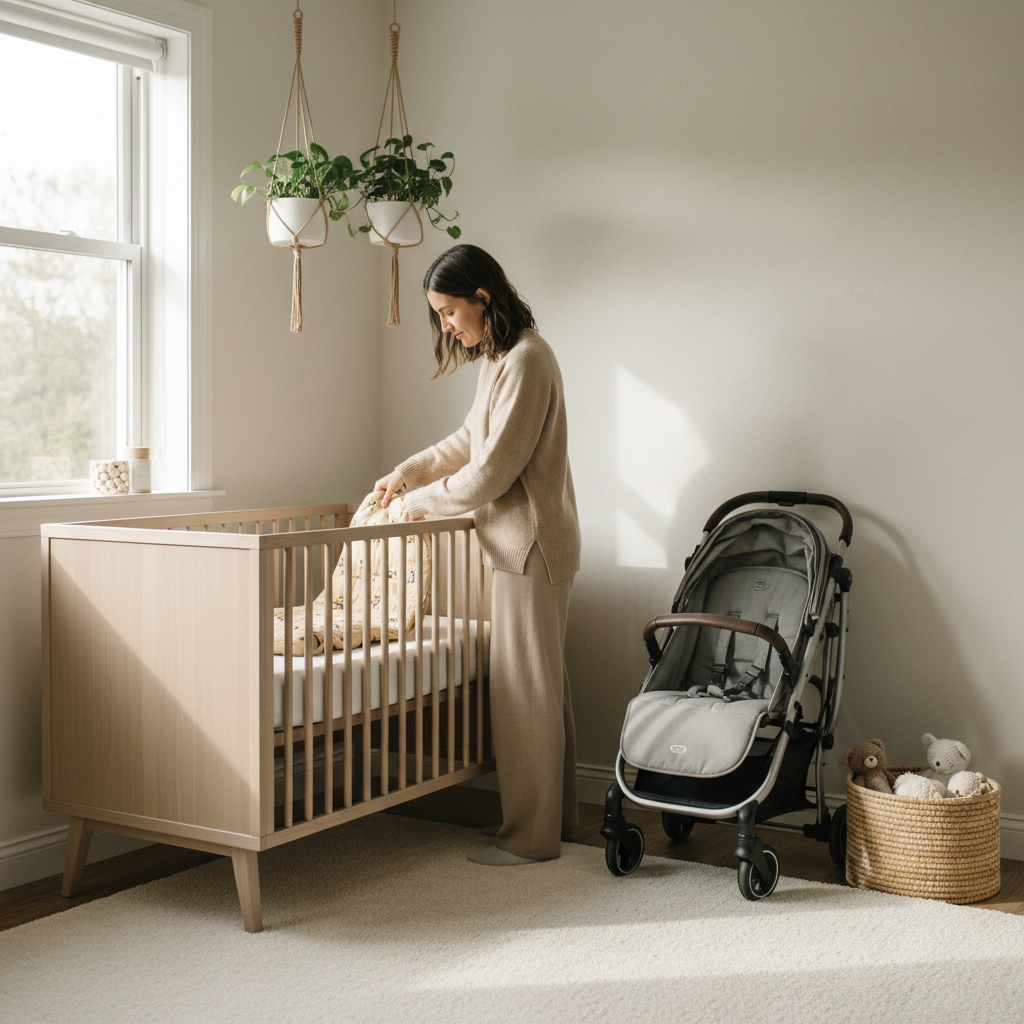
- by Artorias Tse
When to Transition From Bassinet to Crib and Choose the Best Travel Stroller
- by Artorias Tse
If your baby is starting to look cramped in the bassinet, you are probably asking two questions at once: when is it time to move to a crib, and do you still need a bassinet stroller for outings or travel? The short answer is this: move to a crib when your baby is nearing the bassinet’s limits or showing more mobility, keep routine sleep in a crib or other approved sleep space, and choose your stroller based on whether your baby still needs a lay-flat or bassinet-style setup when you are out.
That sounds simple, but in real life these decisions overlap. The same weeks when your baby starts outgrowing the bassinet are often the weeks when you are taking longer walks, planning visits, thinking about road trips, or looking for a lighter stroller that is easier to fold. That is why so many parents end up comparing cribs, bassinets, playards, and strollers all at the same time.
The key is not to treat them as interchangeable. A crib solves safe routine sleep. A stroller solves mobility. A bassinet stroller can bridge the newborn stage when you need a flatter, more supportive ride on the go. A compact travel stroller starts making more sense once your baby has moved past the fully newborn setup and your priority shifts toward portability, faster folding, and easier everyday travel.
This guide walks you through that transition in the right order: first, how to know when your baby has outgrown the bassinet; second, what is actually safe for sleep; and third, how to decide whether you still need a bassinet stroller or are ready for a more compact travel stroller.
You should move your baby from a bassinet to a crib when your baby is approaching the bassinet’s size or weight limits, showing more movement, or simply looking crowded in the space. The exact timing is not the same for every family, which is why it is better to look at readiness signs than to fixate on a single age.
The safest mindset is to let the product manual lead the decision. A bassinet is only appropriate while your baby still fits within that model’s stated limits. Once your baby is close to those limits, the move to a crib should happen before you feel forced into it by one rough night or one surprising new movement.
You also do not need to wait for the transition to become dramatic. Many parents imagine a baby suddenly “outgrowing” the bassinet overnight, but it is usually more gradual than that. The baby starts looking less settled, there is less room to stretch naturally, or you find yourself checking the manual more often because you know the next stage is approaching.
For routine sleep, the crib is the simplest long-term answer because it is built for that job. The American Academy of Pediatrics’ safe-sleep guidance for parents recommends a separate sleep space such as a crib, bassinet, portable crib, or play yard, and it also recommends room-sharing for at least the first 6 months when possible. That gives you a useful framework: the bassinet is often the early-stage room-sharing tool, but the crib is usually the next safe routine-sleep step once the bassinet stage ends.
If you are feeling reluctant to switch because your baby has been sleeping well in the bassinet, that is completely normal. Familiarity matters. But the goal is not to preserve the exact old setup forever; it is to carry the familiar parts forward into a safer next stage. The bedtime rhythm, sleep sack, dark room, and sound environment can stay consistent even while the sleep space changes.
The most important signs are practical, not sentimental. Your baby has likely outgrown the bassinet if any of these are true:
The hardest part is that parents often notice several of these signs at once. A baby who is more mobile is usually also more alert, more physically present, and more likely to be moving into a different stroller stage too. That is why the bassinet-to-crib decision and the stroller decision often show up together.
It helps to think of the bassinet stage as one chapter rather than one identity. Your baby is not “losing” a comfort object; your baby is graduating to a better-matched sleep space. If you approach the crib as the next stable step instead of a sad replacement, the transition often feels less emotional and more practical.
What you do not want is to replace that outgrown bassinet with a false alternative, such as treating the stroller as a routine-sleep backup. That is where many parents get stuck, especially when travel, errands, and naps start overlapping.
A crib is for routine sleep. A stroller is for transportation and, at most, supervised on-the-go naps. That distinction needs to stay sharp.
The AAP guidance on suitable sleeping sites and the CPSC Safe Sleep campaign both point families toward approved sleep spaces and emphasize a firm, flat sleep surface with no loose blankets, pillows, toys, or crib bumpers. A stroller, even a very good stroller, is not a replacement for that routine-sleep setup.
That does not mean a stroller is useless for sleep. It means the role is different. A stroller can be helpful when your baby falls asleep during a walk, while you are moving through an airport, or on a day when you are out longer than expected. But it is still a mobility product first, not the place to plan overnight sleep or long unsupervised daytime sleep.
This matters even more when parents are shopping for newborn gear. Bassinet strollers are often marketed beautifully, and many of them are genuinely helpful during the early months. But “helpful for newborn comfort on the go” is not the same as “an all-purpose replacement for a crib.” Keeping that boundary clear prevents a lot of confusion later.
The same logic applies if your baby has reflux, prefers motion, or seems to nap more easily during walks. The AAP’s pediatrician guidance on reflux and sleep still points parents back to a flat, separate sleep surface rather than improvised sleep arrangements. Motion may help a baby settle, but safe sleep still takes priority.
| Option | Best use | Main limitation |
|---|---|---|
| Crib | Routine sleep at home | Not portable |
| Portable crib or play yard | Travel or flexible routine sleep, depending on the product | Bulkier than a stroller and not as quick for errands |
| Bassinet stroller | Newborn comfort and flatter support while you are out | Limited stage; not a substitute for a full routine-sleep plan |
| Compact travel stroller | Portability, errands, airports, and older-baby travel days | Not always newborn-ready; less suited to routine sleep needs |
Once you see the roles clearly, the rest of the buying decisions become much easier. You stop trying to make one item do everything and start building a setup that actually matches your baby’s stage.

Not every newborn needs a bassinet stroller, but many families find one useful because it makes the early months easier outside the house. The question is not whether a bassinet stroller is universally required. The question is whether your lifestyle makes the flatter newborn setup worth it.
A bassinet stroller is especially helpful if you take long neighborhood walks, spend time outdoors most days, have a baby who settles better in a flatter position, or want a stroller that feels more supportive in the newborn phase. It can also feel more reassuring when you are not ready to place a very young baby in a more upright stroller seat.
On the other hand, if most of your outings are short, car-based, or limited to errands, you may not need a dedicated bassinet stroller for long. Some families move through the newborn stage quickly and then wish they had prioritized a lighter, more compact stroller for the months that follow.
This is also where your home setup matters. If the crib transition is approaching and you are already moving away from the earliest newborn stage, it may be smarter to think in phases rather than buying for one perfect month. A bassinet stroller can be a strong choice if you still have meaningful newborn use ahead. But if your baby is already becoming more mobile and you mostly want easier travel, you may be close to the point where a compact stroller matters more.
If you want to understand what the bassinet format is best at, Mamazing’s guides on bassinet stroller benefits and why a stroller with bassinet can be useful give a good picture of why this stage-specific setup appeals to so many new parents.
A compact travel stroller makes more sense when your baby no longer needs a bassinet-style ride for most outings and your bigger pain point becomes portability. That usually happens when you are folding the stroller more often, carrying it more often, or traveling enough that bulk becomes the thing you notice first.
You may be at that point if your baby is sitting with better support, your outings are longer but more practical, and you care more about one-hand folding, trunk space, airplane convenience, and easy city movement than about the bassinet format itself. In other words, the transition from bassinet to crib at home often arrives around the same time that your stroller priorities shift away from “newborn-compatible” and toward “easy to live with.”
That is why travel stroller queries are showing up so strongly for this page. Parents are often not shopping for a random stroller. They are shopping for the next stroller after the early newborn chapter ends. They want something lighter, faster, and easier for real life.
A compact stroller is also often the better answer for families who travel, use public transportation, move through small cafés and elevators, or simply do not want a bulky frame taking over the hallway. If that sounds like you, a model like the Mamazing Ultra Air Compact Stroller for Travel fits the stage when portability starts to matter as much as comfort.
What you do not want is to switch too early just because compact strollers look convenient online. Convenience is real, but only if the stroller still suits your baby’s stage. The right moment is when your baby’s needs and your day-to-day logistics finally point in the same direction.
The best travel stroller is not the smallest stroller on the market. It is the one that removes friction from the kind of travel you actually do.
Start with the fold. If you regularly lift the stroller into a car trunk, carry it up stairs, or fold it at shop entrances, the mechanism matters as much as the final folded size. A stroller that folds in one quick motion is often more useful than one that folds slightly smaller but takes more effort under pressure.
Next, look at weight in context. Very light strollers feel great when you are carrying them, but the lightest option is not always the best if it feels flimsy on sidewalks or top-heavy when your diaper bag is attached. You are looking for the balance between easy handling and enough structure to feel stable once your child gets heavier.
Seat support matters too. Some travel strollers win on compactness but lose on comfort. If you still have stroller naps, longer sightseeing days, or a baby who tires late in the afternoon, a usable recline, decent canopy, and secure harness are not optional details. They are the difference between “easy travel” and a stroller that only looks good in an airport photo.
Wheel quality is another feature parents undervalue until the first uneven sidewalk. If your trips include city breaks, train platforms, old neighborhoods, or daily pavement changes, weak wheels become annoying fast. You do not need an oversized all-terrain frame for most travel, but you do want enough wheel quality that every crack in the sidewalk does not feel like a problem.
Finally, think about longevity. If your baby is transitioning out of the bassinet stage now, the next stroller should ideally carry you through more than one short season. That means considering not just your baby’s current size, but also the next stage of growth, longer wake windows, and more active travel days.

If you are still deciding between newborn-first and portability-first options, Mamazing’s roundup on the best bassinet stroller options can help you compare what you gain from staying in a bassinet format a little longer versus moving into a lighter travel setup sooner.
The smoothest transition usually happens when you stop trying to solve everything at once. Instead, separate the decisions into three lanes: home sleep, everyday outings, and travel.
This kind of staged thinking lowers stress because you are no longer expecting one product to solve bedtime, naps, errands, and travel all at once. The crib handles sleep. The stroller handles movement. Once those jobs are separated, your gear choices usually become more obvious.
A baby should move from a bassinet to a crib when the baby is nearing the bassinet’s height or weight limits, becoming more mobile, or starting to look cramped in the space. The safest timing follows the product manual rather than a single universal age.
No. A stroller can help with supervised on-the-go naps, but it should not replace a crib or other approved routine-sleep space for regular sleep.
Not always, but many families find a bassinet stroller useful during the newborn stage because it offers a flatter, more supportive setup while you are out. Whether you need one depends on how often you walk, travel, and use the stroller in the first months.
That depends on the stroller design and its manufacturer guidance. Some compact strollers are not appropriate for the earliest newborn stage, while others work with bassinet or newborn-ready configurations. Always check the product’s stated age and recline guidance before use.
A bassinet stroller is aimed at the earliest stage, when a flatter newborn setup matters most. A travel stroller is aimed more at portability, easy folding, and convenience once your baby is beyond that very early phase.
You can switch when your baby has the support and stage readiness the stroller manufacturer requires, and when your outings are better served by a more portable setup than by the bassinet format. It is a baby-stage decision as much as a lifestyle one.
The bassinet-to-crib transition and the stroller transition feel tangled because they often happen in the same season of parenting. But they become easier once you separate the jobs. The crib is the safer routine-sleep solution. A stroller is for getting through real life. A bassinet stroller helps during the earliest months when flatter support still matters. A compact travel stroller becomes the better choice once portability starts to outweigh newborn-stage needs.
If you make each decision based on your baby’s current stage instead of trying to buy one magical do-everything solution, you will usually choose better and stress less. And if you are comparing newborn-friendly setups with lighter travel-ready options, Mamazing’s bassinet stroller content and compact travel stroller lineup can help you choose the setup that fits both your baby and your next season of outings.


Budget vs. Premium Foldable Strollers: Are Expensive Strollers Worth It?
Used Stroller vs New: Are Secondhand Strollers Worth Buying and Safe?