
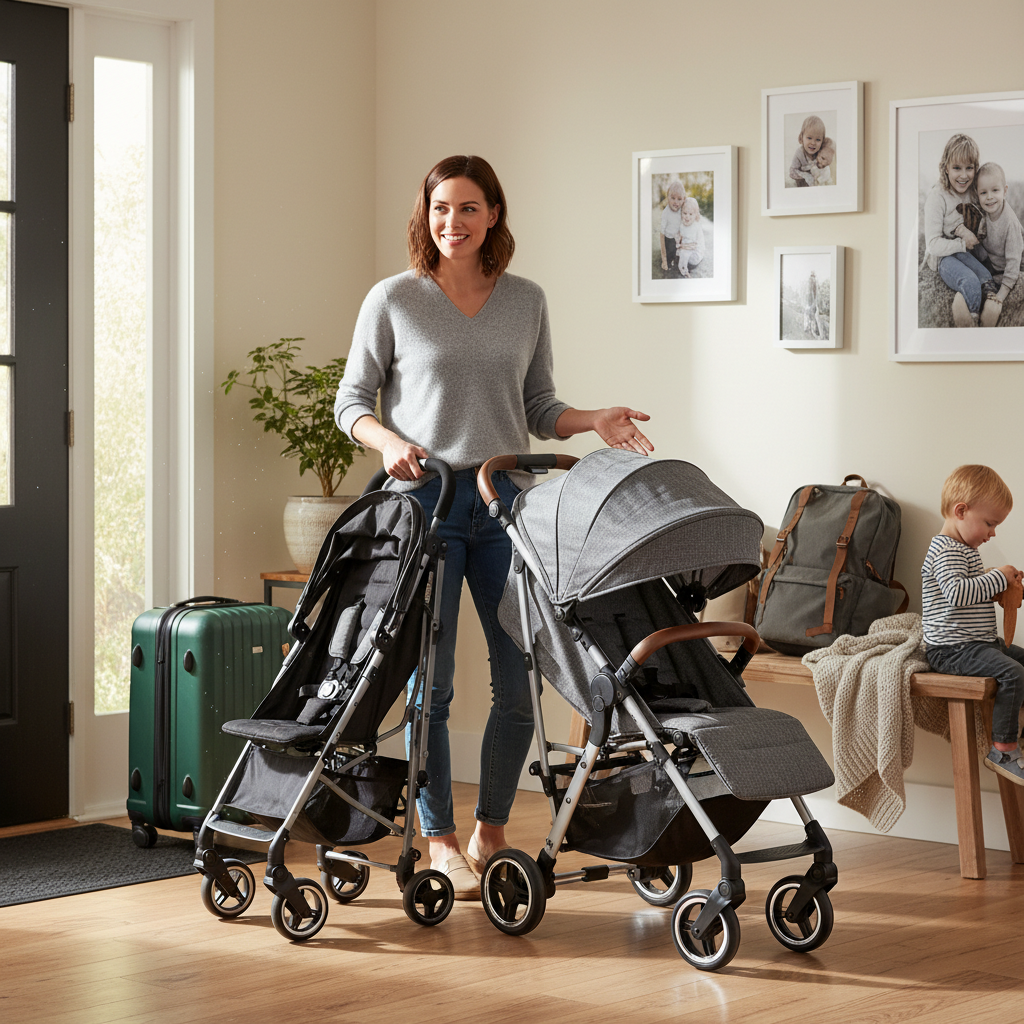
- by Artorias Tse
Budget vs. Premium Foldable Strollers: Are Expensive Strollers Worth It?
- by Artorias Tse
If you are staring at a $99 foldable stroller and a $699 one and thinking, "Is the expensive stroller actually safer - or just nicer?" you are asking the right question. The best value is not a price point. It is the stroller that fits how often you will use it, where you will push it, and how much hassle you can tolerate on the hard days.
Here is the quick answer: a budget foldable stroller is often the best value for occasional errands, backup use, and light travel. A premium foldable stroller becomes worth it when you use it daily, walk longer distances, deal with rough sidewalks, or travel frequently and need a reliable one-hand fold, better steering, and stronger materials.
If you want the fastest way to decide, start with your real life: how many trips per week, how many curbs, how much carrying, and how much space you have at home and in the car.
| Tier | Best for | Where it can disappoint | How to get good value |
|---|---|---|---|
| Budget | Short errands, occasional travel, a second stroller for grandparents, small apartments | Wobblier steering, smaller wheels, fewer adjustability options, less "one-hand" convenience | Prioritize a solid harness, dependable brakes, and a fold you can do quickly |
| Mid-range | Most families who use a stroller weekly and want fewer compromises | You may still need add-ons (rain cover, organizer), and ride quality varies a lot by model | Choose based on your terrain and storage needs, not just brand reputation |
| Premium | Daily walking, frequent air travel, city life (curbs, tight spaces), long outings | High upfront cost, and not every premium feature matters for every parent | Pay for the parts you touch every day: steering, fold, wheels, frame, and warranty |

One counterintuitive truth: the "best travel stroller" for you is often the one you can fold while holding a bag (or a toddler hand) without thinking. That is a skill test, not a spec sheet. If a stroller fails that test in the store, it will feel twice as frustrating in an airport.
"Budget" and "premium" are not official categories. Brands use them loosely, and shoppers use them emotionally. To make the comparison useful, think of tiers as a bundle of trade-offs:
When a premium stroller feels overpriced, it is often because the family does not use the features enough to "cash them in." When a budget stroller feels like a mistake, it is often because the family accidentally bought for the best day (smooth floors, short trips) instead of the worst day (rain, crowds, curbs, tired arms).
First, the baseline: in the U.S., carriages and strollers sold as new are required to comply with a federal safety standard that incorporates ASTM requirements. You can see the requirement in 16 CFR 1227.2 on Cornell Law School's Legal Information Institute site.
Federal stroller safety standard reference (16 CFR 1227.2)
So what does "premium vs mid-range safety features" really mean? It usually means how confidently the stroller holds up to real-life misuse (bumpy sidewalks, heavy diaper bags, quick folds, repeated opening/closing) and whether the safety features are easier to use correctly every time.
If you are buying secondhand, be extra careful. A stroller can meet the safety standard when sold new, but used gear can be missing parts, damaged, or recalled. It is worth checking recall listings before you commit.
Check stroller recalls and safety warnings (CPSC)
For general stroller safety guidance and standards context, CPSC also publishes an overview FAQ for carriages and strollers.
Carriages and Strollers FAQ (CPSC)
Many people search "best travel stroller" and end up comparing price tiers when the real deciding factors are practical:

Premium travel strollers often shine here because convenience is the point: smoother steering, more predictable folding, and fewer rattles when you are rushing. But if you only travel once or twice a year, a solid budget umbrella stroller can still be a great value - as long as it fits your child comfortably and you can fold it without a fight.
If you want deeper travel-specific planning, these Mamazing guides can help you think through packing, airport flow, and what you actually need on the road:
Search results often mix these labels, which makes shopping confusing. Here is a simple way to think about them:

If you are deciding between a budget umbrella stroller and a premium travel stroller, ask one question: Do you need the stroller to feel good for 60 minutes at a time, or just 10? Umbrella strollers can be excellent for short trips. On longer walks, the smaller wheels and simpler recline can become the reason you stop using it.
For a broader comparison of foldable models (especially for city living and daily errands), you may also like:
This is where many parents feel the "premium difference" most clearly. Comfort is not only about padding. It is about how the stroller behaves when your baby falls asleep, when you step off a curb, and when you have to push with one hand.
All-terrain marketing can be exaggerated, but wheel design still matters. Larger wheels and better suspension generally help the stroller roll smoothly on uneven sidewalks. If you mostly walk on smooth indoor floors, this matters less. If you walk outside daily, it matters a lot.
Premium strollers often steer more predictably and feel less twitchy. The difference shows up when you are turning through a narrow aisle or correcting quickly around someone. If you are shopping in person, do a simple test: push one-handed and turn slowly, then quickly. You will immediately feel whether the stroller tracks straight or fights you.
"Best value" becomes clearer when you stop thinking about price and start thinking about cost per use. A stroller that costs more can be cheaper per outing if it lasts longer, stays pleasant to push, and reduces the need for add-ons.
Try this quick framework:

One practical rule: if you are on the fence, spend money on reliability and handling before you spend money on luxury accessories. A cup holder is nice. A fold that works every time is life-changing.
A budget foldable stroller can be the best affordable stroller choice when your needs are simple and predictable. In these situations, paying more rarely changes your day enough to justify the upgrade.
To get good value at the low end, avoid "feature lists" and focus on basics: stable steering, a fold you can repeat, and comfort that is acceptable for your child's typical outing length.
Premium is most worth it when the stroller is a daily tool, not an occasional accessory. Think of it less like buying "luxury" and more like buying lower friction for the parts of parenting that happen when you are tired.
If you are not sure whether premium is worth it, consider mid-range models first. Mid-range is often the sweet spot where you get better handling and durability without paying for every add-on.
Whether you are buying a budget foldable stroller or a premium one, use this checklist to avoid the common mistakes that lead to buyer's remorse:
If your shopping list leans travel-heavy, Mamazing offers travel-focused foldable strollers designed around portability and everyday usability. If you want to compare options quickly, start with the travel stroller collection, then narrow down by how you travel (car-only, flights, public transit) and how often you will use the stroller each week.
Whichever brand you choose, the "best value" outcome looks the same: you can buckle your child quickly, the stroller feels stable and easy to steer, and the fold does not become a daily fight.
They can be, if you use the stroller daily, walk on rough surfaces, or travel often. If you mainly need a lightweight backup for short errands, a well-made budget or mid-range foldable stroller is usually the better value.
Both tiers should meet baseline safety requirements when sold new, but premium models often feel more consistent in daily use. The most practical differences are brake confidence, harness usability, stability, and how well the stroller holds up after months of folding, lifting, and pushing.
There is no single average price that fits every category, because umbrella strollers, travel strollers, and full-size systems are priced very differently. A better approach is to set a budget range, then choose based on use frequency and the features that prevent daily frustration.
An umbrella stroller is usually simpler and optimized for lightweight carrying. A travel stroller is optimized for portability and convenience while still aiming for a more comfortable ride and easier folding, which can matter a lot in airports and on longer outings.
In many places, these words overlap. "Stroller" is common in the U.S., while "pushchair" and "pram" are common in the U.K. and other regions, and "buggy" can mean a lightweight stroller. When shopping, focus on the features and age/weight limits, not the label.
Yes. A used stroller can be missing parts, damaged, or recalled, and those issues are not always obvious at a quick glance. Before buying, look up the brand and model on official recall listings and confirm you have all required parts.
If you use a stroller occasionally, a budget foldable stroller can be the smartest purchase - especially if it folds easily and feels stable. If you use a stroller daily or travel often, a premium foldable stroller can be worth it because it reduces friction: easier steering, fewer annoying failures, and a smoother routine.
Need help narrowing down options? Browse Mamazing's travel stroller collection, then choose the model that matches your lifestyle instead of chasing the most expensive spec sheet.
Featured Products


How to Clean and Maintain Your Foldable Stroller
When to Transition From Bassinet to Crib and Choose the Best Travel Stroller