
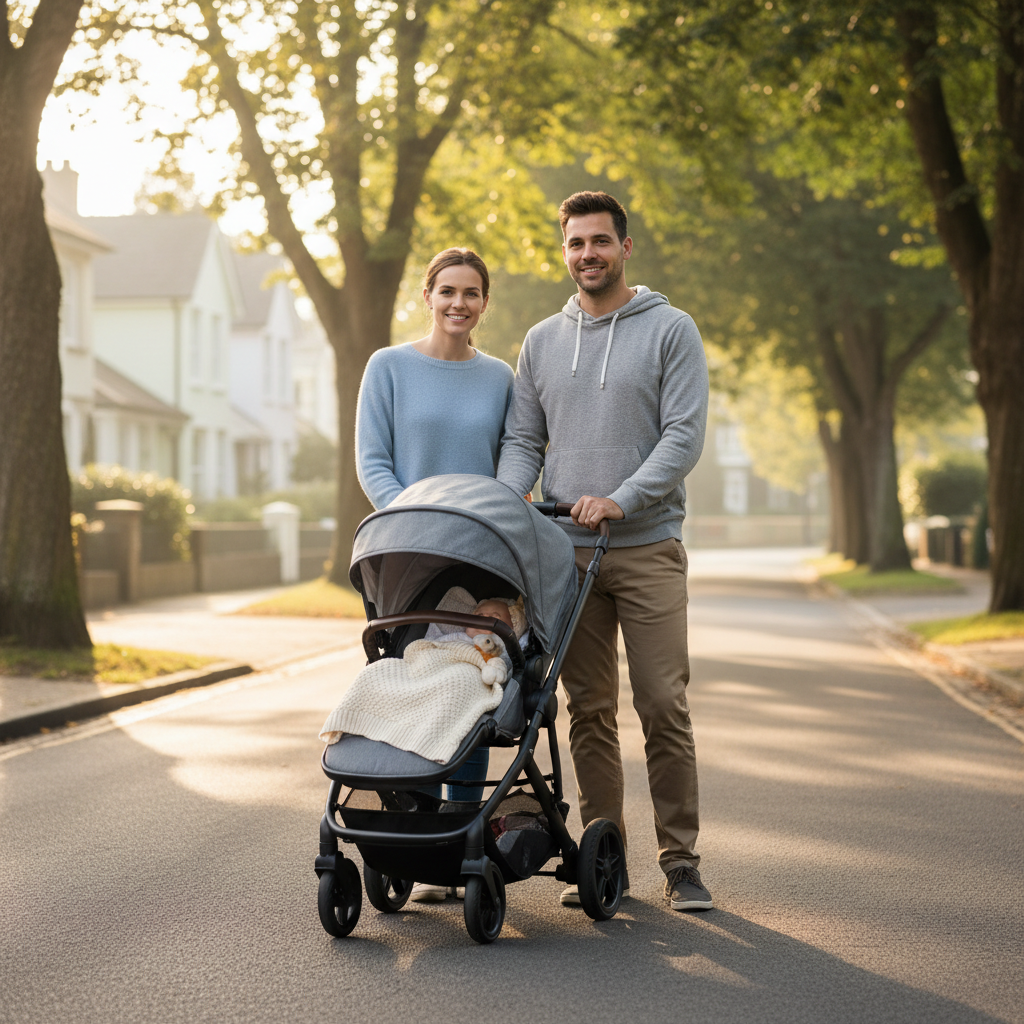
If you have been wondering when you can finally take your newborn outside, you are probably asking more than one question at once. You might mean a short walk around the block. You might mean a pediatrician visit. You might mean taking your baby to a coffee shop, a restaurant, a family gathering, or a busy store. Those are not the same kind of outing, and that is exactly where a lot of online advice becomes confusing.
Here is the most useful answer up front: for many healthy, full-term newborns, a brief outdoor outing can happen very early. The bigger caution is usually not fresh air itself. It is exposure to sick people, crowded indoor public places, direct sun, and temperature extremes. In other words, there is usually no single magic date that suddenly makes every kind of outing safe.
This guide is built around the search intent behind when can newborn go outside, when can a newborn go outside in public, and what temperature is safe to take baby outside for a walk. We will sort out what changes for walks, weather, public places, outing length, and babies who need extra caution.
Quick Answer: Fresh Air Is Different From Crowded Public Exposure
The fastest way to reduce confusion is to separate two ideas that search results often lump together:
| Type of outing | Usually lower risk | Needs more caution |
|---|---|---|
| Quiet outdoor walk | Short walk in mild weather, shaded stroller, baby dressed appropriately | Direct sun, extreme heat, strong wind, biting cold, or a baby who already seems unwell |
| Necessary outing | Pediatrician visit, brief errand with limited exposure | Long trips, poorly ventilated spaces, sick contacts |
| Crowded indoor public place | Only if you have a clear reason and can keep exposure limited | Restaurants, parties, malls, airports, or any crowded indoor place during respiratory virus season |
That distinction matters because a baby can be developmentally ready for a short outdoor walk long before you feel comfortable bringing them into a crowded indoor environment. If you remember nothing else from this article, remember that outside and in public are not interchangeable.

Is There Really a 2-Week Rule?
You will see a lot of articles talk about a “2-week rule.” That idea sounds tidy, but it can oversimplify what families and pediatricians actually do. The American Academy of Pediatrics' parent guidance on bringing baby home clearly assumes newborns will be outside for their very first ride home, and its newborn 3- to 5-day checkup checklist assumes many babies will leave home again within the first week for pediatric care.
That does not mean every newborn is ready for every outing right away. It does mean there is no universal AAP rule saying all babies must stay indoors for exactly two weeks. A more accurate way to think about it is this:
- Healthy, full-term newborn + mild weather + short outdoor outing: often reasonable very early.
- Very young newborn + crowded indoor public exposure: deserves more caution.
- Premature baby, jaundice follow-up, low birth weight, heart or lung concerns, fever, or other medical issues: ask your pediatrician before treating internet timelines as your rulebook.
So if someone tells you “never before 2 weeks” as a hard law, that is usually a simplification rather than an official one-size-fits-all standard. The safer framework is to think about baby condition + outing type + weather + exposure level.
When Can a Newborn Go Outside by Age and Situation?
Parents often want a concrete timeline, even when the real answer depends on conditions. Here is a practical version that is more helpful than a single date.
First days home
During the first days, most families are still recovering, learning feeding patterns, and making it to early pediatric appointments. For that stage, outside time is usually about what is necessary and manageable: rides home, doctor visits, or a very brief walk if everyone is doing well and the weather is mild.
If your baby was born early, had breathing issues, needed NICU care, is struggling to feed, or has any medical follow-up concerns, it is smarter to use your pediatrician's guidance than a generic timeline article.
First month
In the first month, many healthy full-term babies can handle short outdoor outings just fine when the setup is sensible. Think shade, fresh air, reasonable temperatures, a calm route, and a clear exit plan if the baby gets fussy or hungry. This is usually the stage when parents stop asking “can we ever go out?” and start asking “what kind of outing is worth it today?”
This is also the stage when indoor crowd exposure deserves more deliberate judgment. According to the CDC's page on RSV in infants and young children, very young infants are at higher risk for severe illness from RSV. That does not create a magical birthday when risk disappears. But it does support a more cautious approach to close contact with lots of people, especially in enclosed spaces and respiratory virus season.
1 to 3 months and beyond
By this point, many families feel more confident with stroller walks, outdoor errands, and brief public outings. The questions shift from “Can we go?” to “How do we go smart?” Weather, feeding timing, nap timing, and the number of people around you matter more than the calendar alone.
This is also where queries like 2 month old baby outdoor safety become more practical than dramatic. At 2 months, many babies can absolutely go outside. You are just managing the outing differently than you would with an older infant: shorter duration, tighter attention to temperature, and lower tolerance for crowded exposure if people are coughing, touching, or hovering too close.
When Can a Newborn Go Outside in Public?
This is where a lot of parental anxiety is actually living. Plenty of families are not worried about stepping onto the porch or walking around the block. They are worried about restaurants, airports, shopping centers, big family events, and whether strangers will get too close.
A helpful way to think about it is to ask not “public or not?” but “how close, how crowded, how long, and how ventilated?” A quiet outdoor patio with distance is different from a packed indoor restaurant. A quick pharmacy pickup is different from an all-afternoon gathering where lots of people want to hold the baby.
The CDC's RSV guidance matters here because very young infants can get sicker from respiratory viruses than older children or adults. Based on that evidence, it is reasonable to be more selective with crowded indoor public places in the first weeks and months, even if you are comfortable with outdoor walks much earlier. That is an inference from infant respiratory-virus risk, not a single official “never before X weeks” rule.
In practical terms, many parents use this middle-ground approach:
- Start with outdoor walks and necessary appointments.
- Keep indoor outings brief and purposeful at first.
- Avoid obviously sick contacts.
- Skip crowded indoor events if you can, especially during heavy cold, flu, COVID-19, or RSV circulation.
- Give yourself permission to say no to social pressure even if the baby technically “can” go.
What Temperature Is Safe to Take a Baby Outside for a Walk?
This is one of the biggest GSC opportunities for this URL, and it is also where internet advice often overpromises. There is no single AAP-approved temperature cutoff that works for every newborn, every climate, and every outing. A stroller walk at 78°F in shade is not the same as 78°F in direct sun with heavy humidity. Thirty-five degrees with no wind is not the same as 35 degrees with sharp wind chill.
The more reliable question is: Can I keep my baby comfortable, protected, and easy to monitor in these conditions?

Hot weather and direct sun
Heat is not just about the thermometer. Humidity, direct sun, and a stroller canopy that traps warmth can all change the risk. The CDC's guidance on infants and children and heat recommends loose, lightweight clothing and active efforts to keep babies cool. The AAP's parent guidance on sun safety says babies younger than 6 months should be kept out of direct sunlight when possible, using shade, protective clothing, and stroller canopies.
That is why early morning or later-evening walks are often a better answer than chasing a single “safe temperature” number. If it feels hot enough that you are already adjusting your plans, your newborn should not be the one testing the edge of comfort.
Cold weather and wind chill
Cold weather decisions also depend on more than the forecast. Wind, dampness, and outing length all matter. HealthyChildren's winter safety guidance notes that children need appropriate layering and that exposed skin becomes more vulnerable as temperatures and wind chill drop. For older kids, HealthyChildren specifically warns against outside play at very low wind chills.
For newborns, the practical takeaway is even more conservative: if conditions feel biting, windy, wet, or hard to dress for without over-bundling, keep the outing short or stay in. Newborns are not taking a brisk winter workout. They are along for your errand or your sanity walk, and that means the margin for error should be generous.
Best time of day for a newborn walk
For many families, the best time to walk a newborn is simply the time that avoids the harshest conditions. In hot months, that often means earlier or later. In colder months, it may mean the warmest, brightest part of the day. In any season, it helps to line the outing up with a recent feed, a clean diaper, and a route that lets you go home quickly if the baby seems uncomfortable.
How Long Can Newborns Be Outside?
There is no universal stopwatch answer here either. Newborn outings work best when they are short enough that you can still control the conditions. In mild weather, many parents start with a brief walk, a short errand, or just enough time to get some fresh air without turning the outing into an endurance event.
The younger your baby is, the less useful it is to think in heroic terms. “Can we do thirty minutes?” is not as helpful as “Can we do a short outing with a clean exit if the baby gets hungry, cold, hot, overstimulated, or fussy?” That mindset also answers the query how long can newborns be outside more honestly than pretending the same number fits every season.
As your baby gets older and routines stabilize, the answer usually expands naturally. A one-month-old who does well on a short shaded walk today may handle a longer stroller outing in a few weeks. The progression is usually gradual, not dramatic.
First Outing Checklist for New Parents
You do not need a survival backpack for every stroller walk, but you do need the basics that prevent little issues from turning into “we should have stayed home.”

- Dress for the actual conditions, not your anxiety. Overheating can be just as unhelpful as underdressing.
- Plan shade first. Babies under 6 months should not rely on sunscreen as their main sun strategy.
- Keep the outing easy to abort. Nearby route, car access, or a quick way back home matters.
- Bring feeding and diaper basics. A short outing still gets longer fast if the baby spits up or poops immediately.
- Think about touchy strangers in advance. A stroller canopy, carrier positioning, or a practiced “we're keeping some space today” can save you stress.
If you are also figuring out layering and whether your newborn really needs a hat for outdoor time, Mamazing's newborn hat guide is a useful companion read. And if your first outing is going to be stroller-based, our bassinet stroller overview may help you think through setup and comfort.
When to Keep Your Baby Inside and Call the Pediatrician
Some babies need a more conservative plan, and some symptoms should stop the outing conversation entirely. Keep your newborn inside and talk with your pediatrician first if your baby was born premature, has ongoing heart or lung issues, is not feeding well, seems unusually sleepy, or has a condition that makes temperature regulation or illness risk more complicated.
You should also stop thinking about walks and think about medical care if your baby looks sick. HealthyChildren's guidance on fever in babies says that if your baby is 3 months old or younger and has a rectal temperature of 100.4°F (38°C) or higher, you should call your pediatrician immediately. That threshold matters a lot more than whether your stroller walk would have lasted 10 or 20 minutes.
Other reasons to pause outings and get medical advice sooner include:
- breathing trouble or unusual work of breathing
- poor feeding or repeated vomiting
- marked lethargy or your baby seeming hard to wake
- a baby who feels too hot or too cold and is not settling despite environment changes
- jaundice or any medical issue your clinician has specifically asked you to monitor
If your baby falls into one of these categories, “When can newborns go outside?” becomes a personalized medical question, not a general parenting FAQ.
FAQ
When can newborns go outside for the first time?
Most healthy, full-term newborns can go outside very early for short, practical outings such as rides home, checkups, or brief walks, as long as the weather is reasonable and they are dressed appropriately. The bigger caution is usually crowded indoor exposure and close contact with sick people, not fresh air itself.
Can I take a 1- or 2-week-old baby outside?
Often yes, if your baby is healthy, full-term, and the outing is short and low-risk. Choose a calm outdoor setting, avoid direct sun and temperature extremes, and skip crowded indoor public places if possible.
When can a newborn go outside in public?
Outdoor public spaces like a quiet walk are different from crowded indoor public places. Many families are comfortable with outdoor walks early on, but indoor crowds deserve more caution in the first weeks and during respiratory virus season, especially for very young infants.
What temperature is too hot or too cold for a newborn outside?
There is no single universal number that fits every newborn and every situation. Use the conditions, not just the forecast: direct sun, wind, humidity, how your baby is dressed, and whether you can keep the outing short all matter. If it feels like extreme heat or biting cold, keep the outing brief or stay in.
How long can a newborn stay outside?
Start with short outings and adjust based on weather, feeding timing, and how your baby looks. In mild conditions, many families begin with a brief walk or errand rather than a long outing and build up as the baby gets older and routines feel easier.
When should I keep my newborn inside and call the pediatrician?
Keep your newborn inside and contact your pediatrician if your baby has a fever, looks sick, is feeding poorly, has breathing trouble, was born premature, or has a medical condition that changes the risk of outings. For babies 3 months and younger, a rectal temperature of 100.4°F or higher needs prompt medical attention.
Final Takeaway
If you have been searching when can newborns go outside, the most helpful answer is this: many healthy full-term newborns can handle short outdoor outings earlier than anxious internet timelines suggest. The more important questions are what kind of outing you mean, what the weather is doing, and how much exposure to people and germs is involved.
Fresh air and a short walk are not the same thing as a packed indoor public outing. Mild weather is not the same thing as direct sun or extreme heat. And a healthy full-term newborn is not the same thing as a premature or medically fragile baby. Once you separate those questions, the decision becomes much clearer. Start small, use conditions instead of rigid myths, and ask your pediatrician whenever your baby has health issues that make “safe enough” harder to judge.
Hand Preference Age: When Hand Dominance Is Normal and When Early Preference Is a Red Flag
Positive Discipline Kids: 8 Proven Strategies That Work