
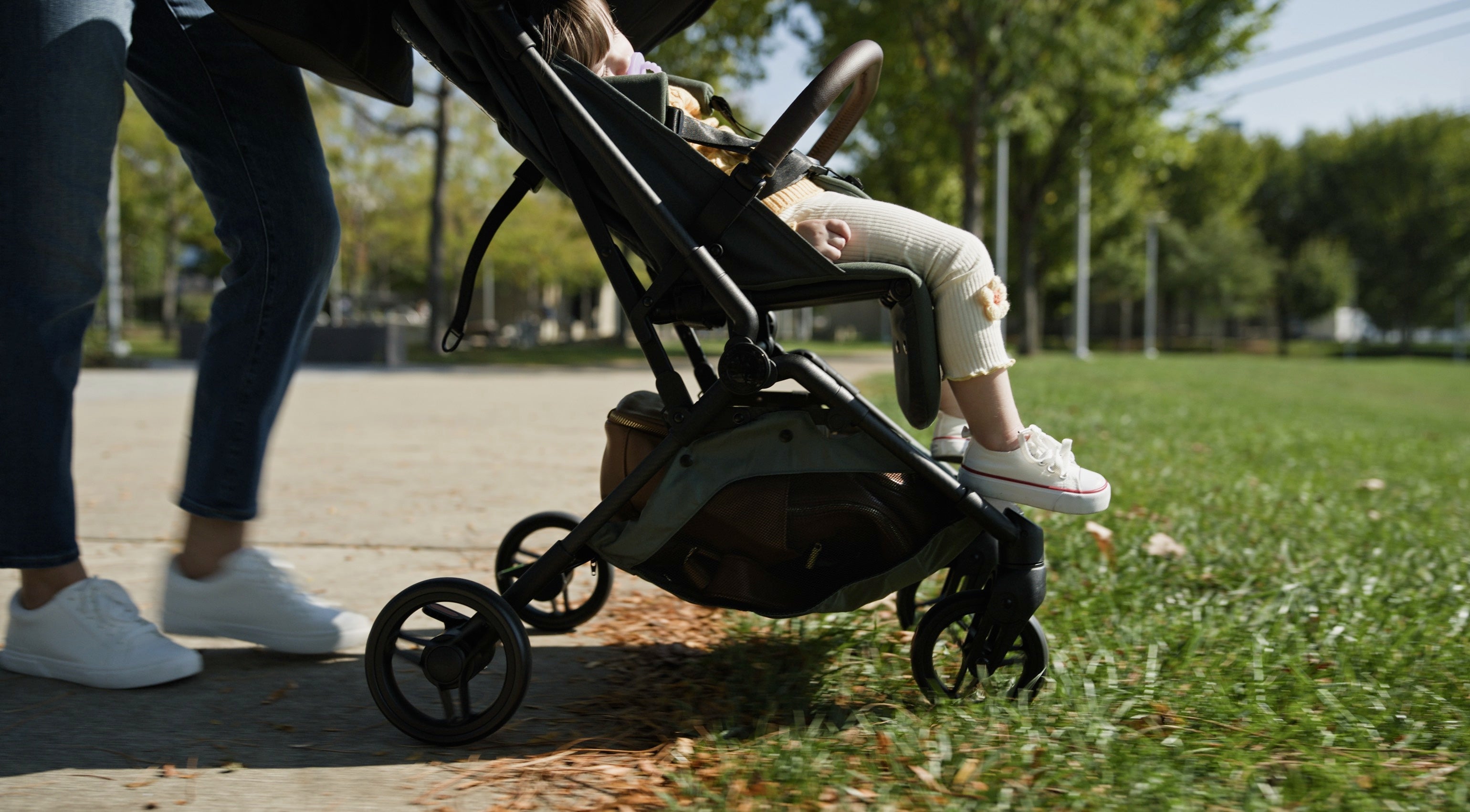
Cleaning a stroller well means treating the fabric, wheels, frame, and buckles a little differently. The safest approach is to vacuum loose crumbs first, check the manual for removable or machine-washable parts, wash or spot-clean stroller fabric with mild soap, scrub wheels and wheel housings separately, and let every part dry completely before you fold the stroller again. If your stroller does not come apart, you can still deep clean it with a damp microfiber cloth, a soft brush, and patient blotting instead of soaking the padding.
Because stroller care varies by brand and model, always check care labels and the user manual before machine washing seat fabric, using disinfectants, or pressure-rinsing wheel assemblies. A little extra caution helps protect baby-contact surfaces, stitching, foam, and hardware.
Quick answer: the best way to clean stroller fabric, wheels, and frame
- For stroller fabric: Vacuum seams and folds first, then spot clean with warm water and mild soap. If the seat cover or liner is removable and the care label allows it, wash stroller fabric separately on a gentle cycle and air dry fully.
- For wheels and frame: Remove hair, grit, and pebbles from treads and axles, then wipe or scrub the frame, wheel forks, locks, and plastic parts with a soft brush, microfiber cloth, and light soapy water.
- For a true deep clean: Go beyond a quick wipe-down after vomit, diaper leaks, sticky spills, beach sand, winter salt, muddy outings, or long storage.
- If the stroller does not come apart: Clean one section at a time, use a damp cloth instead of saturating the seat, and blot moisture out of padding and seams before drying overnight.
- Before reuse: Do not buckle in your child or fold the stroller for storage until the seat, straps, canopy, and wheel area feel completely dry.
What you'll need before you start
You do not need a huge kit, but a few gentle tools make it much easier to clean stroller fabric and wheels without damaging anything.
- Stroller manual or care label
- Handheld vacuum or crevice attachment
- Microfiber cloths
- Mild dish soap or baby-safe laundry detergent
- Soft brush or old toothbrush
- Small bowl of warm water
- Towel for blotting and air-drying support
- Optional enzyme cleaner for milk, food, diaper leaks, or other stubborn organic stains
Before you start, test any cleaner on a small hidden area if you are unsure how the fabric will react. Unless your manual specifically says otherwise, skip harsh bleach and strong fragrance-heavy products on stroller fabric, straps, and other baby-contact surfaces.

How to clean stroller fabric
When people search how to clean stroller fabric, they usually want the safest method that removes crumbs, sweat, milk, sticky residue, and everyday grime without ruining the seat or canopy. Start dry, work gently, and only add as much moisture as the material can handle.
- Vacuum first. Use a crevice tool around seat seams, harness slots, under the seat pad, the basket edge, and canopy folds. Dry debris is much easier to remove before you add water.
- Mix a mild cleaning solution. A few drops of mild dish soap or baby-safe detergent in warm water is enough for most stroller fabric.
- Blot and wipe. Dampen a microfiber cloth and work section by section. Do not pour water directly onto padded areas unless the manual says that is safe.
- Use a soft brush on textured areas. Brush seat seams, piping, and crease lines gently to lift dried-on grime.
- Rinse residue lightly. Follow with a clean damp cloth so soap does not stay on the fabric and attract more dirt later.
- Dry thoroughly. Press with a dry towel, open the stroller fully, and let the fabric air dry in a well-ventilated area before folding it again.
How to wash removable stroller fabric
If your seat liner, canopy panel, or infant insert comes off and the care label allows machine washing, this is the easiest way to wash stroller fabric more thoroughly.
- Remove all detachable soft parts according to the manual.
- Shake out debris and pre-treat visible stains before washing.
- Wash on a gentle or delicate cycle with cool or lukewarm water and a mild liquid detergent.
- Skip high heat unless the care label clearly allows it; air drying is the safer default.
- Reinstall only when every layer is fully dry, especially padded inserts and canopy edges.
If you are wondering how to wash stroller fabric but the padding is fixed or semi-attached, move to the next section instead of forcing the stroller apart.
Brand and model note
Nuna, UPPAbaby, Joie, Chicco, and other stroller brands all handle removable fabrics, buckle cleaning, and wheel assemblies a little differently. Even within one brand, seat covers and canopies may not wash the same way across models, so let the manual override any generic cleaning advice.
How to clean a stroller that doesn't come apart
This is one of the clearest live search intents for this page, and it is very common. Plenty of parents have fixed seat pads, unclear instructions, or a stroller that only partially disassembles. The goal is to deep clean the stroller without saturating the foam or stressing the frame.
- Open the stroller fully. Lock it open so you can reach the seat base, canopy edges, footrest, basket lip, and hinge-adjacent fabric.
- Vacuum every crease. Focus on snack crumbs in seat seams, under the crotch buckle, around harness slots, and near the recline area.
- Use a damp cloth, not a soaked one. Wipe the fabric in small sections with mild soapy water.
- Scrub stubborn spots gently. A soft toothbrush works well on piping, stitched edges, and grime trapped where the seat meets the frame.
- Blot instead of flooding. Use a dry towel to pull moisture back out of the padding as you go.
- Let it dry open. Leave the stroller unfolded until the fabric, foam, and hidden creases are fully dry to reduce mold and mildew risk.
If a stroller stays damp after a basic wipe-down, place it near moving air or a fan rather than folding it into a closet or car trunk. Folding a damp stroller too early is one of the main reasons mildew keeps coming back.
How to clean stroller wheels, frame, and plastic parts
Searchers looking for how to clean stroller fabric and wheels tips usually need a full-body cleaning routine, not just a fabric tutorial. Wheels collect mud, hair, sand, and salt, while the frame picks up sticky handprints, sunscreen residue, and grime around joints and latches.

How to clean stroller wheels
- Remove trapped debris. Pull out hair, threads, pebbles, and dried leaves from the axles, treads, wheel locks, and swivel area.
- Scrub with soapy water. Use a small brush for the tread pattern and a cloth for the rims and wheel housings.
- Check high-grime conditions. After beach trips, rain, mud, or winter salt exposure, clean the wheels sooner rather than later so residue does not dry into the moving parts.
- Dry before storage. Wipe the wheel area well and let it air dry so metal hardware is not left wet.
How to clean the stroller frame and plastic parts
- Wipe the handlebar, frame tubes, footrest, snack tray, cup holder, and under-seat basket edge with a damp microfiber cloth.
- Use a soft brush around hinges, release buttons, and textured plastic where grime collects.
- Rinse away any soap film with a clean damp cloth.
- Dry joints, screws, and fold points before closing the stroller.
Avoid spraying large amounts of water directly into fold joints, brake mechanisms, or wheel hubs unless the manual explicitly allows that cleaning method.
How to clean harness straps and buckles
Harness straps, chest clips, and buckle creases are some of the most touched parts of a stroller, so they deserve extra attention during a deep clean.
- Vacuum or brush away dry debris around the buckle release and strap anchors.
- Wipe straps with a cloth dipped in mild soapy water rather than soaking them.
- Use a cotton swab or soft brush for buckle edges and narrow grooves.
- Wipe again with a cloth dampened in plain water to remove soap residue.
- Let straps and buckles dry fully before buckling your child in again.
If the manual warns against removing or heavily scrubbing the harness, follow the manufacturer guidance. Safety restraints are not the place to improvise.
How to remove stains, odors, mold, and mildew
Everyday dirt is one thing. Milk drips, snack grease, diaper leaks, vomit, and mildew are the reason many parents search how to deep clean a stroller in the first place.
How to remove stains from stroller fabric
- Food or milk stains: Blot first, then use mild soap or an enzyme cleaner if oily residue remains.
- Diaper leaks or bodily fluids: Remove solids carefully, rinse with cool water, clean with a baby-safe product, and dry thoroughly.
- Older set-in stains: Apply a stroller-safe enzyme cleaner, let it sit briefly, then brush gently and blot clean.
When you are trying to get stains out of stroller fabric, aggressive scrubbing usually makes the area fuzzier or pushes the stain deeper. Several light passes are safer than one harsh one.
How to get rid of stroller odors after spills or accidents
Lingering smells usually come from residue left inside padding, seams, or buckle covers. After cleaning the visible mess, blot thoroughly, allow full airflow, and only then judge whether the smell is gone. If needed, repeat the cleaning step with an enzyme cleaner approved for baby gear and let the stroller dry open overnight.
How to clean mold or mildew from a stroller
If you see mold or mildew, stop using the stroller until the affected area is cleaned and dried. Brush off loose dry residue outdoors if possible, clean the area with a mild stroller-safe cleaner, wipe with a damp cloth, and dry the fabric completely in moving air. If mildew has spread deeply into foam, keeps returning, or leaves a strong musty odor after repeated cleaning, it is usually safer to replace the affected soft parts or ask the manufacturer about replacement components.
Quick clean vs deep clean: what your stroller actually needs
A quick clean is enough after light snack crumbs, dusty park visits, or a few sticky fingerprints. Vacuum the seat, wipe the frame, clean the handlebar, and check the wheel treads.
A deep clean makes more sense after vomit, diaper leaks, mold, muddy outings, beach sand, winter salt, or long periods in storage. That is when you should clean stroller fabric more thoroughly, wash removable soft parts if allowed, scrub the wheels and frame, and inspect hidden creases before drying everything completely.
For many families, a quick wipe-down every week or two plus a deeper seasonal clean is realistic. If your stroller is used daily for daycare drop-off, meals on the go, or frequent travel, you may need to deep clean it more often.
How to keep your stroller clean longer
- Empty crumbs and small trash after each outing before they get ground into the seat.
- Wipe spills right away so milk, puree, and snack grease do not settle into the fabric.
- Check wheel locks, treads, and the under-seat basket after rainy walks, playground trips, and beach days.
- Let the stroller dry completely before folding it into the trunk, hallway closet, or entryway.
- Build a routine with our stroller maintenance guide and monthly stroller maintenance checklist.
- If you are cleaning before or after a trip, our tips on travel stroller care before a trip can help you spot problem areas early.
A clean stroller is not about perfection. It is about keeping the seat, straps, wheels, and fold points healthy enough for everyday family use without letting small messes turn into harder cleaning jobs.
FAQs
What's the best way to clean stroller fabric?
The best way to clean stroller fabric is to vacuum it first, then wipe or blot it with mild soapy water and a microfiber cloth. If the fabric is removable and the care label allows it, wash it separately on a gentle cycle and let it air dry completely before reinstalling it.
How do you wash removable stroller fabric?
Remove the seat liner or fabric panel according to the stroller manual, shake out crumbs, pre-treat visible stains, and wash on a gentle cycle with mild liquid detergent. Air drying is usually the safest option unless the care label says low heat is acceptable.
How do you clean a stroller that doesn't come apart?
Open the stroller fully, vacuum every seam and fold, wipe the fabric in small sections with a damp microfiber cloth and mild soap, scrub crease lines gently with a soft brush, and blot moisture out with a towel. Leave the stroller open until the fabric and padding are fully dry.
How do you clean stroller wheels without damaging them?
Remove hair, grit, and pebbles first, then scrub the treads, wheel forks, and locks with a small brush and light soapy water. Wipe the wheels dry before storage and avoid forcing water into hubs or joints unless your manual specifically allows it.
How do you clean mold or mildew out of a stroller?
Clean the affected area with a mild stroller-safe cleaner, wipe away residue with a damp cloth, and dry the stroller completely in moving air before using it again. If mildew has spread into padding or keeps returning, replace the affected soft parts or contact the manufacturer for safer next steps.


Best Stroller for Winter and Snow: Top Picks for Real Cold-Weather Walks
Holiday Travel with a Foldable Stroller