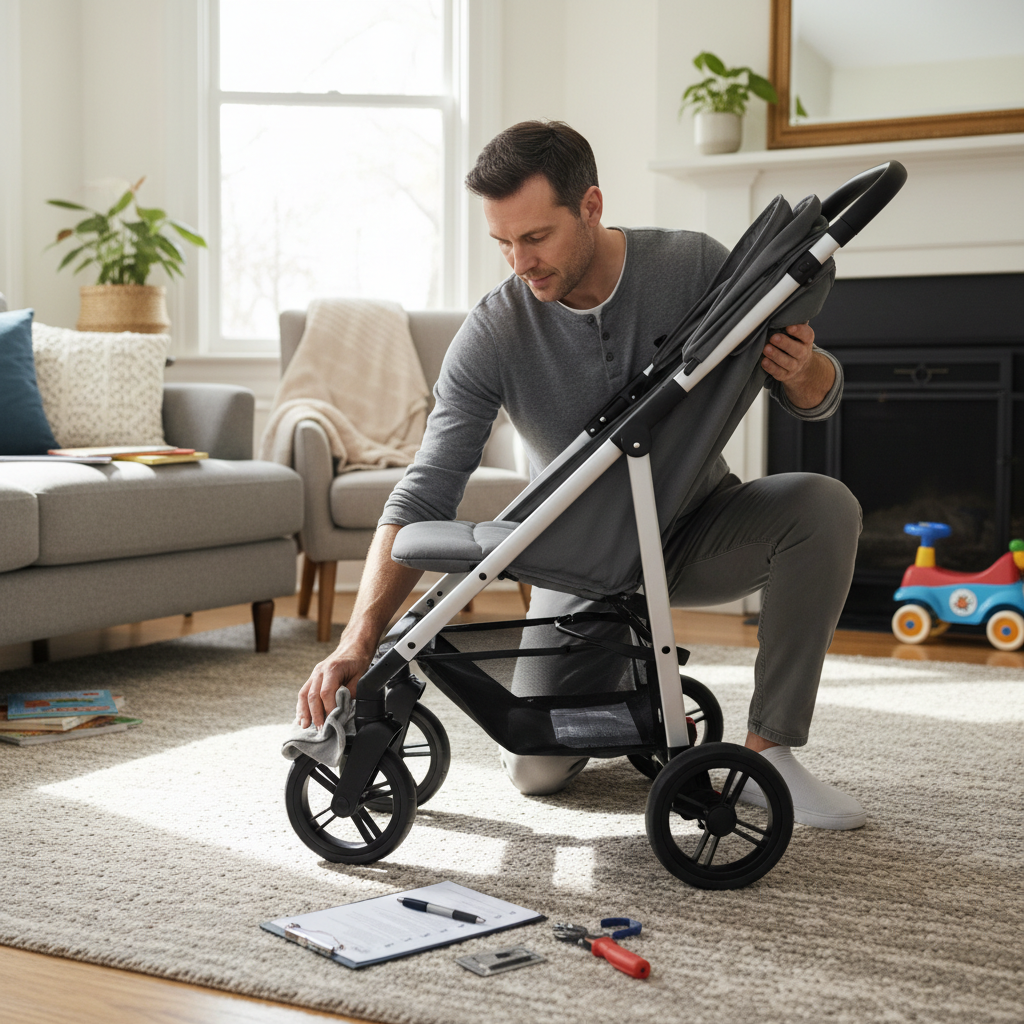
A stroller does not usually fail all at once. It gets noisier. The fold feels rougher. One wheel starts to drag. The brake needs a second push. The seat fabric holds onto crumbs, moisture, and mystery stains a little longer than it used to. That is why foldable stroller maintenance works best as a routine, not a rescue mission.
If you want the simplest version, here it is: give your stroller a light once-over every week, do a more careful inspection once a month, clean it before grime gets embedded, and stop using it if key safety parts no longer work the way they should. A stroller can look mostly fine and still be telling you that a wheel, brake, buckle, or frame joint needs attention.
At Mamazing, we think maintenance advice should feel practical, not fussy. This guide gives you a monthly stroller checklist you can actually follow, shows you how to clean and store a foldable stroller without damaging it, and helps you tell the difference between “needs a quick tune-up” and “needs repair, replacement parts, or a full upgrade.”
Quick Answer: How Often Should You Maintain a Foldable Stroller?
If your stroller gets regular use, plan on two rhythms instead of one. First, do a quick weekly check for the high-wear parts you rely on constantly: wheels, brakes, harness, and the folding action. Second, do a more deliberate monthly inspection that looks at fasteners, axle buildup, fabric wear, rust risk, and signs the frame or locking points are no longer operating smoothly.
This approach works better than waiting for obvious damage because stroller problems are often cumulative. Dirt on the axle turns into drag. Moisture left in the fabric turns into odor or mildew. A loose bolt stays harmless until the day it does not. Small habits matter because they keep daily use from becoming long-term wear.
The American Academy of Pediatrics highlights basics such as working brakes, a secure restraint system, and locking mechanisms that stay engaged in its guidance on how to choose a safe baby stroller. That advice is written for buying and using a stroller, but it also points to what matters most in maintenance: the parts that protect stability, restraint, and safe movement.
If your stroller lives in your trunk, gets pushed daily on sidewalks, or spends time in wet weather, be more conservative. Heavier use means more frequent wiping, more frequent wheel checks, and less tolerance for “I will look at that later.”
Your Monthly Foldable Stroller Checklist
A good maintenance checklist is not just a list of chores. It is a list of things that tell you whether the stroller is still safe, smooth, and worth continuing to use. Start with the parts that take the most stress.

Wheels and axles
Check whether all wheels spin freely, track straight, and stay firmly attached. Remove trapped hair, thread, sand, and tiny stones from the axle area and tread. If one wheel suddenly feels rougher than the others, do not dismiss it as normal wear. Uneven drag is one of the easiest early signs that grime has built up, the axle is compromised, or the wheel assembly needs attention.
You should also look for flat spots, cracks, wobbling, or a wheel that no longer sits square. A stroller can still roll while developing a safety problem, so “it still moves” is not a strong enough standard. If the wheel or attachment point looks damaged, that is a repair issue, not just a cleaning issue.
Brakes and parking lock
Your brake check should be boring. That is the goal. Engage it, release it, and test whether the stroller stays in place without hesitation or slippage. If the brake feels sticky, inconsistent, or harder to lock than usual, inspect it before your next outing instead of hoping it sorts itself out.
Because brakes are such a direct safety feature, this is one of the clearest examples of “do not keep using it if the part is unreliable.” A brake that only works on the second try is already telling you something important.

Harness, buckle, and seat area
Look for frayed webbing, stitching that is pulling loose, twisted straps, or a buckle that no longer clicks confidently. Dirt and snack buildup around the buckle can make it feel like a minor cleaning problem when it is actually affecting function. Wipe it, test it, and make sure the harness still adjusts evenly on both sides.
This is also where you catch fabric wear before it becomes seat failure. The seat may still look usable, but heavily stressed seams, torn slots, or loosened padding around the harness path are worth dealing with early.
Folding joints and frame fasteners
Fold and unfold the stroller deliberately once you have a clear space and good light. You are listening and feeling for changes: a new grinding sound, a hitch in the hinge, a lock that no longer snaps in cleanly, or a frame that feels slightly off-center. Check visible screws, bolts, and connection points without over-tightening anything that should be handled according to the manufacturer’s instructions.

Folding joints are where convenience and safety meet. If the stroller does not lock properly in either the open or folded state, that is not a cosmetic problem. It is a stop-and-assess problem.
How to Clean a Stroller Without Damaging It
The best stroller cleaning routine is gentler and more regular than most parents expect. You usually do not need aggressive sprays, soaking-wet fabric, or a full tear-down every time your stroller gets messy. In fact, overcleaning with the wrong products can create its own damage by drying out grips, weakening finishes, or leaving moisture in seams and foam.
Start with the least invasive method that will actually work:
-
Frame: wipe with a soft cloth, warm water, and mild soap when needed.
-
Wheels: remove visible debris first, then wipe or rinse the outer surfaces without flooding the bearings or axle area.
-
Fabric: spot-clean first, then follow the manufacturer’s instructions if the seat pad or canopy is removable.
-
Basket and pockets: empty crumbs, vacuum if needed, then wipe and let everything dry fully before reassembly.
-
Handlebar and touch points: clean gently and avoid oversaturating foam or stitched coverings.
The part many people rush is drying. A stroller put away while damp is how you get odor, mildew, and that unpleasant “garage smell” that can seem to appear overnight. If you wash fabric, let it dry fully before reinstalling it. If the stroller got caught in rain, unfold it indoors and allow air to move through it before storing it away.

This is also why brand-specific teardown searches can be misleading. If you are looking up things like how to remove a Nuna cover or how to wash an Evenflo stroller, the right answer is not a generic internet trick. It is your own manual. Some seats are machine washable, some are spot-clean only, and some stroller parts should not be disassembled casually at all.
If you use accessories or added organizers, clean those separately and keep the stroller itself as uncluttered as possible. A lot of grime problems come from storage pockets, snack areas, and clip-on extras rather than the frame alone. If you want a more organized setup that is easier to maintain long term, our guide to customizing a foldable stroller for your family’s needs can help you simplify what stays on the stroller day to day.
How to Store a Stroller So It Does Not Rust, Warp, or Grow Mold
Storage problems are often maintenance problems in disguise. If you put a damp stroller in a humid garage, leave it collapsed with trapped moisture, or stack heavy gear on top of it, you are quietly creating the very problems you will later call wear and tear.
Good stroller storage is simple:
- Store it dry, not just folded.
- Keep it in a cool, ventilated place when possible.
- Avoid direct sunlight for long periods if fabrics and plastics are exposed.
- Do not stack heavy items on the canopy, frame, or wheels.
- Use a cover only if the stroller is already fully dry.
Can you store a stroller in the garage? Sometimes, yes, but your garage has to be reasonably dry and stable. If your garage gets damp, humid, or musty, it is not a neutral space. It is an environment that can encourage rust, mildew, and that “mold on stroller in garage” problem people often notice only after it has spread.
If you see visible mold, do not treat it as a purely cosmetic stain. Mold on seat fabric, straps, or padded areas can mean moisture was trapped long enough for contamination to spread, and at that point the question becomes whether the affected part can truly be cleaned according to the manufacturer’s instructions or whether replacement is safer. If your storage challenge is mostly about space rather than moisture, our article on stroller storage solutions has more practical setup ideas.
When a Stroller Needs Repair, New Parts, or Replacement
This is where many parents search “why do strollers expire,” even when what they really mean is, “How do I know this stroller is no longer a good idea to keep using?” For most families, the better question is not whether there is a universal expiration date stamped into stroller life. It is whether the stroller still passes the real-world test of safety, structural integrity, and reliable function.
A stroller is moving from maintenance territory into repair or replacement territory when you notice any of the following:
- A brake that slips, sticks, or fails intermittently
- A wheel that cracks, wobbles, or no longer tracks properly
- A buckle or harness that no longer secures confidently
- A frame that bends, twists, or no longer locks cleanly
- Rust, mold, or damage that keeps coming back even after proper cleaning
- Missing parts, replacement hardware, or a manual you can no longer match confidently to the stroller model
If the issue is isolated and the brand provides the right part or service guidance, repair may be sensible. If the issue affects the frame, the locking mechanism, or essential restraint and braking parts, replacement often becomes the safer answer faster than parents want to admit.
This is also where recall awareness matters. The CPSC maintains a public stroller recall directory at its stroller recall page, and it is worth checking if you are using an older stroller, a secondhand stroller, or a model you have not looked up in a long time. A stroller can feel familiar and still have a known defect history you have never seen.
If you are already thinking about parts, manuals, and long-term durability, it may also be time to compare whether your current stroller still matches your family’s use. Our guide to choosing your first foldable stroller is written for new buyers, but the same logic helps when deciding whether an aging stroller still fits daily life.
When to Check the Manual, the Brand, or a Recall Notice
One of the easiest maintenance mistakes is assuming every stroller can be treated the same way. It cannot. Fabric removal, wheel disassembly, lubrication points, replacement parts, and fold-lock adjustments are all areas where the brand manual matters more than generic advice.
Check your manual or the manufacturer when:
- You want to remove seat fabric or wash a canopy
- You are unsure whether a squeak needs lubricant or a replacement part
- A wheel or brake assembly looks different from common online examples
- You are missing hardware or want to order a replacement piece
- You are cleaning after mold, heavy moisture, or contamination
A simple maintenance note on your phone also helps more than people expect. If you write down when you last deep-cleaned the fabric, tightened hardware, replaced a wheel, or checked for recalls, you stop relying on memory and start spotting patterns. That makes it easier to notice whether the same issue keeps returning or whether your stroller is entering the stage where repairs are becoming more frequent than they are worth.
This is especially useful with secondhand strollers or strollers you plan to keep for another child. The older the stroller, the more valuable it becomes to track what has already been checked, cleaned, replaced, or ruled out.
If you cannot confirm the right process, avoid improvising. The goal of stroller maintenance is to preserve safe function, not to win at DIY repair. A calm pause to check the manual is usually better than taking apart a component you later cannot reassemble correctly.
If you use a Mamazing stroller, check these model-specific points first
This is where brand-specific guidance becomes more useful than any generic stroller checklist. If you use a Mamazing stroller, let your model manual guide anything related to removable fabric, brake or wheel disassembly, fold-lock behavior, and replacement parts. The universal checklist still matters, but your manual should be the final word on what is removable, adjustable, washable, or replaceable on your exact stroller.
-
Confirm which fabric parts are removable and washable. Some seat or canopy pieces may be spot-clean only, while others may have more specific care instructions.
-
Check wheel and brake part guidance before disassembly. If a wheel is dragging or a brake feels inconsistent, use the model guide first instead of forcing parts apart.
-
Review fold-lock and frame inspection points. If the stroller is no longer locking open or folded with the same confidence, compare what you are seeing with the manual before continuing regular use.
-
Look up approved replacement parts or support steps. This matters most for wheels, harness hardware, brake components, and missing fasteners.
-
Use brand support sooner when the issue affects safety. If a Mamazing stroller shows repeated brake issues, locking problems, or structural looseness, it is better to contact support than to keep troubleshooting by trial and error.
That is really the balance this article is aiming for: use a universal monthly maintenance routine to catch issues early, then switch to your Mamazing model guidance the moment the task becomes specific to parts, washing instructions, or safety hardware.
Frequently Asked Questions About Stroller Maintenance
How often should you clean a stroller?
A light wipe-down and crumb cleanup can happen weekly if you use the stroller often, while a deeper clean works well monthly or whenever dirt, spills, or weather exposure build up. The exact schedule matters less than consistency and making sure the stroller is fully dry before storage.
Why do some parents say strollers “expire”?
Most of the time, they are using “expire” as shorthand for “this stroller may no longer be safe or worth continuing to use.” The real issue is usually wear, missing parts, recalls, damage, or changes in the stroller’s ability to brake, lock, and restrain a child properly.
Is mold on a stroller dangerous?
Visible mold should be taken seriously, especially if it affects fabric, padding, or straps your child touches directly. If cleaning according to the manufacturer’s guidance does not fully solve the problem, or if mold keeps returning, replacement of the affected parts or the stroller itself may be the safer option.
Can you store a stroller in the garage?
You can if the garage stays fairly dry, cool, and ventilated. A damp or musty garage is a poor storage spot because moisture encourages rust, odor, and mold. Always store the stroller dry, not just folded.
When should you replace stroller wheels or brakes?
Replace or repair them when they crack, wobble, drag badly, slip, or stop working reliably. Wheels and brakes are not “wait and see” parts because their failure changes how safely the stroller moves and stops.
Do you need professional stroller repair?
Sometimes, yes. Small cleaning issues and simple maintenance are fine to handle at home, but frame problems, failing brakes, damaged locking mechanisms, or uncertainty about the correct replacement parts are all good reasons to contact the manufacturer or an authorized repair option instead of experimenting.
Final Takeaway
A monthly stroller checklist should not feel like another parenting chore that exists only to make you feel behind. It should feel like a fast way to protect something you rely on constantly. Clean it before grime settles in. Store it dry. Watch the wheels, brakes, harness, and fold points closely. And treat small changes in how the stroller moves or locks as useful information, not background noise.
That is the real secret behind stroller longevity. It is not obsessive polishing. It is noticing the early signs that tell you whether a stroller needs a wipe-down, a better storage setup, a new part, or a graceful retirement. If you want a stroller that stays easier to live with over time, that routine matters just as much as the original product choice.
And if you are already at the point where maintenance feels like constant catch-up, it may be worth stepping back and comparing whether your current stroller still fits your life. A stroller that is easier to fold, clean, and store often becomes easier to maintain too.



Carbon Fiber Stroller Guide: Benefits, Tradeoffs, and Who It Fits Best
Most Compact Stroller Guide: Best for Small Apartments, Small Trunks, and Narrow Sidewalks