
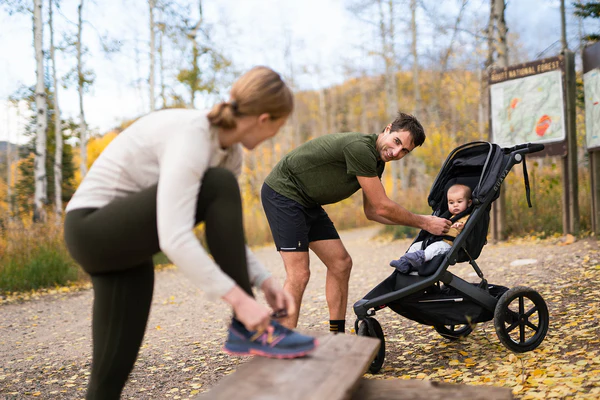
- by FangRussell
When Can Baby Sit in a Stroller? Age, Readiness Signs, and Safety Rules
- by FangRussell
If you want the quick answer, most babies can start using a more upright stroller seat at around 6 months, but the better rule is not the exact month. It is whether your baby can hold their head steady, stay well aligned without slumping, and use a stroller seat position that matches their stage safely.
That distinction matters because parents usually are not asking a theoretical question. They are asking something practical: Can my baby sit in a regular stroller yet, or do I still need a flatter setup? And that is exactly where confusion starts. A newborn bassinet, a fully reclined seat, a semi-reclined stroller, and a regular upright stroller seat are not all the same thing.
This guide keeps the best parts of the original article—its stage-based thinking, readiness signs, FAQs, and comparison table—but goes deeper where readers actually need more help. The goal is not just to rank for “when can baby sit in stroller.” It is to help you understand what is normal, what is still too early, and what to watch for before you move your baby into a more upright seat.
For many parents, that reassurance matters as much as the age guideline itself. The transition is rarely a dramatic overnight change. It is usually a short period where you test more upright positions carefully, watch your baby’s posture, and adjust based on how they actually handle the ride.
For most babies, the common transition point is around 6 months, because that is when many babies begin showing the head, neck, and trunk control needed for a more upright stroller position. The CDC says that by 6 months many babies lean on their hands to support themselves when sitting, while by 9 months many babies can get into a sitting position by themselves and sit without support. That helps explain why upright stroller readiness is often a gradual transition rather than a single birthday-style milestone.
So the simplest parent-friendly answer is this: if your baby is still in the newborn stage, they usually need a fully flat or deeply reclined setup. If your baby is closer to 6 months and has strong head and upper-body control, a more upright stroller seat may start to make sense. And if your baby still slumps, loses alignment, or struggles to stay comfortable in that position, it is a sign to stay flatter a little longer.
This is also why “when can baby sit in a stroller?” is really two questions in one:
One reason this topic gets confusing is that “sit in a stroller” sounds simpler than it is. What parents usually need is a stage guide, not just a number. That is why the age-position table is worth keeping and improving instead of deleting.
| Age / stage | Best stroller position | What to look for | What to avoid |
|---|---|---|---|
| 0–6 months | Bassinet, fully flat, or stroller-approved newborn recline | Head support, stable positioning, newborn-compatible setup | Regular upright stroller seat too early |
| Around 6 months | Semi-reclined to more upright seat, depending on control | Strong head control, better trunk stability, no major slumping | Assuming all 6-month-olds are equally ready |
| Later infancy | Regular stroller seat as tolerated | Comfort, harness fit, safe posture, stroller matched to terrain | Letting excitement about upright riding override safety fit |
That table is not meant to replace your stroller manual or your pediatrician. It is meant to give you a faster mental model: newborns usually need flatter support, older babies gradually tolerate more upright positioning, and the transition depends on real body control, not just what month the calendar says.
If your baby was born early, has lower tone, or is still working on head and trunk control, use extra caution and treat milestone timing more individually. The CDC also reminds parents to talk with their child’s doctor if they have concerns about development or lost skills.
This is one of the most useful parts of the original article, and it is worth keeping because readers need more than an age number. They need signs.
The first and biggest sign is steady head control. If your baby still wobbles, tips, or looks like their head drops forward when the stroller angle changes, that is usually a sign they are not ready for a regular upright position yet. CDC milestone pages support this progression: by 4 months many babies hold their head steady without support when being held, while by 6 months many babies begin supporting themselves in sitting with their hands, and by 9 months many sit without support. Those are helpful markers because stroller readiness usually follows the same physical-control story.

Beyond head control, look for these practical readiness signs:
The important part is that readiness should look sustainable, not just possible for a minute. A baby who can briefly hold their head up is not always ready for a long stroller ride in a more upright seat.
Another helpful way to think about it is that stroller readiness often arrives in layers. Your baby may be ready for a short semi-reclined neighborhood walk before they are ready for a longer upright outing at a busy park or on rough sidewalks. That is normal. Readiness is not just about what your baby can tolerate for a minute in the living room. It is about what they can tolerate comfortably and safely over the full length of a real outing.
If your baby is younger, still slumps, falls asleep quickly with their chin down, or cannot stay aligned without a lot of help, a flatter setup is still the safer choice. This is where many parents get tripped up, especially if their baby seems unusually curious or strong for their age. Curiosity is not the same as stroller-seat readiness.
That is also why newborn-ready stroller options matter. A stroller can be safe from birth if the configuration is actually designed for newborn use, such as a bassinet mode, a fully flat recline, or an infant-compatible car seat setup that the manufacturer allows. The original article was right to keep this distinction, and it deserves more emphasis rather than less.
For example, if you want a Mamazing option for the newborn phase, an Air Lux stroller with bassinet is one stage-appropriate example because it gives you a flatter early setup. Later, once your baby is older and ready to sit more upright, other models in the lineup can make more sense depending on how much travel, carry weight, and compactness matter to you.
It can also help to separate the question of can sit from the question of should sit for this whole outing. Some babies are technically capable of a more upright position before they enjoy it for very long. If your baby gets tired quickly, falls asleep with poor alignment, or looks much more comfortable when reclined, that is useful information. Comfort is not just a luxury here; it often tells you whether the position matches your baby’s current stage.
This is also where stroller sleep needs a careful boundary. A baby may fall asleep in a stroller during an outing, but that does not make the stroller the best routine sleep space. HealthyChildren says babies who fall asleep in sitting devices such as car seats and strollers should be moved to a firm sleep surface as soon as possible. That means stroller naps can happen, but your goal is still the safest stroller position during the outing and a more appropriate sleep surface when practical.
This is where brand examples can actually help the reader instead of getting in the way. Used well, they make the stage difference clearer.
If you are shopping for a newborn, your main question is not “Which stroller is coolest?” It is “Which setup lets my baby stay appropriately supported right now?” If you are shopping for a 6-month-plus baby who is starting to sit more upright, your question changes to seat position, harness fit, ride smoothness, and whether the stroller suits your routine.

| Model | Typical stage fit | Why parents consider it | Best use case |
|---|---|---|---|
| Air Lux with bassinet | Newborn stage | Flatter early setup and staged use | Families who want newborn support first, then later stroller-seat use |
| Ultra Air / Ultra Air X | Older baby stage | Lighter weight and easier travel carry | Families with a baby who can already sit more upright and need portability |
If you want a broader stage-by-stage buying path, Mamazing’s guide on when baby can sit in a stroller is a natural companion read, and the article on what age babies sit up is useful when you are still not sure whether the issue is stroller setup or developmental timing.
The most helpful way to think about stroller choice is this: match the stroller to your baby’s current physical stage first, then match it to your lifestyle. Doing it in the reverse order is how parents end up trying an upright seat too early just because the stroller itself feels more convenient.
That is also why the “best stroller” answer changes by stage. A newborn-friendly setup is about support and positioning first. An older baby stroller is more about seat fit, harness use, and whether your child can enjoy a more upright ride without losing alignment. Once you frame it that way, product choice becomes much less overwhelming.
The original article was smart to include safety guidance, but this is where the wording needs to be clearer and more trustworthy.
First, always use the harness. The CPSC warns that serious injury or death can happen if infants are not properly restrained in strollers, especially younger babies who can slide into dangerous positions. This is not a minor detail. The harness is one of the most important parts of safe stroller use once your baby is in the seat.
Second, do not assume “more reclined” automatically means “safe for any baby at any age.” Recline helps, but posture still matters. A baby whose chin falls hard to chest or whose body keeps collapsing in the seat needs more support or a flatter setup, not just a slightly different angle.
Third, be careful with jogging stroller advice. Parents often want a clean rule, but the best answer is still conditional. A jogging stroller adds more vibration and movement than an ordinary walk. That is why many pediatricians tell families to wait until somewhere around 6 to 8 months or longer, depending on the baby and the stroller. In practice, you should follow both your stroller manual and your child’s doctor’s guidance instead of treating one age number as universal.
Fourth, avoid turning the stroller into a long-term sleep plan. Routine safe sleep still belongs on a firm flat sleep surface, not in a stroller seat just because your baby dozed off during an outing.
Fifth, remember that stroller terrain changes the equation. A baby who seems comfortable on a smooth indoor floor or short sidewalk may look very different once the stroller hits cracked pavement, curbs, gravel, or longer outdoor walks. If the route is bumpier, your baby usually needs even better support and a stroller setup that matches that reality.
Finally, trust the combination of the manual, your own observation, and your pediatrician more than any one-size-fits-all internet rule. The best stroller advice is useful precisely because it leaves room for real babies to develop at slightly different speeds.
And finally, do not let the calendar override what you are seeing. A 5-month-old with strong control and a stroller-approved reclined setup may be fine in a position that would be wrong for another 5-month-old. A 7-month-old who still slumps may still need more support. Real readiness always beats generic internet certainty.
Usually not in a regular upright stroller seat. At that age, most babies still need a fully flat or deeply reclined setup, such as a bassinet stroller or an infant-compatible configuration, because head and trunk control are still developing.
Good head control is a helpful sign, but it is not the only one. Your baby should also be able to stay well aligned in the seat without slumping forward, and the stroller itself should support a safe reclined position if your baby is not truly ready for an upright seat yet.
It is safest to wait until your pediatrician says your baby is ready and your stroller is actually designed for jogging. Many families are told to wait until around 6 to 8 months or longer, because jogging adds more vibration and head movement than an ordinary walk.
A baby may fall asleep in a stroller during an outing, but a stroller should not replace a firm flat sleep space for routine sleep. If your baby falls asleep, use the safest position your stroller allows and move them to an appropriate sleep surface as soon as you reasonably can.
Not always, but you do need a newborn-appropriate setup. A bassinet stroller is one good option because it gives a flatter early stage, while some families use a fully reclined seat or an infant-compatible car seat setup if the stroller manual allows it.
Most babies can move toward a more upright stroller seat around 6 months, but the safest answer is still more specific than that. Look at your baby’s head control, trunk stability, and how well they stay aligned in the seat. Then match the stroller position to that reality instead of rushing the transition because a calendar says it should be time.
If your baby is still young, a flatter newborn-ready setup is usually the right move. If your baby is older and clearly ready, a regular stroller seat can open the door to easier outings and a much more engaged ride. The key is not finding one magic month. It is understanding what your baby’s body is actually ready for right now.
Featured Products


How to Choose a Baby Stroller: A Practical Guide for Your Lifestyle and Baby's Stage
Can I Bring a Stroller on a Plane? Free Check, Gate Check, Carry-On Rules, and Airline Tips