
- by FangRussell
Ultra Compact Strollers for Busy Lifestyles: What to Look For Before You Buy
- by FangRussell
An ultra compact stroller makes the biggest difference when your day includes tight car trunks, apartment hallways, school-drop-off chaos, or travel where every extra pound becomes annoying fast. The appeal is simple: you get a stroller that folds smaller, carries easier, and feels less like one more bulky thing to wrestle with. But the best ultra compact stroller is not just the lightest one. It also needs a usable fold, enough comfort for your child, and safety features you can trust on a rushed day.
If you are trying to figure out whether this stroller style fits your real routine, start with three questions: How often do you lift it? How often do you fold it? And how often do you need it to fit somewhere awkward? Those answers usually matter more than marketing language about lifestyle or sleek design.
At Mamazing, we think the most helpful buying guides do more than praise a category. They should help you decide whether ultra compact strollers are right for your family, what tradeoffs come with the smaller fold, and which features are worth paying attention to before you buy.
An ultra compact stroller is a stroller designed to fold down smaller and carry more easily than a traditional full-size stroller, while still giving your child a safe seat and a practical everyday ride. The U.S. Consumer Product Safety Commission defines a stroller as a wheeled vehicle used to transport infants or children, generally in a sitting or semi-reclined position, and notes that strollers are commonly used from infancy through 36 months in normal consumer use contexts. You can review that baseline in the CPSC's carriages and strollers FAQ.
In practical terms, parents usually mean a stroller that is easier to lift into a car, simpler to store in a small home, and less frustrating to travel with. That often includes a lower total weight, a one-hand or quick fold, and a folded shape that is easier to fit into overhead-friendly travel bags, compact trunks, or closet corners.
Most ultra compact strollers share the same core idea, but they differ in how well they execute it. The features worth noticing first are total carry weight, folded dimensions, fold style, age range, seat recline, wheel quality, and how much effort it takes to open and close the frame when your hands are not free.
Ultra compact strollers usually make the most sense for city parents, travel-heavy families, grandparents who want something light to keep in the car, or anyone living with limited storage. They are also a strong fit for families who already have a bigger stroller and want a second stroller that is faster to grab for short errands, airports, restaurants, and quick everyday outings.
The real advantage is not just that they weigh less. It is that they reduce friction in the small transitions that happen all day long. A stroller that folds fast, stands neatly in a hallway, and does not eat your whole trunk can make a rushed routine feel much more manageable.

Parents tend to notice the benefits most in places where bulk becomes annoying: elevator doors, coffee shops, narrow store aisles, compact trunks, and apartment entryways. A slimmer fold also makes it easier to stash the stroller beside a restaurant table or near the front door instead of reorganizing half the room around it.
If small-home storage is one of your main reasons for shopping this category, Mamazing's guide to compact strollers for small living spaces is a useful follow-up read.
Weight matters, but it is not the only thing that decides whether a stroller feels convenient. A stroller can be light and still be annoying if the folded shape is awkward, the latch is fiddly, or the frame takes two hands and a clear floor space every time you close it. Busy parents usually need both: a stroller that is genuinely light enough to lift and genuinely easy enough to fold when the day is messy.
Before comparing brands or colors, look at how the stroller fits your routine. That sounds obvious, but it is where many buying mistakes happen. The question is not whether a stroller is compact on a product page. It is whether it is compact in the situations you care about most.
If you regularly lift your stroller into a car, carry it up stairs, or store it in a small apartment, the total carry weight matters a lot. So does the folded shape. A slightly heavier stroller may still work better for you if the fold is cleaner, flatter, or easier to carry. For example, Mamazing's current product listings place the Ultra Air at 11.6 lbs and the Air Lux at 15.8 lbs, while the Ultra Air X is listed at 9.9 lbs. The more helpful question is not only which one is lightest, but which folded size best matches your real storage and travel needs.
An ultra compact stroller should still match your child's age and your usual outing length. Some models work from 6 months onward, while others or their bassinet-compatible systems cover earlier stages. If naps on the go matter to you, look beyond the marketing phrase and check the seat recline, padding, leg support, canopy coverage, and whether the stroller actually feels comfortable for more than a 15-minute errand.
The smaller the stroller, the more likely you are to notice tradeoffs in under-seat basket size, wheel size, and rough-terrain comfort. That does not make the stroller bad. It just means you should match it to your routine honestly. If your days mostly involve sidewalks, airports, stores, and paved paths, a smaller stroller may be exactly what you want. If you need deep basket storage or frequent all-terrain use, compactness may need to share priority with other features.
| What to compare | Why it matters | Best fit for | Common tradeoff |
|---|---|---|---|
| Carry weight | Affects stairs, trunk lifts, and travel fatigue | Frequent lifting, travel, grandparents | Lighter models may offer less basket space or cushioning |
| Folded size | Decides whether it actually fits your car or home | Small apartments, taxis, airline travel | Smaller folds can mean a more compact seat or basket |
| Age range and recline | Affects whether the stroller works beyond short errands | Parents with naps-on-the-go or younger babies | The most compact models may start later or recline less |
| Wheel and basket setup | Changes daily convenience more than most spec sheets admit | Urban errands, shopping, airport days | Tiny wheels and tiny baskets are not ideal for every family |
Ultra compact strollers are often marketed like a guaranteed airline solution, but the smarter way to think about travel-readiness is this: they usually make airport days easier, and some are small enough to work well for carry-on-style travel, but airline rules still vary by carrier and aircraft. The goal is less drama at every stage of the trip, not a universal promise that one stroller always fits every cabin rule.
TSA's traveling with children guidance reminds parents that strollers must be screened and that larger equipment that does not fit through the X-ray machine may receive a visual or physical inspection. That is useful context because “travel-friendly” starts before you reach the gate.
For parents who want a wider shortlist focused specifically on flight-friendly options, Mamazing also has a roundup of the best compact strollers for travel.
If you travel often, check folded size, travel bag options, how quickly the stroller collapses, and whether you can manage the fold one-handed while holding a child or a diaper bag. An ultra compact stroller that shaves two minutes of stress off every security line and boarding moment is often more useful than one that simply sounds more technical on paper.
Even if you rarely fly, travel-readiness still matters in everyday life. Compact folds help when your rides include taxis, shared cars, or a trunk already full of groceries and baby gear. They also matter when home storage is limited and you want a stroller you can actually tuck away instead of leaving in the center of the room.
The original side-by-side model table is the most useful part of this article because it helps a reader compare specs quickly. Instead of removing it, the better move is to keep the information skeleton and make the table easier to scan on mobile.
| Model | Weight | Typical age range | Max child weight | Frame / build note | Fold note |
|---|---|---|---|---|---|
| Air Lux | 15.8 lbs | 6 months to about 3 years | 50 lbs | Carbon fiber, more comfort-forward | One-hand compact fold |
| Ultra Air | 11.6 lbs | 6 months to about 3 years | 50 lbs | Carbon fiber, strong travel focus | 21-inch-carry-on-style compact fold |
| Ultra Air X | 9.9 lbs | Current listing should be checked before purchase | 55 lbs listed on current product details | Very light travel-oriented build | Compact tri-fold style |
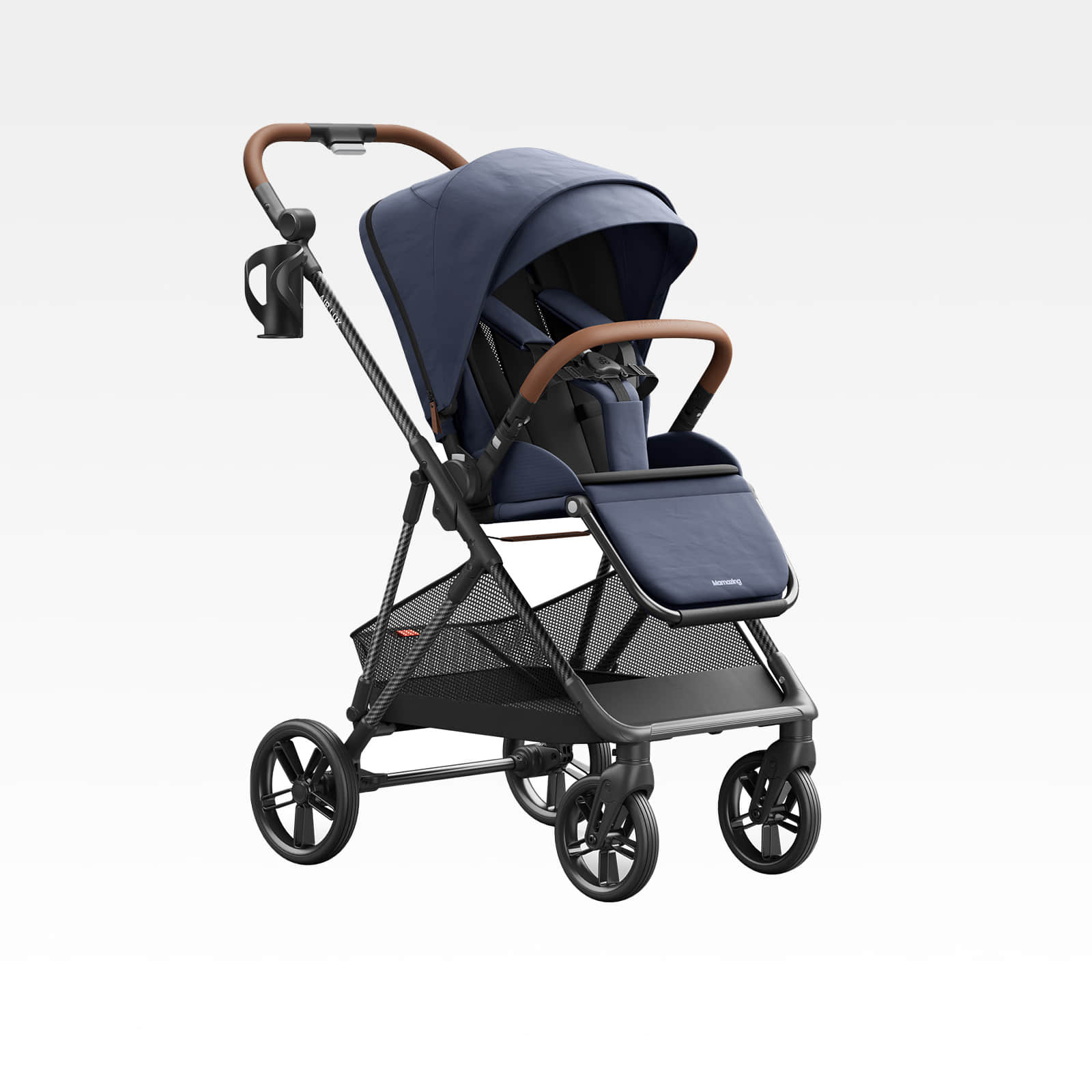
As currently listed on Mamazing product pages, the Air Lux prioritizes a fuller comfort setup, the Ultra Air sits in a very portable middle ground, and the Ultra Air X pushes hardest toward minimal travel weight. If you want a more model-specific side-by-side read, the Ultra Air vs Ultra Air X comparison is the most natural next step.
The important part is not choosing the lightest model by default. It is choosing the one whose fold, age range, and comfort level match the way you actually use a stroller. A stroller that is incredibly light but awkward for naps or short on storage may be less helpful than a slightly heavier model that fits your routine better.

Carbon fiber gets a lot of attention in this category because it can help reduce weight without making the stroller feel flimsy. That matters when you lift the stroller often. But frame material alone should not make the decision for you. A good ultra compact stroller still needs a practical fold, a stable ride, useful brakes, and comfort that matches your child’s stage.
Think of frame material as one part of the reason a stroller feels easy to live with, not the whole story. For many families, the better question is whether the stroller still feels solid after repeated folds, quick curb transitions, and day-to-day use. If long-term durability is a top concern, Mamazing's article on good compact strollers that last is a relevant follow-up.
Compactness should never be treated like a reason to get casual about safety. Before you buy, check for a 5-point harness, easy-to-use brakes, stable wheel lock behavior, and clear age and weight guidance. Then, when you use the stroller, use the harness every time. The CPSC's stroller safety alerts specifically warn that if a child is not properly secured, they can slip through the opening between the seat and tray area and face a strangulation hazard. You can read that reminder on the CPSC safety alerts page.
That warning matters because busy parents often use compact strollers in the exact situations where shortcuts feel tempting: quick errands, airport lines, restaurant stops, and rushed transfers in and out of the car. A stroller is only as convenient as it is safe to use well under pressure.

Even the lightest stroller feels worse to use when wheels collect grit, folding joints stiffen up, or fabric stays damp after spills. The good news is that most everyday maintenance is simple and takes only a few minutes.
Maintenance will not turn the wrong stroller into the right one, but it does protect the convenience you paid for.
It can be excellent for everyday use if your routine involves small spaces, frequent folding, and shorter urban outings. If you need big storage, rough-terrain performance, or a more cushioned all-day ride, a larger stroller may still work better as your primary stroller.
Sometimes, but not automatically. Some models or compatible systems work from birth, while others start around 6 months, so always check the listed age range, recline, bassinet compatibility, and support features before using one with a newborn.
Often yes, but you should treat airline fit as model-specific and carrier-specific rather than guaranteed. Ultra compact strollers are usually easier to travel with, and TSA notes that strollers must still go through screening, but whether a folded stroller fits in the cabin depends on the airline and aircraft.
They can be very safe when they have the right harness, brakes, and stability features and when they are used within their listed limits. The compact fold does not reduce the need for basics like securing the harness every time and checking brakes before you step away.
The best one is the model whose carry weight, folded size, age range, and comfort level match the way you travel. For some parents that means the lightest possible frame. For others, it means a slightly larger stroller with a better recline, better storage, or a smoother everyday ride.
An ultra compact stroller fits a busy lifestyle best when it reduces real-world friction, not just when it looks sleek on a product page. The right one should fold easily, carry comfortably, fit your storage reality, and still give your child the support they need for the kinds of outings you actually take.
If you are comparing options now, start with the practical questions first: where you store it, how often you lift it, whether you need newborn compatibility, and whether travel convenience matters more than basket space or extra cushioning. At Mamazing, we believe that kind of honest comparison leads to better stroller choices than hype ever will.
Featured Products


Mamazing Ultra Air X: A Compact Stroller for Outdoor Fun and Travel
Best Rated Rocking Chairs for Nursery: Recliner Picks by Comfort, Space, and Budget