
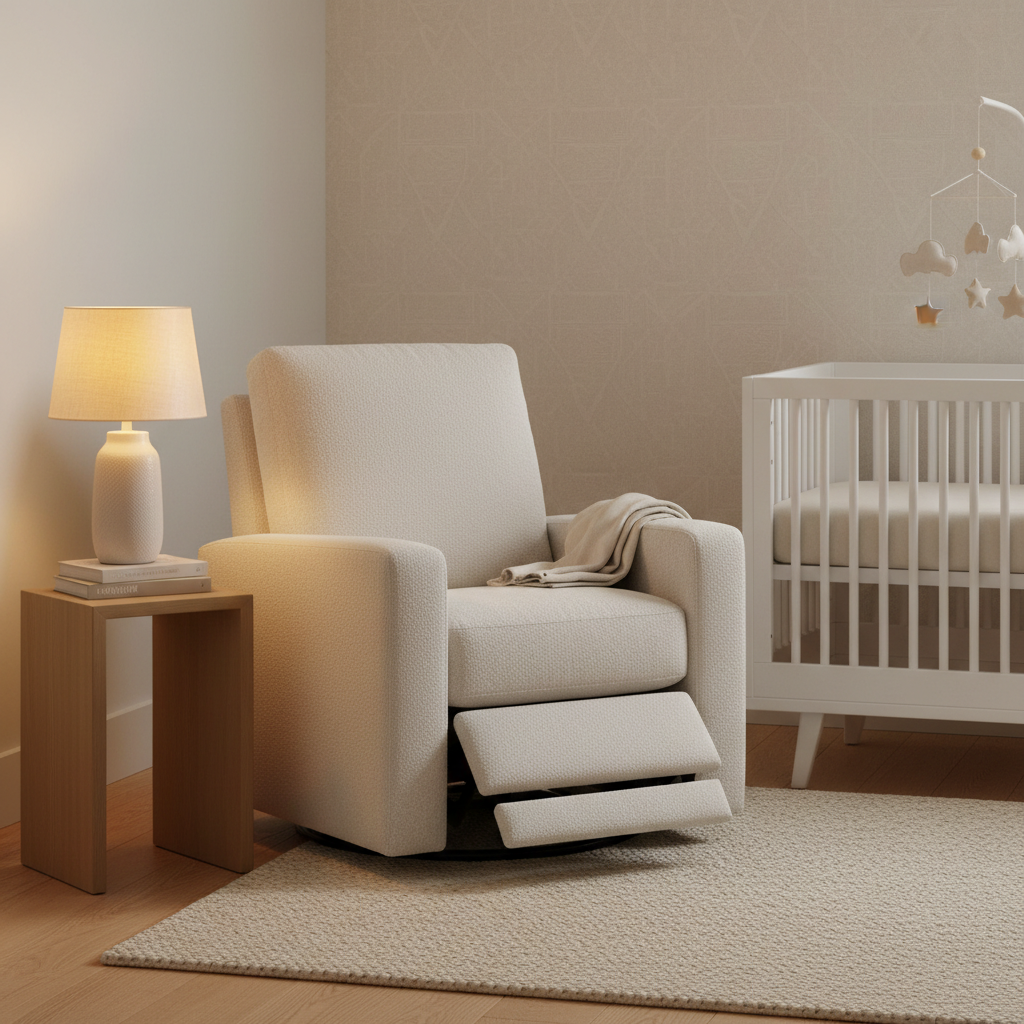
- by FangRussell
Best Nursery Rocking Chairs and Gliders: How to Choose a Glider, Rocker, or Recliner
- by FangRussell
If you are comparing nursery rocking chairs and gliders, you are probably not shopping for "just a chair." You are shopping for the place where 2 a.m. feeds, early-morning cuddles, cluster-feeding marathons, and a surprising amount of your own recovery will happen. The best nursery chair is the one that still feels supportive when you are tired, holding a baby with one arm, and trying not to wake anyone while you stand up.
That is why the real decision is not simply rocker or glider. It is whether you need a classic nursery rocking chair, a smooth glider, or a glider recliner that gives you the most flexibility for feeding, soothing, and short rests while staying awake. At Mamazing, we think the smartest choice is the one that matches your room size, your feeding routine, and how you naturally like to sit when you are exhausted.
If you want the quick answer, start here: choose a nursery glider if you want quiet, low-effort motion; choose a rocking chair for the nursery if you love the traditional swing and simpler silhouette; and choose a nursery glider recliner if you want the most all-around support for feeding, soothing, and putting your feet up after a long day.
Search data for this page points to a very clear intent: people are not only looking for nursery rocking chairs and gliders, they are looking for the best nursery glider, the best nursery glider recliner, and the best nursery rocking chair. In other words, they want a buying decision, not a vague overview. So before you fall in love with upholstery swatches, decide what kind of motion and support you actually want.
| Chair type | Best for | Main advantage | Main trade-off |
|---|---|---|---|
| Rocking chair | Parents who like a classic, deeper rocking motion | Timeless look and simple mechanism | Needs swing clearance and can feel less planted when standing up |
| Nursery glider | Frequent feeding, soothing, and shared nursery use | Smoother, quieter, lower-effort motion | Often larger and more upholstered than a simple rocker |
| Glider recliner | Parents who want one chair to do almost everything | Motion plus feet-up support and easier lounging | Needs more room and usually costs more |
| Swivel glider recliner | Rooms where you move between crib, side table, and window | Most flexible for positioning and daily use | Heavier visual footprint and more moving parts |
A gentle rocking motion can feel genuinely calming for adults and babies alike. Research indexed by PubMed on rhythmic rocking during naps found that rocking can support sleep onset and sleep-related brain activity in adults. That does not mean a nursery chair is a sleep surface for babies, but it does help explain why many parents find gliding or rocking easier for settling down during feeds and wind-down routines.
My practical rule is simple: if you are choosing between a rocker and a glider for the nursery, think less about trend language and more about friction. If you have to push hard to keep the chair moving, twist to reach a burp cloth, or brace awkwardly when you stand, you will feel that friction several times every day.

The best nursery glider recliner is not the one with the longest feature list. It is the one that supports the positions you actually use. For most families, that means three things: good arm support, quiet motion, and an exit that does not feel like a workout when you are holding a sleeping baby.
Feeding comfort is not a luxury feature. It changes whether your shoulders stay relaxed or creep up toward your ears. The Mayo Clinic breastfeeding positions guide specifically notes how armrests and pillows can help support your body so you do not lean forward through a feed. That matters whether you breastfeed, bottle-feed, or pump. A chair with arms that are too low forces you to hold the baby higher; arms that are too wide can make your elbows flare and your wrists work harder than they should.
A good nursing chair should let you sit back, keep your feet grounded, and bring the baby toward you instead of rounding your back toward the baby. That sounds minor in the store. It feels major in week three.
One reason the best nursery glider queries are so strong is that gliders solve a real pain point: they usually feel smoother and quieter than a traditional rocker. If your baby startles easily, a harsh push, squeak, or snap-back becomes more annoying than you expect. This is also why many parents choose a power nursery recliner over a manual one. The point is not gadget appeal. The point is that quiet adjustments are easier to live with when the room is dark and the baby is almost asleep.
The best nursery rocking chair is rarely the softest one on first sit. You want a supportive back, a seat depth that lets you plant your feet, and cushioning that does not collapse after a few weeks of use. If you tend to sit cross-legged, tuck one leg under, or change positions often, test whether the seat still feels stable when you move around. A chair that only feels good in one showroom pose is not the same as a chair that works for real life.
Performance upholstery is not just a premium add-on. Spit-up, lotion, milk drips, and snack crumbs all show up eventually. If low-emission materials matter to you, look for labels you can actually verify. UL GREENGUARD Gold certification is widely used to identify products tested for low chemical emissions, and OEKO-TEX STANDARD 100 applies to textiles tested for harmful substances. Neither label automatically makes a chair perfect, but both are useful filters if you want a cleaner shortlist.

You do not need the same chair as every other parent. A better question is: what will this chair do most often in your house?
If feeding is the priority, a glider or swivel glider recliner usually beats a basic rocker. You get more consistent motion, easier one-handed movement, and a more planted feeling when you adjust. The NHS breastfeeding positions guide recommends getting comfortable in a chair with support and using cushions or pillows so you do not hunch forward. That advice maps directly to chair buying: supportive arms, a tall back, and enough seat width for a feeding pillow matter more than a trendy shape.
If you already know you lean into long feeds, cluster-feeding windows, or pumping sessions, prioritize a nursery glider recliner. It gives you more position options without forcing you to leave the chair the moment your lower back gets tired.
The best nursery chair for small spaces is usually not the smallest chair in the showroom. It is the smallest chair that still supports your whole back and lets you get in and out cleanly. Slim arms help. A compact glider base helps. A wall-hugging recline or a chair that needs less rear clearance helps even more.
Measure three things before you buy:
A chair can fit the room on paper and still make the room feel frustrating. If you have a very compact nursery, a clean-lined glider often beats a bulky overstuffed recliner because it keeps the room functional during daylight hours too.
Budget matters, but the cheapest chair is not always the best value. If you are deciding between a lower-cost rocker and a slightly pricier glider, think about how many times a day you will use it. A simple rocker can be a smart choice if you mainly want occasional soothing and a lighter look. But if you expect the chair to be your main feeding station, it is often worth paying for better arm support, quieter motion, and easier cleaning.
The affordable sweet spot is usually a chair that gets the fundamentals right: stable frame, supportive back, wipeable upholstery, and motion that feels smooth instead of squeaky. Fancy extras matter less than everyday comfort.
If you know you recover best with your legs up, or you want a chair that can cover feeding and occasional upright lounging, a nursery recliner earns its footprint. This is especially true if you are planning around C-section recovery or just want easier repositioning after delivery. The Mayo Clinic's C-section recovery guidance highlights positions that reduce pressure around the incision area during feeding. A supportive recliner can help you avoid awkward twisting and make it easier to settle into a comfortable posture.
That said, bigger is not automatically better. If the recliner only works when fully opened into the center of the room, it may feel less practical than a compact glider you can use effortlessly every day.
The simplest way to choose the best nursery rocking chair or glider is to match the chair to your most common moment, not your idealized one.

Choose the chair that keeps your posture easiest to repeat. That usually means upright back support, useful arm height, and enough seat room to add a feeding pillow without crowding you.
Choose the smoother motion path. For many families, that means a nursery glider instead of a traditional rocker. The motion feels more controlled, and the chair usually stays visually calmer in the room too.
Choose the silhouette you would happily place in a bedroom or reading corner later. This is one reason neutral upholstery, clean lines, and a less nursery-specific look often make sense. A good chair should not feel disposable once the crib is gone.
Use this checklist before you buy:

For some families, no. If you feed mostly on the sofa, have a tiny room, and do not expect to spend much time in the nursery, a dedicated nursery chair may not be essential. But for many parents, it becomes one of the most heavily used items in the room because it solves the exact combination of tasks that happen over and over: feed, burp, soothe, settle, repeat.
That is why the strongest purchase logic is not about decor. It is about lowering daily friction. A good nursery glider recliner can reduce how much you brace yourself, re-stack pillows, or abandon the room for a more comfortable chair elsewhere. When a chair makes it easier to stay calm, stay supported, and keep your routine contained in one place, it tends to earn its keep fast.
The only important caveat is safe sleep. However soothing the motion feels, a nursery chair is not where your baby should stay asleep. The American Academy of Pediatrics advises that if your baby falls asleep during a feed, you should move them to a firm, flat sleep surface as soon as possible, and it specifically warns against falling asleep with your baby on a couch or armchair. You can read that guidance in Safe Sleep Tips for Sleep-Deprived Parents and How to Keep Your Sleeping Baby Safe.
If you are building out your shortlist, start with the Mamazing nursing chair collection for a direct look at gliders, recliners, and nursery-friendly silhouettes. If you are still deciding what separates a good chair from a great one, our guide to the best rocking chairs for nursery goes deeper on comfort features, and our article on whether rocking chairs really help babies sleep adds more context on soothing routines.
My advice is to make your final choice based on the problem you most want the chair to solve. If you want the most balanced all-purpose option, a glider recliner usually wins. If you want a lighter, cleaner look and a smaller footprint, a compact glider is often the best nursery chair for everyday use. If you want classic charm and do not mind the arc motion, a traditional rocking chair can still be a very good buy.
And if you are close to your due date, do not leave this purchase too late. A nursery chair is one of the few pieces of furniture you can use before the baby arrives, during recovery, and long after the nursery stage ends. Choose the one that makes tired hours easier, not just the one that looks best in a staged photo.
A glider is usually better if you want smoother motion, quieter operation, and easier use during long feeding sessions. A rocking chair is better if you prefer a classic arc motion, a lighter visual footprint, and a simpler design. If you want one chair to handle feeding, soothing, and occasional feet-up rest, a glider recliner is often the most versatile choice.
A nursery recliner is worth it if you expect to spend long stretches feeding, pumping, or contact napping with your baby on your chest while you stay awake. Reclining support can reduce pressure on your lower back and legs, and a power recliner is especially helpful when you want to change positions quietly without a hard push or sudden snap-back.
The best nursery chair for a small space is usually a compact glider or swivel glider with a tight footprint, slim arms, and full back support. Measure width, depth, and recline clearance before you buy, and check whether the chair still feels easy to enter and exit when a side table, crib, or dresser is nearby.
Look for supportive arm height, a tall back, firm but comfortable seat cushioning, smooth motion, easy-clean upholstery, and a stable base. If you will use the chair several times a night, also prioritize a quiet mechanism, simple one-handed adjustments, and enough room to add a feeding pillow without forcing your shoulders upward.
A baby should not routinely sleep in a glider or rocking chair. The American Academy of Pediatrics recommends moving a baby to a firm, flat sleep surface as soon as possible if they fall asleep during a feed or soothing session. Use the chair for comforting and feeding, then transfer your baby to a crib, bassinet, or play yard that meets safe-sleep guidance.



Best Toddler Travel Stroller for Airplane Trips: What to Look For Before You Fly
Is a Recliner Necessary for Nursery? Who Needs One, Alternatives, and How to Choose