
- by FangRussell
Do I Need a Double Stroller? Honest Guide for a 2-Year-Old, 3-Year-Old, and Newborn
- by FangRussell
If you are asking, "Do I need a double stroller?" the honest answer is: sometimes, but not always. A double stroller is usually worth it for twins, two under two, or families who regularly need two contained seats on long outings. It is often unnecessary if your older child walks well, your trips are short, or you need a lighter setup for travel, a small car, or apartment living.
The real question is not whether you have two kids. It is whether you need both children riding at the same time, how often one adult handles both children alone, and whether your older child still naps or tires out halfway through the day.
For many families, the answer falls into one of three buckets.
| Most likely yes | Maybe | Probably not |
|---|---|---|
| Twins or two under two | Newborn and a 2-year-old | Newborn and an independent 3-year-old or older |
| Daily long walks or school runs with one adult | Toddler walks sometimes but still naps in the stroller | Mostly short errands and car trips |
| Older child needs strong containment in crowds | You alternate between neighborhood walks and travel days | Limited storage space, small trunk, or frequent flights |
If you sit in the middle column, you may not need a full-time double stroller. A single stroller, baby carrier, or occasional second stroller can be the more practical setup.
Those five questions usually tell you more than any stroller trend or social media recommendation.

Usually, maybe. This is the age gap where parents most often debate it for good reason. A 2-year-old may be able to walk for part of an outing, but many still get tired quickly, need a nap seat, or want the security of being strapped in when the day gets long.
A double stroller is often helpful if you do long walks, solo outings, daycare pickup, amusement parks, or full mornings out of the house. If your 2-year-old likes walking, you mostly run quick errands, or you are comfortable babywearing, you may do just fine with a single stroller and a carrier.
Usually not. For many families, a 3-year-old can walk, hold hands, hop on and off curbs, and ride only when truly tired. That means the second seat often goes unused more quickly than parents expect.
You may still want a double stroller if your 3-year-old naps daily in the stroller, you walk long distances every day, or you need strong containment for a runner in crowded areas. Otherwise, a lightweight single stroller setup is often the better long-term choice.
This is the clearest yes. If both children need a seat every time you leave the house, a double stroller is usually the easiest and safest option. That is especially true for twins, two under two, or siblings with overlapping nap needs.
In that scenario, the bulk and extra weight are often worth the tradeoff because you are getting consistent daily use out of both seats.
Double strollers are worth it when you will use the second seat often enough to justify the extra cost, weight, and storage space. They are less worth it when the second seat solves a problem only once in a while.
| Factor | More worth it when | Less worth it when |
|---|---|---|
| Age gap | Twins, two under two, or a newborn plus a younger toddler | Newborn plus an older 3-year-old or 4-year-old |
| Use frequency | Daily walks, school runs, or all-day outings | Mostly short errands and occasional weekend use |
| Storage | You have room at home and in the trunk | You live small or already struggle with stroller storage |
| Travel | You rarely fly and mostly stay local | You travel often and want a lighter, easier fold |
In plain language: if your older child will still ride almost every day for the next year or more, a double stroller can be a smart buy. If the second seat will mostly sit empty, it is usually not worth it.
If one adult usually takes both kids out alone, a double stroller is usually easier than trying to juggle two separate strollers. If two adults are often present, or you want more flexibility for travel and different outings, two strollers can make more sense.
| Setup | Best for | Main advantage | Main drawback |
|---|---|---|---|
| Double stroller | One adult with two young riders | Both children contained in one push | Bulky, heavy, harder to store |
| Two separate strollers | Two-adult outings and flexible routines | Each child gets their own setup | Not practical when one parent is solo |
| Single stroller plus carrier | Newborn and toddler on short outings | Lighter and simpler | Can get tiring if worn for long stretches |
| Single stroller plus walking older child | Newborn and independent preschooler | Most compact and travel-friendly | Depends on your older child cooperating |
If you are searching for a double buggy or double pram for a newborn and toddler, the same logic applies: the more often you need two seats at once, the more useful the double setup becomes.
A single stroller often wins when your priority is flexibility. That is especially true if you need newborn support, easier storage, or something that is less stressful to lift in and out of the car. If you are comparing bassinet options, this guide to a newborn-ready bassinet stroller is a helpful next read.

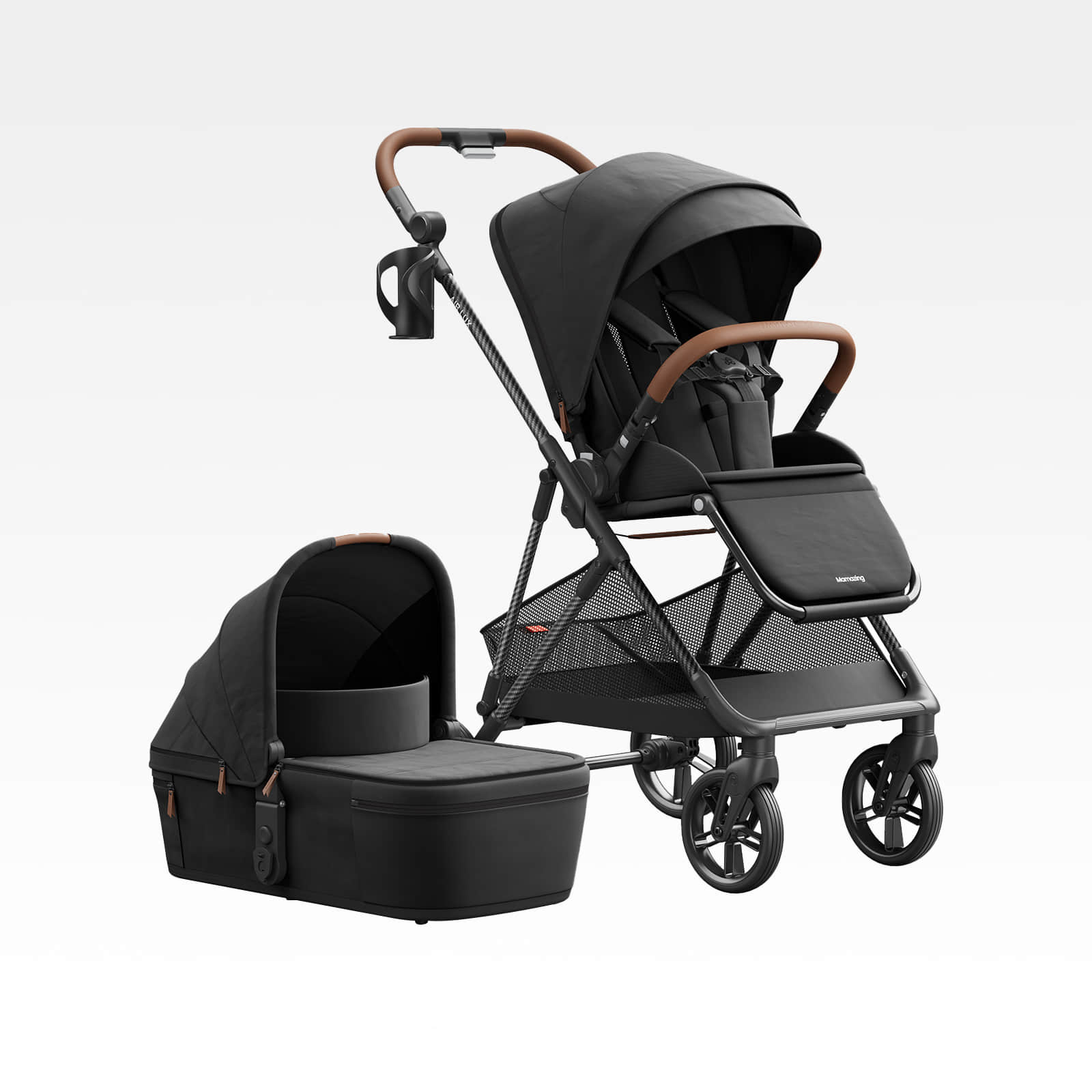
If your answer is "probably not" or "only sometimes," the more practical purchase is often a stroller that covers the newborn stage well and still works comfortably into toddlerhood. That is where the Mamazing Air Lux bassinet stroller can make sense as a simpler alternative to a full double setup.
The Air Lux is designed for families who want newborn support without committing to the bulk of a second seat. Based on the current Mamazing article and product positioning, the key advantages are:
If that sounds closer to your real life, you can also see the product details for the Mamazing Air Lux Bassinet Stroller. For many families, one well-chosen stroller plus a carrier or walking older child is a better fit than owning a second, heavier stroller they rarely use.
A double stroller is necessary for some families, but not for all. It is most useful when both children truly need a seat at the same time on most outings. It is less necessary when your older child is already more independent, your routines are short, or your home and travel setup reward lighter gear.
If you have a newborn and a 2-year-old, the answer is often "maybe, depending on your routine." If you have a newborn and a 3-year-old, the answer is usually "probably not." If you have twins or two under two, the answer is usually "yes." That is the simplest way to think about it.
Maybe. It is often helpful if your 2-year-old still naps, gets tired quickly, or you do long outings alone. If your toddler walks well and your trips are short, a single stroller plus carrier is often enough.
Usually no. Many 3-year-olds can walk for most outings, so the second seat may not get enough use to justify the extra bulk unless your child still naps often or you walk long distances every day.
Yes, if you regularly need two seats at once. No, if the second seat will only be used occasionally. The more often both children ride together, the more a double stroller earns its place.
Not always. Two strollers can work well when two adults are often together, but a double stroller is usually simpler for one adult managing both kids. Many families also do well with one stroller plus a baby carrier.
Choose the double stroller if both children need to ride often and one adult usually takes them out alone. Choose the single stroller and carrier if the newborn needs the seat most, the older child can walk part of the time, and you want a lighter setup.
Many toddlers start needing it less around age 3 to 4, though this depends on stamina, nap habits, and how much walking your family does.
Only when it solves a daily problem. If you need two contained seats on most outings, yes. If your older child mostly walks or your trips are brief, it is often not necessary.
Sometimes. If your toddler is still a frequent rider, it can be worth it. If your toddler is already fairly independent, a compact newborn-ready stroller is often the more practical choice.



When Can Baby Sit in a Stroller? Age, Readiness, and How Long Is Safe
Best Breastfeeding Chair: Comfort, Support & Smart Nursery Picks