
- by FangRussell
Car Seat on Stroller: How to Safely Use a Travel System and Check Compatibility
- by FangRussell
If you want the short answer first, yes: you can put a car seat on a stroller when the stroller is designed to accept it and the car seat is approved for that setup. That combination is usually called a travel system. It can be very convenient for short transfers, especially when your baby falls asleep in the car and you need to move quickly without waking them.
But convenience is only part of the story. A car seat on a stroller is not automatically safe just because the parts seem to fit, and it is not the best setup for every outing. Compatibility, correct attachment, harness use, and time in the seat all matter. The safest version of this setup is one that is used correctly, for the right situations, and for the right amount of time.
This guide focuses on exactly that: when parents use a car seat on a stroller, how to attach it safely, how to check compatibility, when bassinet mode makes more sense, and which common mistakes can make the setup less safe than it looks.
A travel system usually means a stroller and infant car seat combination that lets you move the car seat from the vehicle to the stroller frame without taking your baby out of the seat. For many parents, that is the appeal: fewer transitions, less disruption, and an easier way to handle errands, appointment stops, or quick transfers.
This setup is especially common in the newborn months because infant car seats are designed for smaller babies who cannot yet use an upright stroller seat. The stroller frame or attachment system supports the car seat so the whole setup can roll together as one unit.
If you want more context around systems that combine stroller, bassinet, and car-seat use, Mamazing’s stroller with bassinet and car seat guide is a natural next read.

Parents usually use this setup because it reduces friction. If a baby is asleep in the car, lifting the infant seat onto the stroller can be easier than unbuckling them, carrying them, and settling them into another surface for a ten-minute stop. That is why this query cluster performs so well around errands, appointments, and travel.
The setup tends to work best for:
The important limit is that “convenient” does not mean “best for every outing.” A car seat on a stroller is usually a short-trip tool, not the ideal default for long daily strolls.
If travel use is a big part of why you are searching this topic, Mamazing’s compact travel stroller guide can help you think through the broader travel setup too.
This is where many parents get tripped up. Not every stroller accepts a car seat, and not every car seat works with every stroller. Even within the same brand family, compatibility may depend on a specific adapter, release mechanism, or approved model list.
The safest rule is simple: if the stroller manufacturer and the car-seat manufacturer do not approve that pairing, do not assume it is safe because it seems to click in. NHTSA emphasizes choosing the right seat for your child, using it correctly every time, and following manufacturer instructions closely. You can review that guidance on NHTSA’s car-seat guidance page.
Compatibility usually falls into three buckets:
A simple parent-friendly checklist helps here. Look for the stroller model name, the exact car-seat model name, the adapter part number if one is required, and any notes about direction, recline, or weight limits. If even one of those details is unclear, pause and verify before using the setup outside the house. The safest time to discover a mismatch is in your living room, not in a parking lot with a tired baby.
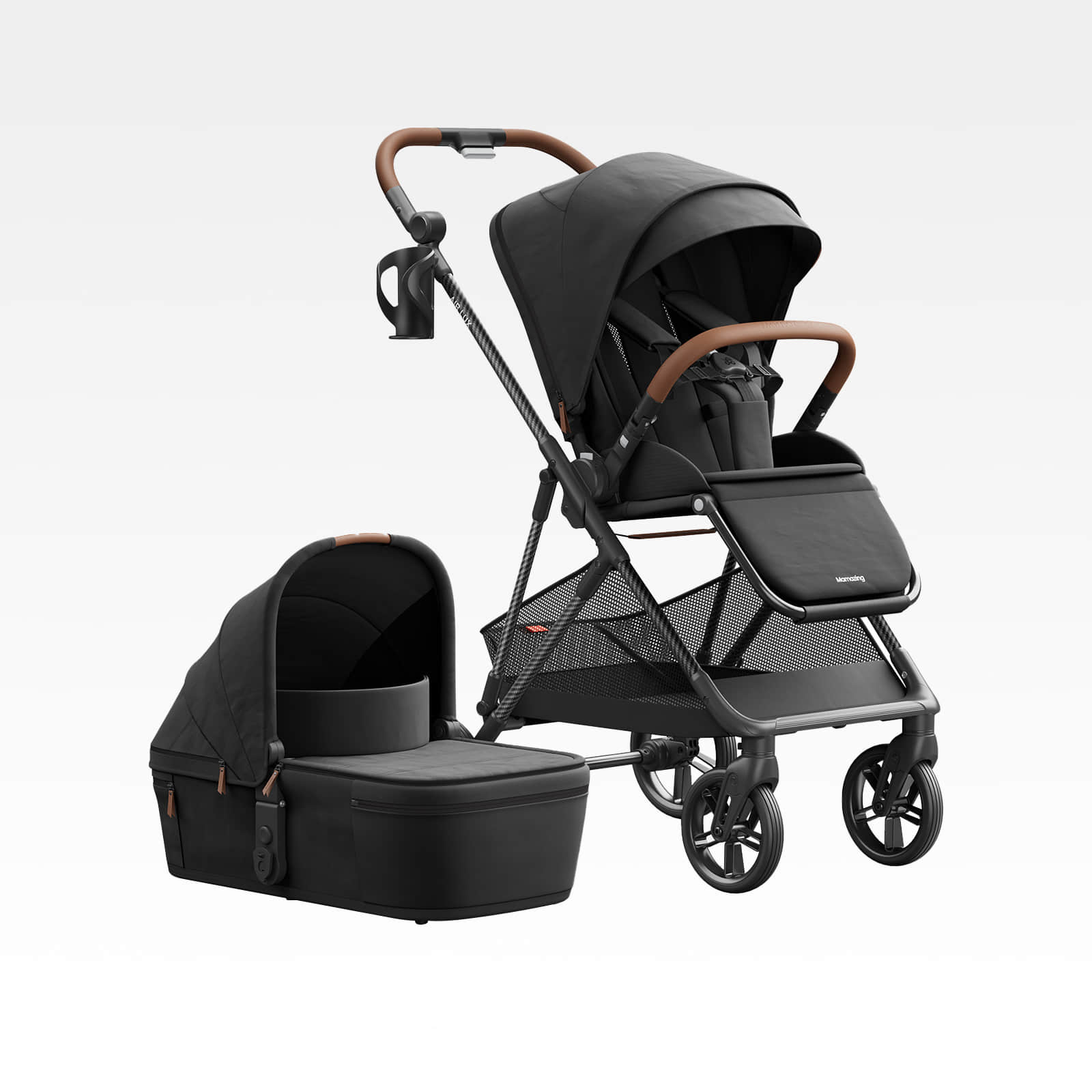
That is also where the Mamazing Air Lux needs clear wording. It does not include a car seat, and it is not universal. It is adapted to fit certain car seats when the correct compatibility path is followed. That makes it an example of the rule, not an exception to it.

If the pairing is approved, the next question is procedural: how do you attach it correctly? The safest setup is not just “clicked on.” It is checked, stable, and used with the child fully harnessed.
The “use it correctly every time” idea matters here. A setup that is compatible in theory can still be unsafe in practice if it is loosely attached, rushed, or used with the harness skipped.
It also helps to build a tiny routine around attachment. Once the seat is locked in, check both sides with your hands, confirm the handle is in the manufacturer-approved position if the manual specifies one, and make sure blankets or rain covers are not interfering with the connection points. Those few extra seconds are what turn a “probably fine” setup into one you have actually verified.
For first-time parents, the easiest way to reduce stress is to practice the sequence before you need it in real life. Install the adapter, attach and remove the seat a few times, fold and reopen the stroller, and learn what a secure lock sounds and feels like. Familiarity matters because most mistakes happen when parents are rushed, distracted, or trying the setup for the first time away from home.
The article should answer the main safety concerns directly, because that is one of the clearest high-impression support clusters in GSC. If you only remember a few rules, make them these:
HealthyChildren’s stroller safety guidance specifically warns against hanging bags or other items from stroller handles because they can make the stroller tip backward, and it also emphasizes using a five-point harness whenever your child rides in a stroller. That guidance appears in HealthyChildren’s stroller safety page.
That means the “I’ll just set the diaper bag up here for one minute” shortcut is not a harmless habit. The safest place for extra gear is the stroller basket or another manufacturer-approved storage spot, not the handlebar.
Another practical rule is to treat curbs, ramps, and uneven sidewalks differently when the car seat is attached. A travel-system setup can feel taller and more top-heavy than a regular stroller seat, so it is worth slowing down over bumps, keeping one hand steady on the frame, and avoiding abrupt one-handed turns while holding coffee, phones, or shopping bags. None of that is dramatic advice, but it reflects how most real-world tip or wobble moments happen.
One of the most helpful distinctions for parents is understanding that a car seat on a stroller and a bassinet-style stroller setup solve different problems. A car seat is often best for short, practical transfers. A flatter bassinet-style option is usually the more comfortable choice for longer stroller outings when the baby is still very young.
HealthyChildren notes that while travel systems are convenient, babies should not spend too much time in car seats outside the car, and a sleeping baby should be moved to a safe sleep space when you reach your destination. That guidance appears in HealthyChildren’s rear-facing-only car seat safety article.
| Feature | Car Seat | Bassinet Mode |
|---|---|---|
| Best use | Short transfers and errands | Longer stroller outings |
| Position | Semi-upright infant seat angle | Flatter stroller setup |
| Main advantage | No transfer needed | More relaxed outing posture |
| Not for | Long non-travel sitting time | Overnight unsupervised sleep |
This is where combo guides like Mamazing’s stroller bassinet car seat combo guide can be helpful, because the choice is not just about what fits—it is about what fits the outing.
A useful rule of thumb is to choose the mode based on the purpose of the trip. If the outing is mainly transportation from point A to point B, the car seat on stroller setup usually wins for efficiency. If the outing is mainly a walk, fresh air break, or longer time outdoors, a flatter bassinet-style mode often makes more sense. Thinking in terms of trip type keeps the decision practical instead of making one mode carry every job.
Parents usually stop relying on the car-seat-on-stroller setup when one of three things happens: the baby outgrows the car seat’s size limits, the baby is ready for the stroller seat or other mode, or the family’s outings become long enough that the transfer convenience matters less than the comfort of another stroller configuration.

That means this setup is temporary by design. It is great at one job, but it is not meant to carry the whole stroller journey for the entire first year.
As babies develop stronger head and trunk control and start benefiting more from the stroller seat or other mode, the travel-system phase naturally becomes less central. The right transition point depends on your child’s development and the product’s guidance, not just age alone.
Many parents notice the shift before they can name it. The baby seems more interested in looking around, the car seat feels heavier every week, or the family starts spending more time walking than driving. Those are not strict safety milestones by themselves, but they are useful clues that the convenience advantage may be fading and another stroller mode may now be the better everyday choice.
The fastest way to make a travel-system setup less safe is to treat it as interchangeable with any stroller or any short-cut routine. The most common mistakes are predictable:
The pattern behind all of them is the same: the parent knows the setup is supposed to be temporary and safe, but daily convenience slowly turns the rule into a shortcut. The safest habit is to keep returning to the manufacturer instructions and the idea that this is a specific-use setup, not a catch-all one.
It is also smart to watch for creeping workarounds. If you find yourself balancing bags on the handle because the basket is full, leaving the baby in the seat because moving them feels like too much trouble, or mixing parts from different systems because they “almost fit,” that is usually the signal to reset your routine rather than forcing the setup to do more than it should.
If you want a broader stroller-safety follow-up, Mamazing’s stroller safety features guide is the best internal continuation from this section.
No. Only use a car seat if the stroller and car-seat manufacturers approve that pairing, either directly or through the correct adapter.
It can be safe for short trips when the setup is approved and used correctly. For longer outings, many parents move to a flatter stroller mode such as a bassinet instead of keeping the baby in the car seat outside travel use for too long.
Check the stroller’s manual, compatibility list, and adapter instructions. If the pairing is not listed as approved, do not assume it is safe just because it appears to fit.
Think of it as a short-use travel tool rather than an all-day seating system. The safest approach is to keep non-travel car-seat time limited and move the baby to a more appropriate stroller mode or safe sleep space when the trip is over.
That depends on your baby’s development and the stroller’s instructions, especially head and trunk control. Many babies transition once they can handle the stroller’s supported seat safely and comfortably, but the product guidance should lead the decision.
Yes, for many longer outings it can. A bassinet-style setup is often the better match when the goal is a walk or extended stroller time rather than a quick transfer from the car.
If you are staying somewhere for a while, that is usually the better plan. Travel-system convenience is most useful during the transfer itself, but once the destination is reached, many families move to a bassinet, stroller seat, or another appropriate safe resting place instead of treating the car seat like a general-purpose lounge spot.
A car seat on a stroller can be one of the most practical newborn travel tools you own, but only when it is used for the right situations and with the right safety habits. Parents usually get the most value from it on short transfers, appointments, and quick errands—not as a replacement for every other stroller mode.
If you keep the setup compatible, the harness snug, the travel-system use short, and the transition rules clear, it can make the early months much smoother. And if you are still comparing full-system options, the best next step is to look at how stroller, bassinet, and car-seat modes work together rather than treating them as separate purchases that will somehow sort themselves out later.
Featured Products


White Rocking Chair Guide: Styles, Uses & Buying Tips
Cheap Baby Strollers: What to Look For in a Safe, Affordable Stroller for Daily Use and Travel