
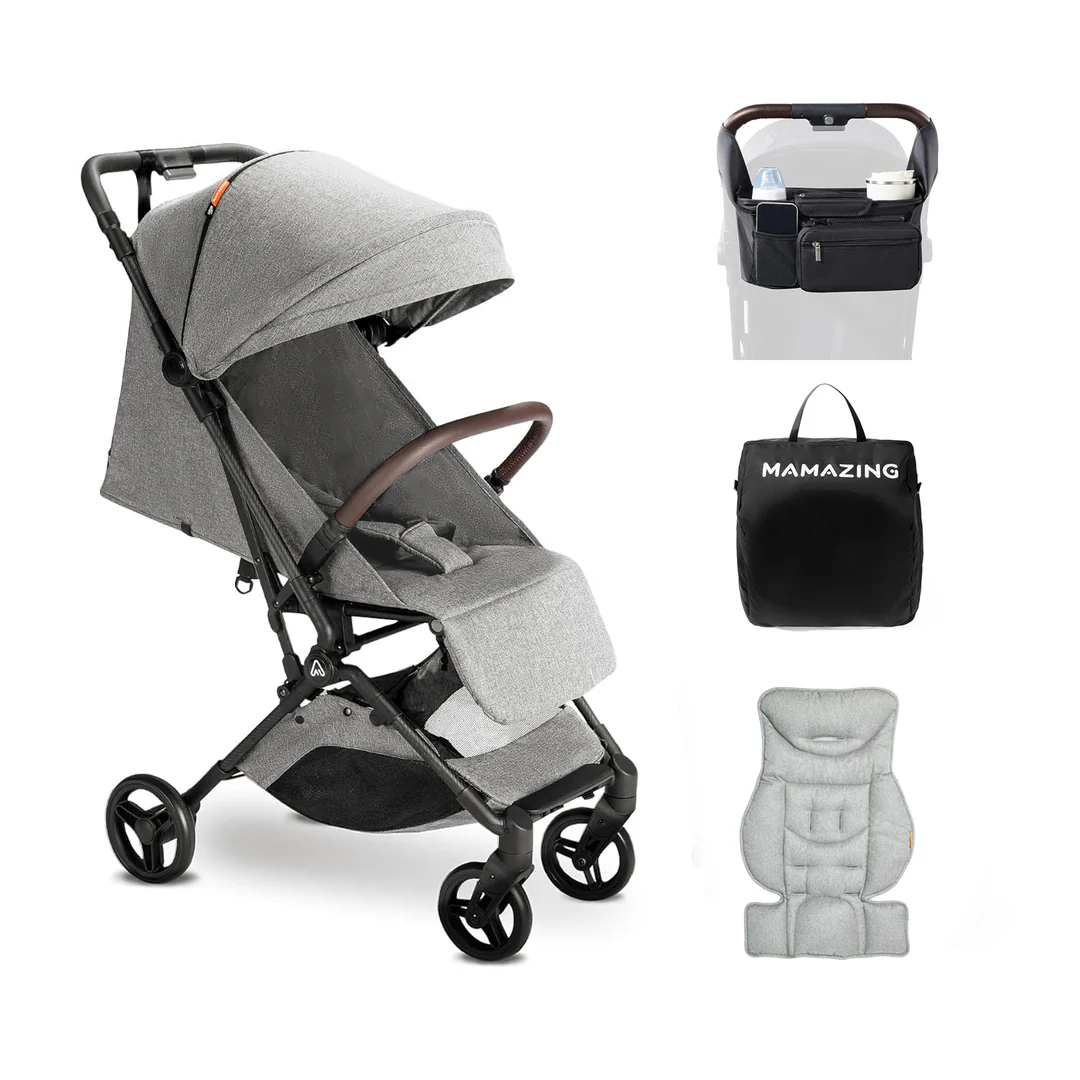
- by Mamazing Team
How to Get Mold Out of a Stroller: Safe Steps That Actually Work
- by Mamazing Team
Right. So you pulled the stroller out of wherever you store it, and there it is. Something fuzzy and either white or greenish across the canopy, maybe down the seat seams. First reaction: mild panic. Totally normal.
Here's what I want to say before anything else — this is fixable. Probably. Most mold on a stroller is surface mold, and surface mold responds well to things that are already in your kitchen cupboard. The mistake most parents make isn't missing some magical cleaning product. It's reaching for bleach, or the dryer, or both — and making the whole situation worse. So let's actually go through this. Not the generic version. The real version, with the mistakes included.

Mold needs two things: moisture and something organic to eat. A stroller has both in constant supply. Fabric fibres, foam padding, spilled juice from last week that soaked in quietly, crumbs from approximately four hundred snack sessions. Not unusual. Just reality. The situations that cause most of the actual mold problems — there are, I want to say, four main ones:
|
🌧️ Moisture Exposure Rainy walk, stroller folded while still damp, trunk. That sealed fold gets warm and humid fast — mold can kick off in under 48 hours in summer. Happened to a neighbour's stroller after one school run in November. |
🏚️ Damp Storage Spots Basement, detached garage, covered porch. Even a 'dry' stroller slowly soaks up moisture from the air over a few weeks. Most parents don't clock it until they pull it out months later and find white patches everywhere. |
|
🧃 Unnoticed Spills A sippy cup tipped sideways unnoticed. The formula that soaked into the seat seam. Organic liquid sitting in fabric that never fully dried — that's just an open invitation, honestly. |
📦 Long Storage Gaps Putting a stroller away between babies without thoroughly drying it first. Three months later, canopy covered in mold. It's more common than it should be. |

Good news: most of this is already in your kitchen. One strong recommendation — don't buy anything that markets itself as a powerful mold killer without specifically stating it's safe for baby gear. Harsh chemical mold removers can degrade the plastic in stroller frames and leave residue on the fabric surfaces your child sits against. Neither of those is acceptable.
|
Supply |
Why It Works |
Notes |
|
White distilled vinegar |
Natural antifungal — kills approx. 82% of mold species |
1:1 with water for fabric; use straight on hard surfaces |
|
Baking soda |
Gentle abrasive; deals with that musty smell |
Paste for bad stains, or throw some into the wash |
|
Hydrogen peroxide (3%) |
Good on stubborn spots on light-coloured fabric |
Test a hidden area first — it can bleach certain colours |
|
Mild dish soap |
Safe on plastic and metal parts |
Dawn works. Nothing antibacterial or fragranced. |
|
Old toothbrush |
Reaches joints, buckles, seam channels |
Label it. Don't put it back in the bathroom. |
|
Spray bottle + gloves |
Controlled application, protects hands |
Work outside or with windows fully open — not cracked |
|
⚠ BEFORE YOU START Do this outside. Disturbing mold sends spores into the air around you — you do not want that happening inside your home anywhere near where your baby sleeps or eats. Keep children out of the area. Gloves are worth it even if the patch looks minor. |

Go through these in order. Seriously. Skipping steps — especially the drying step — is precisely how the mold comes back in two weeks and you're doing the whole thing again.
|
STEP 1 Move It Outside First Not optional, and not 'outside-adjacent.' The moment you start scrubbing, you release spores into the air. Do this outside, or right next to a fully open door or window — not cracked, actually open.A dry, warm day helps too. You want conditions that let the stroller start drying the minute you're done. Don't start this on a rainy afternoon. |
|
STEP 2 Strip Off All the Removable Fabric Seat cover, canopy, cargo basket liner — everything that detaches, detach it. Check your owner's manual if you're unsure. Most decent strollers are designed with this in mind. Machine wash on the hottest setting the care label will tolerate. Add a cup of white vinegar to the rinse cycle — catches spores that hot water alone misses. Strollers with removable washable fabric, like those in the Mamazing stroller collection, make this considerably less annoying.Air dry only. Flat on a surface, or hung somewhere with actual airflow. Never in the clothes dryer — the fabric shrinks and warps around the frame and you won't get it back on properly. |
|
STEP 3 Treat Stubborn Stains on the Fabric If the machine wash didn't fully clear the stain — and sometimes it won't, especially with older mold — fill a spray bottle with equal parts white vinegar and water. Soak the area properly. Leave it an actual hour. Not ten minutes, not 'a while.' An hour.Then scrub with a soft brush. A toothbrush is genuinely the right tool here — works the solution into the fabric weave without tearing anything. Rinse with a damp cloth after. Actually — for lighter-coloured fabric where staining is still showing after vinegar, 3% hydrogen peroxide can help. Test a hidden corner first though, it does lighten certain dyes. The Removing mold from a stroller guide from Orbit Baby covers this in more detail if you want a second opinion on method. |
|
STEP 4 Scrub the Frame, Joints, and Buckles Mold doesn't politely stay in one place. It migrates into folding joints, under harness buckles, along the channel where the canopy connects. All of that needs attention — not just the obvious patches. Mild dish soap, warm water, toothbrush for the crevices. For stubborn residue on plastic parts, the 1:1 vinegar-water mix works here too. Wipe everything down with a damp cloth at the end. Don't leave vinegar sitting on metal hardware. |
|
STEP 5 Dry Everything. Actually Dry. This is the step people rush. And then they're confused when the mold comes back within the fortnight. Every seam, every fold, every strap — bone dry before reassembling or storing anything. Not 'mostly dry.' Not 'it'll finish off in the bag.' Direct sunlight is ideal — UV acts as a natural disinfectant and deals with residual spores. If weather isn't cooperating, fan pointed at the open frame and spread-out fabric. Give it hours. Not twenty minutes. |
|
STEP 6 Reassemble and Rethink Storage Once everything is actually dry, put the seat and canopy back on. But before you put it away — genuinely think about where it's going to live. If it's going back into the same damp garage it came from, this exact conversation is happening again in two months. A breathable stroller travel bag makes a real difference for long-term storage — keeps dust out while allowing air to circulate inside. The complete opposite of a sealed plastic bag, which traps condensation and recreates exactly the conditions mold needs. |

This section might actually be more useful than the steps above. Some of the most commonly suggested fixes in parenting forums — a lot of it dating back fifteen years and never updated — can genuinely damage the stroller or create safety issues for your child.
|
🚫 Don't Use Bleach Degrades the plastic frame over time. Leaves chemical residue on fabric surfaces where your baby sits. Vinegar gets the same result without any of that. |
🚫 Don't Use the Dryer Stroller fabric shrinks and warps around the frame. You often can't get it back on properly after. Air dry — sun if possible. |
|
🚫 Don't Submerge the Straps Safety harness webbing weakens when soaked. The stitching degrades over time. Wipe down with a damp cloth and that's where it ends. |
🚫 Don't Quit After One Round Old or heavy mold needs two passes. Put it away after one, you'll find mold again in a fortnight. Learned that the hard way. |
|
💡 WORTH KNOWING The CDC guidance on mold risks and health is worth reading if you're unsure how serious what you've found actually is. Black mold in particular can produce irritants that affect developing respiratory systems — it's not something to leave and hope dries out. |

Getting it out the first time takes real effort. Keeping it from coming back mostly just takes a couple of habits. None of this is complicated — it's consistency.
|
✓ |
Never fold a wet stroller. Rain or a bad spill — leave it fully open somewhere with actual airflow until everything is genuinely dry. A fan nearby makes this go much faster. |
|
✓ |
Wipe it down every couple of weeks. Five minutes. Dry cloth over the seat, under the canopy, inside the cargo basket. Catches crumbs and early moisture before it becomes an actual problem. |
|
✓ |
Store somewhere with climate control. Indoors beats a detached garage every time. If you're stuck with a damp space, moisture-absorbing packets and regular checks. |
|
✓ |
Use a breathable cover for long storage. Fabric cover, not plastic. Plastic traps condensation. A breathable fabric cover lets air through — that distinction matters more than people realise. |
|
✓ |
Deal with spills immediately. 'I'll sort it when we get home' is exactly how mold gets started. Warm weather, damp fabric, a few days of neglect. That's all it takes. |
|
📌 ONE MORE THING If mold has worked deep into the foam seat cushion or saturated the structural harness webbing, surface cleaning won't fix it. That's the point where you replace those parts rather than clean around the problem. Most manufacturers sell replacement textile sets. Call them. |
Rain is the number-one cause of stroller mold. If you get caught in a downpour, treat it as a maintenance moment when you get home. Not next weekend — when you get home. Wipe the frame down, pull out the seat liner if it's soaked, and leave the whole thing open somewhere ventilated before folding it away.
The Ultra Air Compact Stroller has a breathable mesh backrest that dries considerably faster than padded seats — genuinely relevant if you live somewhere with regular rain.
Removable, machine-washable textiles sound like a small feature until you're standing outside with a bottle of vinegar trying to scrub mold off a fixed seat cover at an awkward angle. Then it's a big feature.
The Air Lux Bassinet Stroller has a removable soft insert for exactly this reason — deep-cleaning the seat doesn't mean pulling apart the whole frame. Small design decision, real time saving in practice.
Does vinegar actually kill mold spores?Yes — white vinegar has acetic acid, which is genuinely antifungal. Studies put it at around 82% for common mold species. Not magic, but effective enough for surface mold on baby gear, and it doesn't leave harmful residue on fabric. Spray it, leave it a full hour (not ten minutes — an hour), scrub, rinse. The smell goes once it dries. |
Can you actually save a stroller that's gone moldy?Most of the time yes. If you caught it early and mold is still at the surface, natural cleaning works well. Where it gets complicated: mold deep in the foam seat or in the harness webbing. At that point you're better off replacing those parts. Some manufacturers sell replacement textile sets separately. |
Why do strollers get moldy in the first place?Moisture, mostly. Folding a wet stroller before it's properly dried is probably the most common cause — that sealed damp fold gets warm and dark and that's exactly where mold settles. Storing in a basement or a damp garage does the same thing more slowly. Unnoticed spills are another big one. |
How do I get mold out of stroller fabric specifically?If it's removable, machine wash on the hottest setting the care label allows. Add a cup of white vinegar to the rinse. Air dry in the sun — not the dryer. For fixed fabric that can't come off: spray a 1:1 vinegar-water mix directly on the mold, leave it an hour, scrub with a soft brush, rinse with a damp cloth. Sun-dry the whole thing after. |
What actually kills 100% of mold?Honestly? Nothing safe enough for baby gear guarantees 100% every time. What comes closest is a multi-step approach — vinegar first for active spores, baking soda to scrub and deodorise, then direct sunlight for the UV effect. If staining remains on light fabric after all that, try 3% hydrogen peroxide on a small hidden area first. |
Is black mold on a stroller actually dangerous for babies?It can be. Black mold produces mycotoxins that trigger respiratory irritation, allergic reactions, and skin problems. Babies are more vulnerable because their immune systems are still developing. Any visible black mold on baby gear should be dealt with thoroughly before the stroller gets used again. If you're not sure how deep it's gone, contact the manufacturer about replacement parts. |
Will the mold just go away if the stroller dries out?No — and this is a really common mistake. Drying the stroller stops active mold growth but the spores are still embedded in the fabric, just dormant. The moment moisture returns — a rainy walk, a humid storage space — they start up again. You need to actively clean and remove it, not just dry it. |
How do I clean mold out of the stroller canopy?Check if it's removable first — most canopies are. Machine wash it warm with white vinegar in the rinse cycle and air dry in the sun. If it's fixed, use a vinegar-water spray and work it into the seams and fold lines with a soft brush, since that's where mold concentrates. Leave the whole stroller open in direct sunlight for several hours after. Repeat if staining remains. |
How often should I deep clean my stroller to prevent mold?Once a month is the general guidance, more often if you use it daily or live somewhere humid. After any rainy outing, wipe down the fabric and check the cargo basket and seat seams before folding for storage. Quick regular maintenance is genuinely far less work than dealing with a full outbreak later. |
Can I use a garden hose to rinse the stroller?For the frame, yes — some parents do this and it's fine. The issue is making sure everything dries completely before storage. Avoid high-pressure washers on the fabric parts since forcing water into the padding at pressure makes the drying problem worse. Rinse after cleaning, then leave the stroller fully open in the sun. |
Sources
1. How to Remove Mold from a Stroller — Orbit Baby Blog (October 2023)
2. How to Clean a Stroller — GoodBuy Gear Blog (July 2023)
3. Moldy Stroller — Community Thread — BabyCenter Community (September 2009)
4. Need Advice: Mold on a Baby Stroller — Reddit r/CleaningTips (May 2023)
5. How to Clean Moldy Stroller — BUBU Baby Gear Blog (January 2023)
6. Removing Mildew Stains from Stroller Canopy — DoItYourself Forum (2021)
7. How to Prevent Mold on Strollers — Moms.com Blog (August 2022)
8. Removing Mold from Baby Strollers — The Spruce (June 2022)
9. Keeping Your Stroller Mold-Free — Baby Gear Lab (March 2021)
10. Mold Removal on Baby Items — Healthline (November 2022)
11. Cleaning Baby Strollers Safely — American Academy of Pediatrics (July 2021)
12. Mold Risks and How to Avoid Them — CDC (April 2022)
Featured Products


3 Wheel vs 4 Wheel Stroller: Which Fits Your Life?
Best Stroller for a 3-Year-Old: What Toddler Parents Actually Need to Know