
- by Mamazing Team
When to Use a Baby Stroller Bassinet Safely
- by Mamazing Team

|
✅ From birth: bassinet stroller or flat-reclining seat — not a standard stroller seat ✅ Until rolling: when your baby can roll back to front, bassinet use ends that day ✅ Weight limit: usually 15–20 lbs — check your specific model, not a general rule ⚠️ Two-hour max: even in the safest bassinet position, extended outings risk airway strain ❌ No loose items: no blankets, pillows, positioners — ever — in a moving bassinet ❌ Not all overnight-rated: most stroller bassinets are for supervised outings only |
Week two. You're standing in the hallway at 3 am with a baby who refuses to go back down, staring at the bassinet stroller still in its box because you never had time to read the instructions. And now you're wondering if it's even safe to use, and if so, whether you've already been doing it wrong for two weeks.
You have not. And here is the thing — the bassinet stroller is one of the genuinely useful pieces of baby gear that rarely gets a clear, honest explanation. From newborn-ready baby gear for the fourth trimester and beyond, that actually fits how newborn life works: the bassinet stage exists for a specific developmental window, has specific safe-use rules, and ends at a specific physical signal. This guide covers all three.

A bassinet stroller — or a bassinet attachment on a standard stroller frame — provides a flat, enclosed sleeping surface for newborns. Flat is the keyword. A newborn's spine is shaped like a C. Their neck muscles cannot support their head, and their airway is vulnerable to compression when the body is in any angled or curved position for extended periods.
The AAP safe sleep guidelines for infant bassinet use make the case plainly: flat, firm surfaces are safest for infants. A bassinet stroller brings that environment out of the bedroom and onto the pavement, which is the whole point.
|
Setup |
When appropriate |
Main advantage |
Watch-out |
|
Bassinet attachment |
Newborn–rolling (0–5 months) |
Flat, safe, comfortable for extended outings |
Needs separate purchase; shorter shelf life |
|
Fully reclining seat (0–10°) |
Newborn if manufacturer-rated |
Versatile — grows into a proper seat |
Not all models are truly flat enough |
|
Infant car seat on stroller |
Newborn to 6–9 months |
Easy car-to-stroller transfer; no waking baby |
Two-hour max per AAP guidance; not for long walks |
|
Standard stroller seat |
6+ months (head control) |
Works for toddler years, too |
Not safe for newborns without proper recline |
The car seat row in that table deserves a special mention. A lot of parents use the infant car seat on the stroller frame as their default newborn setup — which is completely valid for short trips. But the AAP guidance on infant car seat time limits recommends no more than two hours at a time in a semi-reclined car seat position, because even the best car seat angle creates a slight forward head position over time. A bassinet stroller removes that problem entirely.

Age is a useful rough guide. Your baby's actual development is the real one. The table below maps both.
|
Age |
Development |
Best stroller setup |
Key safety note |
Parent tip |
|
Birth–6 weeks |
No head control |
Bassinet ONLY — flat position mandatory |
Never in a standard seat or an inclined position |
Sleep, eat, repeat. Nothing else matters here. |
|
6 weeks–3 months |
Emerging head control |
Bassinet still safest for extended outings |
Car seat OK for short trips (under 2 hrs) |
Start tummy time to build neck muscles |
|
3–5 months |
Steady head, not yet rolling |
Bassinet OR deeply reclining seat |
Watch for rolling signs — daily check |
Many babies hit the weight limit in this window |
|
5–6 months |
Rolling possible, sitting emerging |
Transition zone — watch both signs |
Stop at the first rolling sign |
Do not wait for perfect head control; rolling ends it |
|
6+ months |
Sits with support |
Standard stroller seat with deep recline |
A 5-point harness is essential now |
Begin the world-facing curiosity phase |
|
The two-hour rule applies regardless of how good the bassinet is Even a properly flat bassinet creates slight pressure on a very young baby's airway over an extended time. Plan outings around this. If your baby regularly falls asleep in the bassinet on long walks — great — but 90 minutes to two hours is the practical outer limit before either going home or taking the baby out for a rest. |

Same rules as the bassinet at home. The location changes — bedroom to pavement to park — the rules don't.
|
Safe sleep rule |
What it means |
Priority |
|
Back to sleep, always |
Baby on their back. Not side, not stomach. Every nap. Every outing. |
Non-negotiable |
|
Firm flat mattress only |
No pillow inserts, soft liners, or memory foam. Press the mattress — it should not indent. |
Non-negotiable |
|
Nothing loose in the bassinet |
No blankets, toys, positioners, or wedges. Not even a small muslin. |
Non-negotiable |
|
Not for unsupervised overnight unless rated |
Most stroller bassinets are not overnight-sleep certified. Check the manual specifically. |
Check your model |
|
Two-hour limit per outing |
Extended time in any slightly angled position stresses a developing airway. Short outings, then flat rest. |
Time limit |
|
Temperature check every 20 min |
Babies overheat fast. Feel the back of the neck — warm but not sweaty is right. |
Comfort check |
|
Wheels locked when stopped |
A parked stroller that moves is a hazard. Lock. Every. Time. |
Safety habit |
The overnight certification point in that table catches people out. Most stroller bassinets are rated for supervised daytime use during outings. A smaller number are specifically certified for overnight sleeping, meaning they meet stricter mattress, ventilation, and structural standards. It says so in the manual. Check it before assuming.

Two things end the bassinet stage. Rolling — which is a hard stop — and the physical size and weight limits of your particular model. Here are all the signals to watch for:
|
Sign |
Why it matters |
What to do |
|
Rolling front to back |
Ends the bassinet immediately. Not a guideline — the next day is too late. |
Stop today |
|
Pushing up on hands/knees |
Same as rolling. Baby has the mobility to go over the sides. |
Stop today |
|
Hitting the weight limit |
Check the manual. Usually 15–20 lbs. Do not guess. |
Stop now |
|
Head or feet touch the ends |
Visually cramped. Even if under the weight limit. |
Transition this week |
|
Fussing and fighting the flat |
Maybe developmental readiness, or maybe other causes. Investigate before switching. |
Assess first |
|
Consistently sitting with support |
Even brief supported sitting means the stroller seat stage is close. |
Prepare to transition |
|
The fussing signal needs extra comment. Babies fuss in bassinets for all kinds of reasons — hunger, temperature, overstimulation, gas. Fussing alone does not mean the bassinet stage is over. It means something is wrong at this moment. The genuine developmental signal is when your baby consistently fights lying flat and shows the physical strength to push up or roll. Behavioral fussing is different from physical readiness. |

Honest answer: not always. It depends on whether you are mostly walking or mostly driving, and how long your typical outings run.
|
Reasons a bassinet stroller is worth it |
Reasons you might skip it |
|
Baby stays flat — better for the airway and spine than any reclined position |
Short shelf life — 3 to 5 months at most |
|
No buckles for newborns — easier transitions from home to stroller |
Not always compatible with your existing stroller frame |
|
Reduces the car seat time problem — long walks become genuinely safe |
Adds cost — another piece of gear to buy and store |
|
Mental health win — getting outside in those first weeks matters enormously |
Urban/walker advantage — less value if you mostly drive |
|
Some bassinet strollers are also overnight-rated, which doubles their use |
In simple terms: if your baby is in the stroller for more than 45 minutes at a time, and you do this regularly, the bassinet is genuinely worth it. If your average outing is 20 minutes to the shops and back, the car seat on the stroller frame or a deeply reclining seat with a newborn insert will serve you equally well.

The products worth choosing at this stage are the ones that don't force you to buy a second stroller when the bassinet stage ends.
|
Air Lux Bassinet Stroller — flat from birth Bassinet-mode stroller designed from the ground up for the newborn months. Lies flat, with enclosed sides and appropriate mattress firmness. When your baby develops head control and grows into the sitting stage, the Air Lux converts to a full seat — so the stroller stays useful long after the bassinet attachment is no longer needed. |
|
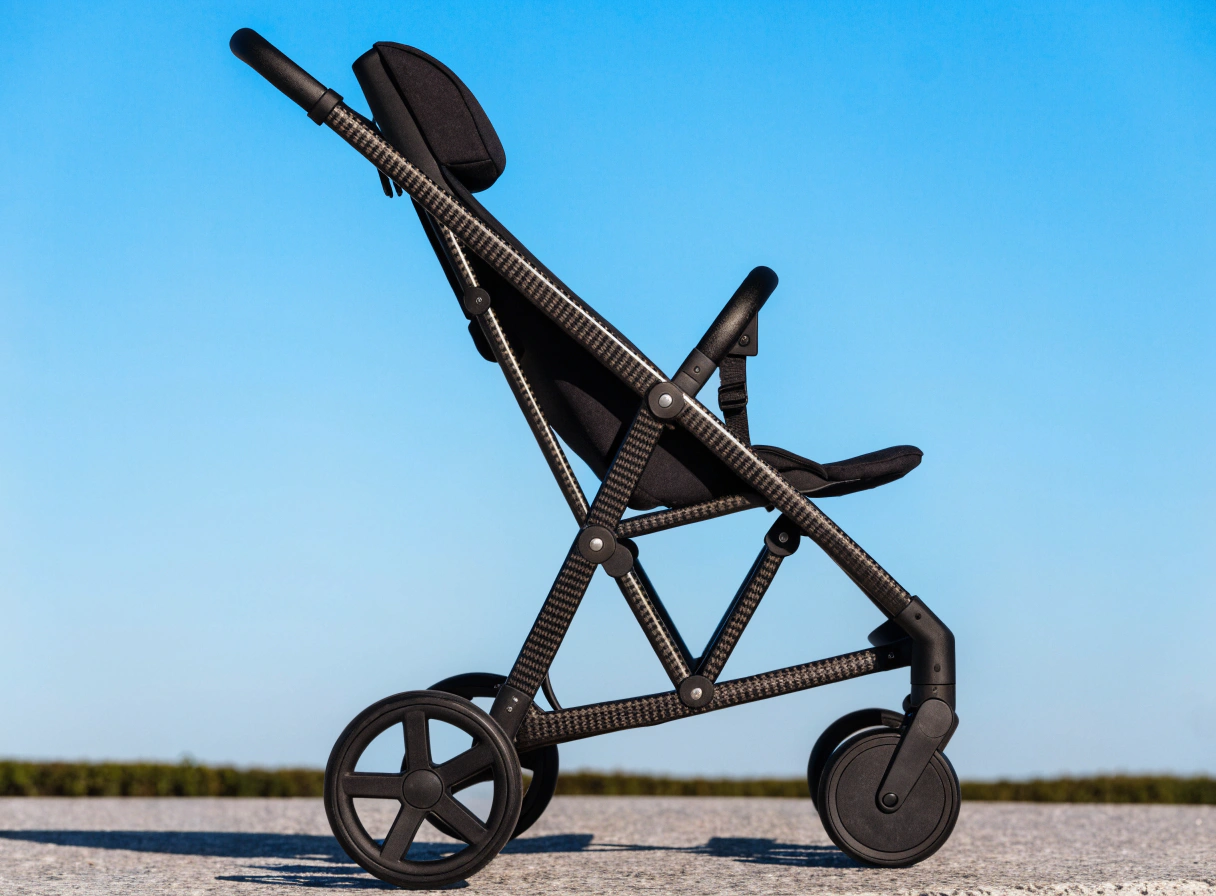
Ultra Air Carbon Fiber — daily driver once the bassinet stage ends When your baby is ready for the stroller seat — usually around six months — this is what daily life looks like. Carbon fiber frame at 11.6 lbs. One-handed fold for parents always holding the baby in the other arm. Organizer included for the level of gear that comes with a six-month-old. Rated for use through toddlerhood. |
The full range of options for both stages is in bassinet strollers and newborn travel systems — worth browsing with your specific newborn age in mind, not just the general category.

When the time comes — and you will know because the rolling starts or the weight limit hits — the transition does not have to happen overnight.
|
1 |
Confirm the stroller seat is appropriate for your baby right now Before the first ride in the seat, check the recline angle. New sitters need a significant recline — not fully upright — and a harness that adjusts to their smaller frame. Test it stationary at home before your first outing. |
|
2 |
First outing: five to ten minutes, smooth path, parent facing if possible Short ride, easy terrain, your face visible to the baby. You are checking whether their head stays steady. Are they comfortable? Do they settle? That is the information you need before a longer outing. |
|
3 |
Gradually extend over a week or two Five minutes becomes ten, becomes twenty, becomes a full park walk. The core muscles are still building at this stage. Tired babies slump — and slumping in a stroller seat means the ride is over. |
|
4 |
Harness check before every single outing Babies grow in bursts. A fit from last week is not necessarily the fit for this week. Snug — one finger between the strap and your baby. Not loose, not painful. |
Until your baby rolls from back to front — whichever comes first: that milestone, the weight limit (check your specific model, not a general 20-lb guess), or the point where their head or feet are pressing against the ends.
Most babies hit one of those checkpoints somewhere between three and five months. A few stay in the bassinet longer. It depends on their individual pace, not on a date on a calendar.
When any of the stop signals arrive, rolling is the clearest one. But there are softer signals too — the baby consistently fights lying flat and shows they have the physical strength to push up, or they have clearly outgrown the space.
The harder question is fussing: lots of parents mistake a fussy baby in a bassinet for developmental readiness, when actually the baby is just hot, overstimulated, or hungry. Restlessness and actual rolling readiness are different things. Watch for both, but do not confuse them.
Two conditions need to be met: the baby needs to have rolled, hit the weight limit, or significantly outgrown the bassinet, and the baby needs sufficient head and neck control to manage a reclined stroller seat safely.
These usually happen around the same time, somewhere in the 4- to 6-month window. But if rolling happens at 3 months and head control is still a work in progress, start with a deeply reclined seat rather than jumping straight to an upright position.
Genuinely depends on your lifestyle. If you take long walks with your newborn — 45 minutes or more, several times a week — it is probably worth it. The flat position matters for extended outings in a way that a car seat's angle does not. If your outings are short errands and you mostly drive.
An infant car seat on a stroller frame or a deeply reclining seat with a newborn insert covers you fine. Neither choice is wrong. The bassinet is not mandatory — it is useful under specific conditions.
Depends entirely on whether your specific model is rated for overnight use. Most stroller bassinets are not. They are designed for supervised outings — not extended unsupervised nighttime sleep. A smaller number have been specifically tested and certified for overnight use, which involves stricter mattress, ventilation, and structural standards.
The manual will say so explicitly. If yours does not mention overnight certification, the answer is no, not because the bassinet is bad, but because it hasn't been tested for that application: different use case, different standard.
It's a sleep scheduling framework, not a medical standard. The idea: five hours of awake time during the day, split across three naps, aiming for three longer nighttime stretches. Parents use it around the 4- to 6-month mark, when sleep starts consolidating. Some babies fit it reasonably well.
Others do not, and chasing a schedule with a baby who isn't there developmentally just creates more stress. In the context of stroller bassinet use, it mostly comes up because the schedule shift often happens around the same time as the bassinet-to-seat transition.
Yes. That is exactly what a bassinet is designed for. The limits are the physical ones — your baby should not exceed the weight limit (check your specific model), and once they can roll, the bassinet is no longer appropriate for sleep, regardless of the time of day.
Before those limits are hit, a bassinet for nighttime sleep follows the same safe sleep rules as any other surface: back to sleep, firm, flat mattress, nothing loose. Babies sleep in bassinets for months. That is the intended use.
This is one of the questions parents most need a real answer to, not a reassuring non-answer. The research points to a developmental window where the brain's arousal reflexes — the responses that wake a baby when their airway is compromised — are transitioning.
They're not fully established yet, and the nervous system is changing fast. The NICHD research on SIDS peaks at 2 to 4 months, confirming this is the highest-risk window, which is why the 2 to 4 month period is the time to be most rigorous about safe sleep, not less rigorous because the baby is 'past the newborn stage.' The peak is not at birth. It is here.



When Can Your Baby Sit in a Stroller
Gate Check Stroller Travel Guide for Parents