
- by Mamazing Team
Best Stroller for 4-Year-Old: Comfort, Travel, and Everyday Use Guide
- by Mamazing Team
The stroller is sitting in the garage, collecting dust for most of the week. Then you book a trip to a theme park, and suddenly you are staring at it, wondering whether a four-year-old is too old for this, whether strangers are going to judge you, and whether that old umbrella stroller you have is even rated for a child this size.
Here is the honest version. Four-year-olds are not too old for a stroller. They are completely appropriate for specific situations — and the stroller you choose matters more than it did when they were 18 months. From baby gear and strollers for active preschoolers and big kids, the criteria for a stroller at this age are genuinely different from those of the baby years. Weight capacity, seat depth, legroom, and fold speed all land differently when your passenger is 40 lbs and opinionated.
This guide covers when it makes sense, what features actually matter at age four, and what to look for in the specs so you are not buying something the child will outgrow in three months.

The AAP healthy development milestones for 4 to 5-year-olds confirm that four-year-olds are physically capable of walking, running, and climbing — but capability and endurance for extended walking are different things. A four-year-old who can run across a playground cannot necessarily walk 10 miles through a theme park without collapsing. Here are the situations where the stroller earns its keep:
|
Situation |
What it involves |
Why a stroller helps |
|
Theme park day |
8–12 hours of walking on hard surfaces. An adult struggles — a 4-year-old hits a wall by hour four. |
A stroller is the difference between getting through the day and getting carried. |
|
Long airport transit |
Multiple terminals, security, long corridors, potential delays. |
A 4-year-old who has to stay close and not run in a crowd is much safer in a stroller. |
|
City sightseeing (Europe, NYC) |
Cobblestones, long blocks, uneven surfaces, early starts, late finishes. |
Children can walk segments and ride the long, boring parts. Flexible is better here. |
|
Outdoor markets and festivals |
Crowded, unpredictable, lots of stopping and starting. |
Containment and rest point in one — genuinely useful, not indulgent. |
|
Ill or recovering child |
Post-illness fatigue, lower-than-normal endurance. |
No parent question-mark moment — this is obviously the right call. |
|
New baby sibling situation |
Parent pushing a double or needing to contain the older child while managing a baby. |
Practical family logistics, not developmental regression. |
According to JLD therapy on when a kid should stop using a stroller, occupational therapists note that stroller use is appropriate when the distance or environment exceeds what a child can realistically manage on foot. There is no developmental concern with strategic stroller use at four—the concern arises only when a child who can walk freely uses a stroller instead of walking for most outings.

This is where the shopping gets specific. Most of the online advice for strollers is written with babies and toddlers in mind — the specs that matter shift significantly at 4.
|
Feature |
Why it matters for a 4-year-old specifically |
What to look for |
|
Weight capacity |
A 4-year-old typically weighs 35 to 45 lbs. Standard strollers can handle up to 35–40 lbs. |
Look for a minimum of 50 lbs — ideally 55. This gives you the full age range without hitting the limit partway through. |
|
Seat height/back height |
A 4-year-old is significantly taller than a toddler. Seat backs that hit them at the shoulder are uncomfortable. |
The seat back should reach at least to the head, ideally with adjustable head support. |
|
Legroom and footrest |
Dangling legs become uncomfortable within 20 minutes. This is the most common complaint about 4-year-old strollers. |
Footrest that adjusts — not just a fixed bar. Adjustability is the difference between a usable stroller and one that gets refused. |
|
Frame weight |
As the passenger gets heavier, you need a lighter frame to compensate — otherwise the total weight becomes a problem. |
Carbon fiber or lightweight aluminum. Under 15 lbs for a travel stroller. Under 20 lbs for a daily driver. |
|
5-point harness |
Older kids are heavier and more mobile. A lap belt is not sufficient when they shift or fall asleep leaning. |
5-point with adjustable shoulder height. Check that the clips work easily with one hand — you will need that. |
|
Compact fold |
By the time a child is 4, you are probably also managing a bag, a jacket, and at least one argument. |
One-hand fold. Self-standing when folded. Fits in a standard car boot without rearranging your life. |
|
The weight capacity check is non-negotiable. The average four-year-old weighs 38 to 44 lbs. Many compact and umbrella strollers max out at 35-40 lbs. If you buy a 40-lb stroller for a child who already weighs 38 lbs, you may have it for three months before it becomes unsafe to use. Always look for the 50 lb minimum — preferably 55 — regardless of how good everything else looks. |

The right type depends on your primary use case. You might notice that this is where the decision tree splits depending on your family:
|
Stroller type |
Frame weight |
Does it fit a 4-year-old well? |
Travel-friendliness |
Best for |
|
Compact travel stroller |
Under 15 lbs, folds small |
Good — if rated 50 lbs+ |
Best — overhead bin, gate check, abroad |
Theme parks, airports, and city trips |
|
Standard everyday stroller |
15–25 lbs, medium fold |
Very good — wider seats |
OK — larger, but manageable |
Daily use, parks, errands |
|
Umbrella stroller |
Under 12 lbs, very compact |
Depends — check the weight limit carefully |
Excellent — lightest option |
Short outings, backup stroller |
|
Jogging stroller |
25–35 lbs, large fold |
Excellent — most spacious |
Poor — heavy and bulky |
Active families, trail walks |
|
Sit-and-stand |
15–20 lbs, compact-ish |
Good for an older child standing |
Good — folds reasonably |
Newborn + 4-year-old sibling pairs |
The big kid strollers for 4- and 5-year-old preschoolers span both compact travel options and everyday models — worth filtering by weight capacity (50 lbs+) rather than by style when you are shopping for this age group.

Save yourself from buying the wrong thing. Go through these five questions first:
|
1 |
What is your primary use case? Theme parks and travel → compact travel stroller, 50 lbs+, overhead bin compatible. Daily neighborhood errands → probably skip it, the child can walk. Mixed → standard lightweight with a compact fold and good weight rating. |
|
2 |
What is your child currently weighing? Check it. Then add 10 lbs, and that is your minimum weight capacity. Do not buy at the edge of the limit for a 4-year-old — they grow fast, and you will be back at square one in six months. |
|
3 |
Do you already have a newborn or younger sibling in the mix? If yes, consider a sit-and-stand style that lets the older child ride or stand — more flexibility, lighter than a full double stroller, easier to manage solo. |
|
4 |
How often will you actually use it? Twice a year for theme parks → lightweight travel model, store it flat. Multiple times a week for errands → invest in a better daily driver with more features. Buying a premium stroller for two uses a year is not a good calculation. |
|
5 |
Can you fold and carry it solo while holding a bag and possibly a second child? This is the real-world test. Any stroller you are considering should be tried for fold speed and one-hand operation before you commit. What feels easy in a shop aisle is different at the gate to a flight with a child refusing to cooperate. |

In simple terms, the spec sheet tells you more than the marketing page. Here is what to look for and what to avoid:
|
Spec to check |
Look for this |
Avoid this |
|
Weight capacity (lbs) |
50 lbs minimum for a 4-year-old, giving you room to grow over the next 5 years. |
40 lbs. Your child will hit this within months, and you will need a replacement. |
|
Seat depth (inches) |
14 inches minimum. This is the horizontal measurement — too shallow, and the back of the thighs bear the weight of the seat edge. |
Under 12 inches. This toddler seat will become uncomfortable quickly. |
|
Seat back height (inches) |
18 inches minimum from the seat base to the top of the back support. More is better for the headrest. |
Under 16 inches. Their shoulders will clear the back, and there is no head support. |
|
Folded dimensions |
It should fit in a standard car boot alongside one piece of luggage. Check the spec sheet. |
Any model where you cannot verify the folded dimensions, you are guessing. |
|
Handlebar height |
Should reach mid-torso for the parent. Strollers with fixed low bars ruin your back on long days. |
Fixed bars below hip height — this is a daily ergonomic problem. |
|
Canopy coverage |
UPF 50+ and extendable. A 4-year-old sits higher in the seat — check the canopy reaches them. |
Fixed or small canopies that leave the child exposed at the shoulder and face. |

The products worth considering at this age are the ones built with a carbon fiber frame — light enough to compensate for a heavier passenger, rated to 50 lbs, and compact enough to be practical for travel.
|
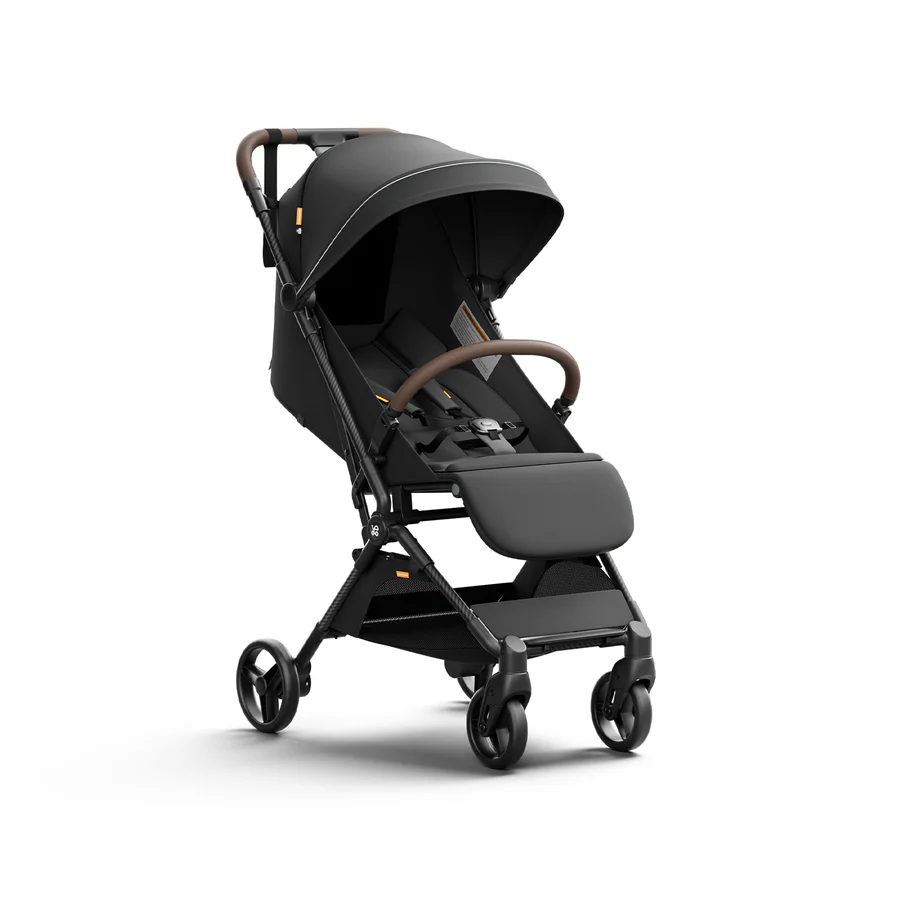
Ultra Air Carbon Fiber Lightweight Stroller — the travel and daily option 11.6 lbs with a carbon fiber frame. Rated to 50 lbs — covers the full 4 to 5+ year window. An organizer is included, so you are not constantly looking for somewhere to put your bag. One-hand fold for parents managing the child and logistics simultaneously. For families who use the stroller for travel, theme parks, and busy city days, this is the weight-capacity-and-portability combination that actually works. lightweight carbon fiber stroller designed for growing preschoolers |
If you are building out the day-trip kit beyond the stroller itself — snack bag, cup holder, organizer panel — the universal stroller organizer for preschooler day trip essentials fits the Ultra Air frame and turns the stroller from transport into a mobile command center for a day at the park.
The CDC healthy weight and physical activity for preschoolers recommends at least 60 minutes of active play daily for 4-year-olds. The stroller is not a replacement for that — it is the tool that makes the other 8 hours of a theme park day manageable while still including genuine walking time.
Yes — for the right outings. A 4-year-old who is walking around the neighborhood does not need a stroller. A 4-year-old at a theme park, at an airport, or spending a full day sightseeing in a city can absolutely use one without it being a developmental problem.
The relevant distinction is whether the stroller is replacing walking that the child is fully capable of doing, or enabling a day that would otherwise be impossible to complete without carrying a 40-lb human. The latter is practical parenting. No judgment required.
Not necessarily. A 4-year-old and a newborn are a challenging combination to manage on foot, but a full double stroller is heavier, bulkier, and often overkill for the older child who will want to walk much of the time anyway.
The most practical options for this gap are a sit-and-stand stroller (one seat for the baby, a bench or standing platform for the 4-year-old to use when needed) or a compact stroller for the baby with a ride-on board. Both options are lighter and more flexible than a full double, and the 4-year-old will prefer the standing option anyway.
Depends entirely on how you use it. Most families stop using a stroller daily somewhere between 3 and 5 — but keep a lightweight stroller for travel, theme parks, and long days well past that. The useful life of a stroller is less about age and more about whether the outings you take regularly exceed your child's walking endurance.
A family that mostly drives will retire the stroller earlier than a family that walks everywhere. Weight limits are the practical hard stop — once a child exceeds the rated capacity, the stroller should be retired regardless of how useful it still feels.
No. The UK pushchair/buggy culture tends to align more with US stroller culture than most people assume — parents keep them for travel and long days well past the toddler years. A 4-year-old using a pushchair on a long day out, at an airport, or during a packed European city tour is completely normal and practical.
The occasional looks from strangers are not evidence of a parenting error. They are evidence of strangers having opinions that are not relevant to your day.
Not always — but often. If the holiday involves significant walking (theme parks, cities, airports with connections), having a lightweight stroller available prevents the dead-leg situation where your 4-year-old simply cannot walk another step at the exact moment you need to cover the most distance.
For beach holidays with short walks and nearby restaurants? Probably not needed. For Disney, a European city break, or any holiday with full-day itineraries? Having a compact travel stroller in the bag is an investment in the entire day going well, not a crutch.
Only if the weight limit supports it, umbrella strollers are typically the most compact and lightweight option, but many cap at 35 to 40 lbs — and a 4-year-old may already be at or over that limit. Check the specific model before assuming it works.
Beyond weight, check the seatback height — many umbrella strollers are designed for toddlers, so the seatback ends at the child's shoulder level, with no head support. For short outings where the child will not be sleeping, fine. For a full day at a park where they will doze off, the lack of head support is a problem.



When Do Kids Stop Using Strollers Age Guidelines Development Signs and Parent Tips
Best Stroller for Sand: What Actually Works at the Beach