
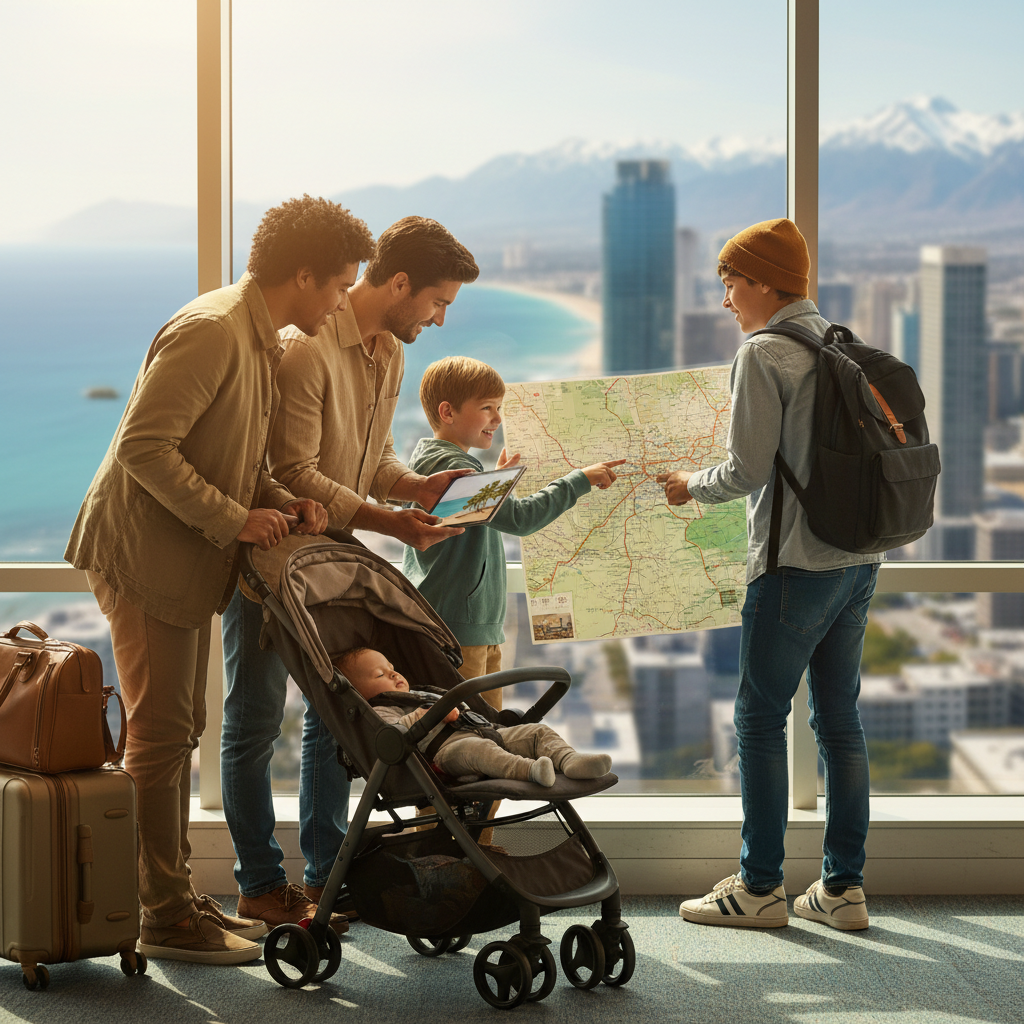
If you are trying to figure out the best family vacation destinations with kids, start here: babies and toddlers do best on easy, low-transfer trips; preschool and early elementary kids thrive where animals, beaches, and hands-on play are close together; older kids want more choice and momentum; and teens usually light up when a trip feels a little more independent. In other words, the best place to travel with kids is not one perfect country. It is the destination style that matches your child’s age, energy, and tolerance for long days.
This guide helps you choose faster. Instead of treating every age as a totally separate world, you will see which trips work best for babies, toddlers, young kids, big kids, and teens, plus where Europe city breaks, theme parks, and nature-heavy adventures fit best. Along the way, you will also find practical planning notes Mamazing readers usually care about: how much walking a trip really requires, when a stroller still helps, and when to trade convenience for wow factor.
Best family vacation destinations with kids by age: quick answer
If you want the short version before you compare destinations, use this rule of thumb: the younger your child is, the more your trip should optimize for naps, short transfers, and flexible meals. As your child gets older, you can gradually prioritize novelty, educational value, and bigger daily adventures. That is why baby-friendly vacations often look like beach towns, resort areas, or compact cities, while the best destinations for teens are usually places with a stronger sense of challenge, identity, or adventure.
| Age | Best trip style | What usually matters most | Strong examples |
|---|---|---|---|
| 0-3 | Baby-friendly beach break, resort, or compact city | Short transfers, kitchen access, stroller-friendly walking, early bedtimes | Algarve, Mallorca, Copenhagen, San Diego |
| 4-7 | Animals, soft adventure, beach plus one big attraction | Hands-on fun, simple logistics, daily movement | Costa Rica, Portugal, Banff, Australia |
| 8-12 | City break, theme park trip, or culture-meets-play itinerary | Variety, memorable highlights, manageable walking | Japan, Copenhagen, Rome, Disneyland Paris |
| 13+ | Teen-ready cultural trip or active expedition | Autonomy, challenge, identity-building experiences | Japan, Iceland, safari, Patagonia |
The real secret is that you do not need the most exotic destination to have the best family vacation with kids. You need the least friction for your child’s stage. A toddler who sleeps well in a stroller and loves splashing may be happier in a simple coastal town than on an ambitious multi-city itinerary. A teen may be the opposite: bored by a resort, energized by a place where they can navigate transit, choose food spots, and chase a specific interest.

Best baby-friendly vacations and trips for toddlers
For babies and toddlers, the best international trips are rarely the trips with the longest wish list. They are the ones with the fewest hard transitions. Think direct flights when possible, one home base instead of three, easy access to groceries, and enough shade, stroller space, and downtime that you do not spend the entire vacation managing meltdowns.
That is why baby-friendly vacations usually fall into three categories. First, beach destinations with calm mornings and easy afternoons, such as the Algarve, Mallorca, or a family-focused resort area close to the airport. Second, compact cities where you can do one attraction, one meal, and one playground without commuting all day. Third, countryside or lake stays where the schedule can stay gentle. If your child is under 3, choose the destination that lets you say yes to naps without feeling like you are missing the entire trip.
Two official resources are worth checking before you book. The CDC's traveling with children guidance recommends a pre-travel appointment at least one month before an international trip so you can review vaccines, destination-specific risks, and your health kit. If you are flying with a newborn, the American Academy of Pediatrics notes in its flying with baby guide that it is generally best to avoid flying before 7 days old, and ideally to wait until two or three months if you can. That does not mean you must stay home for years. It means your planning margin matters more than your passport count.
For airport days, the practical detail parents forget most is liquids. The TSA's traveling with children page confirms that formula, breast milk, toddler drinks, and baby food in quantities over 3.4 ounces are allowed in carry-on bags when declared for screening. That single rule can make a low-stress first international trip much more realistic.
My favorite baby-and-toddler filter is simple: would I still like this destination if I spent half the day moving at stroller speed? If the answer is yes, it is probably a good fit. Waterfront promenades, shaded old towns, zoo-plus-playground cities, and resorts with walkable layouts win here. If the trip only works when you are moving fast, standing in lines, or changing hotels every two nights, save it for later.
If your toddler loves sand and water, pair this article with Mamazing's baby beach guide. Beach vacations are often the easiest first answer for families with very young kids because they combine simple sensory play with built-in rest windows.

Best picks for ages 0-3
- Algarve or Mallorca: great when you want short resort transfers, calm beaches, and easy family meal routines.
- Copenhagen: strong for stroller-friendly transit, playgrounds, and short sightseeing blocks that do not overwhelm you.
- A close-to-home beach or lake trip: often the smartest first vacation with a baby, especially if you are still learning your child’s sleep patterns.
Best family vacation destinations with kids ages 4-7
Once your child hits the 4-to-7 range, the best family vacations with young kids usually add one thing babies do not need: momentum. You want enough action that your child feels the trip is happening, but not so much that you are dragging them through your own adult bucket list. This is the sweet spot for destinations built around animals, beaches, short hikes, boat rides, and highly visual attractions.
Costa Rica is a classic example because it gives you sloths, monkeys, beaches, hot springs, and soft adventure without requiring a complicated culture-first itinerary. Portugal works for a different reason: the pace is manageable, food is family-friendly, and you can combine city time with coast time. Australia and parts of Canada also fit well because they pair nature with clear infrastructure. These are the years when your child can remember the trip vividly, but still benefits from predictable meal times and earlier nights.
Nature-heavy trips are especially strong at this age when they include a framework, not just scenery. The National Park Service Junior Ranger program is a good example of why national park vacations work so well for many families: kids are not just walking, they are collecting observations, answering questions, and feeling involved. That same principle applies anywhere. Give your child a mission and the destination becomes more memorable.
This is also the age when many parents feel unsure whether they still need a stroller. The honest answer: sometimes, yes. A 5-year-old may be done with everyday stroller use at home and still hit a wall during airport transfers, late museum afternoons, or theme-park mileage. If that sounds like your family, read our guide to strollers for big kids before you rule one out for travel.
For ages 4 to 7, look for destinations with one headline attraction per day, not five. Kids this age do wonderfully when the trip alternates high-energy and low-pressure moments: zoo in the morning, pool in the afternoon; short hike before lunch, beach after nap; science museum plus early dinner. That rhythm is usually more valuable than squeezing in another famous sight.
Best city breaks with kids in Europe
If you are searching for the best places to travel with kids in Europe, do not start by asking which city is the most famous. Start by asking which city is easiest to enjoy in small pieces. The best city breaks with kids have short transit times, stroller-friendly public spaces, outdoor breaks built into the day, and enough casual food options that lunch does not become the hardest part of the itinerary.
Copenhagen is one of the strongest picks because the city is designed in a way that genuinely lowers friction for families. Visit Copenhagen's official Copenhagen with kids guide highlights playgrounds, family-friendly attractions, baby equipment rental, and public transport that works well with prams and pushchairs. That combination is exactly what makes a city break succeed with young children: you can see real things without forcing your child into an all-day adult pace.
Rome, Lisbon, and Barcelona also make good family city breaks, but for slightly different families. Rome is best when your kids are curious enough to care that they are standing in a place they have seen in books. Lisbon is excellent when you want coast access, colorful neighborhoods, and a more relaxed meal rhythm. Barcelona can work well for families who want architecture, beach time, and parks in the same trip. What matters is not whether a city is “good with kids” in the abstract. It is whether you can enjoy it in two-hour blocks.
Europe works especially well from about age 5 onward because short-haul connections make multi-stop trips more realistic, but you still do not need to build a giant itinerary. In practice, many families are happier choosing one city and one easy side trip than trying to conquer three capitals in a week. The best Europe trips with kids often feel smaller than the adult fantasy version and richer because of that.

What makes a Europe city break work
- Walkable neighborhoods: You can reset with a snack, park stop, or playground instead of a taxi ride.
- Attractions close together: One museum, one square, one sweet treat often beats a packed sightseeing list.
- Public transit that welcomes families: Especially helpful if you still have a stroller or tired younger sibling in the mix.
- A soft landing after travel days: Pick apartments or family rooms near the center so the city feels easier from hour one.
Best theme park and high-energy family destinations
Some families do not want a “balanced” trip. They want a trip where the entertainment is built in and the answer to “what are we doing next?” is obvious. That is where theme-park and high-energy destinations shine. These trips are often underrated in roundups of the best family vacation destinations with kids because they can feel less sophisticated on paper. In reality, they are some of the easiest wins when your children want excitement and you want low decision fatigue.
For younger kids or mixed-age siblings, Disneyland Paris works because the park itself is segmented by age and intensity. Disneyland Paris has an official family-with-young-kids planning page that breaks down attractions and services for ages 0-3 and 4-6, which makes it easier to judge whether your child is old enough to enjoy the trip rather than merely survive it. If your family wants a European park alternative with lots of child-focused rides, the official Europa-Park children's attractions guide is useful for checking whether the experience matches your kids' ages.
The best moment to choose a theme-park trip is when your kids are old enough to anticipate rides and shows, but still young enough that total immersion feels magical. That usually means roughly 5 to 10 for the easiest payoff, although older kids may still love a park when the destination also includes another layer, such as Paris, Tokyo, or a beach stay. Theme parks are especially strong for families with siblings who need entertainment density more than cultural depth.
If you go this route, plan less around maximum rides and more around stamina. A theme park day with kids is basically a long athletic event disguised as fun. Midday breaks, early entry, and one must-do list per child will usually improve the trip more than squeezing in two extra attractions.
Best destinations for teens and older kids
The best destinations for teens are different because teens do not just want to be entertained. They want to feel changed by the trip, or at least trusted by it. That is why Japan, Iceland, safari itineraries, and Patagonia all show up again and again for older kids: each one gives teens a role to play. They can navigate, photograph, compare food, choose routes, or push themselves physically.
Japan is one of the strongest all-around picks because it can satisfy wildly different personalities in the same family. The official JNTO traveling with children guide points out practical details parents care about, including stroller-friendly buses, elevators in major stations, and stroller rentals at many attractions. For younger families, that means ease. For teens, Japan adds layered rewards: food culture, anime and gaming neighborhoods, temples, design, trains, and the thrill of a place that feels both safe and stimulating.
Iceland works best for families who want dramatic scenery without extremely technical adventure. A safari is hard to beat for teens who are obsessed with wildlife and photography. Patagonia is ideal when your teen is ready for a trip that feels like an expedition rather than a vacation. The common thread is not geography. It is agency. Older kids remember the trips where they had a stake in the experience.

If you are traveling with one teen and one younger child, the compromise is usually not to split the difference perfectly. It is to pick a destination where both can claim something real. Japan is good at this. So are many U.S. and Canadian national park trips, where younger kids can focus on wildlife and ranger activities while teens get longer hikes, photography, or more independence around the itinerary.
How to choose the best place to travel with kids based on age
When families get stuck, it is usually because they are choosing a destination by reputation instead of by friction. A better framework is to rate each trip on four things: flight length, transfer count, walking load, and flexibility. Then add a fifth filter: what your child is genuinely into right now.
- Flight length: Babies and toddlers can handle flights, but the rest of the itinerary needs to be forgiving if the journey is long.
- Transfer count: One airport and one hotel usually beats a beautiful itinerary full of re-packing.
- Walking load: Cobblestones, stairs, and giant museums feel different when you are carrying gear or managing tired kids.
- Flexibility: Ask whether you can cut the day in half without the entire destination losing value.
- Current obsession: Animals, trains, beaches, mythology, food, rides, football, anime, snorkeling—this is often the detail that turns a good family vacation into a beloved one.
If you use that filter, your choices become clearer. A child who loves animals may be happier in Costa Rica or on a park-focused trip than in a prestigious capital city. A teen who loves design or gaming may care more about Tokyo than any beach. A 2-year-old does not need the “best country.” They need the easiest rhythm. The age-by-age answer works because it is really a rhythm-by-rhythm answer.
That is also why you should not be afraid to repeat destination types across the years. Families often think they need increasingly bigger trips as children grow. In practice, the trip can stay simple while the experience gets deeper. Copenhagen at 2 looks like playgrounds and short museum bursts; Copenhagen at 8 looks like bikes, Tivoli, and science exhibits. Portugal at 3 may be naps and beach snacks; Portugal at 7 may become trams, castles, and tide pools.
FAQ
What are the best family vacation destinations with kids by age?
For ages 0-3, choose baby-friendly beach towns, resorts, or compact cities. For ages 4-7, look for wildlife, beaches, and soft adventure. For ages 8-12, city breaks, Japan, and theme-park trips usually work well. For teens, choose destinations with more independence and challenge, such as Japan, Iceland, safari itineraries, or Patagonia-style adventures.
What are the best baby-friendly vacations for families?
The best baby-friendly vacations are usually places with short transfers, easy meal access, shade, stroller-friendly paths, and flexible days. Beach resorts, calm coastal towns, and compact cities often beat ambitious multi-stop trips for this age group.
What are the best international trips with toddlers?
Toddler-friendly international trips tend to be destinations where you can stay in one place and keep daily movement simple. Portugal, Mallorca, Copenhagen, and other walkable, family-oriented destinations are often easier than trips built around long sightseeing days or constant hotel changes.
What are the best city breaks with kids in Europe?
Copenhagen is one of the easiest all-around picks because it combines playgrounds, transport that works with strollers, and family-friendly attractions. Lisbon, Rome, and Barcelona can also work beautifully when you plan one major outing per half day instead of treating the city like an adult checklist.
What are the best destinations for teens?
The best destinations for teens are places that offer some independence, stronger identity, and memorable challenges. Japan is a standout because it blends culture, food, transit, pop culture, and safety. Iceland, safari trips, and active itineraries also work well for teens who like nature or photography.
What is the best age to travel internationally with kids?
There is no single best age. Babies may travel more easily than expected if the itinerary is simple, while older kids may appreciate the destination more deeply. The better question is whether the trip style matches your child’s current rhythm, sleep needs, stamina, and interests.
The best family vacation destinations with kids are the ones that feel manageable to you and meaningful to them. If you want a better trip, do not chase the most impressive map pin. Choose the destination your child can actually enjoy at their current stage, then build in enough margin that you can follow their pace. When you do that, even a simple city break or beach week can become the trip your family talks about for years.
And once you have chosen the destination, Mamazing can help you make the logistics feel lighter. Start with the rhythm, choose the right gear, and let the trip fit your family instead of forcing your family to fit the trip.


Diet for Breastfeeding Mothers: Nourishing You and Your Baby
How to Choose Non-Toxic Nursery Furniture for a Healthier Baby Room